Prepared by the LSE Team. Reviewed by Joseph Andrade, Jr., RN, NRP.
Joe and the LSE instructor team are firefighters, paramedics, registered nurses, OSHA Outreach instructors, and safety officers, in various combinations. Joe is an active firefighter, paramedic, and registered nurse working in emergency and vascular access care.
CPR and AED at a Glance
| Detail | What to expect |
|---|---|
| Format | Live, instructor-led classroom with hands-on practice. Pediatric First Aid CPR AED is also available as blended learning |
| Price | Heartsaver CPR AED $69, First Aid $69, First Aid CPR AED $99, Pediatric First Aid CPR AED $109 |
| Time | CPR AED about 3 hours. First Aid CPR AED about 5 to 6 hours. Pediatric First Aid CPR AED about 5 to 7 hours |
| Who it is for | Workplace responders, teachers, coaches, childcare staff, fitness staff, security, community groups and caregivers |
| Healthcare workers | Most clinical jobs ask for BLS instead. See our BLS training guide |
| Card | AHA Heartsaver course completion eCard, valid for two years, after all requirements are met |
| Where | Onsite at your workplace, or at a scheduled class, in the Washington, DC region and other East Coast service areas |
| Dates | Scheduled with our team based on course, class size and instructor availability |
Register: CPR AED Register: First Aid CPR AED Register: Pediatric Call 617-840-0113
Choose Your CPR and AED Course
| Course | Best fit | Price | Course page |
|---|---|---|---|
| Heartsaver CPR AED | CPR and AED only, for workplaces and community learners | $69 | View CPR AED |
| Heartsaver First Aid CPR AED | Workplaces that need first aid and CPR/AED in one course | $99 | View First Aid CPR AED |
| Heartsaver Pediatric First Aid CPR AED | Childcare, schools, camps and youth programs | $109 | View Pediatric |
| Heartsaver First Aid | First aid only, without CPR | $69 | View First Aid |
| ACS Stop the Bleed | Bleeding control add-on for any team | $59 | View Stop the Bleed |
| Heartsaver Instructor Development | People who want to teach Heartsaver courses | $349 per candidate | View Heartsaver Instructor |
Why Train With Life Saving Education
Every LSE instructor is at least a paramedic with teaching experience. Many are also firefighters, nurses, technical-rescue or occupational-safety professionals.
Onsite classes can walk through your emergency action plan and where your AEDs are, not just a generic scenario.
Most Heartsaver classes run 6 to 12 students, so everyone gets real time on the manikin and AED trainer.
CPR and AED training prepares people to recognize cardiac arrest, begin high-quality CPR, and use an automated external defibrillator while professional help is on the way. Life Saving Education offers American Heart Association Heartsaver CPR AED options for workplaces, community learners, and people who need a course completion card, as well as BLS training for healthcare professionals.
The current AHA Heartsaver portfolio reflects the 2025 American Heart Association Guidelines for CPR and Emergency Cardiovascular Care. The right course depends on who you are, what your employer or school requires, and whether you also need first-aid training.
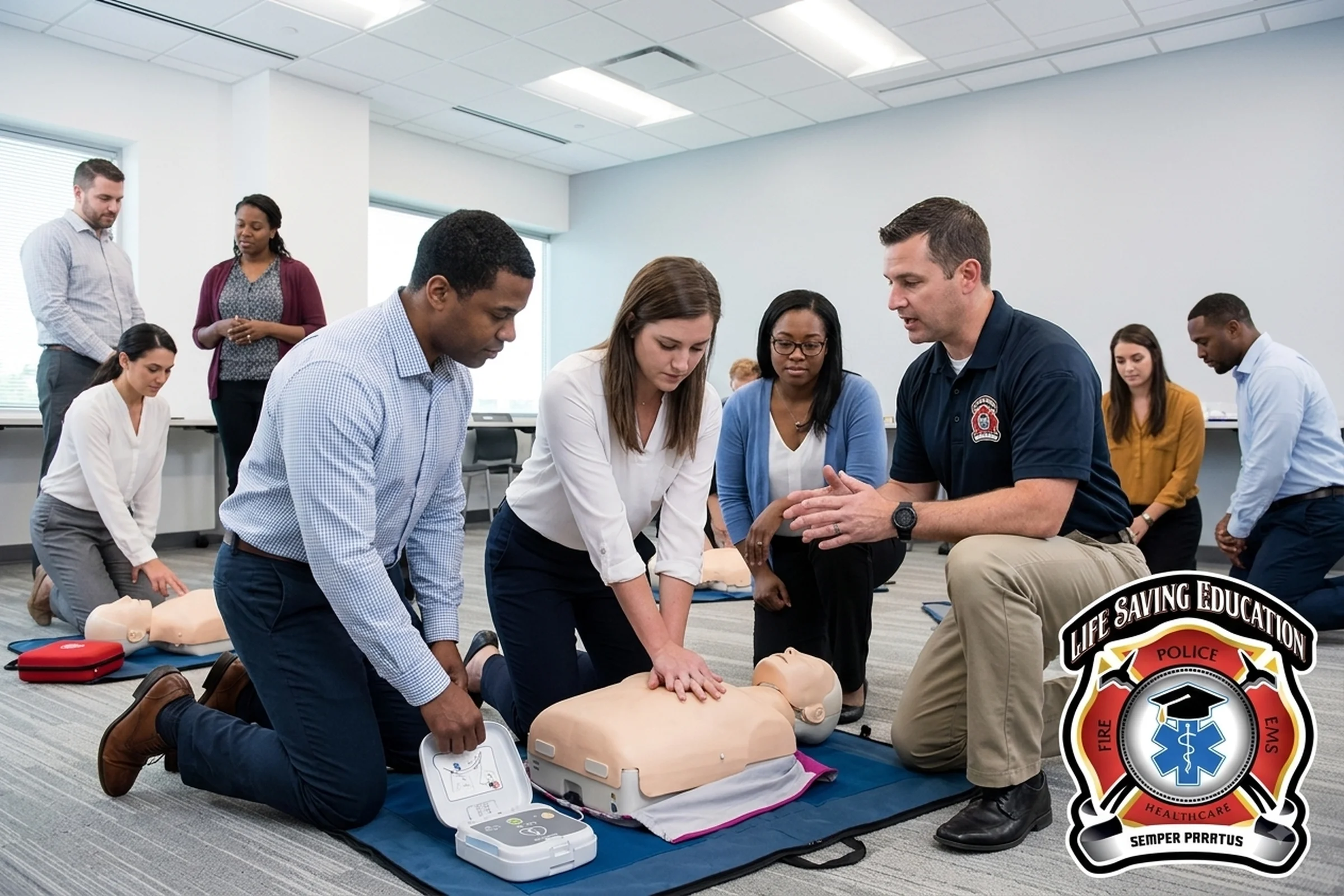
Choose the Right CPR and AED Course
AHA Heartsaver CPR AED
The AHA Heartsaver CPR AED course is designed for people with little or no medical training who want or need formal CPR and AED instruction. It focuses on recognizing cardiac arrest, performing CPR, using an AED, and responding to choking emergencies.
AHA Heartsaver First Aid CPR AED
If your requirement includes both first aid and CPR/AED, the AHA Heartsaver First Aid CPR AED course combines those topics in one program. This is often the better option for organizations that need a broader workplace emergency-response course rather than CPR alone.
AHA Heartsaver Pediatric First Aid CPR AED
Childcare professionals, schools, camps, youth programs, and others who work around children may need AHA Heartsaver Pediatric First Aid CPR AED. Confirm the exact requirement with the organization or licensing authority that requires the training.
AHA BLS for Healthcare Professionals
Healthcare professionals and professional responders may need BLS rather than Heartsaver CPR AED. Review our AHA BLS training guide when your employer, hospital, school, or clinical program specifies BLS.
What CPR and AED Training Covers
Course content depends on the selected AHA program, but CPR/AED training generally develops the ability to:
- recognize cardiac arrest and activate the emergency-response system;
- perform high-quality CPR;
- use an automated external defibrillator safely and effectively;
- respond to choking and foreign-body airway obstruction;
- work through realistic emergency-response steps; and
- demonstrate required hands-on skills for course completion.
Some course versions may include adult-only content, while others include child and infant skills. Verify the exact course option required before registering.
Who Should Take CPR and AED Training?
CPR and AED training can benefit almost anyone, but formal Heartsaver courses are especially useful for:
- workplace emergency-response teams;
- teachers, coaches, and school staff;
- fitness and recreation professionals;
- construction, hospitality, security, retail, and other workforce employees;
- childcare and youth-program personnel;
- community organizations and volunteer groups;
- family members and caregivers; and
- people who want documented training for a job or program requirement.
The organization imposing a training requirement decides which course, format, and completion document it will accept. When a requirement simply says “CPR certified,” ask for the exact course name before registering.
Heartsaver CPR AED vs. BLS
Heartsaver and BLS are different AHA course families. Heartsaver courses are generally aimed at people with little or no medical training. BLS is designed for healthcare professionals and professional responders and includes a stronger healthcare-team and professional-rescuer focus.
Taking a more advanced-sounding course is not always the right answer. The best course is the one that matches the requirement you actually need to satisfy.
Classroom, Blended, and Other AHA Training Formats
AHA Heartsaver programs may be available in classroom, blended-learning, and other approved formats depending on the course and Training Center. In blended learning, students complete the assigned online portion and then satisfy the applicable hands-on practice and skills requirements.
Do not assume that an online purchase by itself produces the course-completion card you need. Confirm the full pathway, including any required hands-on component, before registering.
CPR and AED Course Completion Cards
Students who successfully complete the applicable AHA Heartsaver course requirements receive the corresponding AHA course completion card. Current Heartsaver course-completion cards are valid for two years. An employer, school, licensing body, or other organization may impose its own more frequent retraining requirement.
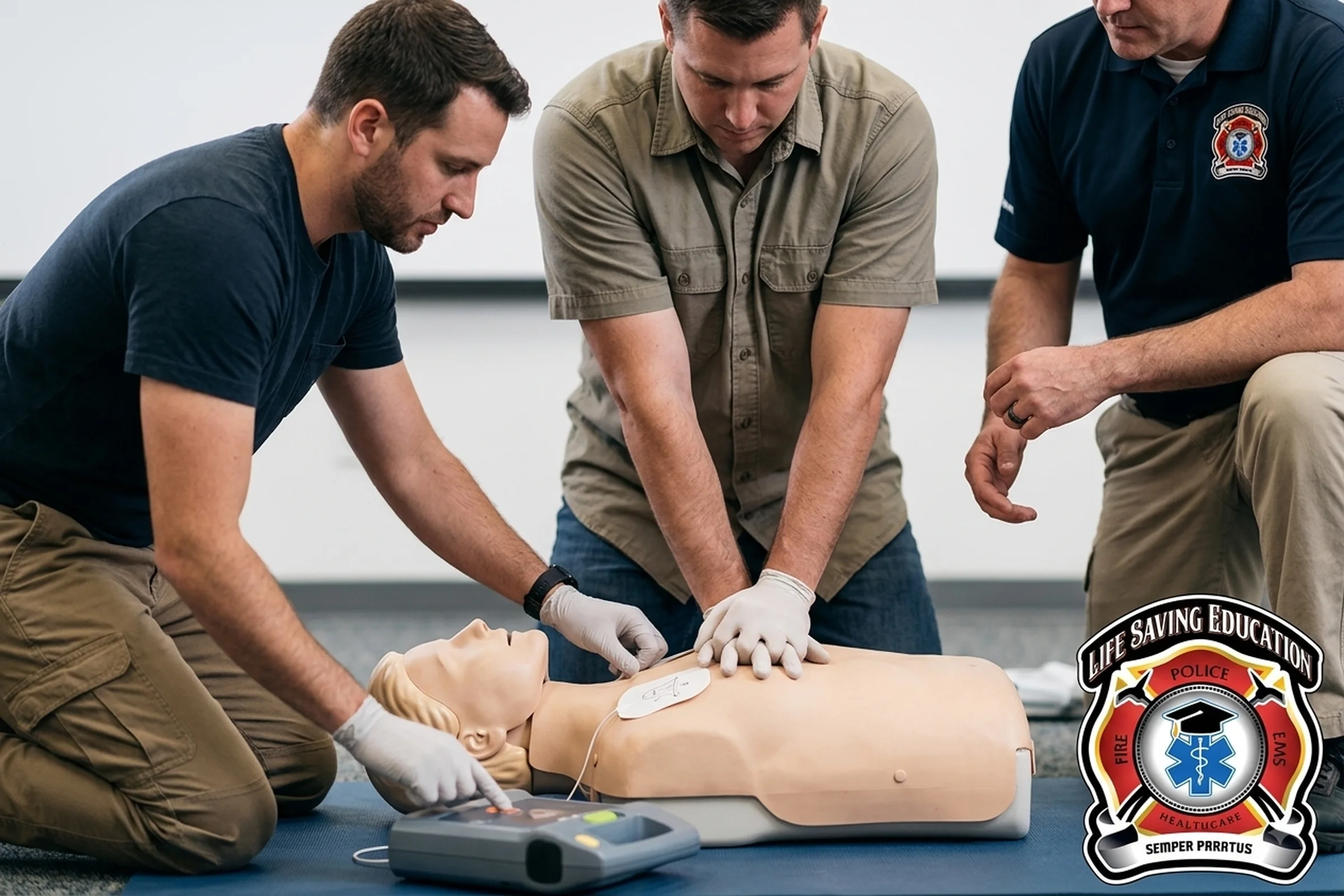
Why AED Practice Matters
An AED is designed to guide a responder through analysis and shock delivery, but training helps people act faster and with more confidence. Students practice integrating AED use into CPR rather than treating the device as a separate task. That includes minimizing interruptions, following prompts, maintaining scene safety, and resuming CPR when directed.
Onsite CPR and AED Training for Groups
Life Saving Education provides private and onsite training for workplaces, schools, healthcare support teams, community organizations, public-safety groups, and other employers. Group training can make it easier to train multiple employees or shifts while allowing the class to discuss the organization’s emergency action plan and AED locations.
Visit Onsite Group Training for planning information or contact Life Saving Education to request a class or discuss group scheduling.
CPR and AED Guides and Resources
Practical articles from our instructors to help you prepare for class and act fast in a real emergency.
- CPR and AED: How to Go From Bystander to Lifesaver
- Choking to Cardiac Arrest: What Happens When an Airway Emergency Becomes a Resuscitation
- Should Your Workplace Keep Naloxone Next to the AED? OSHA’s New 2026 Guidance Explained
- Opioid Overdose at Work: OSHA’s New 2026 Guidance Changes What “Prepared” Looks Like
- The Patient Is Already in Cardiac Arrest. Does Naloxone Still Matter?
- Drowning Prevention and Water Safety for Families
- When Online Safety Training Is Not Enough: What Employers Must Know About OSHA, NASP, and AHA Skills Training
- Group CPR, BLS & OSHA Training in New York City
Frequently Asked Questions About CPR and AED Training
Do I need Heartsaver CPR AED or BLS?
If you are a healthcare professional or professional responder, your employer may require BLS. If you are a workplace or community learner, a Heartsaver option may be appropriate. Verify the exact requirement before registering.
Should I choose CPR AED or First Aid CPR AED?
Choose the combined course when you also need formal first-aid training. If your requirement is CPR/AED only, the CPR AED course may be the better match.
How long is the AHA Heartsaver card valid?
Current AHA Heartsaver course-completion cards are valid for two years after successful completion.
Can LSE train my workplace or organization onsite?
Yes. Private and onsite group training may be available depending on location, class size, instructor availability, equipment, and the specific course requested.
How much does CPR and AED training cost?
Heartsaver CPR AED is $69, Heartsaver First Aid CPR AED is $99, and Heartsaver Pediatric First Aid CPR AED is $109 per student. Contact us for onsite group pricing.
Find Your CPR and AED Class
Review AHA Heartsaver CPR AED, compare First Aid CPR AED, check the class schedule, or contact Life Saving Education for help choosing the correct course.
Training You Can Count On. When Seconds Count.
Ready to Schedule CPR and AED Training?
Pick your course to register, or bring a live Heartsaver class to your workplace. Questions? Call 617-840-0113.
The American Heart Association strongly promotes knowledge and proficiency in BLS, ACLS, and PALS and has developed instructional materials for this purpose. Use of these materials in an educational course does not represent course sponsorship by the American Heart Association.