Prepared by the LSE Team. Reviewed by Joseph Andrade, Jr., RN, NRP.
Joe and the LSE instructor team are firefighters, paramedics, registered nurses, OSHA Outreach instructors, and safety officers, in various combinations. Joe is an active firefighter, paramedic, and registered nurse working in emergency and vascular access care.
BLS at a Glance
| Detail | What to expect |
|---|---|
| Format | Live, in-person classroom, or HeartCode blended learning (AHA online portion first, then an in-person skills session) |
| Price | BLS Provider $79, HeartCode BLS skills session $59 (the AHA online portion is purchased separately) |
| Time | BLS Provider about 4 hours. HeartCode skills session about 60 to 120 minutes |
| Who it is for | Nurses, physicians, EMTs, paramedics, firefighters, dental teams, allied-health staff and healthcare students |
| Before class | Read How to Prepare for Your BLS Provider Class. HeartCode students bring their online completion certificate |
| Card | AHA BLS Provider course completion eCard, valid for two years, after all requirements are met |
| Where | Onsite at your workplace, or at a scheduled class, in the Washington, DC region and other East Coast service areas |
| Dates | Scheduled with our team based on course, class size and instructor availability |
Register: BLS Provider Register: HeartCode BLS Skills Call 617-840-0113
Choose Your BLS Course
| Course | Best fit | Price | Course page |
|---|---|---|---|
| BLS Provider | First-time BLS, renewals, or anyone who wants the full instructor-led course | $79 | View BLS Provider |
| HeartCode BLS Skills Session | Learners who finished the AHA HeartCode BLS online portion | $59 | View HeartCode Skills |
| BLS Instructor Development | Current BLS providers who want to teach | $349 per candidate | View BLS Instructor |
Why Train With Life Saving Education
Every LSE instructor is at least a paramedic with teaching experience. Many are also firefighters, nurses, technical-rescue or occupational-safety professionals.
BLS Provider classes run 6 to 12 students, so you get real time on compressions, bag-mask ventilation and the AED.
Hospitals, dental practices, schools and EMS agencies can book a private class onsite, scheduled around shifts and departments.
American Heart Association BLS training is designed for healthcare professionals and other personnel who need Basic Life Support skills for clinical or emergency-response work. Life Saving Education offers multiple BLS pathways so nurses, EMS clinicians, firefighters, students, dental teams, and other healthcare personnel can choose the format that matches their employer or program requirement.
The current AHA BLS program reflects the 2025 American Heart Association Guidelines for CPR and Emergency Cardiovascular Care. BLS training emphasizes high-quality CPR, AED use, ventilations, and coordinated team response. AHA identifies both prehospital and in-facility tracks within BLS training.

Choose the Right BLS Training Option
AHA BLS Provider
The AHA BLS Provider course is the primary option for healthcare professionals who need an AHA BLS Provider course completion card. It is appropriate for many nurses, physicians, EMS clinicians, firefighters, allied-health professionals, dental personnel, and students entering clinical programs.
HeartCode BLS Hands-On Skills Session
If your requirement allows blended learning, HeartCode BLS combines the AHA online cognitive portion with a required hands-on skills session. Students should complete the required HeartCode component before arriving for the skills session and bring the completion documentation requested by the instructor.
BLS Instructor Development
Experienced providers who want to teach may also review AHA BLS Instructor Development. Becoming an instructor involves more than completing a provider course, and all applicable Training Center and instructor requirements must be satisfied.
What BLS Training Covers
BLS is built around the rapid recognition and treatment of life-threatening emergencies. Course activities may include:
- recognition of cardiac arrest and activation of the emergency-response system;
- high-quality adult, child, and infant CPR;
- automated external defibrillator use;
- ventilation and bag-mask skills;
- one-rescuer and multi-rescuer response;
- team roles, communication, and coordinated resuscitation;
- relief of foreign-body airway obstruction; and
- skills testing required for successful course completion.
The exact sequence, learning activities, testing requirements, and course materials follow the current AHA program used for the class.
Who Usually Needs BLS?
BLS is commonly selected by people whose work places them in a healthcare or professional-responder role, including:
- registered nurses and nursing students;
- physicians, physician assistants, and advanced practice clinicians;
- EMTs, paramedics, firefighters, and other first responders;
- respiratory therapists and other allied-health professionals;
- dental professionals and outpatient clinical teams;
- medical, nursing, dental, and allied-health students; and
- healthcare employees whose employer specifically requires AHA BLS.
Your employer, school, licensing body, clinical site, or other organization ultimately decides which course and format it will accept. If the requirement simply says “CPR certification,” confirm whether it specifically requires BLS before registering. Non-healthcare workplaces may instead need a Heartsaver course.
BLS Provider vs. Heartsaver CPR AED
These are different AHA course families. BLS is designed for healthcare professionals and professional responders. Heartsaver courses are generally designed for people with little or no medical training who need CPR, AED, first-aid, workplace, or regulatory training. Choosing the correct course before registration prevents the common problem of completing a legitimate course that does not match an employer’s requirement.
If you are not sure which one you need, review our course FAQs or contact Life Saving Education with the exact wording of your requirement.
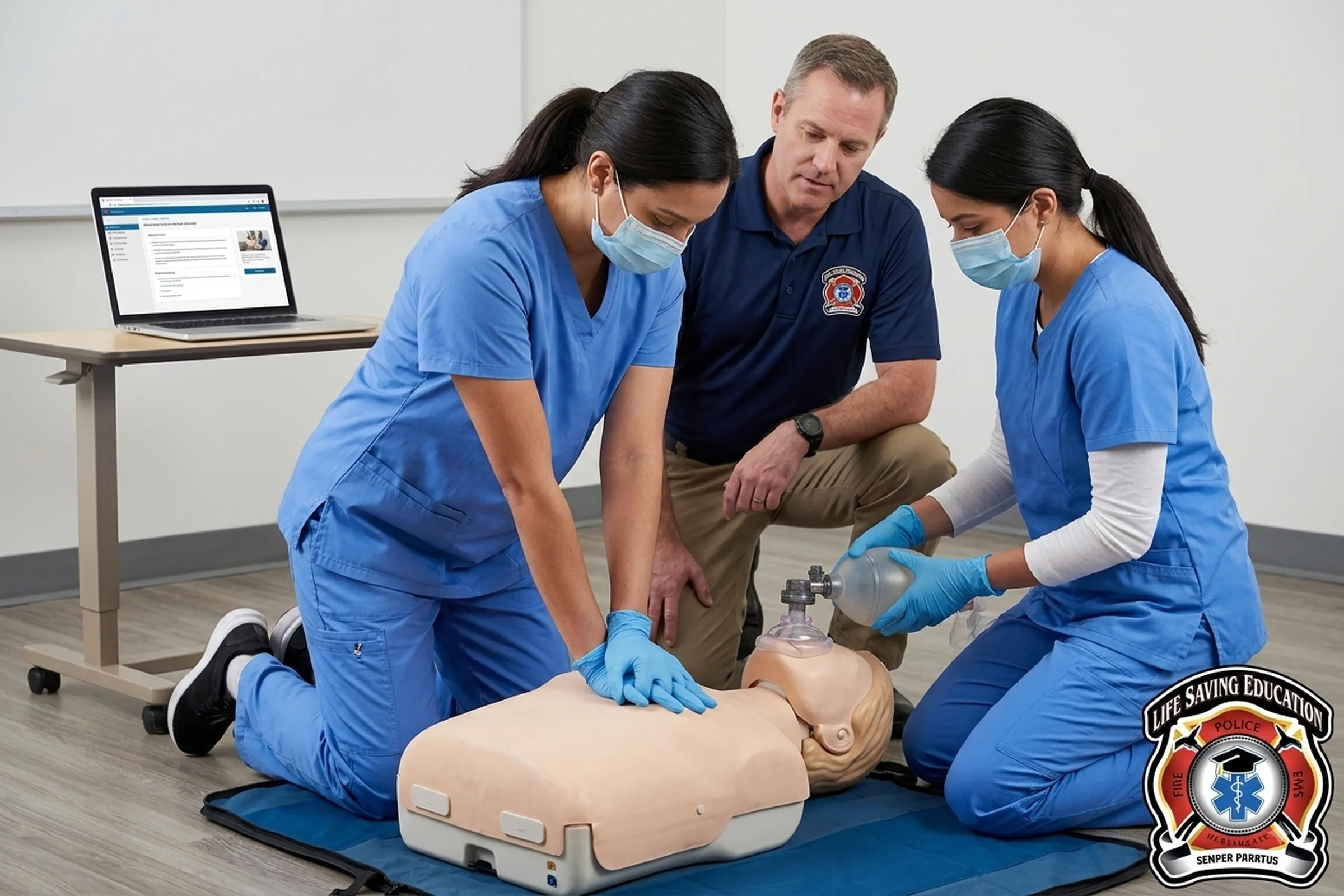
Classroom BLS vs. HeartCode BLS
Some learners prefer a traditional instructor-led course. Others complete the cognitive portion through HeartCode and attend an in-person hands-on skills session. Both pathways still require the student to meet the applicable AHA course-completion requirements. An online module by itself should not be assumed to replace required hands-on BLS skills testing.
For blended students, confirm that you are purchasing or completing the correct AHA online component and that the skills session you schedule matches that course.
BLS Course Completion Card
Students who successfully complete the applicable AHA BLS requirements receive a BLS Provider course completion eCard that is valid for two years. Life Saving Education does not describe students as “AHA certified.” The course completion card documents successful completion of the applicable AHA course.
Prepare Before Your BLS Class
Want to arrive ready? Read How to Prepare for Your BLS Provider Class. Before class, verify your course type, complete any required precourse or online work, confirm the name and email you want associated with your completion record, and wear clothing that allows you to kneel and perform hands-on CPR skills.
BLS Learning Center
Use the Life Saving Education BLS Learning Center to prepare for class, compare course formats, and strengthen the hands-on skills that matter during Basic Life Support training.
- How to Prepare for Your BLS Provider Class: what to review, bring, and expect before hands-on training.
- Browse BLS Education: explore current and upcoming BLS preparation, skills-testing, CPR quality, and team-performance resources.
Onsite BLS Training for Healthcare Teams
Hospitals, clinics, dental practices, EMS organizations, schools, and other employers can request private or onsite BLS training. Group scheduling can reduce travel and make it easier to train multiple employees, shifts, or departments.
Visit Onsite Group Training for planning information, or contact Life Saving Education to request a BLS class or discuss group scheduling. Availability varies by course, location, instructor staffing, equipment requirements, and class size.
BLS Guides and Resources
Practical articles from our instructors to help you prepare for class and respond with confidence.
- CPR and AED: How to Go From Bystander to Lifesaver
- Choking to Cardiac Arrest: What Happens When an Airway Emergency Becomes a Resuscitation
- The Patient Is Already in Cardiac Arrest. Does Naloxone Still Matter?
- Do We Need to Squeeze the Bag? Continuous-Flow Oxygen During Cardiac Arrest
- Who Decides When to Stop? Pediatric Cardiac Arrest and the EMS Agency Effect
- Should Your Workplace Keep Naloxone Next to the AED? OSHA’s New 2026 Guidance Explained
- When Online Safety Training Is Not Enough: What Employers Must Know About OSHA, NASP, and AHA Skills Training
- Moving up to ACLS? Start with our ACLS certification guide
Frequently Asked Questions About BLS
Is BLS the same as CPR?
BLS includes CPR, but it is a healthcare-professional course with additional emphasis on ventilations, AED use, team response, and professional-rescuer skills.
Is HeartCode BLS completely online?
HeartCode is a blended-learning pathway. The online portion is followed by the required hands-on skills component needed for course completion.
How long is the AHA BLS card valid?
The AHA BLS Provider course completion card is valid for two years after successful completion.
Can LSE train an entire department or healthcare team?
Yes. Private and onsite group training may be available depending on course requirements, location, equipment, instructor availability, and class size.
What if I do not know which BLS format my employer accepts?
Ask the employer or school for the requirement in writing and send it to LSE before registering. The organization imposing the requirement makes the final acceptance decision.
How much does BLS cost at Life Saving Education?
BLS Provider is $79 and the HeartCode BLS skills session is $59 per student. The AHA HeartCode online portion is purchased separately. Contact us for onsite group pricing.
Find Your BLS Class
Review the AHA BLS Provider course, choose a HeartCode BLS skills session, check the class schedule, or contact Life Saving Education for help selecting the correct option.
Training You Can Count On. When Seconds Count.
Ready to Schedule BLS?
Pick your course to register, or bring a live BLS class to your team. Questions? Call 617-840-0113.
The American Heart Association strongly promotes knowledge and proficiency in BLS, ACLS, and PALS and has developed instructional materials for this purpose. Use of these materials in an educational course does not represent course sponsorship by the American Heart Association.