Prepared by the LSE Editorial Team. Reviewed by Joseph Andrade, Jr., RN, NRP.
Joseph works across emergency response, healthcare, and workplace safety and develops practical training for civilians, employers, and first responders.
Ask how often DOT hazmat training is required and most people who know the rule will answer, "Every three years."
That answer is correct.
It is also incomplete.
DOT hazmat training frequency includes a three-year recurrent-training cycle, but the Hazardous Materials Regulations also address new hazmat employees, employees who change job functions, security-plan changes, and employer recordkeeping.
A calendar reminder every three years is useful. A real compliance system follows the employee’s functions.
⏱️ DOT Hazmat Training Frequency: The Core 3-Year Rule
49 CFR 172.704 requires hazmat employees to receive the required recurrent training at least once every three years.
The recurrent program must cover the applicable training components, not merely administer a test.
PHMSA’s current guidance emphasizes that an employee cannot simply pass an examination and have the recurrent-training requirement waived.
The training program generally includes:
- general awareness and familiarization
- function-specific training
- safety training
- security-awareness training
- in-depth security training when a security plan is required
- modal-specific requirements applicable to the employee’s work
🔗 Related: ELDT hazmat endorsement training: what CDL drivers need before the H knowledge test
🆕 New Hazmat Employees: The 90-Day Rule
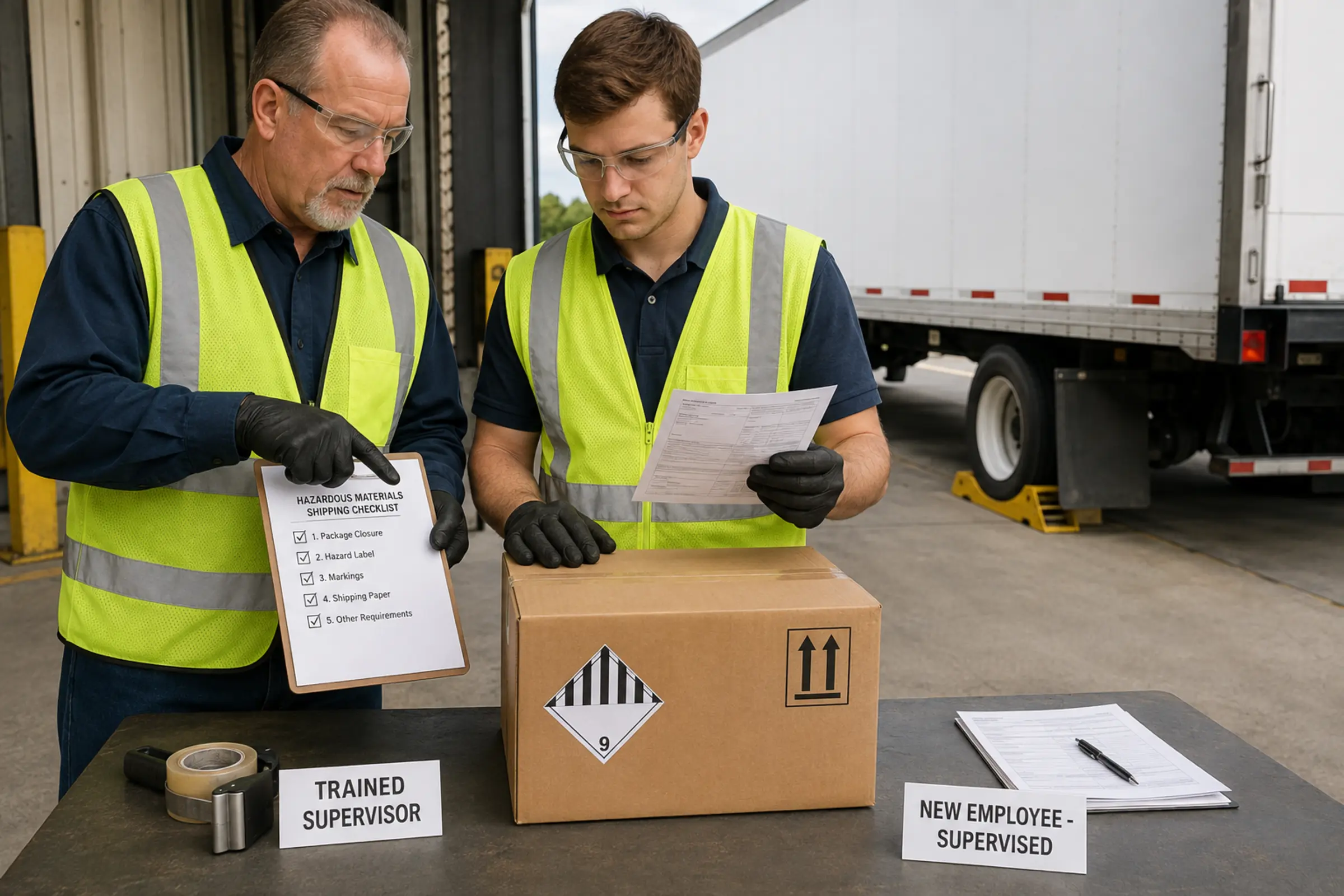
A new hazmat employee can perform covered functions before completing all required initial training only if two conditions are met:
- the employee works under the direct supervision of a properly trained and knowledgeable hazmat employee, and
- the required training is completed within 90 days after employment.
The same rule applies when a hazmat employee changes job functions.
This is where employers get into trouble with experienced workers.
A person may have years of hazmat experience but move into a new function they have never performed, such as preparing shipping papers, selecting packaging, or accepting dangerous goods for air transportation.
Experience does not automatically equal function-specific training for the new role.
🔁 A Job Change Can Reset the Training Question
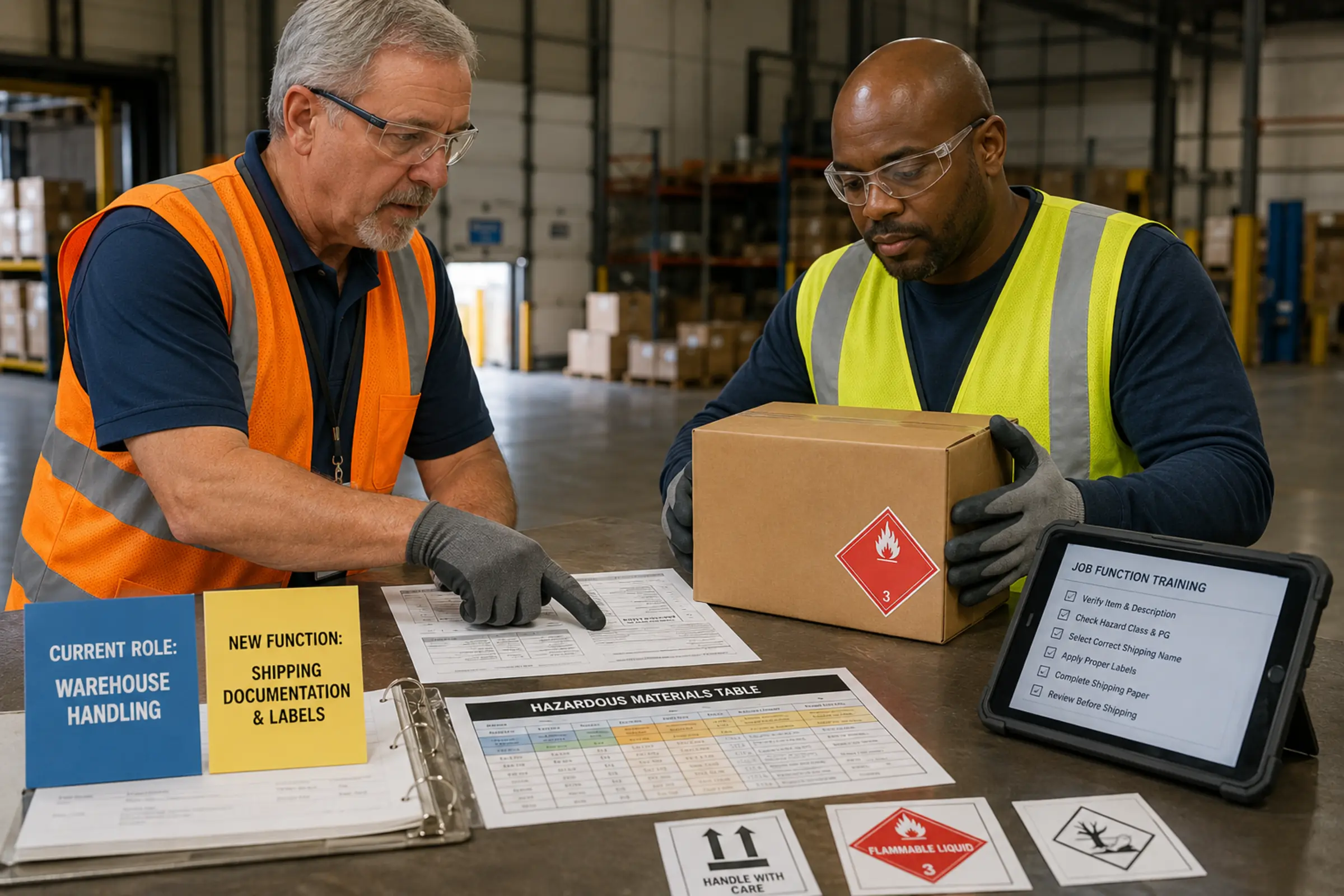
Hazmat-employee status depends on what the employee actually does.
Covered functions can include:
- classifying hazardous materials
- selecting or filling packaging
- closing packages
- marking or labeling packages
- preparing or reviewing shipping papers
- providing emergency-response information
- loading or unloading hazmat
- operating a vehicle used to transport hazmat
- inspecting or maintaining certain packaging
When duties change, compare the new function with the employee’s current training record.
If the existing training does not cover the function, update it.
🔐 Security-Plan Changes Can Trigger Training Before Three Years
Employees who require in-depth security training must receive that training at least once every three years.
But 49 CFR 172.704 also says that if the applicable security plan is revised during the three-year cycle, covered employees must receive training on the revised plan within 90 days of implementation.
That is a good example of why the three-year date is a floor, not a complete schedule.
✈️ Air Transportation Has a Different Recurrent Cycle
The HMR three-year rule is not the only training clock in hazardous-material transportation.
For employees performing dangerous-goods functions in air transportation, FAA and international requirements can impose more frequent recurrent training, commonly a 24-month cycle for applicable functions.
Employers using air transportation should verify the current modal and international requirements that apply to their operation.
A three-year corporate calendar may therefore be too slow for some employees.
The same concept applies across modes: function-specific and modal-specific rules matter.
📚 Previous Training Can Count, But the Employer Still Owns Compliance
49 CFR 172.704 allows relevant training from a previous employer or another source to be used when it satisfies the applicable requirement and the current training record is obtained.
That can prevent unnecessary duplication.
But the current employer remains responsible for compliance.
The employer should verify:
- what content was covered
- when it was completed
- which job functions it addressed
- whether modal-specific content matches the new operation
- whether the current employer’s procedures and security plan need additional instruction
A wallet card with "HazMat trained" on it is not enough information.
🧾 What Must Be in the Training Record?

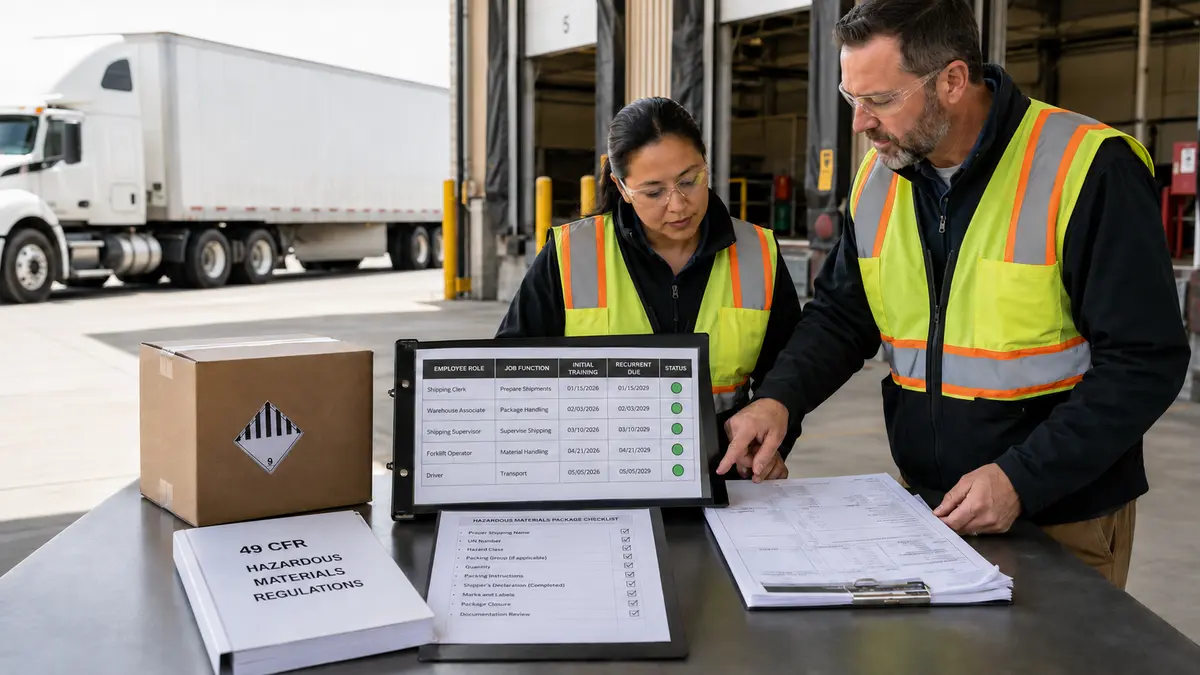
PHMSA requires the hazmat employer to create and retain a current training record for each hazmat employee.
The record must include:
- employee name
- most recent training completion date
- description, copy, or location of training materials
- name and address of the person providing training
- certification that the employee was trained and tested as required
The employer keeps the current record, inclusive of the preceding three years, for as long as the person is employed as a hazmat employee and for 90 days thereafter.
That record is often what turns "we train everyone" into something an inspector can actually verify.
🧠 Build a Trigger-Based Training System
Trigger 1: New hire
Identify whether the employee performs hazmat functions. Train promptly, using direct supervision if functions are performed during the allowed initial period.
Trigger 2: Job-function change
Compare new duties with current function-specific training.
Trigger 3: Three-year recurrent date
Complete the required recurrent training before the interval exceeds three years.
Trigger 4: Security-plan revision
Train affected employees on changes within the required 90-day window.
Trigger 5: Regulatory or procedure change
Evaluate whether the change affects the employee’s function and requires additional training.
Trigger 6: New transportation mode
Add applicable modal-specific requirements.
🔗 Related: DOT hazmat vs hazardous waste training: same material, different rules
📆 A Better Training Matrix
| Employee | Hazmat functions | Last training | Next 3-year due | Other trigger |
|---|---|---|---|---|
| Shipping specialist | classify, package, mark, ship papers | date | date | new product class |
| Dock worker | load/unload | date | date | procedure revision |
| Driver | transport, placarding check | date | date | route/security update |
| Air shipping employee | accept/prepare air DG | date | mode-specific | 24-month air cycle |
The point is not the spreadsheet itself.
It is seeing training as a live qualification system.
🚩 Common DOT Hazmat Training Timing Mistakes
- starting the three-year clock from the wrong date
- assuming a CDL hazmat endorsement replaces employer training
- allowing unsupervised work before initial training is complete
- missing training after a job-function change
- ignoring security-plan revisions
- using a previous employer’s certificate without obtaining a usable training record
- treating general-awareness training as function-specific training
- forgetting shorter modal cycles
- failing to retain records after the employee leaves the hazmat role
✅ Key Takeaways
- Federal DOT hazmat recurrent training is required at least once every three years.
- New hazmat employees and employees changing functions must complete required training within 90 days and may work before completion only under direct supervision by a properly trained and knowledgeable hazmat employee.
- Security-plan revisions can require in-depth security training within 90 days of implementation.
- Previous training can sometimes count, but the current employer remains responsible for compliance and records.
- Some modes, especially air transportation, can impose shorter recurrent cycles than the HMR three-year baseline.
❓ Frequently Asked Questions
Is DOT hazmat training every two years or three years?
The general PHMSA HMR recurrent-training rule is at least once every three years. Air dangerous-goods functions and other modal or international requirements can use shorter cycles, so employers must identify the transportation mode and job function.
Can a new hazmat employee work before completing training?
Yes, within the limits of 49 CFR 172.704. The employee must work under direct supervision of a properly trained and knowledgeable hazmat employee and complete the required training within 90 days of employment or a function change.
Does changing jobs require new DOT hazmat training?
It can. If the new job adds hazmat functions not covered by the employee’s current training, function-specific training must be completed within the regulatory timeframe.
Can I use training from a previous employer?
Relevant prior training may be used if it satisfies the applicable requirements and a current training record is obtained. The new employer still remains responsible for compliance.
How long must DOT hazmat training records be kept?
The current training record, inclusive of the preceding three years, must be retained while the employee works as a hazmat employee and for 90 days afterward.
Training Excellence, Real-World Readiness.
🎯 Stop Tracking Only the Expiration Date
The best hazmat training program follows changes in the job, not just changes on the calendar.
Life Saving Education provides DOT HazMat and workplace-safety education built around the actual functions employees perform in transportation and shipping.
📚 Authoritative Sources
- eCFR, 49 CFR 172.704 Training Requirements
- eCFR, 49 CFR Part 172 Subpart H
- PHMSA, Hazardous Materials Training Requirements
- PHMSA, Training Requirements for Industry
- PHMSA, Hazmat Training Publications
⚖️ This article is provided by Life Saving Education for general educational purposes only. It is not medical, legal, or compliance advice, and it is not a substitute for hands-on training or professional guidance. Regulations and clinical guidelines change and vary by state, jurisdiction, job function, and operation. Verify current requirements for your situation. In an emergency, call 911.