Prepared by the LSE Editorial Team. Reviewed by Joseph Andrade, Jr., RN, NRP.
Joseph works across emergency response, healthcare, and workplace safety and develops practical training for civilians, employers, and first responders.
On September 24, 2026, the U.S. Consumer Product Safety Commission (CPSC) and Tyco Fire Products renewed a warning about recalled fire sprinklers that can fail to activate during a fire.
The affected Central Sprinkler units were manufactured from the mid-1970s through June 2001 and were originally recalled in 2001. CPSC says minerals, salts, and other contaminants in water can degrade rubber O-ring seals and contribute to sprinkler failure.
The renewed warning followed the July 13, 2025 fire at an assisted living facility in Fall River, Massachusetts, where ten residents died and dozens were injured. CPSC reported that dozens of recalled sprinkler heads had not been replaced despite having been identified during a prior fire-safety inspection.
| What to check | Why it matters |
|---|---|
| Manufacturer and model | Recall status depends on the specific sprinkler identification. |
| Installation and maintenance records | Records may show previously identified or replaced heads. |
| System condition | A qualified professional can assess the system and determine the proper corrective action. |
| Vulnerable occupants | Facilities with residents who need assistance may require especially careful interim planning. |
⚠️ Why Recalled Fire Sprinklers Still Matter
A sprinkler system is a life-safety system. The fact that a building has sprinkler heads in the ceiling does not establish that every installed component is appropriate, functional, and free from recall concerns.
The Central Sprinkler O-ring recall involved millions of sprinkler heads. The formal replacement program ended years ago, but CPSC’s 2026 warning makes the current concern clear: some affected units may still remain in service.
That is why owners should not treat an old recall as an old problem. If the product is still installed, the risk is current.
🔗 Related: Construction Sites Burn Differently: A Practical Fire-Prevention Plan for Contractors

📋 Start With an Inventory, Not a Guess
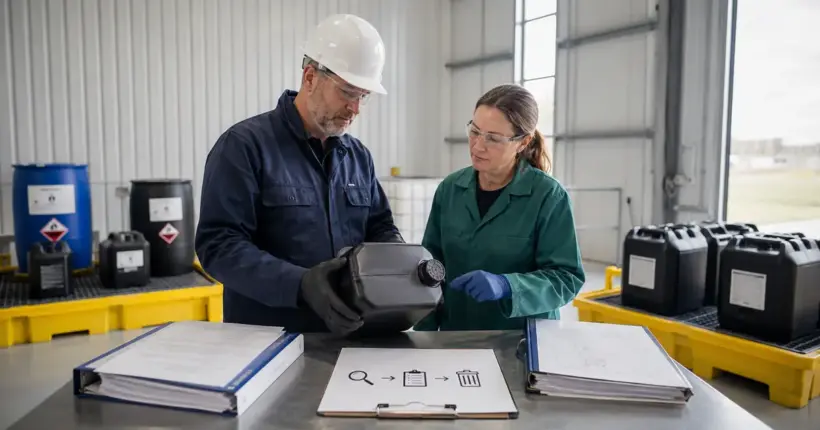
Building owners and facility managers need to know what is actually installed. That may require reviewing drawings, inspection reports, replacement records, prior deficiency reports, and physical identification of sprinkler heads.
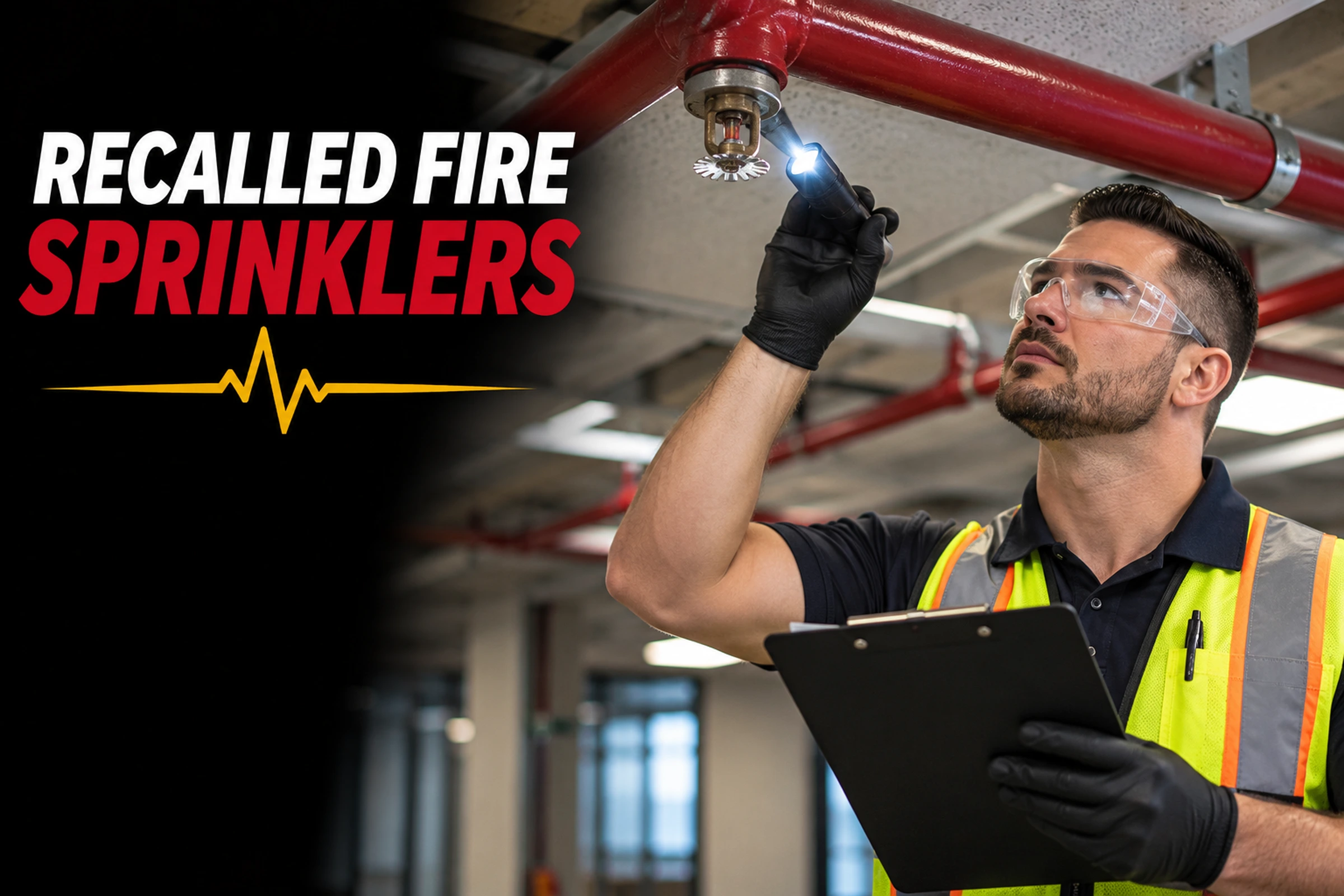
Do not rely on a casual visual scan by an unqualified person. Sprinkler identification can involve model markings, configuration, age, system type, and other details that should be evaluated by a qualified fire-protection professional.
- Locate prior sprinkler inspection, testing, and maintenance records.
- Identify the sprinkler manufacturer and model where possible.
- Compare installed products with the current CPSC recall information.
- Document affected locations rather than relying on memory.
- Use a qualified fire-protection professional to determine replacement needs.
A building with renovations, additions, or phased system work may contain more than one type or generation of sprinkler. Inventory by area can help prevent an assumption that one sample head represents the entire building.
✅ A Visual Inspection Has Limits
A sprinkler may look normal and still be affected by a recall. The problem described by CPSC involves O-ring degradation that can prevent activation. That is not something a building occupant can reliably rule out by looking up at the ceiling.
Visual inspection still matters for obvious concerns such as damage, paint, obstruction, corrosion, missing components, or changes around the sprinkler. But recall verification and system evaluation require the right records and expertise.

📋 Records Can Reveal What the Ceiling Does Not
CPSC specifically urges building owners and managers to review historical maintenance records to determine whether recalled sprinklers were previously identified and removed.
That means older inspection reports should not disappear into a file cabinet or vendor portal. If a report identified a recalled product, deferred correction, or recommended replacement, the current owner or facility team needs to know whether the work was completed.
For organizations with multiple buildings, create a central record showing the system, inspection provider, outstanding deficiencies, recall checks, corrective work, and completion documentation.
🔗 Related: Charge Safely, Prevent the Fire: Lithium-Ion Battery Safety at Home and Work
⚠️ Vulnerable Occupancies Need Stronger Planning
Assisted living, healthcare, schools, housing, and other occupancies may include people who cannot evacuate quickly without assistance. A fire-protection deficiency in these settings deserves prompt attention because evacuation can take longer and require more staff.
If a significant sprinkler deficiency is identified, building management should work with the qualified fire-protection contractor and the authority having jurisdiction on required corrective action and any interim measures. Do not invent an informal workaround.
Interim planning may involve notification, staffing, fire-watch requirements, restrictions, or other controls depending on the jurisdiction and the specific impairment. The responsible fire-code authority should determine what applies.
📚 Federal Recall and Local Fire Code Are Different Layers
CPSC manages consumer-product safety and recall information. Fire-sprinkler installation, inspection, testing, maintenance, impairment procedures, and enforcement also involve adopted fire and building codes, standards, licensing rules, and local authorities.
That means checking the federal recall database is necessary but may not be sufficient. Owners should coordinate with their fire-protection professional and applicable authority having jurisdiction.
For workplace and organizational training, LSE also provides Fire & EMS training programs and group training for organizations. Training does not replace licensed sprinkler inspection or code compliance.
🔗 Related: The Fire Is Out. The Hazard Isn’t: Why SCBA Must Stay On During EV Battery Handling and Removal
✅ Key Takeaways
- CPSC renewed its warning about recalled Central Sprinkler O-ring fire sprinklers in September 2026.
- Affected units were manufactured from the mid-1970s through June 2001.
- Building owners should inventory installed sprinklers and review historical maintenance records.
- Recall verification and replacement should involve a qualified fire-protection professional.
- A normal appearance does not prove a recalled sprinkler is safe.
- Facilities serving vulnerable occupants should take deficiencies especially seriously and coordinate with the applicable authority.
❓ Frequently Asked Questions
Which fire sprinklers were recalled?
CPSC’s renewed 2026 warning concerns previously recalled Central Sprinkler fire sprinkler heads that use O-ring seals. Owners should use the official recall information and a qualified professional to determine whether installed units are affected.
Can I tell if a sprinkler is recalled by looking at it?
Do not rely on appearance alone. Product identification, records, system type, and professional evaluation may be needed to confirm whether a sprinkler is affected.
What should a building owner do if recalled sprinklers are found?
CPSC urges replacement of recalled sprinklers using a qualified fire-protection professional. The owner should also follow applicable local requirements and coordinate impairment or interim measures with the appropriate authority.
Why review old sprinkler inspection records?
Historical records may show that recalled units were previously identified, whether replacement was recommended, and whether corrective work was documented as complete.
Training You Can Count On. When Seconds Count.
Build Fire-Safety Awareness Into Your Organization
LSE provides practical emergency-response and fire-safety education for organizations and response teams across the East Coast.