Prepared by the LSE Editorial Team. Reviewed by Joseph Andrade, Jr., RN, NRP.
Joseph works across emergency response, healthcare, and workplace safety and develops practical training for civilians, employers, and first responders.
Most workplace emergency plans are built around familiar events: cardiac arrest, severe bleeding, burns, falls, chemical exposure, and medical emergencies such as stroke or diabetic problems. Opioid overdose belongs on that list.
On September 24, 2026, OSHA released new workplace guidance on opioid-overdose rescue with reversal medications. The guidance is aimed at helping employers and workers recognize an opioid overdose and act rapidly. It does not turn every employee into a clinician. It frames opioid-overdose preparedness as a workplace emergency-response issue.
🧭 What OSHA Is Telling Employers
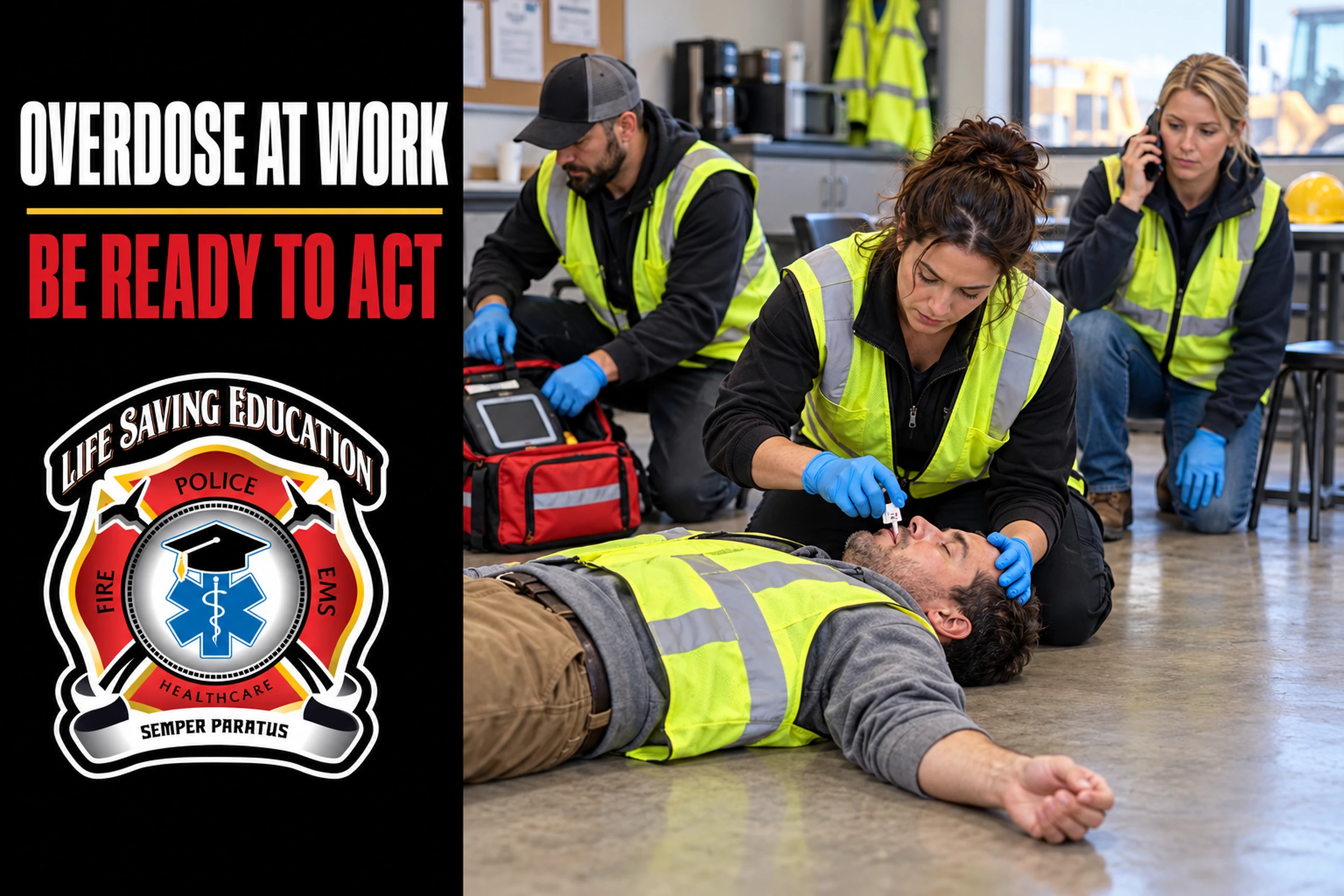
Workplaces should consider keeping FDA-approved opioid-overdose reversal medications available and accessible. Workers should know how to recognize an overdose, activate EMS, administer the available reversal medication according to training and product directions, and provide supportive care while help is responding.
Unresponsiveness and abnormal or absent breathing are emergency findings that demand action.
Call 911 and get the site’s emergency equipment moving immediately.
Provide appropriate resuscitative care and use reversal medication when available and within training.
Potential findings can include slow or stopped breathing, unresponsiveness, pinpoint pupils, and blue or discolored lips or skin. No single sign should become a reason to delay action when a person is unresponsive and not breathing normally.
❤️ Naloxone Does Not Replace CPR or EMS
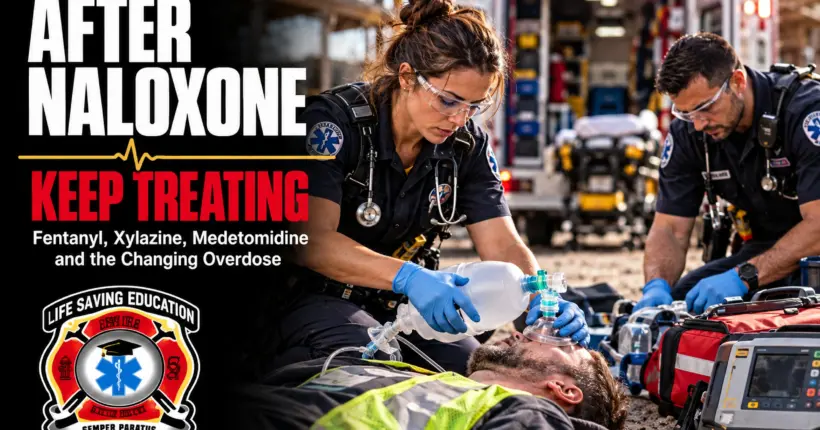
An overdose patient who is not breathing normally has an immediate oxygenation and ventilation problem. Reversal medication can be lifesaving, but it does not eliminate the need to assess breathing, call 911, and provide appropriate resuscitative care.
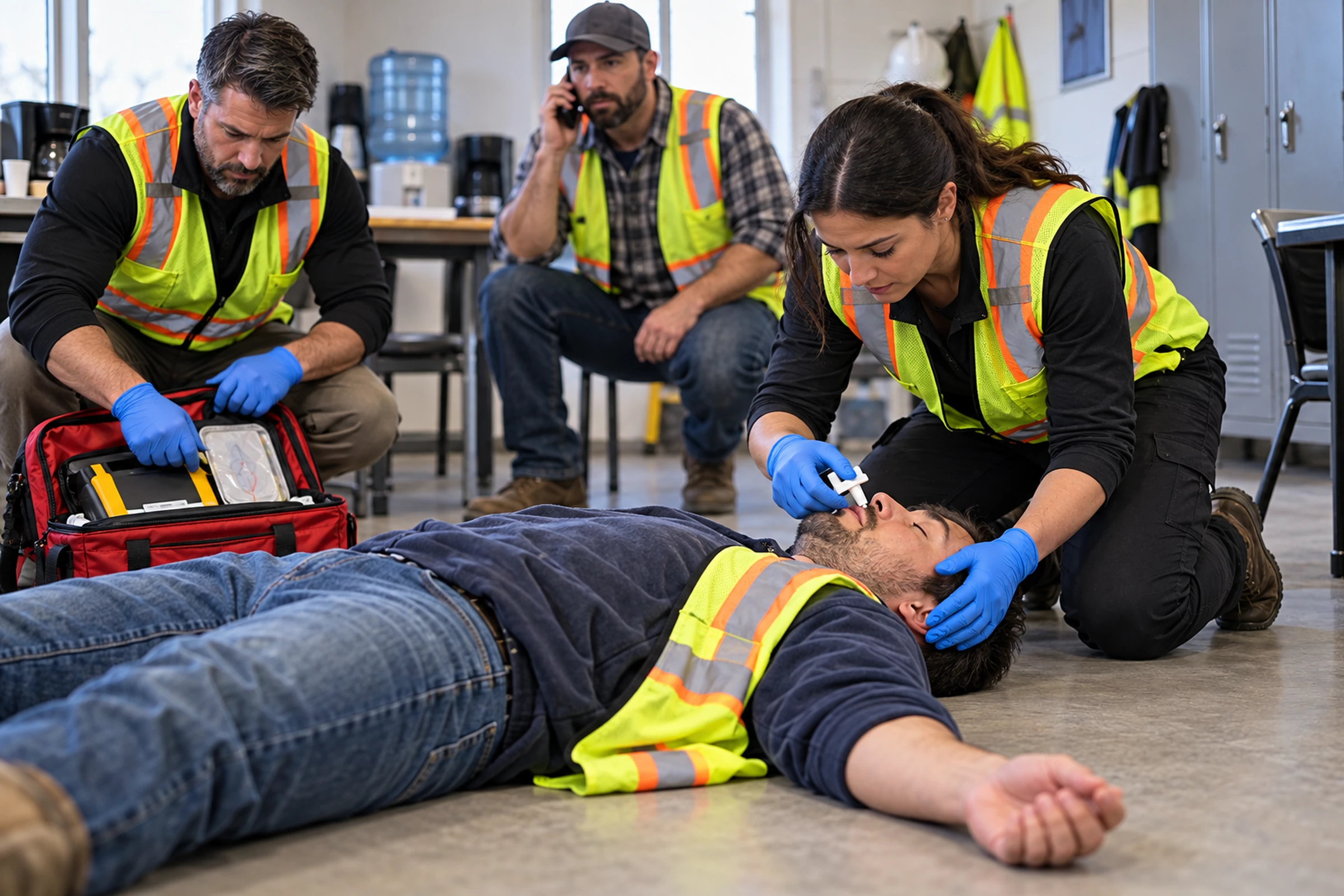
A practical response sequence
- Recognize unresponsiveness and abnormal breathing.
- Activate EMS and obtain the AED and overdose-response equipment.
- Begin appropriate resuscitative care.
- Administer the available opioid-reversal medication according to training and product directions.
- Continue reassessment and supportive care.
- Transfer care to EMS.
📍 Accessibility Matters
Emergency equipment that cannot be reached quickly is not truly emergency equipment. Employers should ask the same questions about overdose kits that they ask about AEDs.
- Can workers find the kit without searching?
- Is it available on every shift?
- Is it behind a locked door?
- Is it within its expiration date?
- Are replacement doses available after use?
- Can workers on distant floors, work areas, or jobsites reach it quickly?
For a large warehouse, campus, manufacturing plant, construction project, or multi-floor workplace, emergency planning should consider response time, facility layout, workforce distribution, and access.
🏢 Build Overdose Response Into the Emergency Action Plan
A good workplace program should identify who calls 911, who retrieves emergency equipment, who begins care, who meets EMS, and who restores the kit after use. These details turn a policy into an operational plan.
Assign emergency activation rather than assuming somebody else will do it.
Workers should know the location of the AED, first-aid supplies, and overdose kit.
Large sites lose time when responders cannot quickly find the patient.
🎓 What Employers Should Train
- Recognition of unresponsiveness and abnormal breathing
- Common overdose indicators
- Immediate 911 activation
- Location of overdose kits
- Administration of the specific product stocked by the employer
- CPR and ventilation skills appropriate to the responder’s training
- AED integration
- Recovery positioning when appropriate
- Ongoing reassessment
- Scene safety and standard precautions
- Post-event reporting and equipment replacement
Training should avoid stigmatizing assumptions about who can experience an overdose. A responder’s job is to recognize the emergency and provide care.
🧪 Use a Scenario That Tests the Whole System
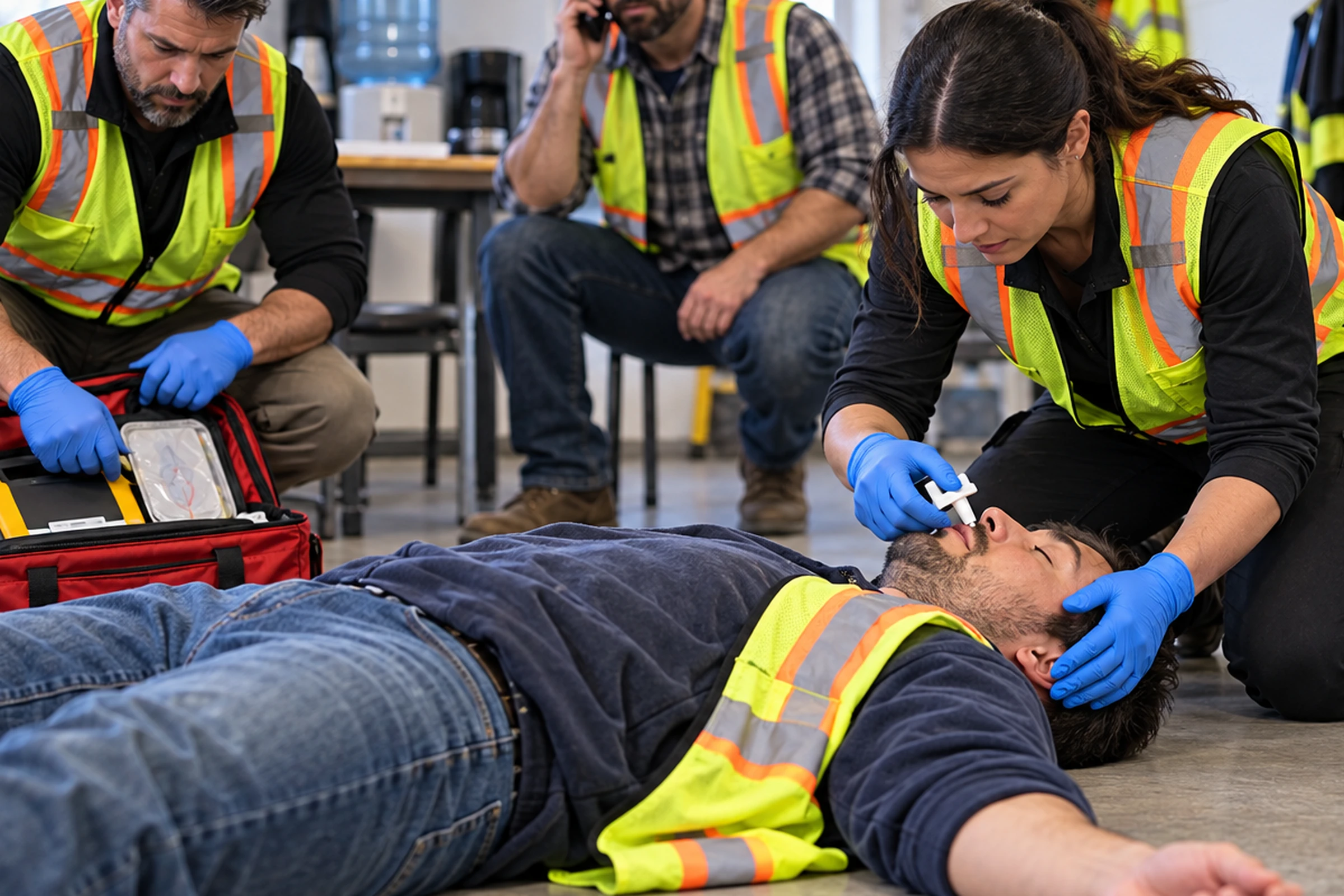
Place a training manikin in a realistic work area and tell the team only that a coworker has been found unresponsive. Do not announce “opioid overdose.”
That tests the system rather than memorization.
✅ Key Takeaways
- OSHA’s 2026 guidance treats opioid-overdose preparedness as a workplace emergency-response issue.
- Reversal medication does not replace CPR, ventilation when indicated, AED use, or EMS activation.
- Overdose kits must be visible, accessible, current, and integrated into the site emergency plan.
- Employer training should test recognition, equipment retrieval, resuscitation, medication use, and EMS handoff as one system.
- A responder’s role is to recognize and care for the emergency, not judge why the overdose occurred.
❓ Frequently Asked Questions
Does naloxone replace CPR?
No. An unresponsive person who is not breathing normally still needs the appropriate resuscitation response, including EMS activation and CPR or ventilation as indicated by the responder’s training.
Where should an overdose kit be kept?
It should be accessible enough to support a rapid emergency response. Employers should consider the same practical access issues used when placing AEDs and first-aid supplies.
Should workplace training use a scenario?
Yes. A scenario can reveal whether workers actually know who calls 911, where equipment is located, and how CPR, the AED, reversal medication, and EMS handoff fit together.
Is this only a healthcare issue?
No. OSHA’s guidance is directed at workplace preparedness, which makes the topic relevant to employers, safety teams, and trained workplace responders.
Build the Response Before the Emergency
Life Saving Education provides CPR, AED, first-aid, and onsite workforce training that can be adapted to your organization’s actual emergency-response plan.
📚 Sources and Further Reading
- OSHA: Workplace guidance for opioid emergencies, Sept. 24, 2026
- OSHA Medical and First Aid publications
- CDC Overdose Prevention
This article is for workplace education and does not replace EMS protocols, professional medical evaluation, or an employer-specific emergency-response plan.