By Joseph Andrade, Founder of Life Saving Education. Firefighter, paramedic, and registered nurse.
Hollywood got drowning wrong, and that mistake costs lives. On screen there is splashing and shouting. In reality, drowning is usually fast and almost completely silent, often over in under a minute. A person who is drowning rarely has the air or the strength to call for help. By the time it looks like an emergency, it often already is one.
This is one of those subjects where a few simple habits, learned before you need them, genuinely change outcomes. Here is what drowning really looks like, the protection that actually works, and what to do in the worst moment if you ever pull a child from the water.
What drowning really looks like
A drowning person is often vertical in the water, mouth at the surface, head tilted back, eyes glassy, with no energy left to wave or yell. There is no dramatic thrashing. It is quiet, and it is quick.
The numbers explain why this matters so much. Drowning is the leading cause of death for children ages 1 to 4 in the United States, and about 4,000 people drown unintentionally every year. For children ages 5 to 14, drowning is the second leading cause of injury death, behind only car crashes.
One habit can shortcut a tragedy: if a child is missing and there is any water nearby, check the water first. A pool, a hot tub, a pond, even a bathtub or a bucket. The seconds you save by looking there first are everything.
Layers beat luck
No single thing prevents every drowning. The families who stay safe do not rely on one precaution. They build layers. Each layer is imperfect on its own. Stacked together, they are far stronger than chance, and they forgive the normal human moments, the unlatched gate, the phone that buzzed, the friend who showed up unexpectedly.
The five layers worth building this summer
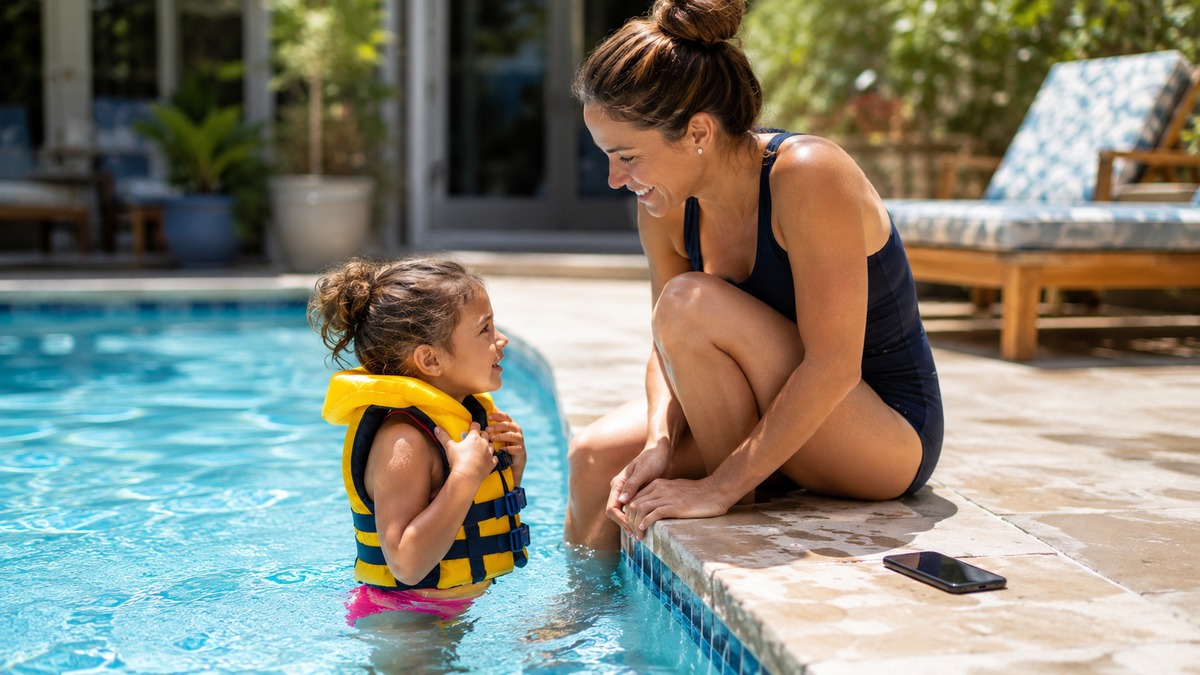
- Watch. Name a water watcher. One adult, phone away, eyes on the water, in shifts. Watching water is harder than it sounds, so rotate the role about every 20 minutes to keep eyes sharp. For children under 5 and weaker swimmers, stay within arm’s reach every minute they are in the water.
- Barrier. Use four-sided fencing around home pools, at least 4 feet high, with gates that self-latch above a child’s reach. Cover the pool when it is not in use, and put away the ladders on above-ground pools.
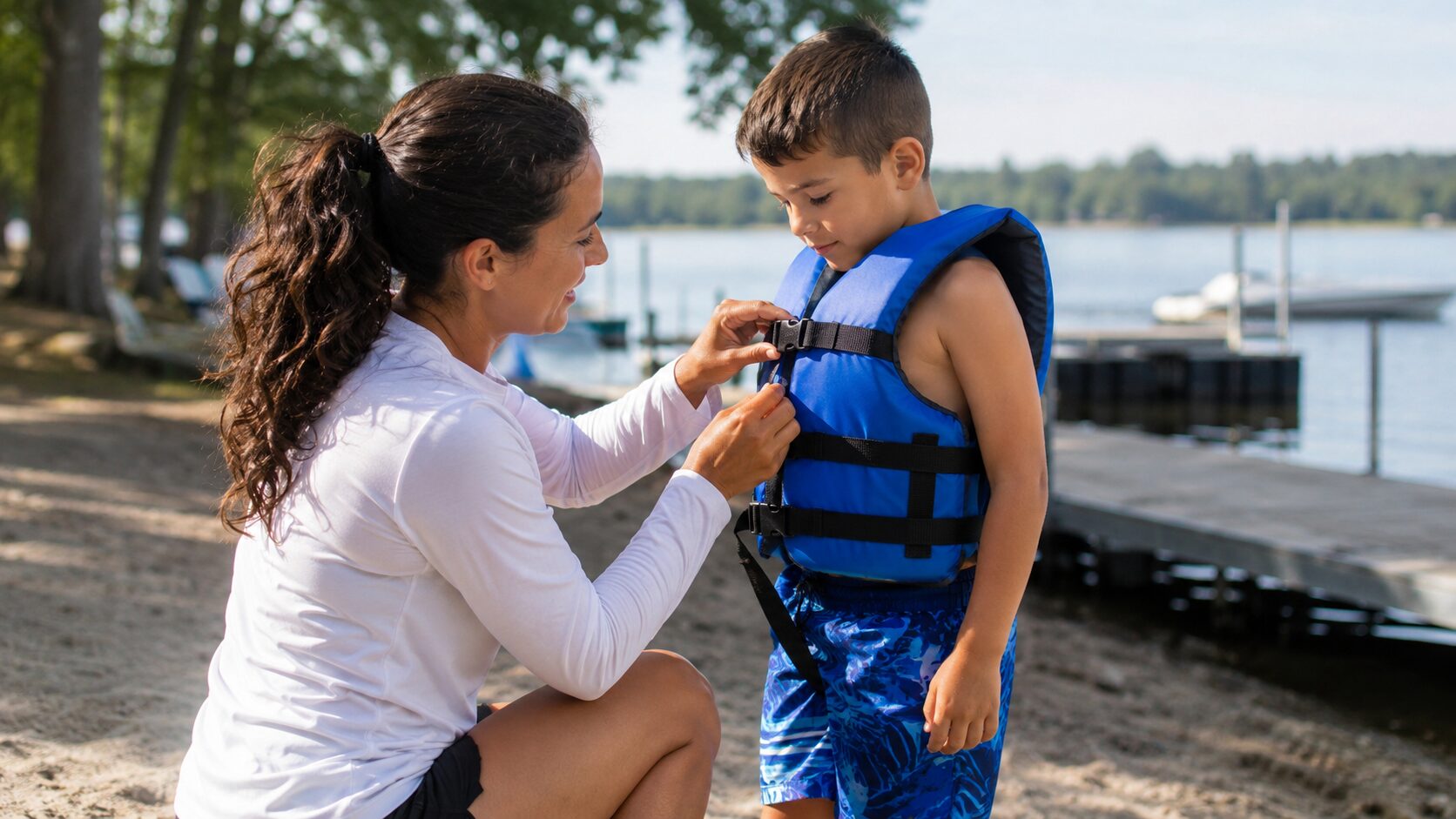
- Float. Use properly fitted Coast Guard-approved life jackets for weaker swimmers and on open water. Foam noodles, water wings, and inflatable floaties are toys, not safety devices, and should never be treated as a substitute for a life jacket or supervision.
- Swim. Get kids and adults into swim lessons. About 40 million US adults cannot swim, which means many parents cannot rescue their own child from the deep end.
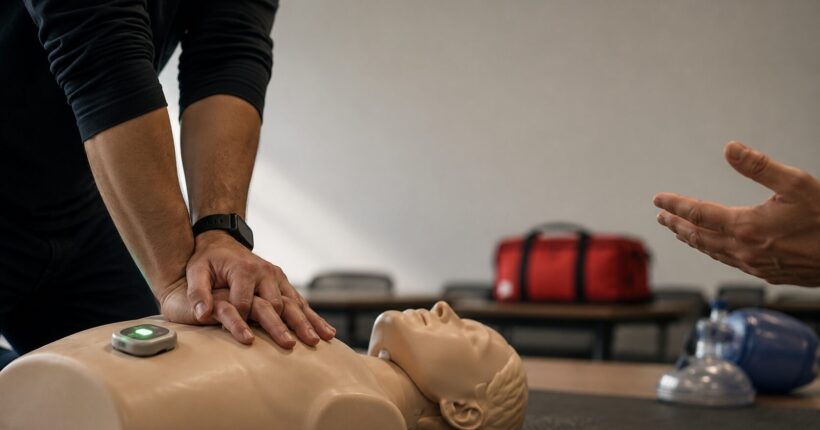
- Prepare. Learn CPR. Early bystander CPR improves survival after a drowning, and it is the layer that matters most when the others have failed.
Pulled from the water: the next seconds matter
If you pull a child from a pool or a lake and they are not breathing, what happens in the next two minutes shapes everything. Drowning is a respiratory event, not a cardiac one, which means children and infants need rescue breaths included, not compressions alone. Here is the sequence.
- Get them safe and call. Move the child to a flat, firm surface, on their back. Have someone call 911 right away. If you are alone, give about 2 minutes of CPR first, then call.
- Open the airway. Tilt the head back and lift the chin.
- Give rescue breaths. Give 2 breaths, each about 1 second, just enough to make the chest gently rise.
- Begin CPR. 30 chest compressions, then 2 breaths. For an infant, use 2 fingers in the center of the chest. For a small child, use one hand. Push about one-third the depth of the chest, and push fast.
- Do not stop until the child starts breathing, an AED takes over, or EMS arrives. Use an AED as soon as one is available.
Two honest reminders. Do not delay CPR to try to clear water from the lungs. Compressions and breaths are what move air and blood. And anyone pulled from the water should be evaluated by EMS even if they seem fine, because dangerous secondary effects can show up hours later.
Key Takeaways
- Drowning is usually silent and fast, often under a minute, with no splashing or shouting.
- It is the leading cause of death for children ages 1 to 4 and the second leading injury death for ages 5 to 14.
- If a child is missing near water, check the water first.
- Protection comes in layers: watch, barrier, float, swim, and prepare with CPR.
- Floaties and water wings are toys, not safety devices.
- After a water rescue, children need rescue breaths included, and everyone should be evaluated by EMS.
Frequently Asked Questions
Why is drowning so hard to notice?
A drowning person is usually vertical, with the mouth near the surface and too little air to shout or wave. It often looks quiet and can happen quickly, which is why active supervision matters.
Are floaties and water wings safe for children?
Foam noodles, water wings, and inflatable floaties are toys. Use a properly fitted U.S. Coast Guard-approved life jacket for weaker swimmers and never rely on toys instead of supervision.
What is a water watcher?
A water watcher is one adult assigned to watch the water continuously, with the phone put away and no competing task. Rotate the role regularly because attention fades.
Should I clear water from the lungs before CPR?
No. Do not delay CPR to try to remove water. Begin rescue breaths and compressions because they are what move air and blood.
Should I call EMS if the child seems fine after a rescue?
Yes. Anyone pulled from the water should be evaluated by EMS because serious complications may not be immediately obvious.
Learn the skill before pool season peaks
The layer that saves a life when the others fail is the one in your own hands. A CPR and first aid class takes a few hours and can change the outcome of the worst day of your life.
We teach CPR, AED, and first aid for families, workplaces, and teams. Review CPR and AED: From Bystander to Lifesaver and the child hot-car prevention guide, then browse our classes or contact us to book a session.
Training you can count on. When seconds count.
Sources
- CDC, Drowning Facts. https://www.cdc.gov/drowning/data-research/facts/index.html (Supports drowning as the leading cause of death for ages 1 to 4, the roughly 4,000 annual figure, and the ages 5 to 14 ranking.)
- CDC Vital Signs, Drowning. https://www.cdc.gov/vitalsigns/drowning/index.html (Supports the roughly 40 million US adults who cannot swim.)
- American Red Cross, Water Safety. https://www.redcross.org/get-help/how-to-prepare-for-emergencies/types-of-emergencies/water-safety.html (Supports the layers of protection, the water watcher, and CPR after a water rescue.)
This article is for general education and awareness. It is not medical advice and does not replace hands-on training or certification from a qualified instructor. In an emergency, call 911. Always follow current American Heart Association or American Red Cross guidance and the direction of local emergency services.