First Aid Training
Life Saving Education is owned and led by Joe Andrade.
Joe and the LSE instructor team are firefighters, paramedics, registered nurses, OSHA Outreach instructors, and safety officers, in various combinations. Joe is an active firefighter, paramedic, and registered nurse working in emergency and vascular access care, and an OSHA Outreach instructor and safety officer. The team trains civilians, workplaces, and first responders in the skills that save lives.
First aid training helps people recognize common medical, injury, and environmental emergencies, call for appropriate help, and provide immediate care until more advanced resources are available. Life Saving Education offers American Heart Association Heartsaver First Aid options for workplaces, community learners, caregivers, and organizations that need documented training.
The current AHA Heartsaver First Aid program reflects the 2025 American Heart Association science and education. The best course depends on whether you need first aid only, combined first aid and CPR/AED, pediatric content, or a different healthcare-professional course.
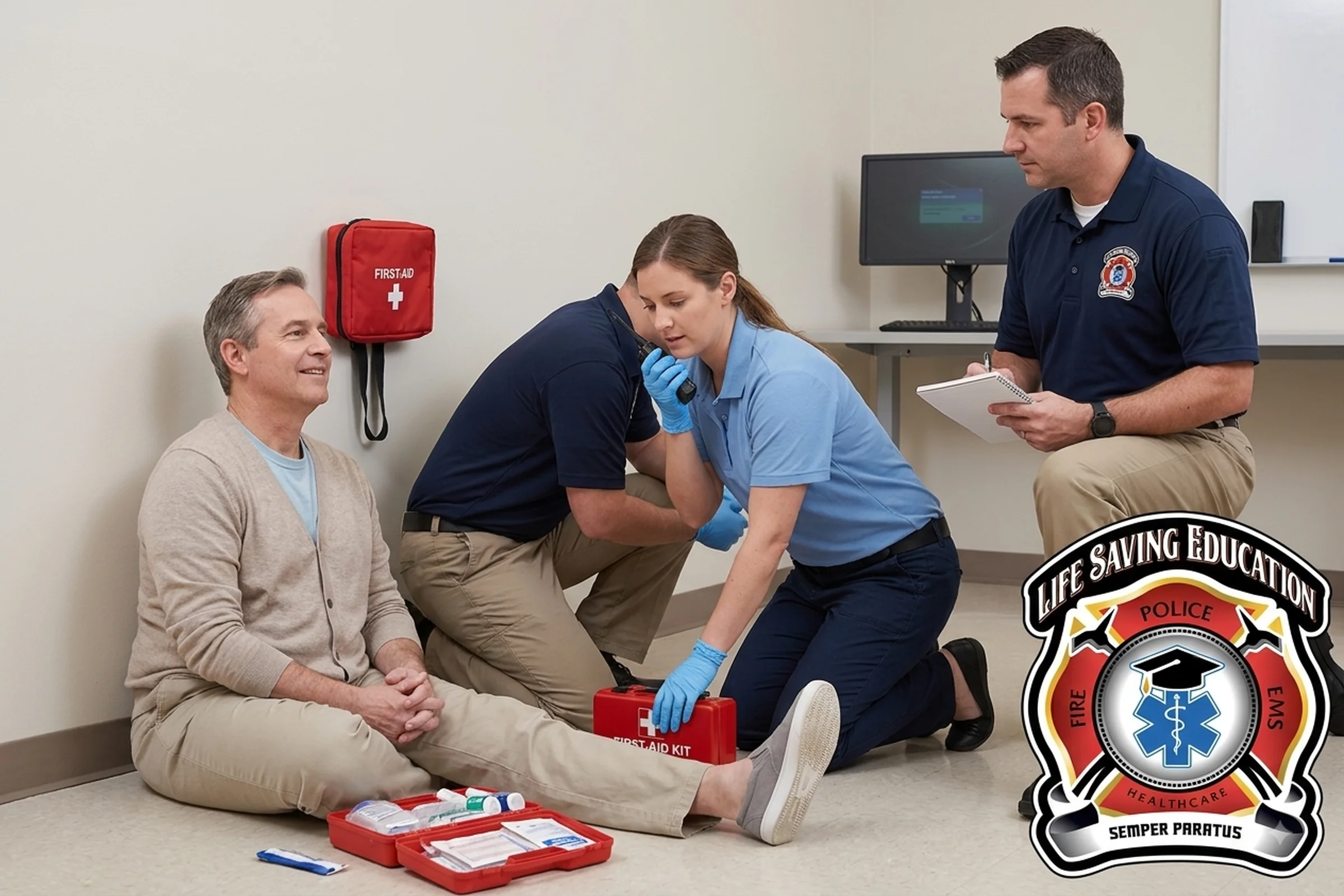
Choose the Right First Aid Course
AHA Heartsaver First Aid
The AHA Heartsaver First Aid course is designed for people with little or no medical training who need first-aid education for a job, licensing, regulatory, workplace, or personal-preparedness purpose. It focuses on recognizing emergencies, activating appropriate help, and providing initial care within the responder’s training.
AHA Heartsaver First Aid CPR AED
If your requirement also includes CPR and AED training, the AHA Heartsaver First Aid CPR AED course combines first aid with cardiac-arrest and choking-response skills. This is often the better choice when an employer wants a broader emergency-response program rather than first aid alone.
AHA Heartsaver Pediatric First Aid CPR AED
Childcare providers, schools, camps, youth programs, and others who work around children may need AHA Heartsaver Pediatric First Aid CPR AED. Because childcare and licensing requirements vary, verify the exact required course and completion document before registering.
What First Aid Training Covers
The exact content depends on the selected AHA course, but first-aid training commonly addresses:
- first-aid priorities and scene safety;
- recognition of medical emergencies;
- injury emergencies and bleeding control;
- environmental emergencies;
- illness and injury prevention concepts;
- choking response where included in the course;
- opioid-associated life-threatening emergencies where included; and
- hands-on practice and skills required for course completion.
Training is intended to help a responder act within the limits of the course and their role. It does not replace professional medical care, employer-specific emergency procedures, or required workplace programs.
Who Usually Needs First Aid Training?
Formal first-aid training is commonly requested for:
- workplace first-aid responders;
- construction, manufacturing, hospitality, retail, and office employees;
- teachers, school staff, coaches, and recreation personnel;
- childcare and youth-program staff;
- security personnel and community organizations;
- fitness professionals;
- caregivers and family members; and
- employees whose job, contract, licensing body, or employer requires first-aid training.
The employer, licensing body, school, contract administrator, or other organization imposing the requirement determines which course it will accept. Ask for the requirement in writing when the wording is unclear.
How to Choose Your First Aid Course
- Get the requirement in writing. Confirm whether you need first aid only, CPR/AED too, pediatric content, or a specific issuing organization.
- Match the course to the requirement. Choose Heartsaver First Aid, combined First Aid CPR AED, or the pediatric pathway based on what the employer, school, licensing body, or program will accept.
- Choose the delivery plan. Check the public schedule for individual enrollment or request onsite group training when multiple employees need the same course.
First Aid Only vs. First Aid CPR AED
Choose the first-aid-only course when that is the complete requirement. Choose First Aid CPR AED when you also need formal CPR and AED training. Taking separate courses can be appropriate in some settings, but a combined program may simplify scheduling for workplaces and organizations that need both skill sets.
If the requirement specifically says BLS, ACLS, PALS, or another healthcare-professional course, a Heartsaver first-aid program is not a substitute. Review the course catalog or contact LSE before registering.
Classroom and Blended First Aid Options
AHA Heartsaver First Aid is available in instructor-led classroom and blended-learning formats. In blended learning, the learner completes the assigned online portion and then satisfies the applicable hands-on skills requirement. The exact delivery method available through LSE depends on the course, scheduling, equipment, and Training Center requirements.
Do not assume that an online purchase alone produces the completion card required by an employer. Confirm the full training pathway, including any required hands-on component, before registration.
First Aid Course Completion Card
Students who successfully complete the applicable AHA Heartsaver First Aid requirements receive the corresponding AHA course completion card, which is valid for two years. An employer, regulator, licensing body, or project owner may require retraining on a different schedule or may impose additional site-specific training requirements.
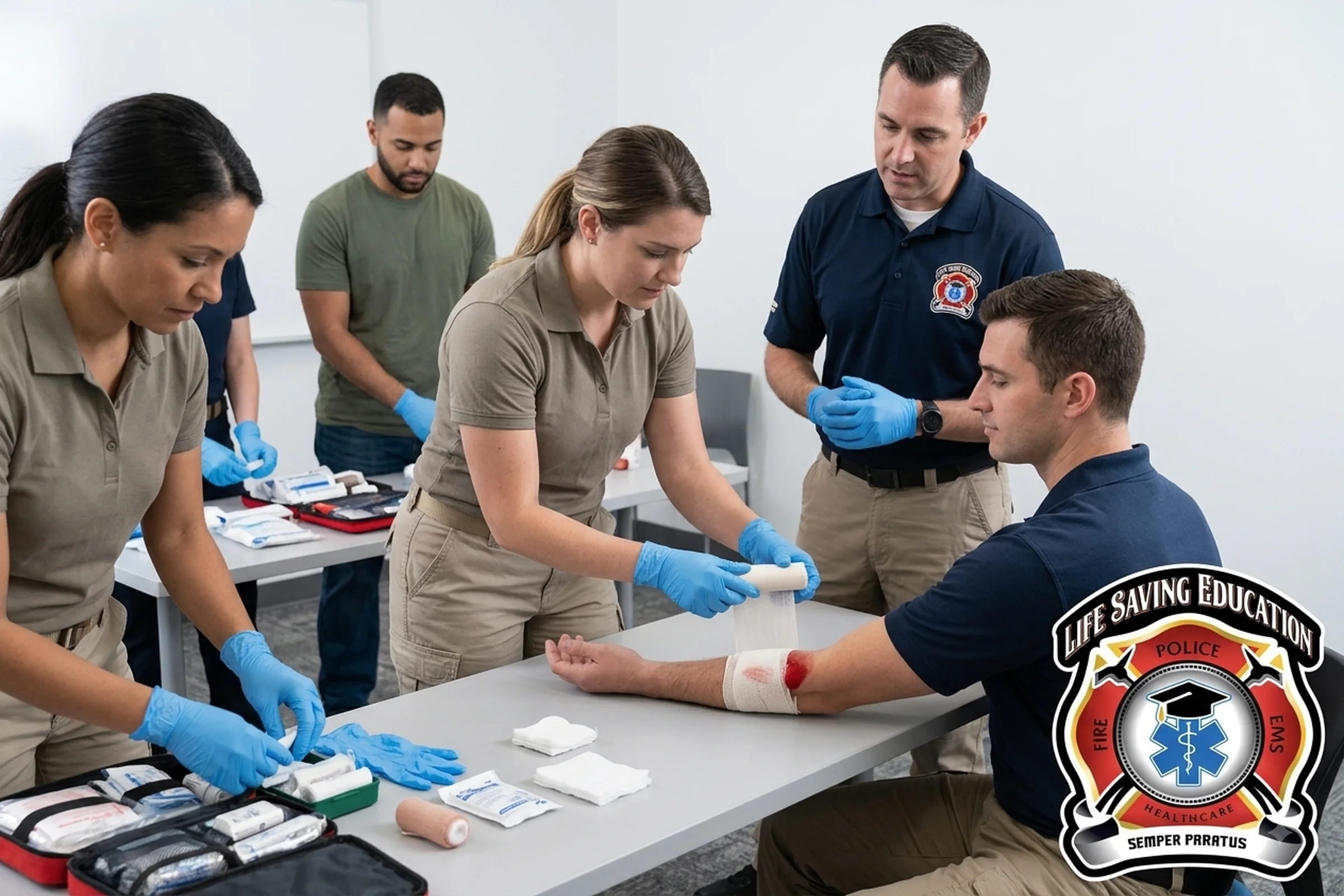
First Aid Training Is Part of a Larger Emergency Plan
A first-aid course is one part of workplace or organizational preparedness. Employers may also need emergency action plans, appropriate first-aid supplies, AED programs, bloodborne-pathogen controls, exposure-response procedures, communication systems, and other training based on their hazards and applicable standards.
LSE can help an organization identify which training courses fit its stated requirements, but the employer remains responsible for its own hazard assessment, policies, regulatory compliance, and site-specific instruction.
Onsite First Aid Training for Workplaces and Groups
Life Saving Education provides private and onsite first-aid training for workplaces, schools, community groups, public-safety organizations, and other employers. Group training can reduce travel and make it easier to train employees across departments or shifts.
Visit Onsite Group Training for planning information, or contact Life Saving Education to request a class or discuss group scheduling.
Frequently Asked Questions About First Aid Training
Do I need First Aid or First Aid CPR AED?
Choose the course that matches the requirement you were given. If you need both first aid and CPR/AED, the combined course is usually the more direct option.
How long is the AHA Heartsaver First Aid card valid?
The current AHA Heartsaver First Aid course-completion card is valid for two years after successful completion.
Can first aid be completed entirely online?
AHA offers blended-learning options, but learners should confirm the complete course pathway and any required hands-on skills component before registering.
Does a first-aid course make my workplace OSHA compliant?
No single course establishes overall workplace compliance. Employers remain responsible for the applicable OSHA standards, hazard-specific training, written programs, supplies, response arrangements, and other required measures.
Find Your First Aid Class
Review AHA Heartsaver First Aid, compare First Aid CPR AED, check the class schedule, or contact Life Saving Education for help choosing the correct course.