Prepared by the LSE Editorial Team. Reviewed by Joseph Andrade, Jr., RN, NRP.
Joseph works across emergency response, healthcare, and workplace safety and develops practical training for civilians, employers, and first responders.
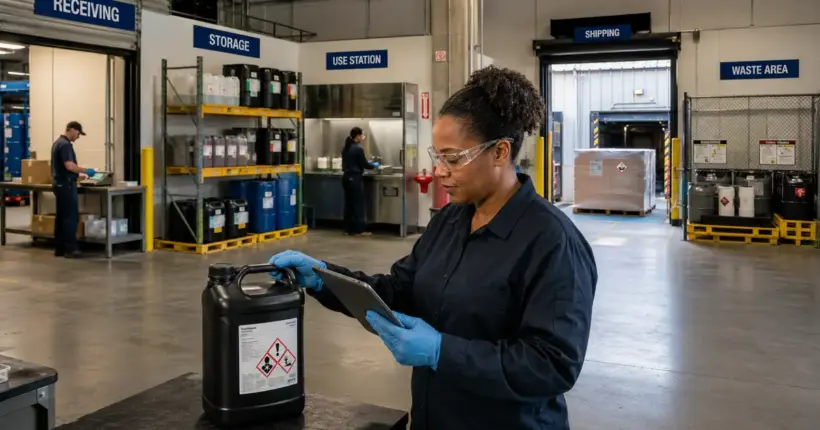
A container does not become hazardous waste because it looks dirty, smells strong, or has a scary name. Hazardous waste identification and disposal starts with something much more disciplined: knowing how the material was generated, what is in it, whether a federal or state rule excludes it, and whether it is listed or exhibits a hazardous characteristic.
Our team likes this topic because it exposes a common safety problem. People often jump straight to the disposal question before answering the identification question.
That reverses the process.
🧪 How Hazardous Waste Identification and Disposal Works
The Resource Conservation and Recovery Act, or RCRA, creates the federal framework for managing hazardous waste from generation through final treatment, storage, or disposal. EPA often describes this as a cradle-to-grave system.
For a generator, the first critical rule is 40 CFR 262.11. It requires a person who generates a solid waste to make an accurate determination of whether that waste is hazardous.
The word solid waste in RCRA is a regulatory term and is broader than an ordinary bag of solid trash. The classification process matters more than the physical appearance.
A useful decision sequence is:
- Determine whether the material is a solid waste under RCRA.
- Determine whether an exclusion applies.
- Determine whether the waste matches a hazardous-waste listing.
- Determine whether the waste exhibits a hazardous characteristic.
- Identify any additional exclusions, restrictions, or special management standards.
- Count the hazardous waste to determine generator category.
- Manage, transport, recycle, treat, or dispose of it under the rules that apply.
🔗 Related: Request customized hazardous-waste and HAZWOPER training or explore Life Saving Education HAZWOPER training.
📋 Listed Hazardous Waste: The F, K, P, and U Lists
EPA’s hazardous-waste rules include several lists of wastes that are hazardous because they meet specific listing descriptions.
F-list: wastes from non-specific sources
The F-list includes certain wastes from common industrial processes that can occur across many industries, such as some spent solvent wastes.
K-list: wastes from specific industries
The K-list covers certain wastes generated by specific industrial processes. Because the listing depends on the source, the process that produced the waste matters.
P-list and U-list: discarded commercial chemical products
The P and U lists address certain unused commercial chemical products that are discarded or intended to be discarded and meet the regulatory listing criteria.
A label or SDS can help you understand a product, but the hazardous-waste determination still has to evaluate the regulatory listing requirements and how the waste was generated.
🔥 The Four Hazardous Waste Characteristics
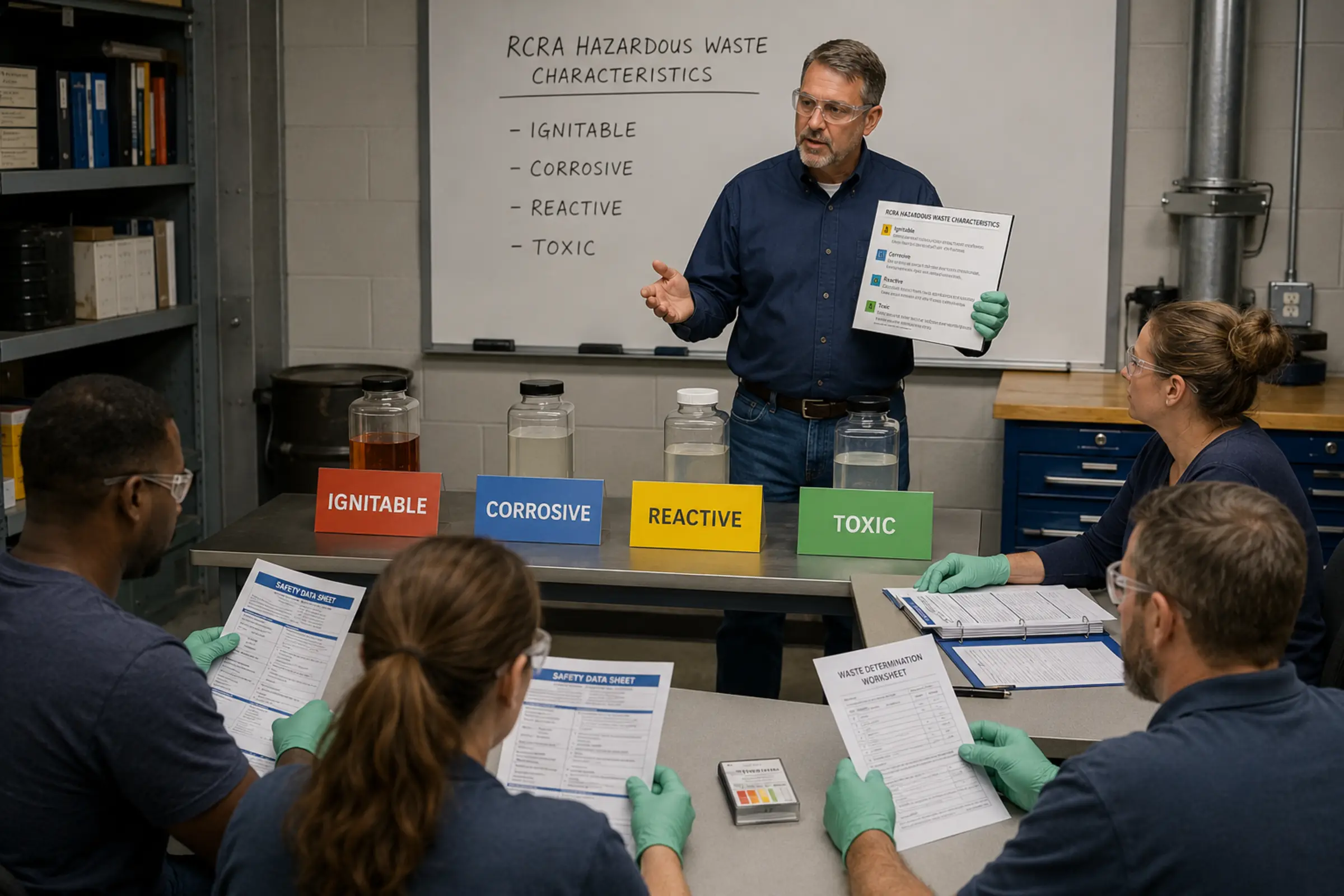
A waste that is not listed can still be hazardous if it exhibits one or more characteristics in 40 CFR Part 261, Subpart C.
A simple memory aid is I-C-R-T:
| Characteristic | General idea | Examples that may raise the question |
|---|---|---|
| Ignitability | Can readily catch fire under defined regulatory criteria | Certain solvents, fuels, paint-related wastes |
| Corrosivity | Strongly acidic or alkaline under regulatory criteria, or corrosive to steel | Some acids, caustic cleaners, process solutions |
| Reactivity | Can be unstable, react violently, or generate dangerous gases under defined conditions | Certain unstable or reactive chemical wastes |
| Toxicity | Contains regulated toxic constituents that can leach above regulatory levels | Some wastes containing lead, mercury, or specified organics |
The examples are clues, not automatic classifications.
EPA allows generators to use reliable knowledge of the waste and process where appropriate. When available knowledge is inadequate, regulatory testing may be required.
That distinction is important. Guessing is not a waste determination.
🧠 What Information Can Support a Waste Determination?
EPA’s current rule recognizes several forms of knowledge that can help characterize a waste, including:
- raw materials and chemical feedstocks
- process knowledge
- product and by-product information
- chemical or physical properties
- SDS information
- previous analytical results
- representative sampling and regulatory testing
The strongest waste profiles usually connect the documentation to the actual process.
For example, an SDS tells you about the product before use. It may not tell you everything about a spent mixture after that product has contacted metals, other chemicals, soil, process residue, or contamination.
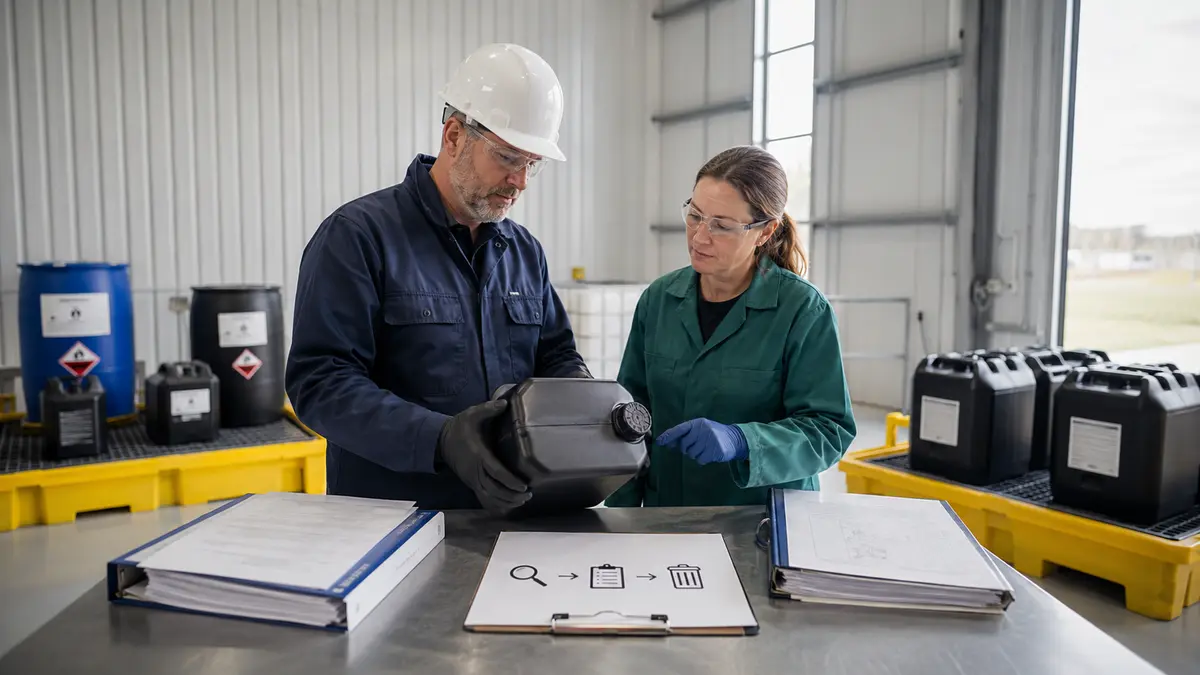
Fun audit exercise: follow one waste stream
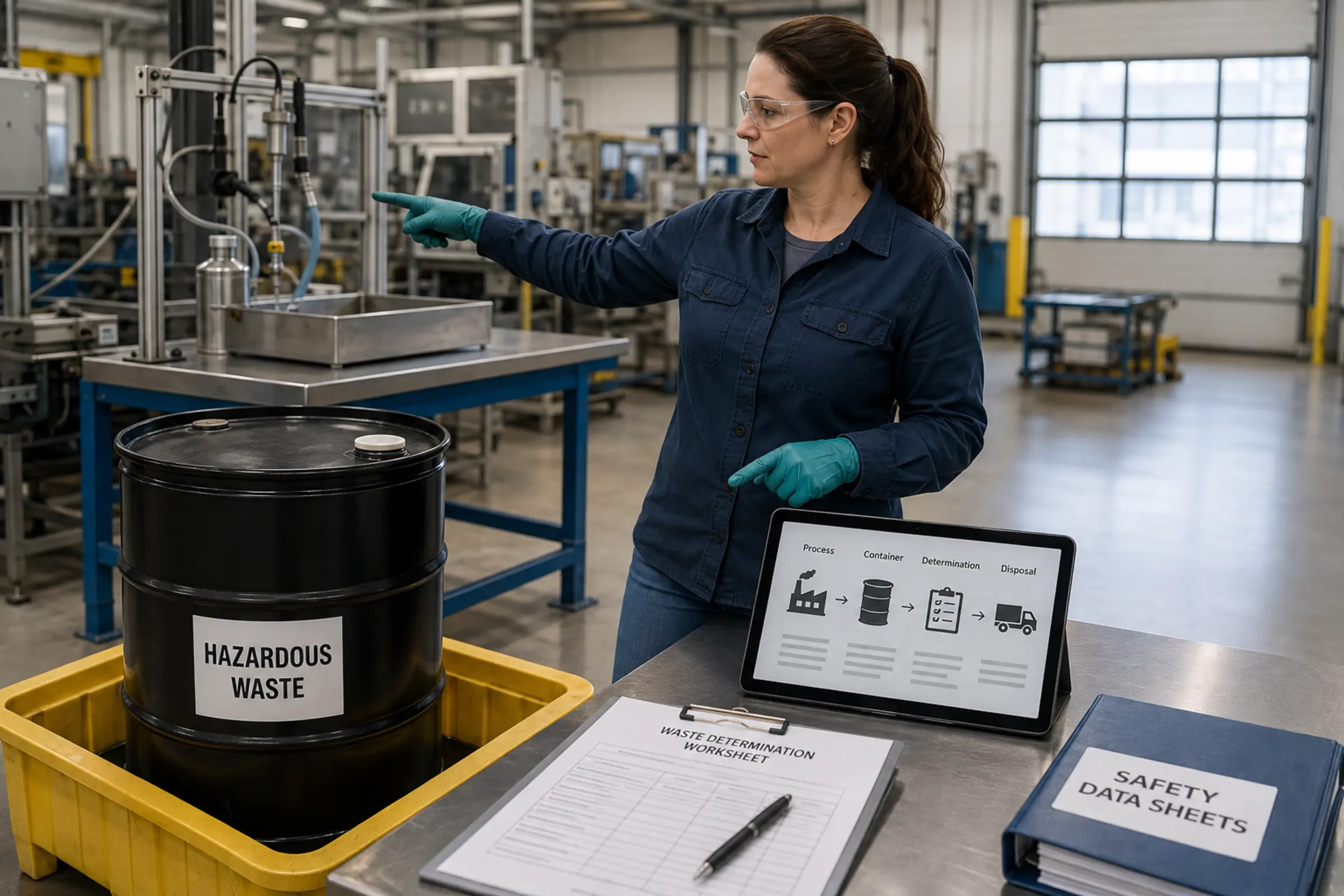
Pick one waste container and trace it backward:
Container → label → accumulation point → generating process → waste determination → generator count → shipment or recycling record
If that chain breaks, you have found a place worth reviewing.
🏭 Examples of Workplaces That May Generate Hazardous Waste
Hazardous waste is not limited to chemical manufacturing.
Potential generators include:
- manufacturing plants
- laboratories and universities
- vehicle and fleet maintenance shops
- painting and coating operations
- healthcare and pharmaceutical facilities
- utilities and public works
- printing and electronics operations
- remediation and cleanup projects
- construction and demolition projects encountering contaminated materials
The important phrase is may generate. Industry alone does not determine whether a specific waste is hazardous.
⚖️ Your Generator Category Changes the Rules
EPA divides hazardous-waste generators into federal categories based primarily on how much hazardous waste and acute hazardous waste they generate in a calendar month.
The categories are:
- Very Small Quantity Generator, or VSQG
- Small Quantity Generator, or SQG
- Large Quantity Generator, or LQG
Generator category can affect accumulation limits, time limits, training expectations, contingency planning, reporting, manifests, and other duties.
Your company can be physically small and still have significant regulatory duties. The category follows waste generation, not the number of employees or square footage of the building.
🔗 Related: Hazardous waste training requirements by industry, plus OSHA 10-Hour Training and OSHA 30-Hour Training.
🚫 Safe Disposal Starts With What Not to Do
When people hear "safe disposal," they sometimes want a single universal instruction.
There is not one.
For a business, the correct path depends on the waste classification, generator category, state program, quantity, accumulation method, recycling options, transporter requirements, and destination facility.
Some rules that are broadly useful:
- Do not place a questionable industrial chemical waste into ordinary trash just because the container is small.
- Do not pour chemical waste into a sink, storm drain, soil, or floor drain unless a specific legal discharge system and authorization actually applies.
- Do not mix waste streams simply to reduce volume or make disposal easier.
- Do not assume a product that was safe for normal use remains non-hazardous after the process changes it.
- Do not rely only on color, odor, or a product name to classify waste.
- Do not ship regulated hazardous waste until transportation and manifest duties have been evaluated.
Off-site hazardous waste shipments
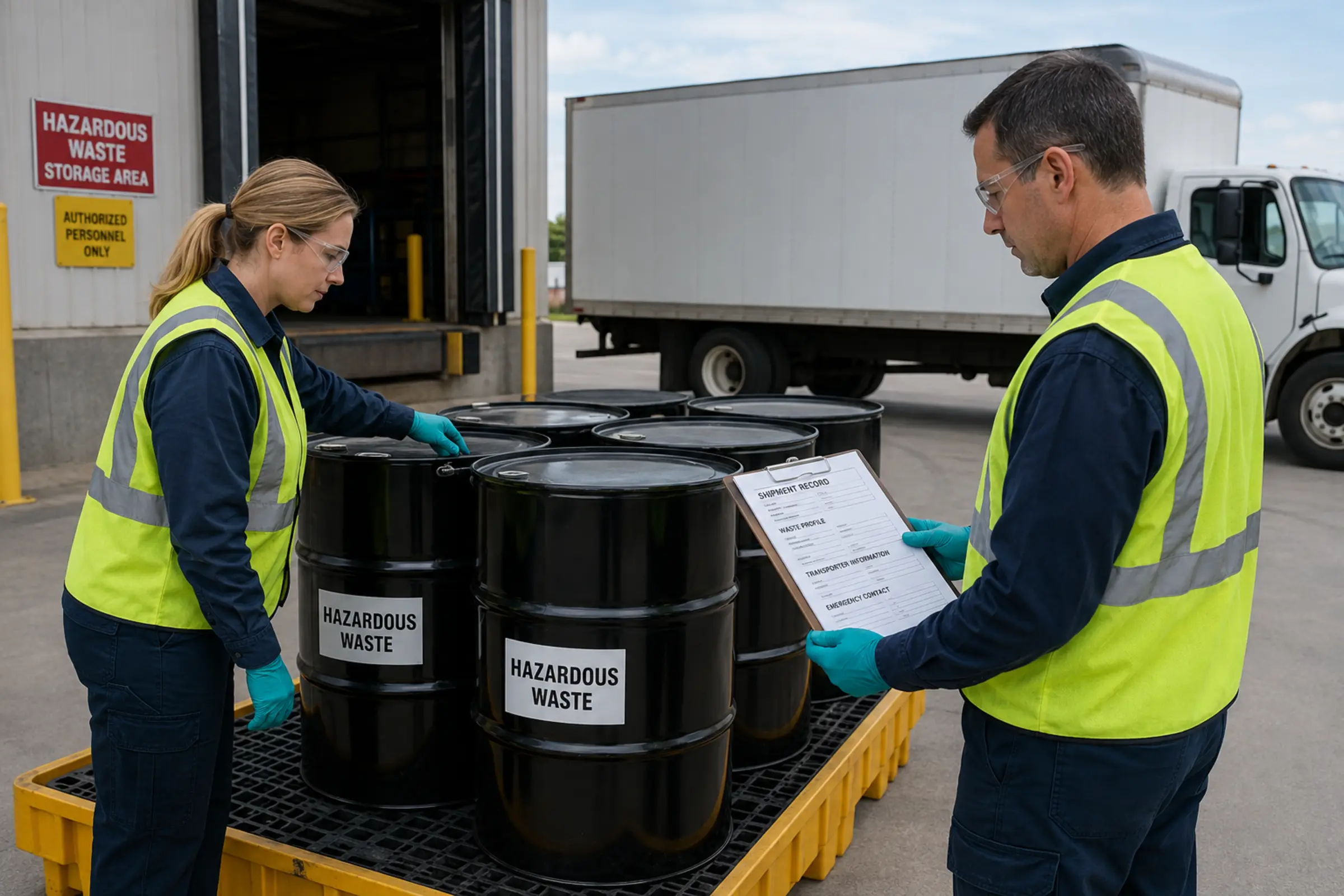
EPA’s hazardous-waste manifest system tracks covered hazardous waste shipments from generator to receiving facility. SQGs and LQGs generally use the Uniform Hazardous Waste Manifest when sending covered hazardous waste off site for treatment, storage, or disposal.
The receiving facility also matters. Hazardous waste may need to go to a permitted or otherwise authorized treatment, storage, disposal, recycling, or management facility depending on the waste and regulatory pathway.
♻️ Recycling Can Be Better, But It Is Still Regulated
RCRA encourages resource conservation, and many wastes can be recycled or reclaimed.
But "we recycle it" is not a regulatory exemption by itself.
Some recycled materials are excluded or subject to alternative standards. Others remain regulated during storage, transportation, or recycling.
Examples of special management systems can include:
- universal waste
- used oil
- certain batteries
- certain lamps
- some recyclable materials
The exact pathway needs to be verified before changing how the material is managed.
🏠 Household Hazardous Waste Is Different From Business Waste
EPA treats household hazardous waste differently from hazardous waste generated by businesses.
Common household products that may need special local collection include:
- paints
- cleaners
- oils
- batteries
- pesticides
For consumers, the safest practical approach is to use local household hazardous-waste or appropriate recycling programs and follow local instructions.
Lithium-ion batteries deserve special mention. EPA says used lithium-ion batteries and devices containing them should not go into household trash or curbside recycling bins because of fire risk. Terminals should be protected, such as with non-conductive tape or individual bags, and the batteries should go to a separate battery recycling or household hazardous-waste collection point.
For commercial generators, do not assume the household pathway applies.
🔗 Related: Lithium-ion battery safety at home and work
🧯 Where OSHA and HAZWOPER Enter the Picture
RCRA is primarily an environmental waste-management framework.
OSHA rules protect workers.
A workplace may need:
- Hazard Communication training for chemical hazards
- PPE and exposure controls
- Bloodborne Pathogens controls in relevant healthcare or cleanup work
- HAZWOPER training for specific hazardous-waste operations or uncontrolled-release response
The waste classification and the worker-protection plan should support each other.
A drum can be correctly manifested and still be handled unsafely. It can also be handled cautiously while being classified incorrectly.
Good programs get both sides right.
🛠️ A Practical Waste Determination Workflow
Step 1: Identify the generating process
Document where the waste comes from and what materials enter the process.
Step 2: Check exclusions
Do not assume RCRA regulation until exclusions have been evaluated.
Step 3: Check the hazardous-waste lists
Compare the waste and process with the applicable F, K, P, and U listing descriptions.
Step 4: Evaluate characteristics
Use reliable knowledge and, where necessary, representative testing for ignitability, corrosivity, reactivity, and toxicity.
Step 5: Document the determination
EPA requires records supporting hazardous-waste determinations for certain generators. Documentation also helps prove why a material was managed the way it was.
Step 6: Determine generator category
Count hazardous waste correctly and evaluate acute hazardous waste separately where applicable.
Step 7: Choose the lawful management path
Evaluate accumulation, labeling, inspection, emergency, transportation, manifest, recycling, treatment, and disposal requirements.
Step 8: Reassess when the process changes
A new chemical, supplier, cleaning process, or production method can change the waste.
✅ Key Takeaways
- Hazardous-waste disposal decisions should come after an accurate waste determination.
- Federal RCRA hazardous waste can be listed, characteristic, or both.
- The four characteristics are ignitability, corrosivity, reactivity, and toxicity.
- Generator category changes compliance duties and follows the amount and type of waste generated, not business size.
- Household hazardous-waste guidance should not be automatically applied to commercial generators.
- Waste management and worker protection are related but governed by different regulatory systems.
❓ Frequently Asked Questions
What is considered hazardous waste under RCRA?
A waste can be hazardous because it meets a federal listing description or exhibits one or more hazardous characteristics. The generator must evaluate exclusions, listings, characteristics, and any special rules that apply.
What are the four characteristics of hazardous waste?
They are ignitability, corrosivity, reactivity, and toxicity. The regulatory definitions are specific, so a general hazard impression is not enough to classify the waste.
Can I use the SDS to determine if a waste is hazardous?
An SDS can be useful evidence, especially when combined with process knowledge, but it may not fully describe a spent or contaminated waste. EPA permits knowledge-based determinations when the knowledge is reliable and requires testing when available knowledge is inadequate.
Can hazardous waste go into normal trash?
Some wastes and exclusions may allow ordinary solid-waste management, but a business should not make that decision until the waste has been properly evaluated. Regulated hazardous waste generally requires a compliant management and disposal pathway.
How often should a hazardous-waste determination be reviewed?
Review it whenever the process, raw materials, composition, or management of the waste changes in a way that could change its regulatory status. EPA’s rule also requires reevaluation when the waste may have changed properties during management.
Training Excellence, Real-World Readiness.
🎯 Train People to Recognize the Decision Point
The goal is not to make every employee an environmental chemist.
The goal is to make sure the people generating, accumulating, moving, inspecting, shipping, and responding to waste know when a regulatory decision has to be made and who owns it.
Life Saving Education provides practical HAZWOPER, HazMat, OSHA, and workplace-safety education built around real job functions and real hazard recognition.
📚 Authoritative Sources
- EPA, Defining Hazardous Waste: Listed, Characteristic and Mixed Radiological Wastes
- eCFR, 40 CFR 262.11 Hazardous Waste Determination and Recordkeeping
- EPA, Hazardous Waste Generators
- EPA, Hazardous Waste Manifest System
- EPA, Used Lithium-Ion Batteries
- OSHA, 29 CFR 1910.120 HAZWOPER
⚖️ This article is provided by Life Saving Education for general educational purposes only. It is not medical, legal, business, transportation, or compliance advice, and it is not a substitute for hands-on training or professional guidance. Regulations, carrier rules, clinical guidance, and state requirements change. Verify current requirements for your operation, material, mode of transportation, and jurisdiction. In an emergency, call 911.