By Joseph Andrade, Founder of Life Saving Education. Firefighter, paramedic, and registered nurse.
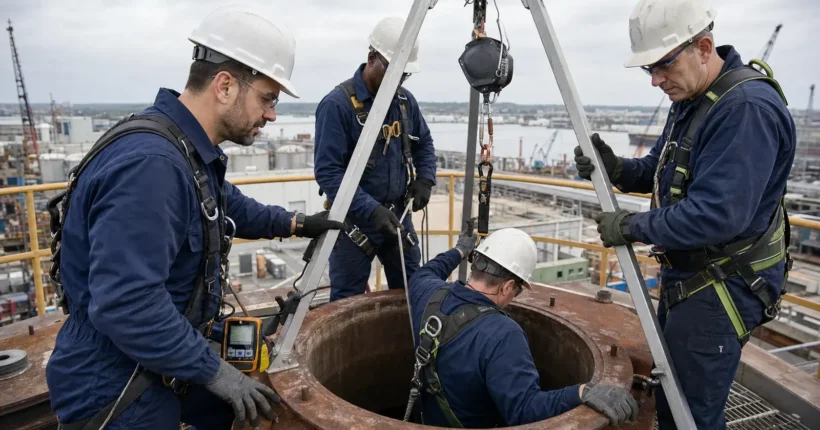
Hazmat is not just tankers on the highway. It is silos at a lumber mill, tanks at an aerospace plant, and vats at a paper mill. The hazards change from one call to the next. The playbook for the first few minutes does not. Tens of thousands of hazardous materials incidents are reported to federal regulators every year, and the reported transportation numbers have climbed over the past decade from around 15,000 to just over 21,000 annually. Most communities and many workplaces will face one eventually.
Here is the reassuring part. The first responder to arrive does not need to be a chemist. In those opening minutes, the job is to recognize, isolate, and call for the right help. This guide covers that first-minutes playbook for responders, then answers the question every employer eventually asks: who actually needs HAZWOPER training?
The first-minutes playbook: recognize, isolate, call for help
The first arriver almost never gets to pick the chemical, the container, or the weather. What they can control is how disciplined those first minutes are. Trained responders answer four questions fast.
The four questions
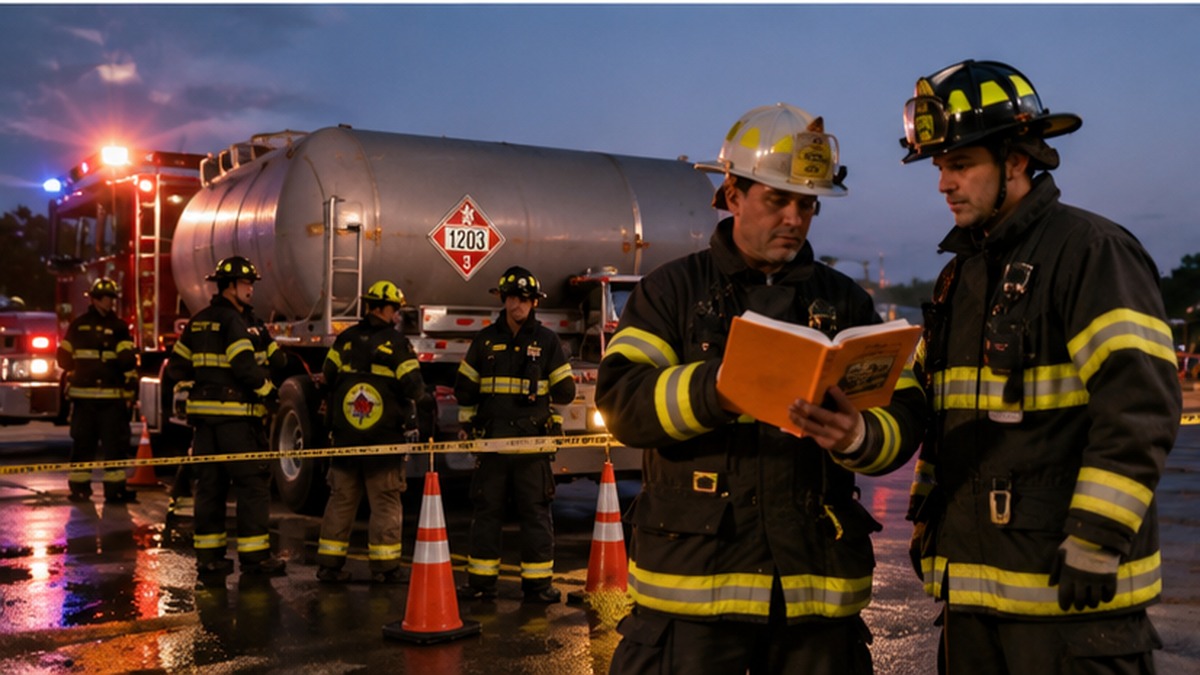
- What is it? Read placards, container shapes, the NFPA 704 diamond, and shipping papers from a distance. The free DOT Emergency Response Guidebook (ERG 2024) turns a placard or a four-digit ID number into initial isolation and protective action distances.
- How much is it? One pail and one tanker are very different problems. Volume shapes everything that follows.
- Where is it going? Wind, slope, drains, and the people in its path.
- Who is at risk? Workers, neighbors, schools, and you.
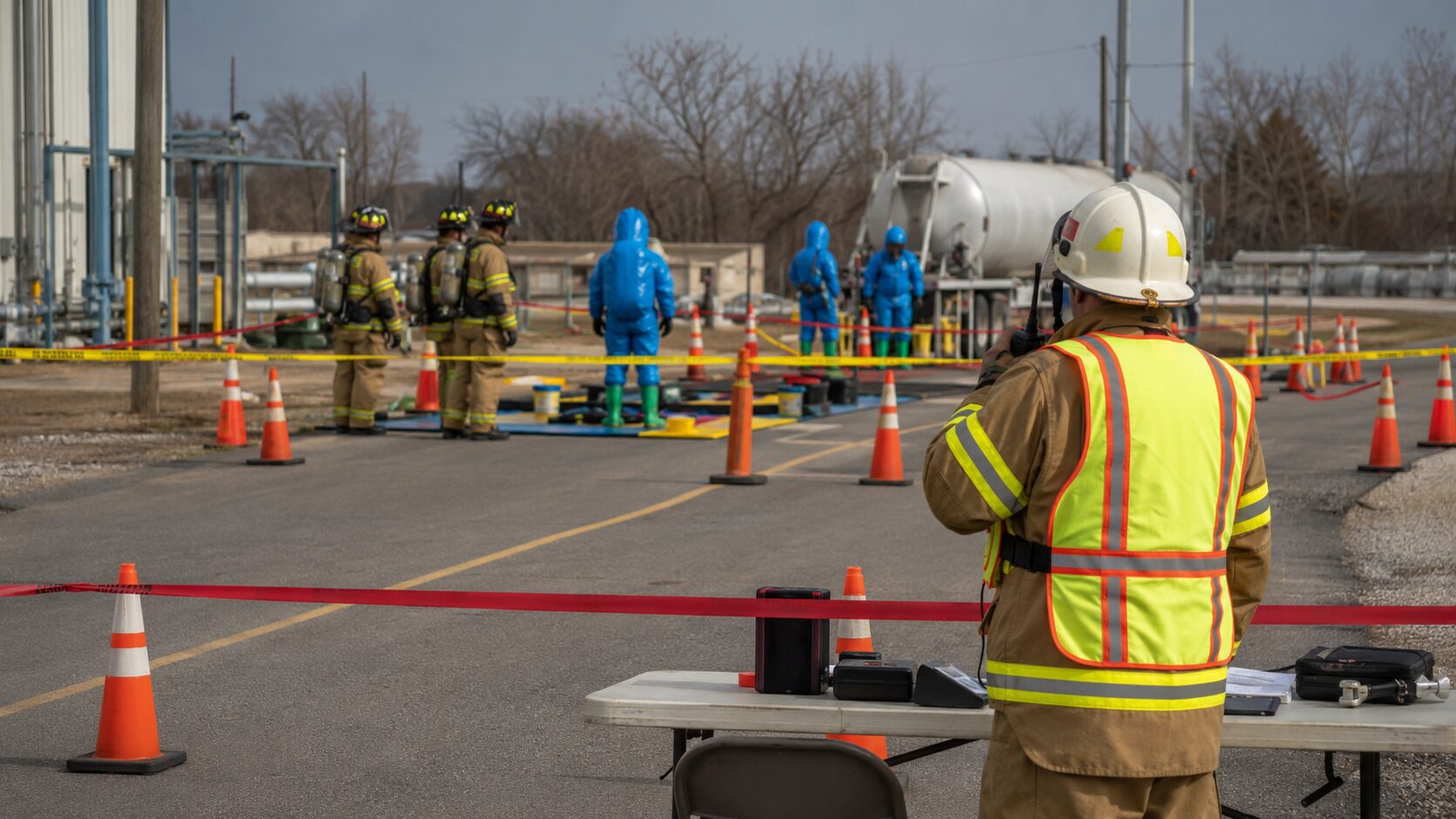
Then act to your training level
At the awareness level under the OSHA HAZWOPER standard, the job is to recognize the problem, secure the area, notify the right resources, and stay out. You do not enter the hot zone or try to stop the leak. At the operations level, actions are defensive only. You protect people and exposures from a distance. No plugging, no patching, and no entries unless you are trained and equipped for that specific work.
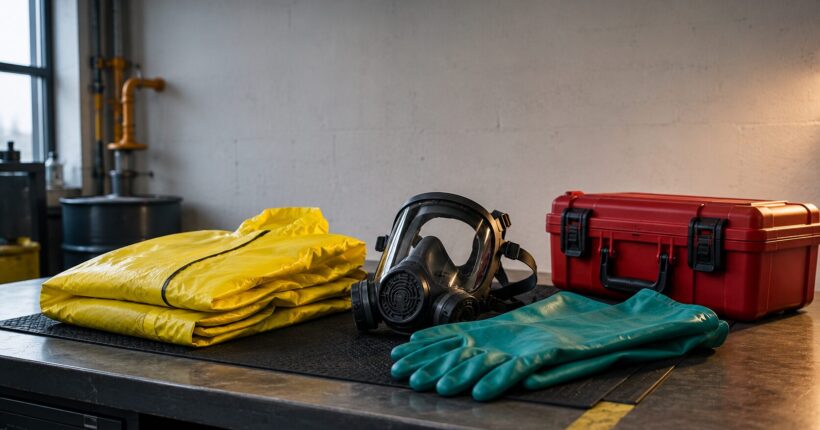
Two reminders that recent industrial incidents keep driving home. Combustible dust is a hazmat hazard. Sawdust, grain, metal, plastics, and even sugar can ignite and explode under the right conditions, so fixed facilities deserve the same pre-planning as transportation routes. And distance is your best PPE. When in doubt, back people up and stay upwind, uphill, and upstream.
Who actually needs HAZWOPER? A guide for employers
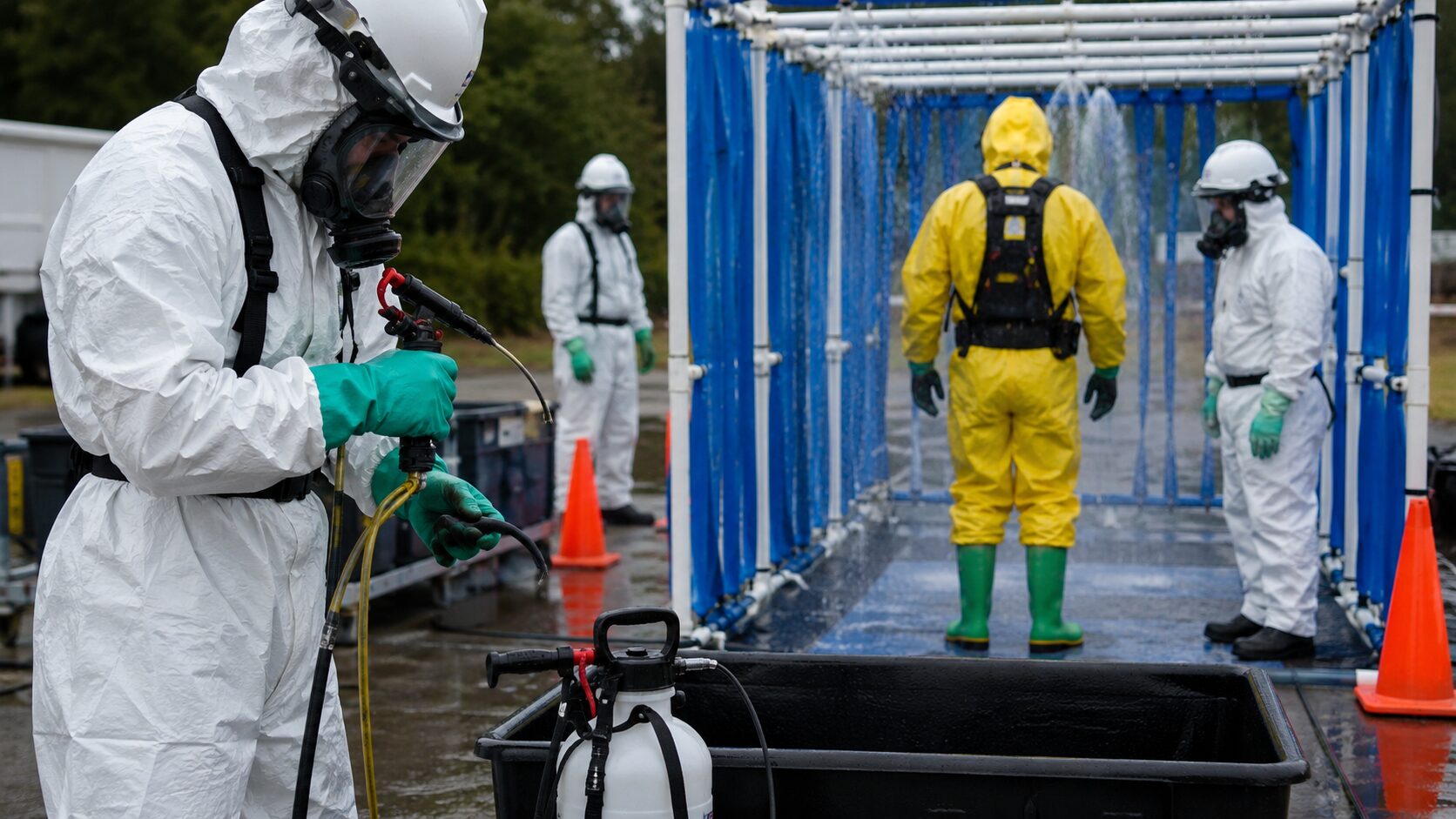
If your people handle, store, clean up, or could be the first to find a chemical release, OSHA may require HAZWOPER training. Many employers are surprised by who counts. HAZWOPER, which stands for Hazardous Waste Operations and Emergency Response, covers hazardous waste site work, treatment, storage, and disposal facilities, and emergency response to chemical releases.
Training matches the role
- 40-hour: General site workers with regular exposure to hazardous substances.
- 24-hour: Workers with occasional or limited site exposure.
- 8-hour refresher: Annual training to keep certification and skills current.
Emergency responders train to a level that fits their duties, from Awareness at the entry level up through Operations, Technician, and beyond.
Three OSHA standards that work together
Chemical safety at work rarely comes down to a single rule. Three standards commonly apply together.
- Hazard Communication (the HazCom standard): current Safety Data Sheets for every chemical, GHS-aligned labels, and training on the hazards your workers actually face.
- HAZWOPER: the site-work and emergency-response training described above.
- Process Safety Management: required when you have threshold quantities of highly hazardous chemicals on site.
Note that the specific regulatory citations for these standards are technical identifiers that change over time. Verify the current standard numbers and requirements for your operation and your state.
The surprise in the data, and how to prepare
Most reported hazmat transportation incidents do not happen speeding down the highway. A large share occur during loading and unloading. Your dock is a hot spot. Getting ready before an incident is far cheaper than reacting to one. A strong baseline includes current Safety Data Sheets at the workstation, a written spill plan and the right PPE, a clear call list, pre-arranged mutual aid with your local fire department, and any community right-to-know reporting your facility is required to file.
For a real chemical release, the National Response Center line is 1-800-424-8802, and you should call 911 for anything that threatens people.
Key Takeaways
- Hazmat happens at fixed facilities, not just on the highway, and reported incidents number in the tens of thousands each year.
- The first-minutes job is to recognize, isolate, and call for help. The first arriver does not need to be a chemist.
- Read placards, container shapes, and the NFPA 704 diamond from a distance, and use the ERG to find isolation distances.
- HAZWOPER training tiers match the role: 40-hour, 24-hour, and the 8-hour annual refresher.
- Combustible dust is a real hazmat hazard, and most transportation incidents happen during loading and unloading.
- Distance is your best PPE. Stay upwind, uphill, and upstream.
Frequently Asked Questions
What does HAZWOPER stand for?
HAZWOPER means Hazardous Waste Operations and Emergency Response. It is the OSHA framework covering specified hazardous-waste operations, treatment and disposal facilities, and emergency response to hazardous-substance releases.
Which HAZWOPER course do workers need?
The correct training depends on job duties and exposure. General site workers with regular exposure may need the 40-hour course, qualifying limited-duty workers may need 24 hours, and covered workers require annual refresher training. Emergency responders train to the level matching their assigned role.
Must a first responder identify the exact chemical before acting?
No. The early priorities are to recognize a hazardous-materials problem, isolate the area, protect people, and request the appropriate resources. Placards, identification numbers, shipping papers, and the Emergency Response Guidebook support initial decisions from a safe distance.
Is combustible dust a hazardous-materials concern?
Yes. Dust from materials such as wood, grain, metal, plastics, and sugar can ignite or explode under certain conditions. Fixed facilities need hazard assessment, controls, housekeeping, and emergency preplanning.
Can LSE provide onsite HAZWOPER or responder training?
Yes. LSE provides applicable awareness, operations, 40-hour, 24-hour, and refresher training based on current instructor authorization, course requirements, facility suitability, and the written scope of work.
Train for the call you hope never comes
The departments and employers who handle a hazmat incident well are not lucky. They trained to the right level before the alarm ever sounded.
We teach first responder awareness and operations and the full HAZWOPER series, delivered onsite and built around real risks. Compare the HAZWOPER 40-, 24-, and 8-hour pathways, share the family chemical-emergency guide with community partners, then browse our classes or contact us to scope a session.
Training excellence, real-world readiness.
Sources
- OSHA, HAZWOPER (Hazardous Waste Operations and Emergency Response). https://www.osha.gov/emergency-preparedness/hazardous-waste-operations/standards (Supports who needs training, the role-based tiers, and awareness and operations duties.)
- PHMSA, Hazmat Incident Statistics. https://www.phmsa.dot.gov/hazmat-program-management-data-and-statistics/data-operations/incident-statistics (Supports the annual incident volume and the loading and unloading point.)
- PHMSA, Emergency Response Guidebook (ERG). https://www.phmsa.dot.gov/training/hazmat/erg/emergency-response-guidebook-erg (Supports the ERG’s role and the initial isolation and protective action distances.)
This article is for general education and awareness. It is not legal advice, medical advice, or a guarantee of OSHA compliance. Regulatory citations and requirements change and vary by state. Verify current standards for your operation. In an emergency, call 911, and for a chemical release call the National Response Center at 1-800-424-8802.