Prepared by the LSE Editorial Team. Reviewed by Joseph Andrade, Jr., RN, NRP.
The entry supervisor is the person who verifies that a permit-required confined-space entry is ready to begin and who has authority to terminate it. Under 29 CFR 1910.146(j), that means more than signing a form. The supervisor must understand the hazards, verify the permit and required tests, confirm procedures and equipment are in place, verify rescue availability, control unauthorized entry, and re-check conditions when responsibility changes and as operations require.
✅ Key takeaways
- The supervisor verifies the permit before endorsing it and allowing entry to begin.
- The supervisor must confirm that required tests, procedures, and equipment are in place.
- Rescue availability and a working method of summoning rescue must be verified.
- The supervisor terminates entry and cancels the permit when the work is complete or prohibited conditions arise.
- The supervisor may perform another permit-space role only when trained and equipped for that role and able to perform all of its duties.
Entry supervisor duties under OSHA 1910.146(j)
- Know the hazards. Understand potential exposure routes, signs or symptoms, and consequences.
- Verify the permit. Confirm required entries have been completed, specified tests have been conducted, and required procedures and equipment are in place before endorsing the permit and allowing entry.
- Terminate entry and cancel the permit. Do so when operations are complete or when a condition not allowed under the permit arises.
- Verify rescue availability. Confirm the rescue service is available and that the method for summoning it is operable.
- Remove unauthorized individuals. Take appropriate action when unauthorized people enter or attempt to enter.
- Re-check the operation. When responsibility transfers and at intervals dictated by the hazards and operation, verify that entry remains consistent with the permit and acceptable entry conditions are maintained.
A signature is not the safety check

The permit documents the control process. Before signing, the supervisor should be able to connect every critical line on the permit to something real at the entry point: atmospheric test results, isolation and lockout, ventilation, communications, PPE, barriers, retrieval equipment when required, and the rescue plan. If a required control is missing, the correct action is to delay entry rather than sign around the problem.

“Rescue is available” has to be verified
Calling 911 is not automatically a compliant rescue strategy. The employer must evaluate a prospective rescue service for its ability to respond in a timely manner considering the hazards, and for proficiency with the tasks and equipment needed for the spaces involved. The employer also must provide the rescue service access to permit spaces for planning and practice. The entry supervisor’s specific duty is to verify that rescue services are available and that the means for summoning them are operable before entry proceeds.
Can the entry supervisor also be an attendant or entrant?
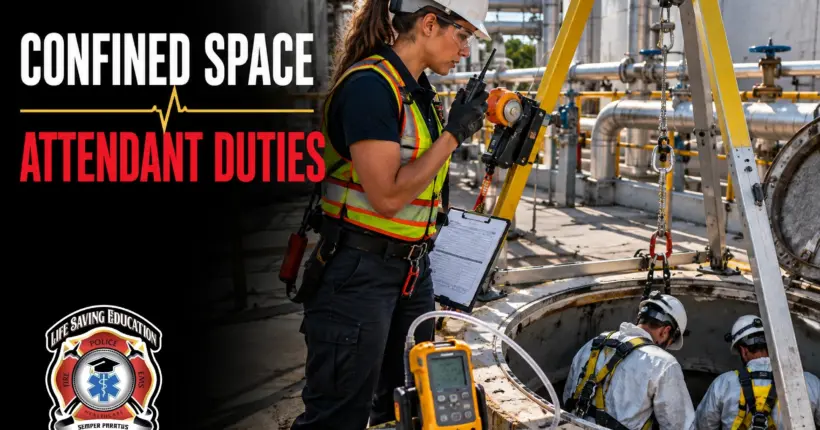
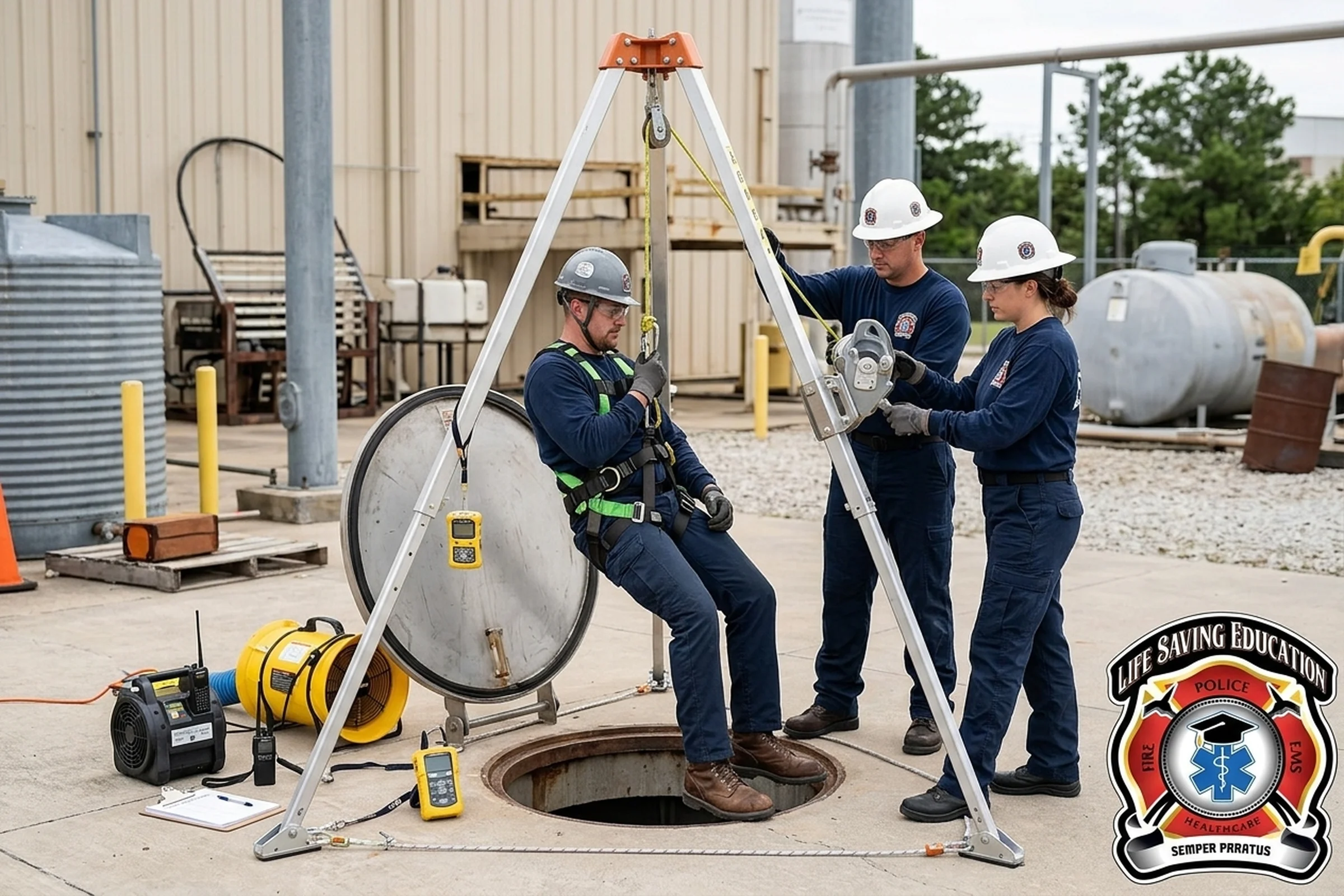
Yes. OSHA allows an entry supervisor to serve simultaneously as an attendant or authorized entrant when that person is trained and equipped for each role. The combined assignment still has to work operationally. For example, an attendant cannot take on supervisory activity that interferes with the attendant’s duty to monitor and protect entrants. See our confined space attendant duties guide.
Stop-entry authority is part of the job
If acceptable entry conditions are lost, a prohibited condition develops, or a required control or rescue capability is no longer available, the supervisor should not treat the permit as permission to continue. The entry must be managed under the employer’s program, including evacuation and permit cancellation when required.
When should the entry be stopped?
The standard requires termination when a condition not allowed under the entry permit arises. Operational warning signs include atmospheric readings outside acceptable entry conditions, loss of required controls or communication, a change in the work that introduces an unassessed hazard, or loss of the planned rescue capability. Evacuate first when required, then reassess the entry under the employer’s program.
Training for entry supervisors
Entry supervisors fall under the training provisions of 1910.146(g). Training is required before first assignment, before a change in duties, when operations introduce an untrained hazard, and when the employer has reason to believe employees are deviating from procedures or have inadequate knowledge or use of the procedures. The training must establish proficiency. See who needs confined space training and when retraining is required.
Entry supervisor pre-entry review
- Are the hazards and acceptable entry conditions clearly identified?
- Were all required atmospheric tests completed and documented?
- Are isolation, ventilation, barriers, communications, PPE, and other specified controls actually in place?
- Is the attendant assigned and able to perform the role without interfering duties?
- Is the rescue service available now, and does the summoning method work?
- Does the work being performed match the scope described by the permit?
- What condition will trigger evacuation or cancellation?
Frequently asked questions
Who signs a confined space entry permit?
Under 1910.146, the entry supervisor verifies that required preparations are complete and endorses the permit before entry begins. The employer’s written program should identify who is authorized to act as an entry supervisor.
Does the entry supervisor have to stay at the space for the entire entry?
The standard focuses on the supervisor’s required duties rather than creating a universal rule that the supervisor must physically remain at the opening throughout every entry. The supervisor must still perform required verification, cancellation, unauthorized-entry control, and periodic or transfer checks as dictated by the hazards and operation.
Can the entry supervisor cancel a permit?
Yes. Terminating entry and canceling the permit when the operation is complete or a prohibited condition arises is an explicit entry-supervisor duty.
Is the fire department automatically an acceptable rescue service?
No. An employer that selects an outside rescue service must evaluate that service under the rescue provisions of 1910.146(k). Availability, response capability, proficiency, equipment, and familiarity with the relevant spaces and hazards matter.
Train supervisors to verify, not merely sign
The best permit-space programs make the supervisor’s decision visible: hazards identified, controls verified, rescue confirmed, and authority to stop the job understood by everyone. LSE provides confined space entrant, attendant, and supervisor training as well as onsite employer training.
Educational note: This article summarizes federal OSHA general-industry requirements. Construction work is covered by 29 CFR 1926 Subpart AA, and State Plan requirements may differ or add obligations.
Primary authority: OSHA 29 CFR 1910.146.