Prepared by the LSE Editorial Team. Reviewed by Joseph Andrade, Jr., RN, NRP.
Joseph works across emergency response, healthcare, and workplace safety and develops practical training for civilians, employers, and first responders.
Lithium-ion batteries power phones, tablets, laptops, cordless tools, radios, cameras, e-bikes, scooters, medical devices, material-handling equipment, and countless other products. Most operate without incident.
But these batteries store substantial energy in a compact package, and a defective, damaged, improperly charged, overheated, modified, or incompatible battery system can become a serious fire and life-safety problem.
That is why Fire Prevention Week 2026, October 4–10, is centered on safer charging. NFPA’s theme is “Charge into Fire Safety: Safe Charging Is a Superpower.”
🔌 Start With the Right Equipment
A battery system is not just the battery. The device, battery, charger, cable, battery-management system, and electrical supply work together.
Use the battery and charging equipment designed or approved for the device.
Manufacturer charging, storage, temperature, and inspection instructions matter.
A connector that physically fits does not automatically make a charger appropriate for the battery system.
📍 Where You Charge Matters
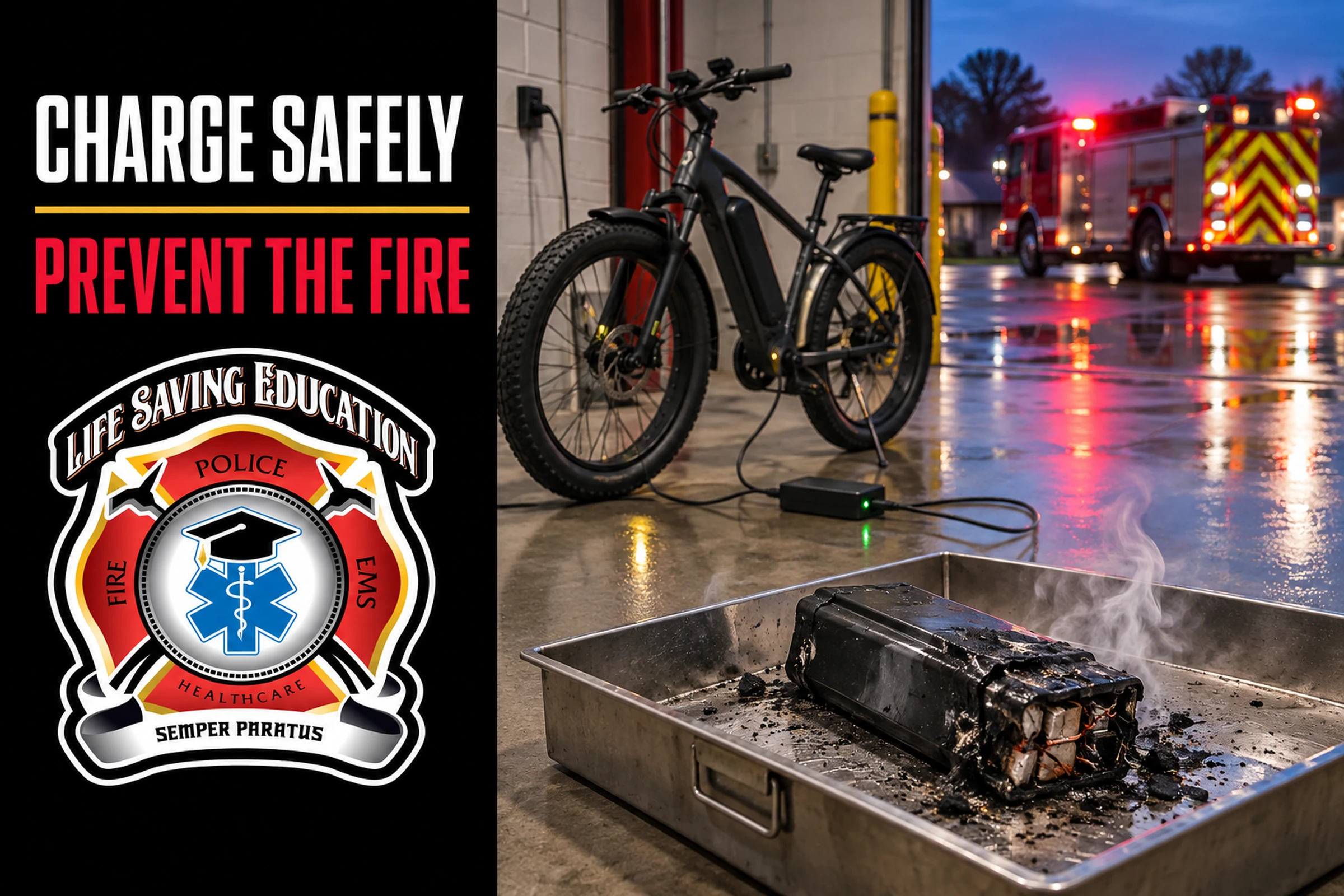
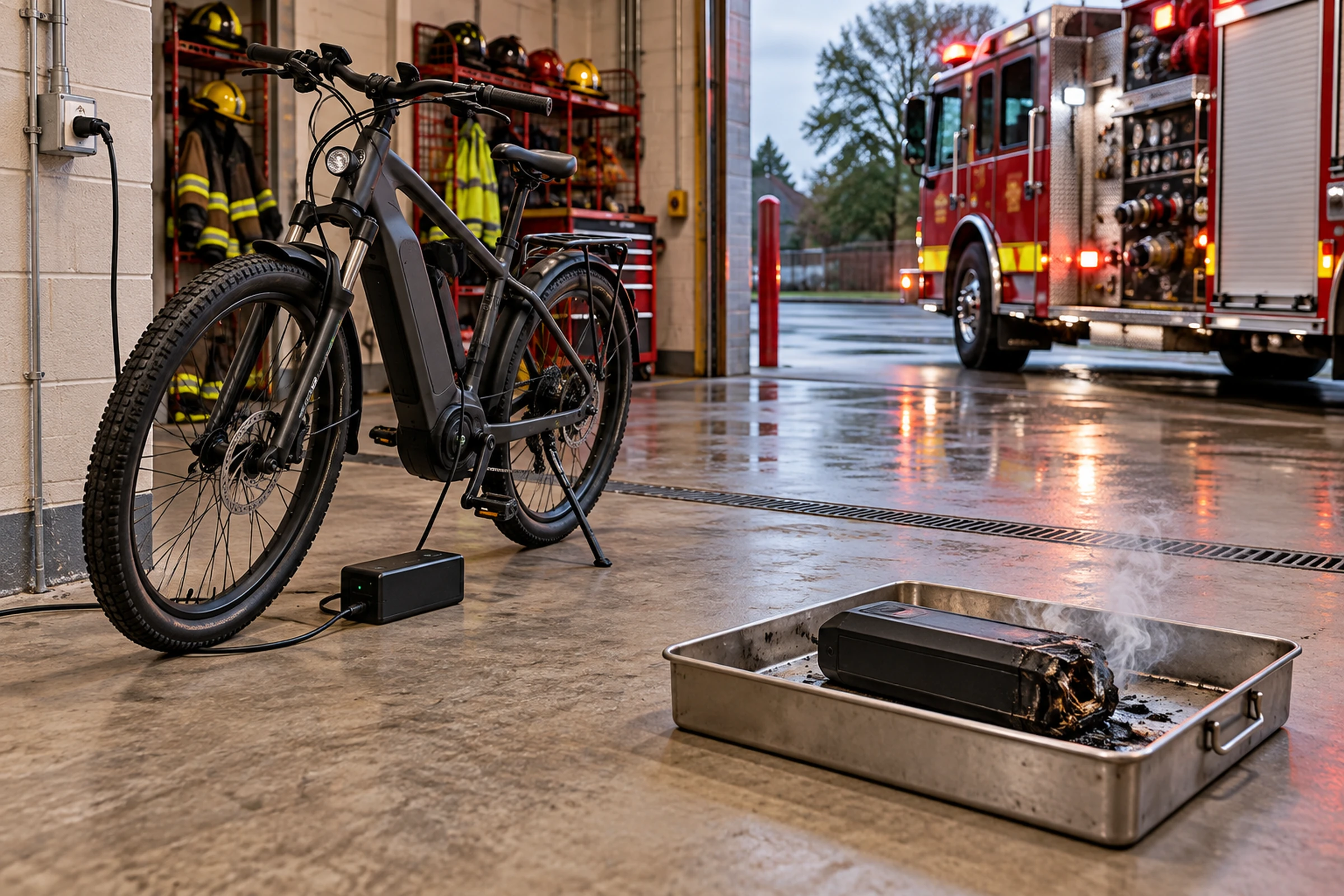
Charging should occur on a hard, stable surface away from readily combustible materials. Avoid charging devices under pillows, on beds, or on couches.
👀 Do Not Ignore a Battery That Is Changing
Batteries can provide warning signs before or during failure.
- Unusual heat
- Swelling or bulging
- Leaking
- Unusual odor
- Hissing, popping, or other abnormal sounds
- Smoke
- Physical damage
- Unexpected changes in performance
Stop using equipment that shows concerning signs and follow manufacturer and local disposal guidance. Do not puncture, crush, disassemble, or casually place damaged lithium-ion batteries into ordinary trash.
🧯 Damage Matters Even When the Device Still Works
A dropped tool, crashed e-bike, crushed battery pack, forklift impact, or damaged laptop can create internal battery damage that is not immediately obvious.
The fact that a device powers on does not prove that the battery is healthy.
A workplace damaged-battery procedure should answer:
- Who evaluates the device?
- Where is damaged equipment placed?
- How is it protected from further damage?
- Who arranges proper disposal or recycling?
- What should workers do if the battery heats, vents, smokes, or burns?
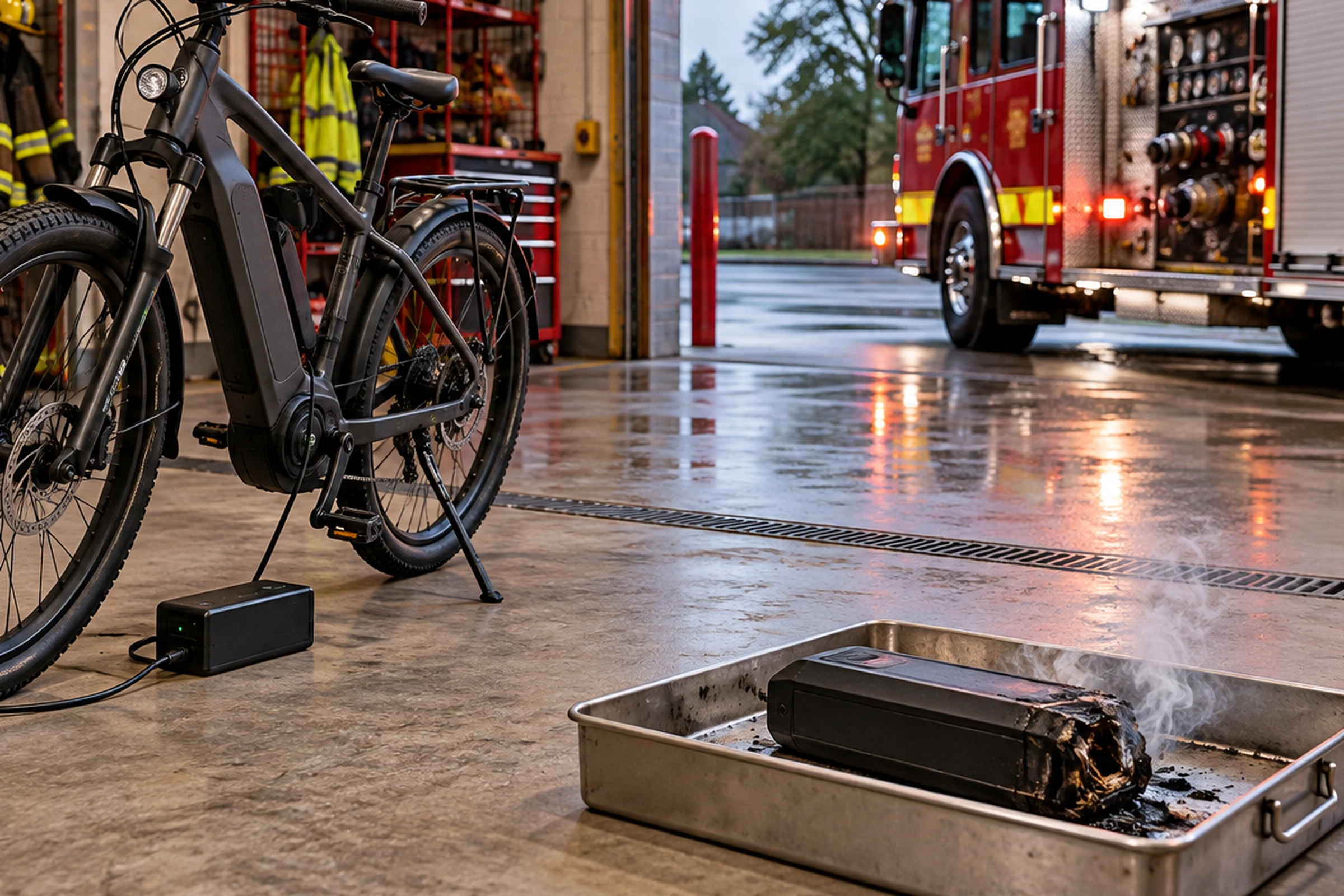
🏢 Workplaces Need Designated Charging Areas
A good charging area is more than an electrical outlet.
Use charging equipment appropriate for the battery system.
Keep combustibles and clutter away from charging locations.
Reduce crushing, impact, and other foreseeable damage.
Do not let normal charging arrangements compromise exits.
Workers need a process for identifying and removing damaged equipment.
Decide what workers should do before a battery failure occurs.
🏗️ Construction Sites Have a Growing Battery-Safety Challenge
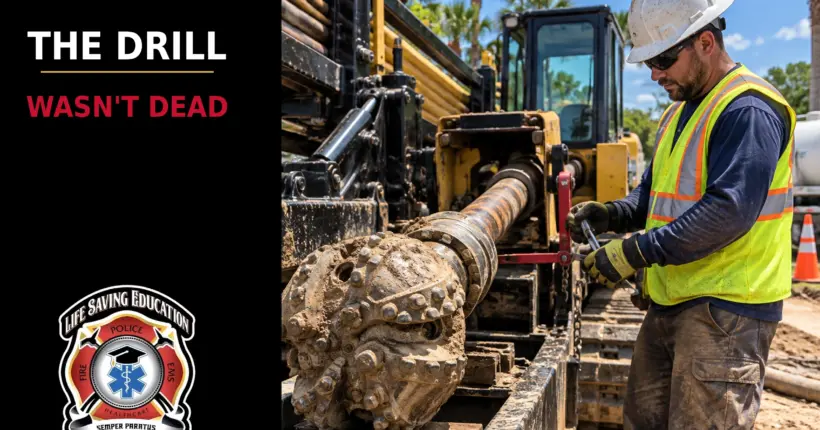
Cordless tools have transformed construction. Jobsite batteries may be dropped, exposed to temperature extremes, transported in trucks, charged in temporary areas, and stored near combustible construction materials.
Battery safety should become part of ordinary site safety rather than a specialty topic discussed only after an incident.
🏭 Warehouses and Recycling Facilities Face Different Risks
A warehouse may handle batteries embedded in products, powered industrial equipment, returns, damaged goods, and charging stations. A recycling or waste facility may encounter damaged, discarded, or improperly packaged batteries.
OSHA notes that there is no single specific OSHA standard governing all lithium-ion battery hazards. Depending on the operation, multiple fire, electrical, emergency-response, PPE, respiratory, hazardous-energy, first-aid, powered-industrial-truck, air-contaminant, recordkeeping, and hazard-communication requirements may be relevant.
📱 Do Not Turn a Battery Fire Into a Social-Media Experiment
When a battery is smoking or burning, people sometimes move closer to record it, carry it through an occupied building, or attempt an improvised extinguishing tactic. That can increase exposure.
The correct response depends on battery size, chemistry, location, fire conditions, available suppression systems, training, and organizational procedures. Untrained occupants should prioritize life safety, evacuation when needed, emergency notification, and calling the fire department rather than improvising hazardous fire-control tactics.
🚒 Firefighter Considerations
Lithium-ion battery incidents can create rapid heat release, flammable gases, toxic combustion products, reignition potential, difficult access to cells, and exposure hazards during overhaul and post-fire operations.
The tactical problem varies enormously between a phone, e-bike, electric vehicle, warehouse, and stationary energy-storage system. One tactic does not apply to every lithium-ion incident.
🏠 A Five-Minute Home Battery Audit
- Are devices being charged on beds, couches, or other soft surfaces?
- Are chargers manufacturer-supplied or approved?
- Are any batteries swollen, cracked, leaking, unusually hot, or damaged?
- Are e-bikes or scooters charging in or near an exit path?
- Are spare batteries protected from crushing, shorting, or excessive heat?
- Are damaged batteries being kept because “they still work”?
- Does everyone know what to do if a battery begins smoking?
🧰 A Workplace Battery Audit
What battery-powered equipment is actually in use?
Where does charging occur, and with what equipment?
Who removes damaged equipment from service?
Where are spare and damaged batteries kept?
What should a worker do if a battery heats, swells, vents, smokes, or burns?
How are batteries recycled or disposed of?
✅ Key Takeaways
- Use the battery and charging equipment designed or approved for the device.
- Charge on a stable surface away from readily combustible materials.
- Do not let e-bikes, scooters, or charging equipment compromise exits.
- Remove swollen, leaking, overheated, smoking, or seriously damaged batteries from normal use.
- Employers need a defined process for charging, inspection, damaged equipment, storage, disposal, and emergency response.
- Battery incidents vary by device and system. One fire-service tactic does not apply to every lithium-ion incident.
❓ Frequently Asked Questions
Can I use any charger that fits?
No. Physical fit does not prove compatibility. Use the charging equipment specified or approved for the battery system.
Is a swollen battery still safe if it works?
Swelling is a warning sign. Stop normal use and follow manufacturer and local guidance for safe handling and disposal.
Why should e-bikes and scooters be kept away from exits?
If a battery fails in an exit path, a fire can become an immediate egress problem for occupants.
Does OSHA have one lithium-ion battery standard?
OSHA notes that there is not one single standard covering every lithium-ion battery hazard. Different existing standards may apply depending on the workplace and operation.
Build Battery Safety Into the Workplace Before the Failure
Life Saving Education provides practical construction, industrial, emergency-response, and employer safety training built around the hazards workers actually face.