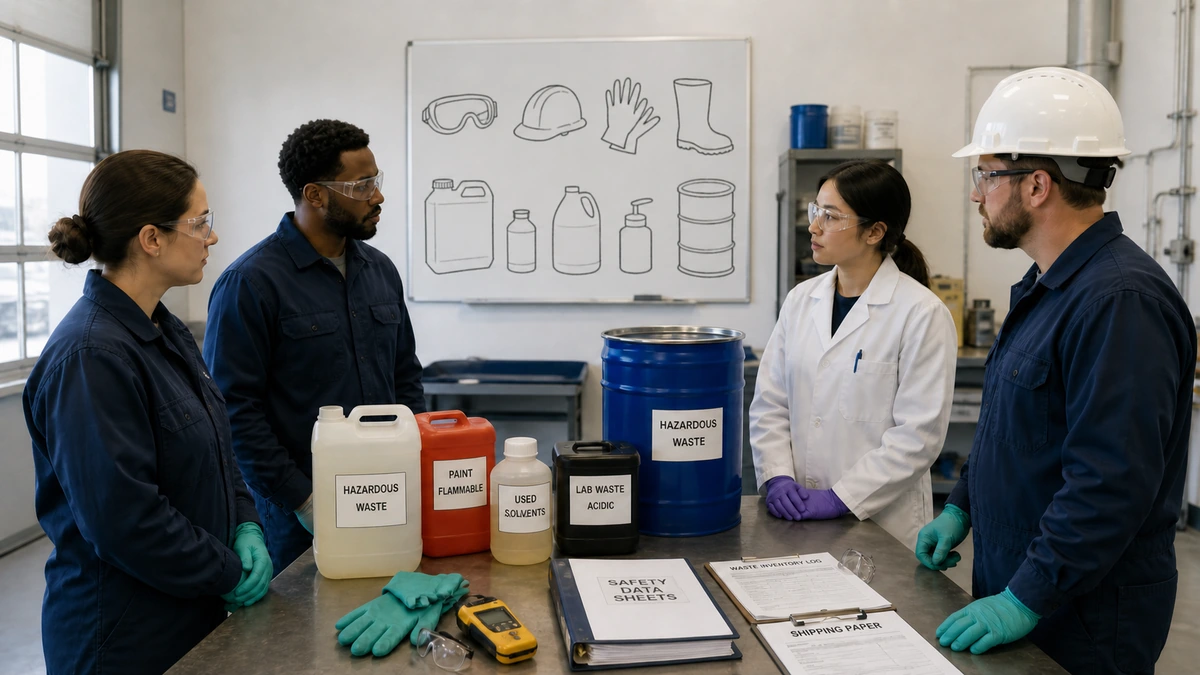
Joseph Andrade, Firefighter, Paramedic, RN, OSHA Outreach Instructor, Lead Instructor
Life Saving Education. Practical safety education built around real hazards, real decisions, and skills people can use when seconds count.
One of the most common mistakes I see in safety conversations is treating "hazardous waste training" like it is one course with one rule.
It is not.
A hospital can generate hazardous waste. A manufacturing plant can generate hazardous waste. A laboratory, auto shop, university, construction project, remediation contractor, public works department, or pharmaceutical facility can all encounter regulated waste. But that does not mean every worker in every one of those industries needs the same training.
The real question is not simply, "What industry are you in?"
It is:
What hazardous waste do you generate or handle, what job functions does the employee perform, and which regulatory system applies to that work?
That is the key to understanding hazardous waste training requirements.
🧭 Hazardous Waste Training Requirements Start With the Rule, Not the Industry
Several federal systems can overlap around hazardous waste:
| Regulator | Main issue | Common training trigger |
|---|---|---|
| EPA under RCRA | Hazardous waste generation and management | Generator category and employee waste-management duties |
| OSHA under HAZWOPER | Hazardous-waste cleanup, TSD operations, emergency response | Type of covered operation and employee exposure or response role |
| DOT/PHMSA | Hazardous materials in transportation | Employee job functions that directly affect hazmat transportation safety |
| OSHA HazCom | Chemical hazards in the workplace | Employee exposure to covered hazardous chemicals |
This is why a generic certificate labeled "hazardous waste" may not answer the compliance question.
Training has to match the worker’s actual regulated functions.
Life Saving Education HAZWOPER training
OSHA 10-Hour Training and OSHA 30-Hour Training
🗑️ EPA RCRA Training: Generator Category Matters
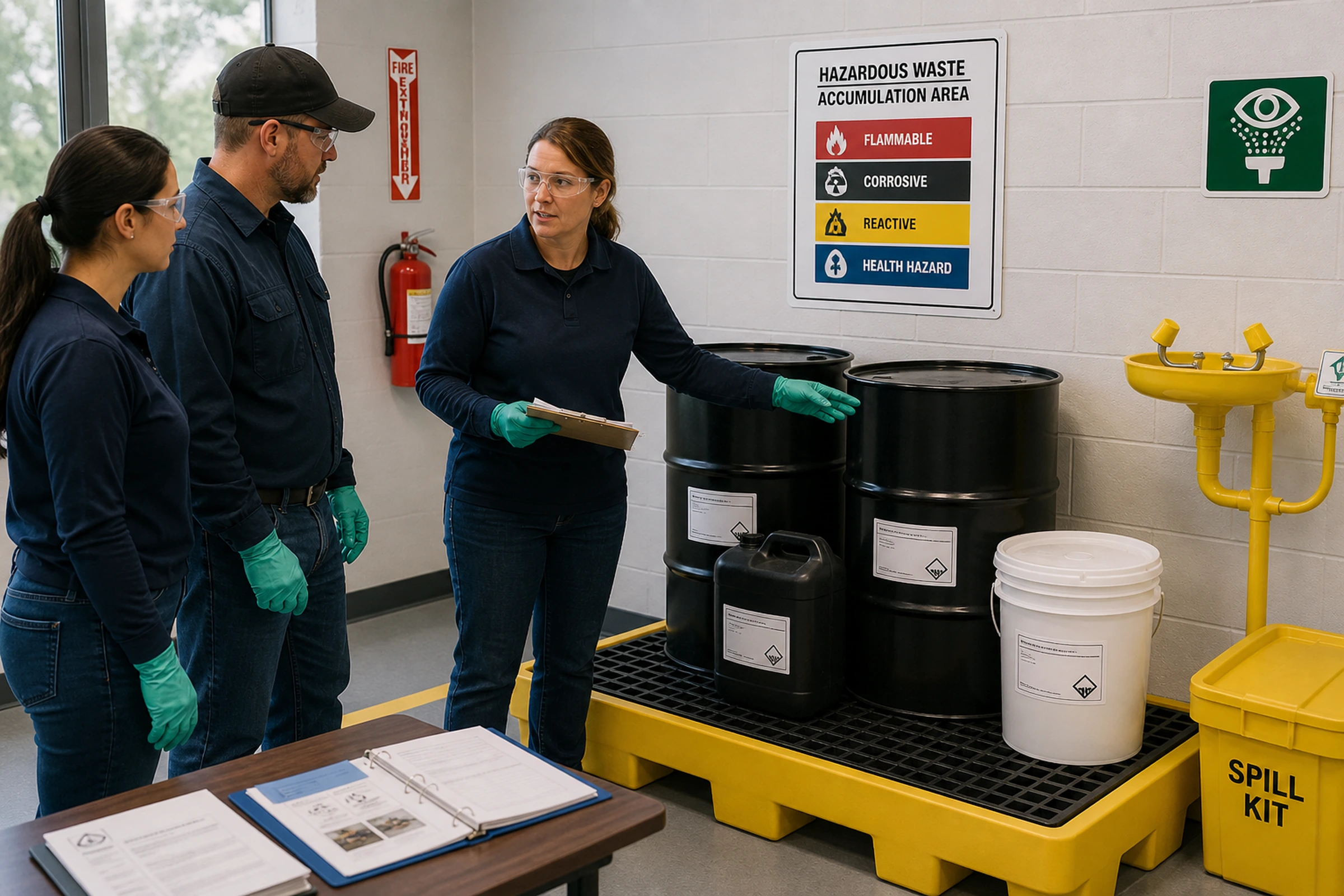
EPA’s hazardous-waste generator rules divide generators into three federal categories:
- Very Small Quantity Generator, or VSQG
- Small Quantity Generator, or SQG
- Large Quantity Generator, or LQG
The generator category is generally based on the quantity and type of hazardous waste generated in a calendar month.
EPA’s current regulatory summary makes an important training distinction.
Very Small Quantity Generators
At the federal level, VSQGs do not have the same specific personnel-training requirement that applies to SQGs and LQGs.
That does not mean no training of any kind is ever needed. Other OSHA, DOT, state, employer, or task-specific requirements may still apply.
Small Quantity Generators
SQGs must ensure that employees are thoroughly familiar with proper waste handling and emergency procedures relevant to their responsibilities.
EPA describes this as a basic training requirement under 40 CFR 262.16(b)(9)(iii).
Large Quantity Generators
LQGs have a more formal personnel-training requirement under 40 CFR 262.17(a)(7). Appropriate personnel must complete classroom instruction, online instruction, or on-the-job training that teaches proper hazardous-waste management and emergency procedures relevant to the facility.
LQGs also have documentation and contingency-planning responsibilities that go beyond the basic SQG framework.
✅ Bottom line: Under federal RCRA rules, training duties change with generator category. Do not assume every generator has the same personnel-training requirement.

🏭 Which Industries Commonly Generate Hazardous Waste?
Many industries can fall into the hazardous-waste system because the rule follows the waste and the activity, not a marketing label.
🧪 Laboratories and Research Facilities
Laboratories can generate solvents, reagents, corrosives, ignitable wastes, toxic metals, and discarded chemicals.
Universities, research institutions, pharmaceutical laboratories, and healthcare laboratories need systems for identifying waste, managing accumulation areas, labeling, emergency procedures, and assigning trained personnel.
🏥 Healthcare and Pharmaceutical Operations
Healthcare facilities may generate hazardous pharmaceutical waste, laboratory chemical waste, solvents, maintenance chemicals, and other regulated materials.
It is important not to confuse hazardous waste with every type of medical waste. Infectious waste, sharps, pharmaceuticals, chemotherapy agents, chemicals, and radioactive materials can fall under different regulatory systems.
Training should match the specific waste stream and employee role.
🏭 Manufacturing
Manufacturing can generate spent solvents, paint waste, metal-bearing waste, cleaning chemicals, corrosives, process residues, and off-specification materials.
A production employee who creates a waste stream may need different instruction from the environmental manager who makes hazardous-waste determinations and signs manifests.
🚗 Automotive, Fleet, and Maintenance Operations
Vehicle and equipment maintenance may involve solvents, parts-cleaning waste, paints, batteries, used oil, aerosols, contaminated rags, and other regulated materials.
Some materials may be managed under special rules, such as universal-waste or used-oil standards, rather than the full hazardous-waste generator framework.
🏗️ Construction, Demolition, and Remediation
Construction itself does not automatically equal hazardous-waste work. But renovation, demolition, environmental remediation, industrial cleaning, and disaster cleanup can encounter lead-containing debris, contaminated soil, solvents, chemicals, or other regulated waste.
If the operation is a HAZWOPER-covered cleanup site, OSHA training duties can become much more significant.
⚡ Utilities and Public Works
Water and wastewater operations, electrical utilities, municipal maintenance, public works yards, and infrastructure operations can generate chemicals, solvents, treatment residues, lamps, batteries, oils, and other regulated wastes.
Public-sector OSHA coverage varies by jurisdiction, but environmental waste rules and state-plan requirements still need to be evaluated.
🧯 Hazardous Waste Treatment, Storage, and Disposal Facilities
This is a major dividing line.
OSHA’s HAZWOPER standard has specific provisions for employees at certain hazardous-waste treatment, storage, and disposal operations. Under 29 CFR 1910.120(p), new covered employees receive at least 24 hours of initial training, and the training program includes an 8-hour annual refresher.
RCRA facility requirements and OSHA worker-protection requirements can apply at the same time.
☣️ When HAZWOPER Training Is Required
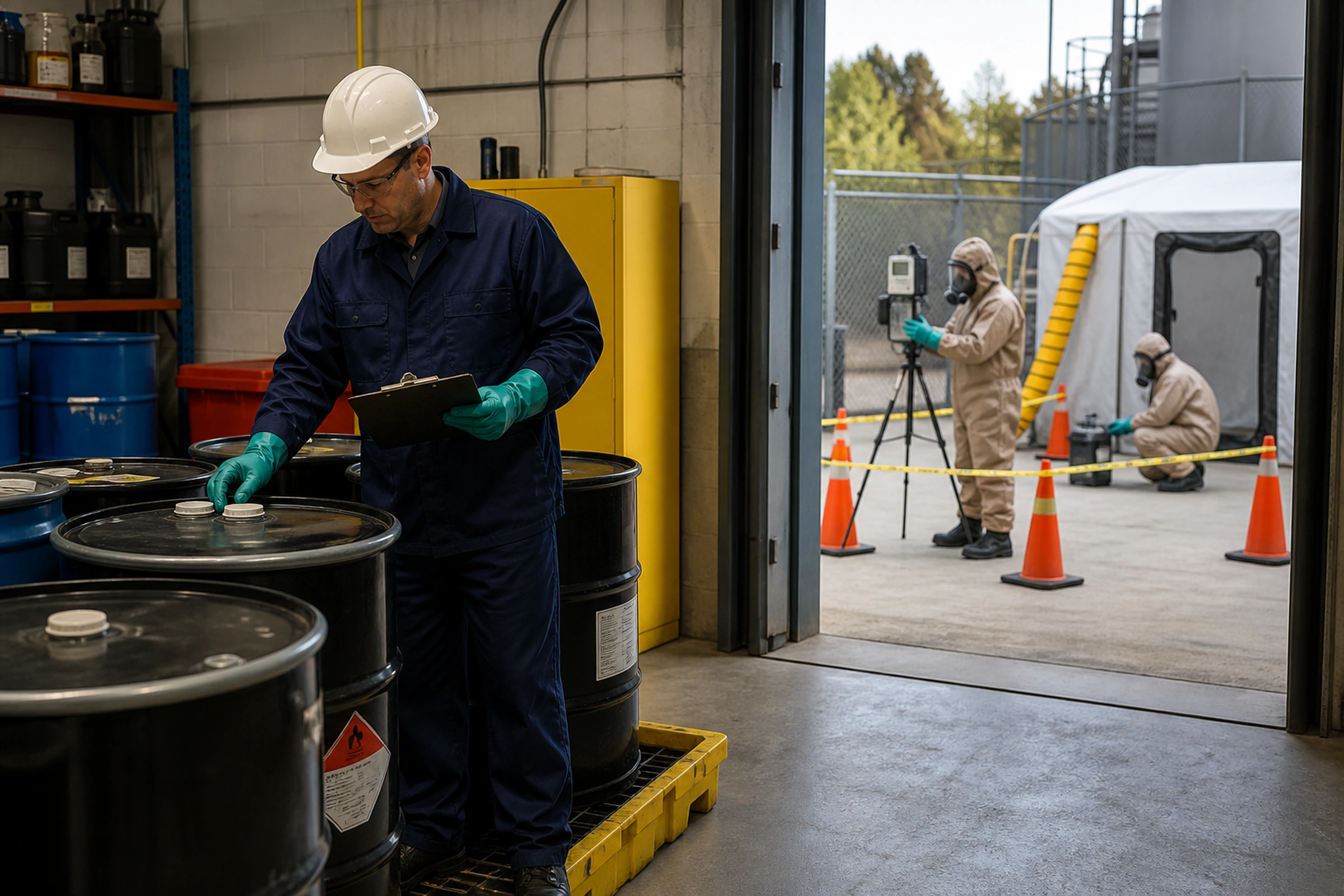
HAZWOPER is often over-applied and under-applied.
It is not a universal hazardous-waste course for every worker who sees a waste label.
OSHA’s 29 CFR 1910.120 applies to specific categories of work, including certain:
- cleanup operations at uncontrolled hazardous-waste sites
- corrective actions and operations at RCRA sites
- voluntary cleanup operations recognized by government
- hazardous-waste treatment, storage, and disposal operations
- emergency response to uncontrolled releases of hazardous substances
40-hour and 24-hour site-worker training
For covered cleanup-site work under paragraph (e), training depends on exposure potential and work conditions.
OSHA describes 40-hour initial training and three days of supervised field experience for certain workers who may be exposed at or above permissible exposure limits, where respiratory protection is required, or where health hazards are not fully characterized.
A 24-hour initial course and one day of supervised field experience can apply to certain workers with limited tasks or lower exposure potential under the conditions described in the standard.
Both designations generally require an 8-hour annual refresher for workers covered by those provisions.
Emergency responders are different
Emergency-response training under HAZWOPER paragraph (q) is competency-based and role-specific.
Awareness-level personnel, operations-level responders, hazardous-materials technicians, hazardous-materials specialists, and incident commanders do not all have the same training requirements.
A person should not choose a HAZWOPER course simply because the title sounds closest to their job.
The employer has to identify the role and required competencies.
🚚 DOT Hazmat Training May Apply After the Waste Leaves the Facility
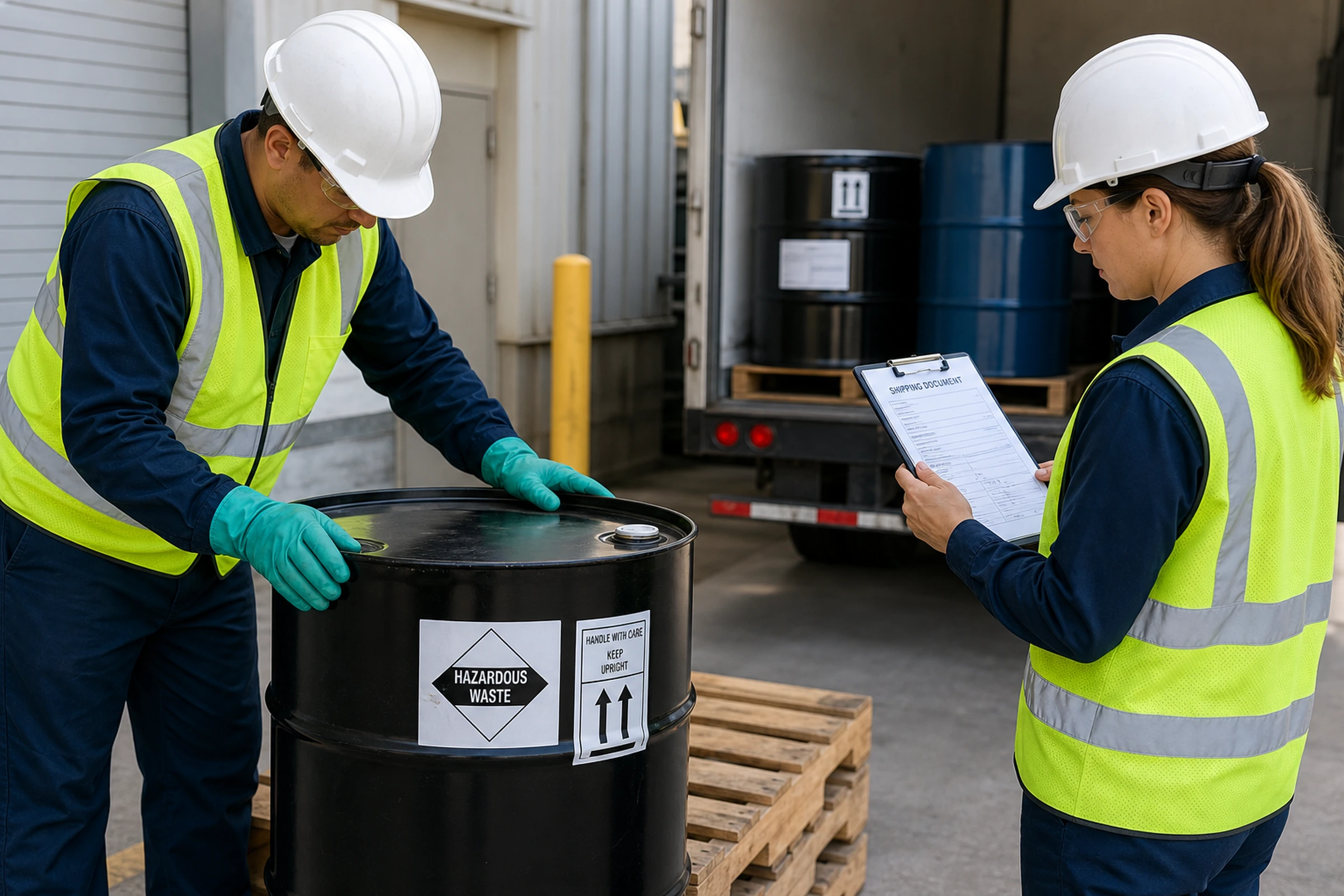
Another common blind spot is transportation.
A material can be hazardous waste under EPA rules and also be a hazardous material for transportation under DOT’s Hazardous Materials Regulations.
PHMSA requires hazmat employers to train, test, certify, and maintain records for hazmat employees whose job functions directly affect hazardous-materials transportation safety.
That can include employees who:
- classify or prepare hazardous materials for shipment
- select or fill packaging
- mark or label packages
- prepare shipping papers
- load or unload hazmat
- operate a vehicle transporting regulated hazardous materials
- perform other covered transportation functions
PHMSA requires recurrent hazmat training at least once every three years.
So a waste-management employee may need RCRA training for on-site waste duties and DOT function-specific training for shipment preparation.
One course does not automatically replace the other.
request customized HazMat and transportation-safety training
explore OSHA and workplace-safety training
🧠 The Four-Layer Training Question
Layer 1: What is the material?
Is it a hazardous chemical, hazardous waste, universal waste, used oil, infectious waste, radioactive material, or another regulated category?
Layer 2: What is the operation?
Generation, accumulation, cleanup, treatment, storage, emergency response, packaging, transportation, or disposal?
Layer 3: What does the employee actually do?
Do they move a container, sign a manifest, perform waste determinations, enter a cleanup zone, respond to releases, label packages, or supervise other workers?
Layer 4: Which agencies have jurisdiction?
EPA, OSHA, DOT/PHMSA, a state environmental agency, a state OSHA plan, or another authority?
That sequence prevents the common mistake of buying a training course first and asking what it covers later.
🗺️ State Rules Can Be More Stringent
RCRA is implemented through authorized state hazardous-waste programs in much of the country.
States can adopt requirements that are more stringent or broader than the federal baseline.
That matters for employers operating in multiple states.
A training program that fits federal minimum requirements may not automatically satisfy every state-specific hazardous-waste rule.
This is particularly important in states with substantial state hazardous-waste programs, such as California.
📋 Hazardous Waste Training Decision Checklist
- What waste streams are generated?
- Has the generator category been determined?
- Which employees manage hazardous waste?
- Are satellite accumulation areas used?
- Does the facility operate as an SQG or LQG?
- Is the work a HAZWOPER-covered cleanup or TSD operation?
- Are employees expected to respond to uncontrolled releases?
- Do employees prepare hazardous waste for transportation?
- Are DOT hazmat functions performed?
- Does the state impose additional requirements?
- Does the employer have records documenting the required training?
🔗 Related Life Saving Education Guides
- HAZWOPER 40 vs 24 vs 8
- HAZWOPER and HazMat response guide
- Life Saving Education HAZWOPER training
- Onsite group training
✅ Key Takeaways
- Hazardous-waste training is not one universal course.
- RCRA personnel-training requirements depend heavily on generator category and job duties.
- HAZWOPER applies to specific hazardous-waste operations and emergency-response roles, not every workplace that generates waste.
- DOT hazmat training can apply when employees perform functions affecting hazardous-materials transportation safety.
- One employee may legitimately need EPA, OSHA, and DOT training because the same material moves through different regulatory systems.
❓ Frequently Asked Questions
Does every employee at a hazardous-waste generator need HAZWOPER?
No. HAZWOPER applies to specific operations and response roles identified in 29 CFR 1910.120. Routine hazardous-waste generation alone does not automatically create a 40-hour HAZWOPER requirement.
Do small quantity generators need hazardous-waste training?
Yes, under federal rules SQGs must ensure employees are thoroughly familiar with proper waste handling and emergency procedures relevant to their responsibilities. The requirement is less formal than the LQG personnel-training framework.
Do large quantity generators need annual training?
LQG personnel must complete the training required by 40 CFR 262.17(a)(7), and the federal rules include an annual review of the initial training. Employers should verify the current regulatory text and applicable state program.
Is DOT hazmat training the same as RCRA training?
No. RCRA regulates hazardous-waste management, while DOT’s Hazardous Materials Regulations govern transportation safety. A worker preparing hazardous waste for shipment can trigger both systems.
What is the fastest way to determine the right training?
Start with the employee’s actual job functions and the facility’s generator status. Then map the work to EPA, OSHA, DOT, and state requirements before selecting the course.
🎯 Train the Job, Not Just the Job Title
The best training matrix is built from regulated tasks.
A maintenance technician, environmental coordinator, shipping employee, HazMat technician, and site supervisor may all work around the same waste stream but need very different competencies.
Life Saving Education develops practical OSHA, HAZWOPER, HazMat, and workplace-safety training around what workers actually do.
Life Saving Education HAZWOPER training
Onsite Group Training
Training You Can Count On. When Seconds Count.
📚 Sources and Further Reading
- EPA, Hazardous Waste Generator Regulatory Summary
- EPA, Frequent Questions About Hazardous Waste Generation
- EPA, Categories of Hazardous Waste Generators
- OSHA, 29 CFR 1910.120 HAZWOPER
- OSHA, HAZWOPER Preparedness and Training
- PHMSA, Training Requirements for Industry
⚖️ Educational Disclaimer
This article is provided by Life Saving Education for general educational purposes only. It is not medical, legal, or compliance advice, and it is not a substitute for hands-on training or professional guidance. Regulations and clinical guidance change and may vary by state, jurisdiction, employer, operation, or mode of transportation. Verify the current requirements that apply to your situation. In an emergency, call 911.