Prepared by the LSE Editorial Team. Reviewed by Joseph Andrade, Jr., RN, NRP.
Life Saving Education. Practical safety education built around real hazards, real decisions, and skills people can use when seconds count.
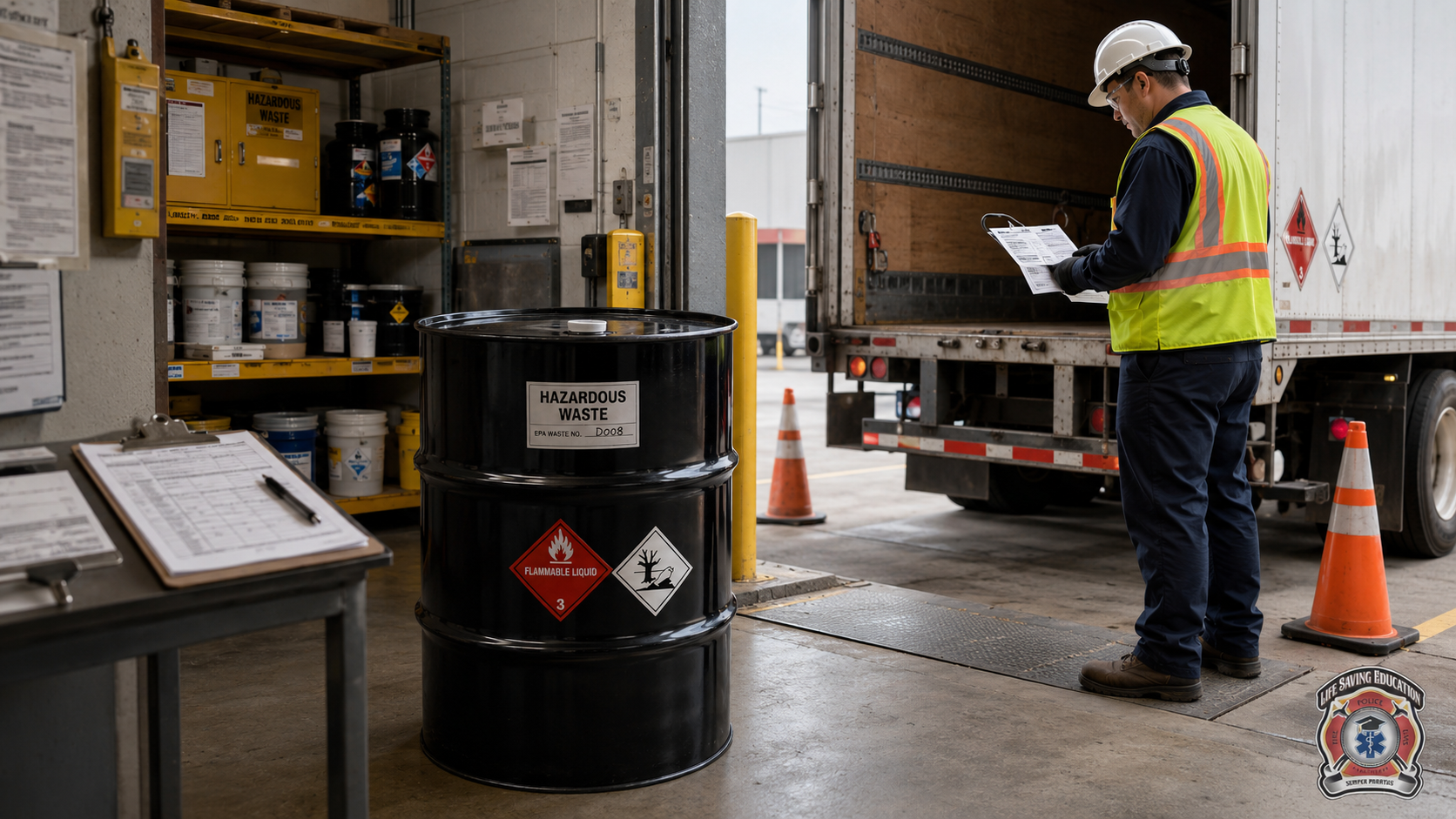
A drum can sit inside a facility under one regulatory system and cross the loading dock into another.
That is where people get tripped up.
Inside the workplace, you may be dealing with EPA hazardous-waste rules, OSHA Hazard Communication, or HAZWOPER. Once the material is being prepared for transportation, DOT’s Hazardous Materials Regulations may apply to the employee’s job functions.
The material did not magically change.
The regulated activity did.
Understanding DOT hazmat vs hazardous waste training is less about memorizing agency names and more about following what happens to the material from generation to transportation and response.
🚚 DOT Hazmat vs Hazardous Waste Training in One Table
| Question | DOT / PHMSA | EPA / RCRA | OSHA / HAZWOPER |
|---|---|---|---|
| What is being regulated? | Hazardous materials transportation | Hazardous-waste generation and management | Worker safety at covered hazardous-waste operations and emergency responses |
| Core federal rules | 49 CFR Parts 171-180 | 40 CFR hazardous-waste rules, especially Part 262 for generators | 29 CFR 1910.120 |
| Who trains? | Hazmat employer trains hazmat employees | Generator/facility trains personnel as required by category and duties | Employer trains covered workers/responders |
| Recurrent cycle | At least every 3 years for hazmat employees | Varies by generator/facility requirement | Annual refresher for several HAZWOPER categories |
| Training focus | General awareness, function-specific, safety, security | Proper waste management and emergency procedures | Hazard recognition, PPE, monitoring, site control, emergency response, role competencies |
The systems can overlap.
A worker may legitimately need more than one.
request customized HazMat and transportation-safety training
Life Saving Education HAZWOPER training
📦 What DOT Hazmat Training Covers
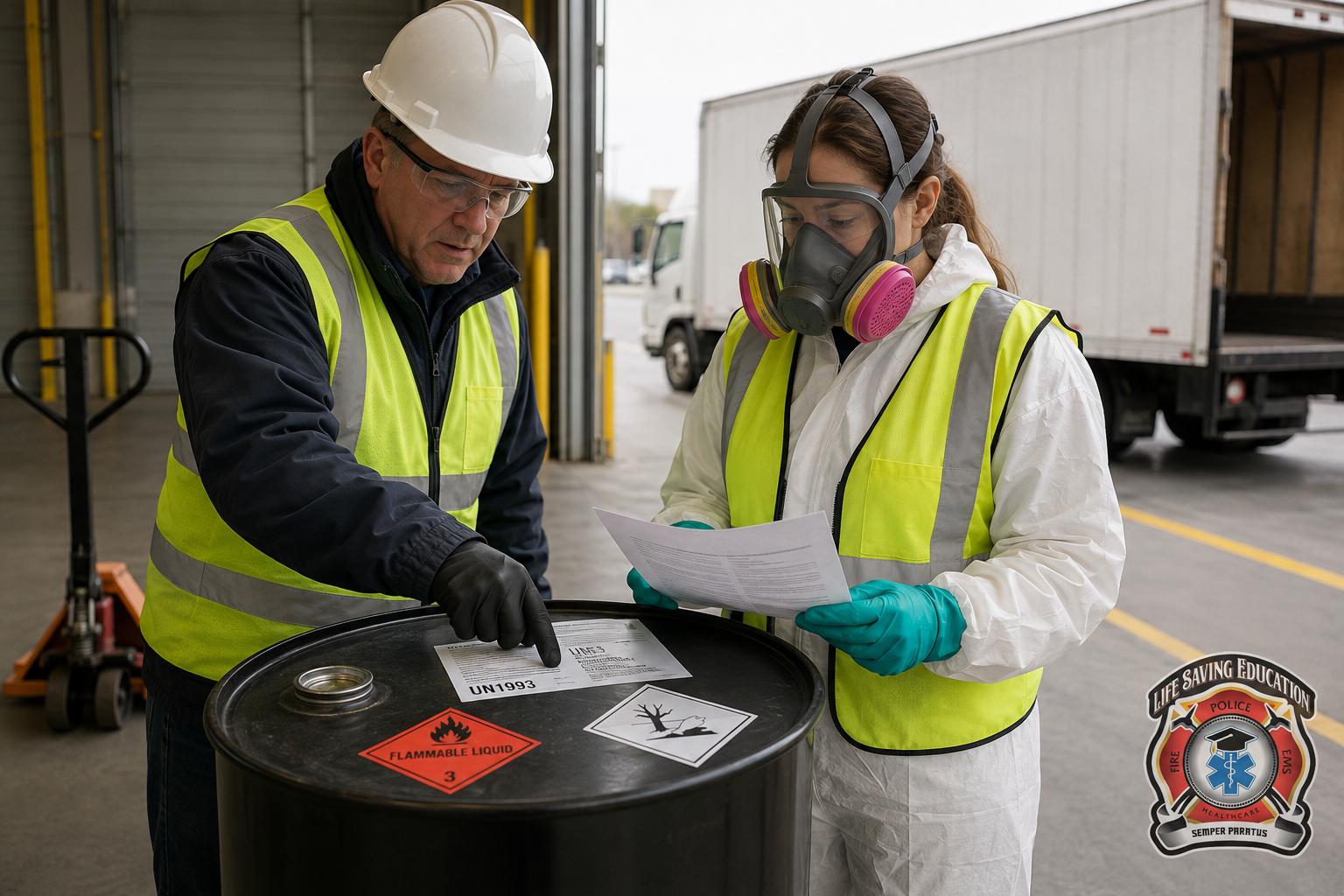
PHMSA administers the Hazardous Materials Regulations, or HMR, for transportation.
A hazmat employee is a person whose job directly affects hazardous-materials transportation safety. That can include people who:
- classify hazardous materials
- select packaging
- fill packages
- mark or label packages
- prepare shipping papers
- load, unload, or handle hazmat in transportation
- operate vehicles transporting regulated hazmat
- inspect, test, or maintain certain hazmat packaging
PHMSA requires hazmat employers to train and test hazmat employees, certify their training, and keep current training records.
Core DOT training elements
- general awareness and familiarization
- function-specific training
- safety training
- security awareness training
- in-depth security training when a security plan is required
- modal-specific requirements where applicable
Someone shipping by highway may have different function-specific needs than someone preparing dangerous goods for air transportation.
How often is DOT hazmat recurrent training required?
At least once every three years under the HMR.
But the three-year cycle is not permission to ignore changes in duties or regulations. PHMSA explains that additional training may be needed when an employee’s job function changes or when applicable regulatory requirements change.
🗑️ What RCRA Hazardous-Waste Training Covers
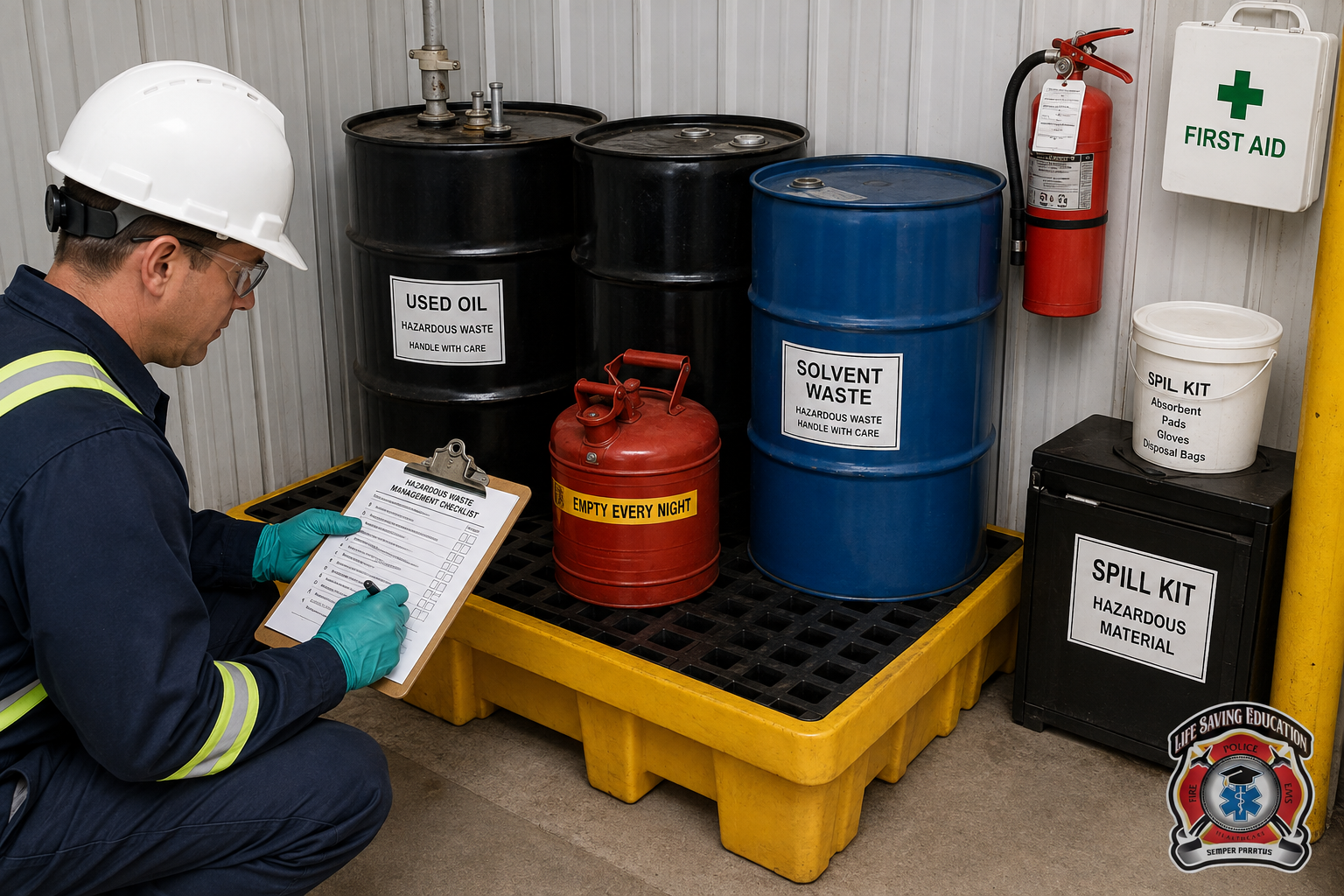
EPA’s RCRA system is about hazardous-waste management from generation through disposal.
For generators, federal training requirements change according to generator category.
Small Quantity Generators
SQGs must ensure employees are thoroughly familiar with proper waste handling and emergency procedures relevant to their responsibilities.
Large Quantity Generators
LQGs must maintain a personnel-training program under 40 CFR 262.17(a)(7). Training can include classroom, online, or on-the-job instruction and must teach hazardous-waste management and emergency procedures relevant to the job.
The LQG system includes records and annual review requirements.
RCRA training focuses on the facility’s waste-management system.
DOT training focuses on transportation functions.
They are related, but they are not interchangeable.
☣️ Where HAZWOPER Fits
HAZWOPER enters when the work falls into one of the operations covered by 29 CFR 1910.120.
- certain uncontrolled hazardous-waste site cleanups
- certain corrective actions and government-recognized voluntary cleanups
- hazardous-waste treatment, storage, and disposal operations
- emergency response to uncontrolled releases of hazardous substances
HAZWOPER is not just "more advanced DOT"
The curriculum and purpose are different.
A 40-hour HAZWOPER course does not automatically make someone trained for every DOT shipping function.
Likewise, DOT general-awareness training does not qualify a worker to enter a hazardous-waste cleanup zone.
The employer has to match the training to the actual work.
🧪 And HazCom Is Another Layer
OSHA’s Hazard Communication Standard, 29 CFR 1910.1200, applies to covered hazardous chemicals in the workplace.
- written hazard-communication programs
- labels and warnings
- Safety Data Sheets
- employee information and training
HazCom may apply before a material becomes waste, while RCRA may apply after the material is discarded and meets the hazardous-waste definition.
This is another reason why the label "hazmat training" is too vague by itself.
Ask: Which hazard, which activity, which rule?
🔄 Follow One Drum Through the System
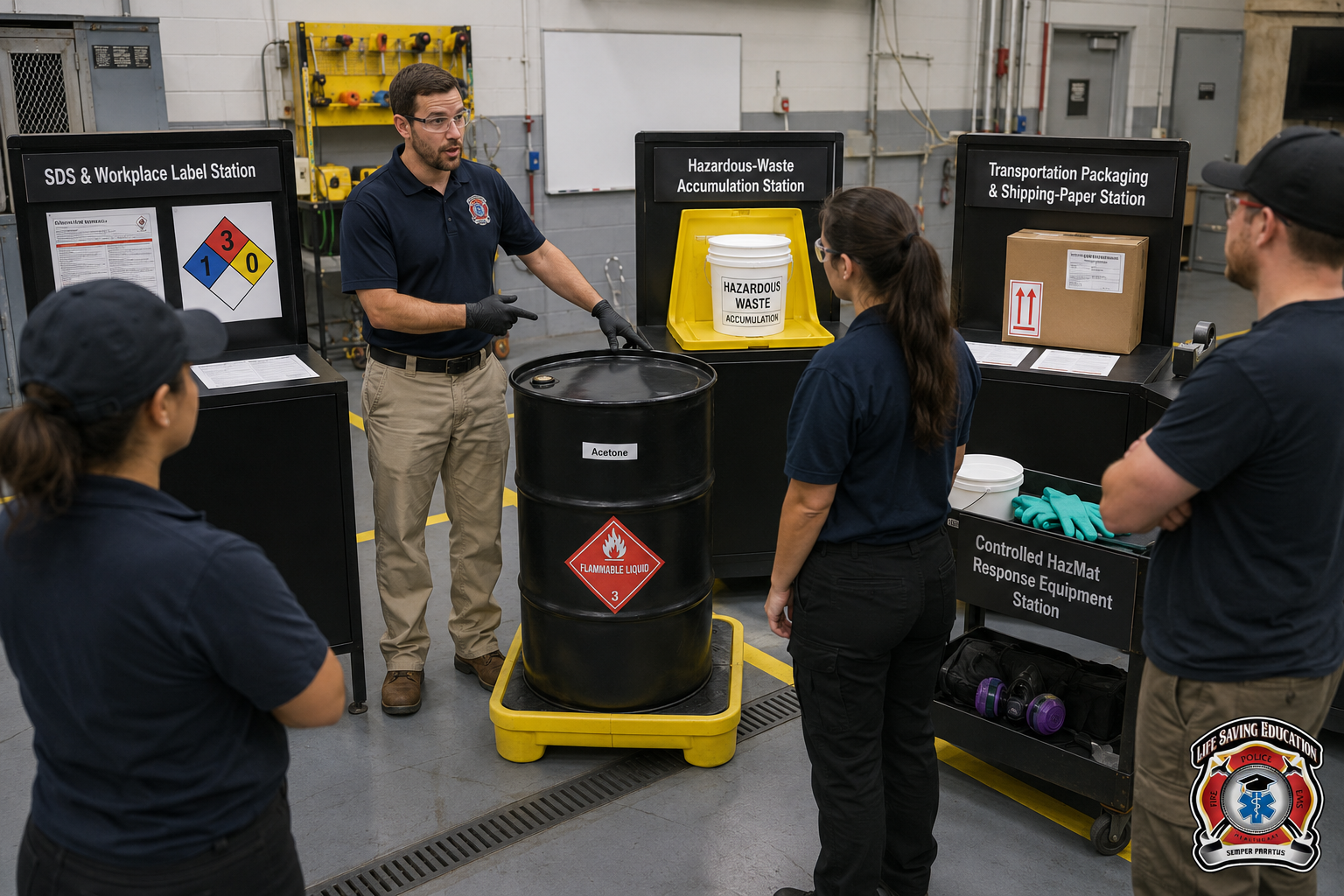
Imagine a manufacturing facility uses a flammable solvent.
Step 1: The solvent is being used
OSHA HazCom may apply. Employees need information and training on the chemical hazard, labels, SDSs, and protective measures.
Step 2: The spent solvent becomes hazardous waste
The facility must make the appropriate hazardous-waste determination and manage the waste under applicable RCRA generator rules.
Employees who manage the waste may need RCRA-related training based on generator status and duties.
Step 3: The waste is accumulated for shipment
Container management, labeling, inspection, emergency planning, and accumulation rules may apply under RCRA.
Step 4: An employee prepares the drum for transportation
Now DOT transportation functions can be triggered. The employee may need function-specific hazmat training for classification, packaging, marks, labels, shipping papers, and other assigned duties.
Step 5: The drum is involved in an uncontrolled release
Depending on the circumstances and employer response plan, HAZWOPER emergency-response requirements may apply to responders.
Same drum. Different point in its life cycle. Different training purpose.
🧠 The lesson: Compliance follows the function.
⚠️ The Mistake of the "One Certificate"
A common procurement mistake is asking a training provider for one certificate that "covers OSHA, EPA, and DOT."
Sometimes courses can legitimately address content that satisfies components across more than one regulation.
PHMSA even allows relevant training from other federal programs to count toward HMR training if it actually addresses the required DOT components.
But that does not mean a certificate title alone proves compliance.
- the employee is in the right training population
- every required component is covered
- function-specific duties are addressed
- testing is completed where required
- certification and records meet the applicable rule
- employer-specific procedures are included when necessary
A course can be part of the solution. The employer’s training program is the compliance system.
📋 DOT vs RCRA vs HAZWOPER Decision Guide
Ask DOT questions when the employee:
- offers hazmat for transportation
- classifies or packages hazmat for shipment
- marks or labels packages
- prepares shipping documentation
- loads or unloads transportation vehicles
- performs other transportation-safety functions
Ask RCRA questions when the employee:
- makes or supports hazardous-waste determinations
- manages accumulation areas
- handles hazardous-waste containers
- conducts inspections
- performs emergency duties at a generator facility
- signs or manages waste documentation
Ask HAZWOPER questions when the employee:
- works at a covered hazardous-waste cleanup site
- works at a covered TSD operation
- performs post-emergency cleanup under applicable provisions
- responds to uncontrolled releases as part of an organized emergency response
Ask HazCom questions when the employee:
- can be exposed to covered hazardous chemicals in the workplace
- needs to understand labels, SDSs, and protective measures
explore OSHA and workplace-safety training
OSHA 10-Hour Training and OSHA 30-Hour Training
🧾 Recordkeeping Is Different Too
DOT requires the hazmat employer to create and retain a current training record for each hazmat employee.
RCRA LQG training documentation has its own personnel-record expectations.
HAZWOPER requires written certificates for certain training and employer documentation of training and experience.
This matters during audits and incident review.
A stack of completion cards without a training matrix can still leave unanswered questions.
🔗 Related Life Saving Education Guides
- HAZWOPER and HazMat response guide
- When a chemical spill becomes a HAZWOPER emergency response
- Life Saving Education HAZWOPER training
- Onsite group safety training
✅ Key Takeaways
- DOT hazmat vs hazardous waste training is a function question, not a vocabulary question.
- DOT/PHMSA regulates hazardous-materials transportation functions.
- EPA/RCRA regulates hazardous-waste management and generator responsibilities.
- OSHA/HAZWOPER regulates worker safety in specific hazardous-waste operations and uncontrolled-release response.
- OSHA HazCom regulates communication of covered workplace chemical hazards.
- One employee can need multiple types of training because one material can move through several regulatory systems.
❓ Frequently Asked Questions
If I have 40-hour HAZWOPER, do I still need DOT hazmat training?
Possibly yes. HAZWOPER does not automatically satisfy DOT function-specific training for hazardous-materials transportation. Relevant portions can sometimes be credited, but the hazmat employer must ensure all required HMR training elements are covered.
Is hazardous waste automatically a DOT hazardous material?
Many hazardous wastes are regulated as hazardous materials in transportation, but classification must be made under the applicable HMR. Do not rely on the word "waste" alone.
How often is DOT hazmat training required?
PHMSA requires recurrent hazmat employee training at least once every three years. Additional training can be required when job functions or applicable regulations change.
Is RCRA training annual?
For LQGs, the federal personnel-training provisions include annual review of initial training. SQG requirements are structured differently. State rules can add requirements.
Who is responsible for DOT training compliance?
The hazmat employer is responsible for ensuring hazmat employees are trained, tested, certified, and documented as required. Outside training providers can assist, but the regulatory responsibility remains with the employer.
🎯 Build a Training Matrix That Follows the Material
The easiest way to stop mixing these rules together is to map the material’s life cycle and the employee’s job functions.
What happens inside the facility? What happens when it becomes waste? Who prepares it for shipment? Who responds if it is released?
Those answers tell you which training systems belong in the matrix.
Life Saving Education provides practical HazMat, HAZWOPER, OSHA, and workplace-safety education designed to help employers connect regulatory requirements with real job functions.
Life Saving Education HAZWOPER training
Onsite Group Training
Training You Can Count On. When Seconds Count.
📚 Sources and Further Reading
- PHMSA, Hazardous Materials Training Requirements
- PHMSA, Training Requirements for Industry
- EPA, Hazardous Waste Generator Regulatory Summary
- OSHA, 29 CFR 1910.120 HAZWOPER
- OSHA, 29 CFR 1910.1200 Hazard Communication
⚖️ Educational Disclaimer
This article is provided by Life Saving Education for general educational purposes only. It is not medical, legal, or compliance advice, and it is not a substitute for hands-on training or professional guidance. Regulations and clinical guidance change and may vary by state, jurisdiction, employer, operation, or mode of transportation. Verify the current requirements that apply to your situation. In an emergency, call 911.