Prepared by the LSE Editorial Team. Reviewed by Joseph Andrade, Jr., RN, NRP.
Joseph works across emergency response, healthcare, and workplace safety and develops practical training for civilians, employers, and first responders.
A chemical can be regulated differently depending on what you are doing with it.
Use it in the workplace and OSHA may be central. Store enough of it and community emergency-planning or fire-code requirements may matter. Ship it and DOT’s Hazardous Materials Regulations can take over. Discard it and EPA hazardous-waste rules may apply. Respond to an uncontrolled release and HAZWOPER may enter the picture.
That is why hazardous materials handling compliance is not one regulation.
It is a handoff between regulatory systems.
🗺️ Hazardous Materials Handling Compliance Starts With the Activity
| Activity | Main federal framework to evaluate |
|---|---|
| Workplace chemical use and exposure | OSHA Hazard Communication and chemical-specific standards |
| Emergency response / covered waste operations | OSHA HAZWOPER |
| Community chemical inventory / emergency planning | EPA EPCRA |
| Hazardous-waste generation | EPA RCRA |
| Offering hazmat for transportation | DOT/PHMSA HMR |
| Transportation security | DOT/PHMSA security-plan rules where applicable |
This table is a starting map, not a complete legal determination.
State, local, fire-code, environmental, industry, and facility-specific rules can add requirements.
OSHA 10-Hour Training and OSHA 30-Hour Training
Life Saving Education HAZWOPER training
🏷️ Step 1: Know What You Have
You cannot manage a chemical safely or compliantly if you do not know what it is.
Start with:
- product identifier
- current Safety Data Sheet
- physical and health hazards
- quantity on site
- storage conditions
- incompatibilities
- employee exposure potential
- whether it is regulated for transportation
- what happens when it becomes waste
OSHA’s Hazard Communication Standard requires covered employers to maintain hazard information through labels, SDSs, a written program, and employee training.
For transport, DOT classification uses the Hazardous Materials Regulations and the Hazardous Materials Table, not the workplace GHS label alone.
For waste, RCRA classification is another separate determination.
Do not assume one classification system automatically answers the others.
📦 Step 2: Store and Segregate for the Actual Hazard
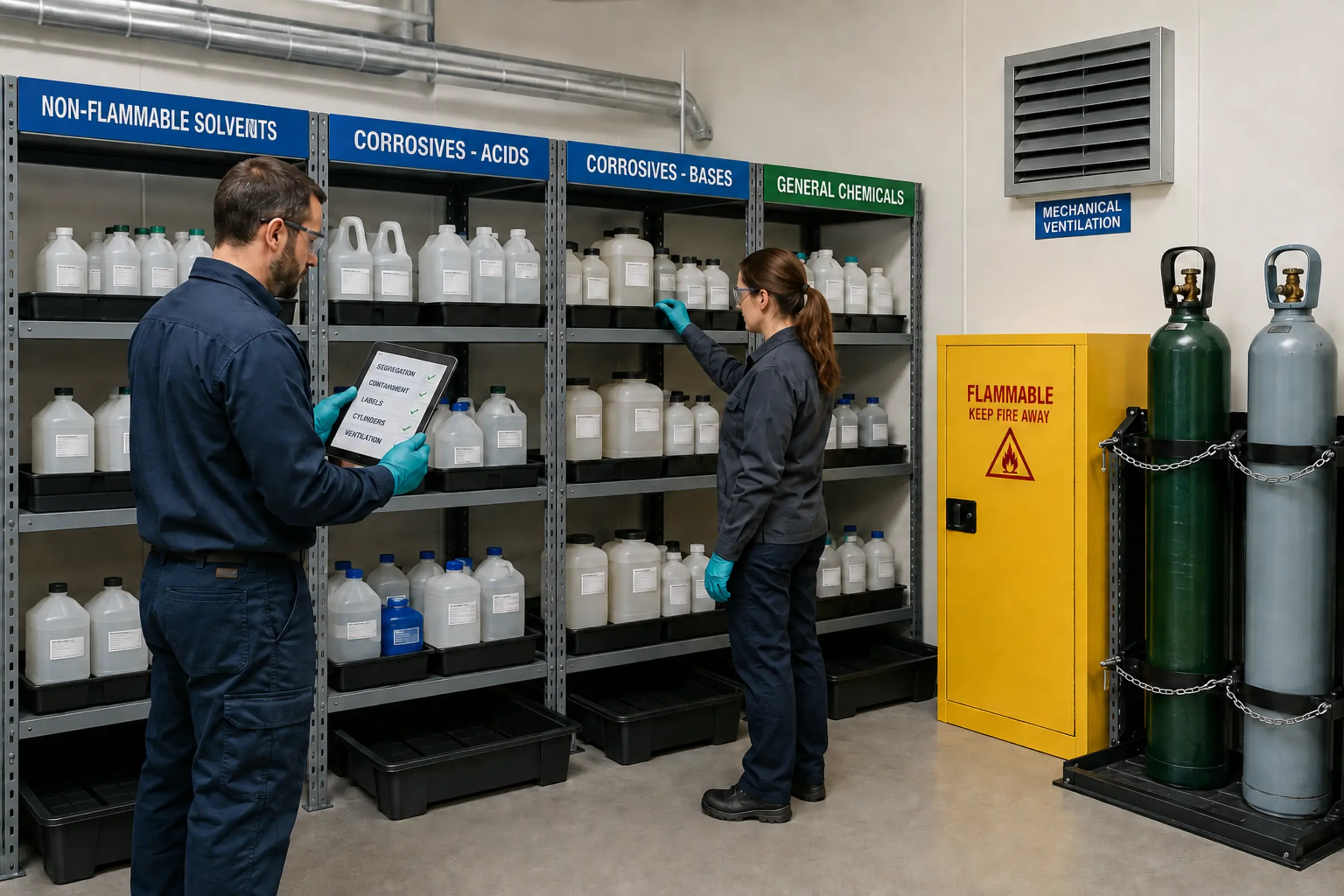
Safe storage should reflect chemical compatibility and manufacturer information.
Depending on the material, controls can include:
- compatible containers
- closed containers
- secondary containment
- segregation of incompatibles
- ventilation
- ignition control
- temperature control
- cylinder securing
- spill control
- restricted access
- emergency equipment
OSHA, EPA, fire codes, local authorities, insurance standards, and consensus standards can all influence the final storage design.
The SDS is a starting source, especially Sections 7 and 10, but site-specific risk assessment still matters.
👷 Step 3: Train Employees for Their Actual Functions
OSHA HazCom
Employees need effective information and training on hazardous chemicals in their work area at initial assignment and when a new chemical hazard is introduced that they have not previously been trained on.
DOT Hazmat
Hazmat employees need general awareness, function-specific, safety, security-awareness, and applicable security-plan and modal training. Recurrent training is generally at least every three years.
HAZWOPER
Covered cleanup-site workers, hazardous-waste TSD employees, and emergency responders have training requirements based on the operation and role under 29 CFR 1910.120.
RCRA hazardous waste
Generator and facility personnel-training requirements depend on generator category, facility type, and duties.
One employee may need several layers because the person’s job crosses several activities.
explore OSHA and workplace-safety training
request customized HazMat and transportation-safety training
📄 Step 4: Make Safety Data Sheets and Procedures Usable
SDSs should be readily accessible to employees during their work shift.
But access alone is not enough.
Employees should know how to find:
- hazards
- PPE
- first aid
- firefighting information
- accidental-release information
- storage conditions
- incompatibilities
Written procedures should connect the SDS to the actual facility.
For example, "use appropriate PPE" is weaker than an employer procedure that identifies the PPE selected for the task and its limitations.
🚨 Step 5: Know Which Release Is an Employee Spill and Which Is an Emergency
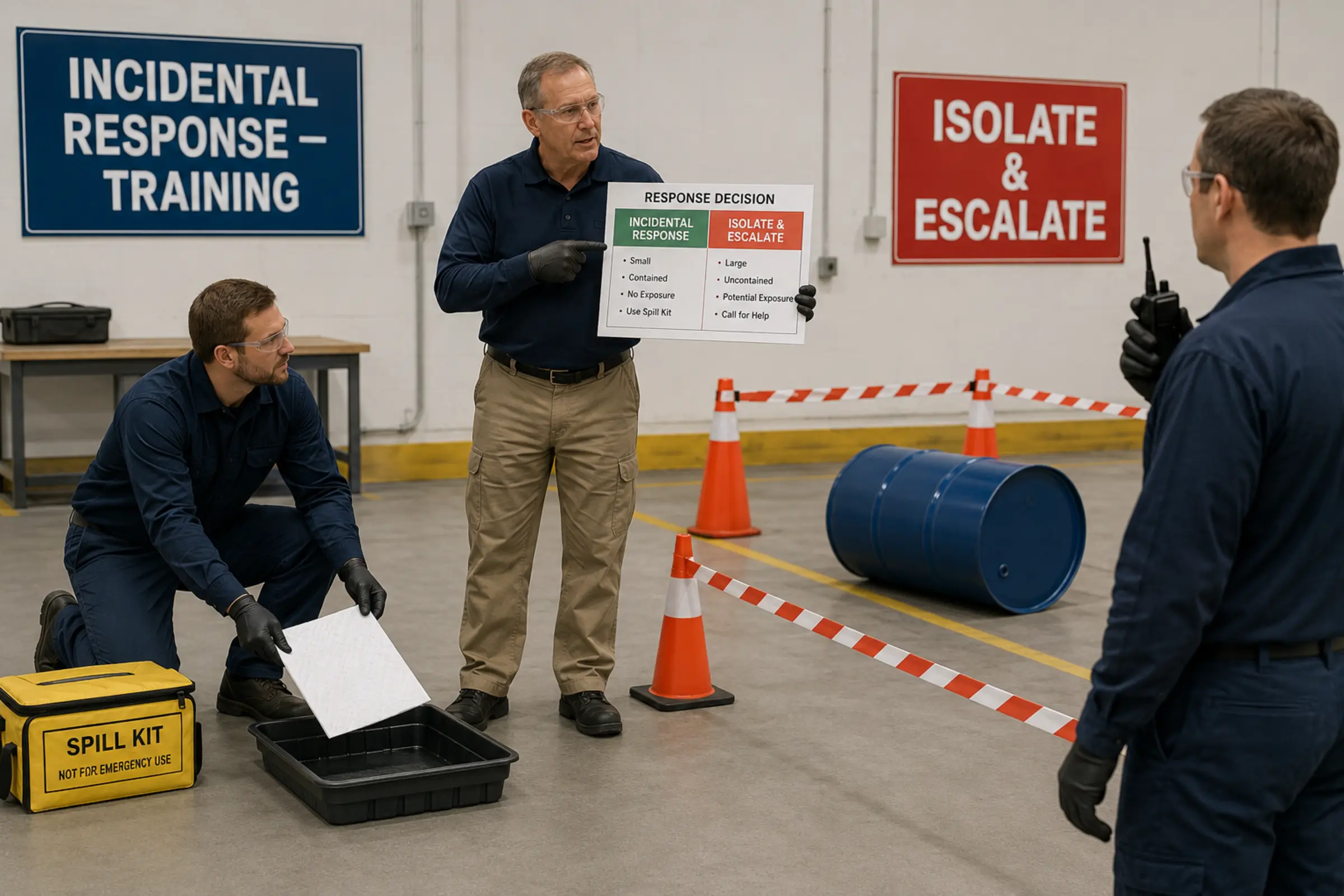
This boundary matters.
OSHA HAZWOPER distinguishes emergency response to uncontrolled releases from certain incidental releases that employees can safely control within the normal scope of their work using available equipment and procedures.
The employer should define:
- who may clean up minor incidental releases
- what equipment they use
- when employees evacuate
- who calls the HazMat team or fire department
- how emergency notification works
- how decontamination and medical response are handled
Training employees to clean every spill they see can put them into a role they were never trained or equipped to perform.
🏘️ Step 6: Check EPCRA Community Right-to-Know Duties
EPA’s Emergency Planning and Community Right-to-Know Act, or EPCRA, creates emergency-planning and chemical-reporting requirements for certain facilities.
Sections 311 and 312 can require facilities with covered hazardous chemicals above applicable thresholds to provide SDS or chemical-list information and annual chemical inventory reporting to state or tribal emergency response commissions, local or tribal emergency planning committees, and the local fire department.
Tier II inventory reports are generally due March 1 for covered facilities.
EPCRA Section 304 can require emergency release notifications for releases of certain reportable substances.
These requirements are separate from OSHA’s employee right-to-know system.
One protects workers inside the workplace. The other helps communities and responders plan around chemicals present at facilities.
🚚 Step 7: When It Ships, Use the HMR
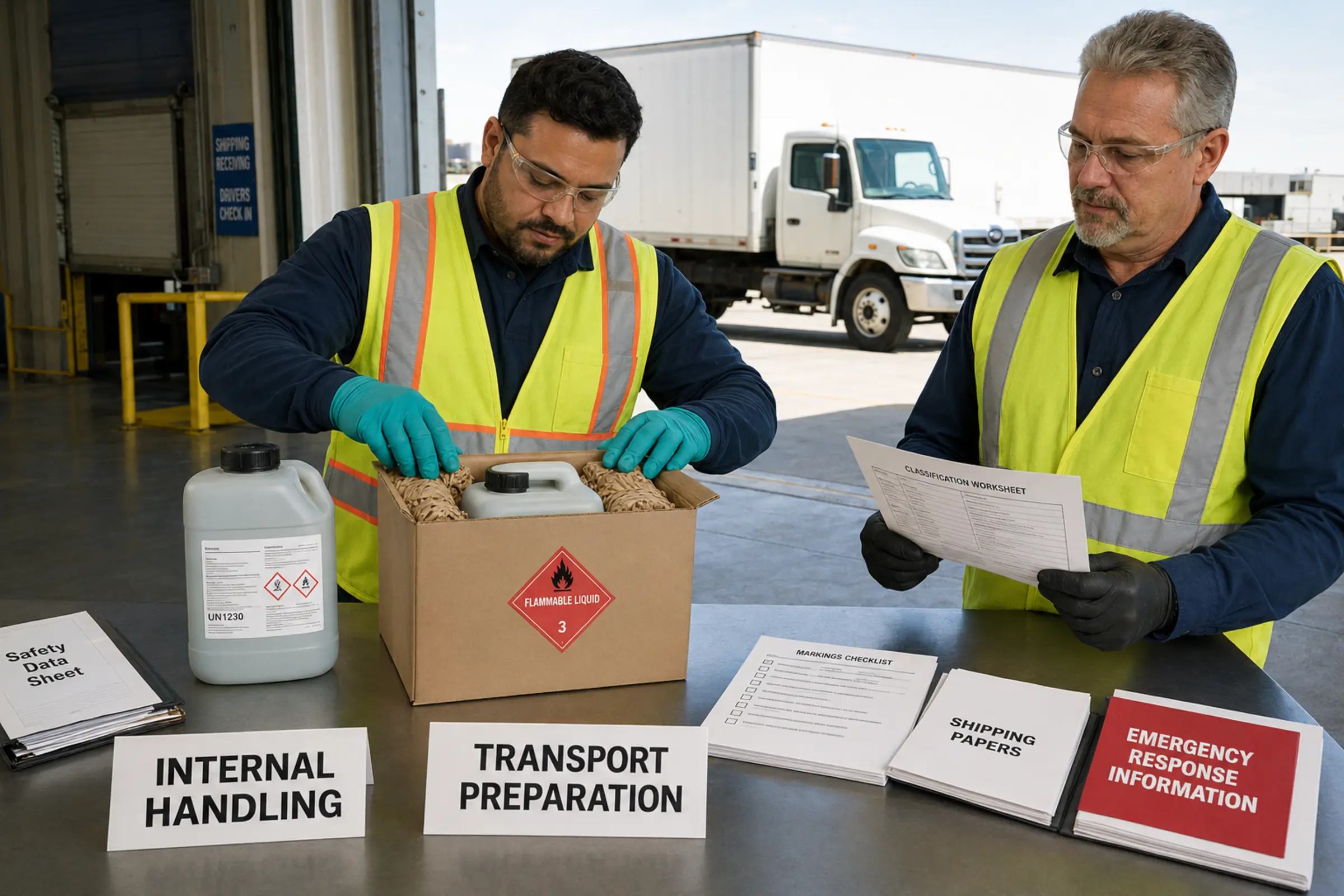
Preparing a hazardous material for transportation can trigger DOT/PHMSA requirements for:
- classification
- proper shipping name
- UN or NA identification number
- hazard class/division
- packing group when applicable
- authorized packaging
- package closure
- marking and labeling
- placarding where required
- shipping papers
- emergency-response information
- hazmat employee training
- security requirements where applicable
Do not use the SDS transportation section as the sole compliance decision.
The shipper is responsible for applying the HMR correctly.
🗑️ Step 8: When It Becomes Waste, Reclassify the Problem
Once a material is discarded, hazardous-waste rules may apply.
The generator has to determine whether the waste is regulated under RCRA and applicable state rules.
That can affect:
- accumulation time
- container requirements
- labels and dates
- inspections
- emergency planning
- training
- manifests
- disposal facility selection
- recordkeeping
A chemical that was managed correctly while in use can still be mismanaged after it becomes waste.
🔐 Step 9: Security Is Part of HazMat Transportation
DOT requires security-awareness training for hazmat employees.
Certain operations involving specified types and quantities of hazardous materials must also develop security plans under 49 CFR Part 172, Subpart I.
Those plans address personnel security, unauthorized access, and en route security.
Security is not an add-on after safety. It is another part of the transportation risk system.
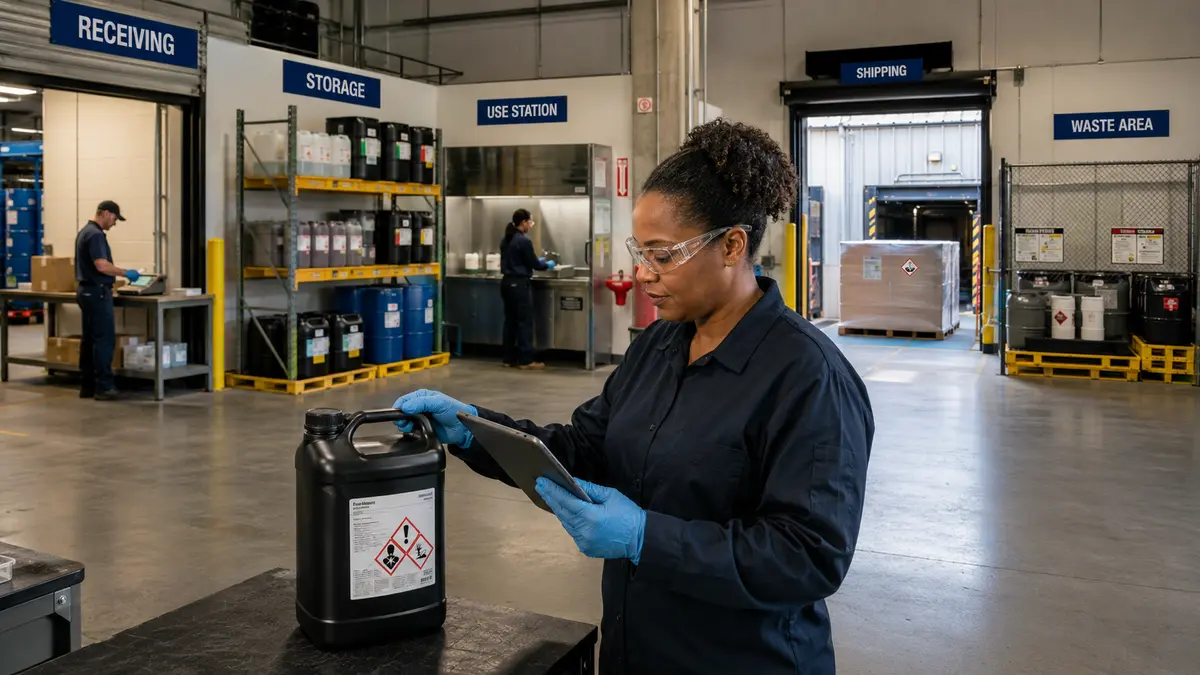
🔄 Step 10: Audit the Handoffs
Most compliance failures happen at transitions.
Ask:
- Did receiving obtain the SDS?
- Did EHS add the chemical to the inventory?
- Did the storage location account for incompatibilities?
- Did the employee receive training before exposure?
- Did shipping classify the material under DOT rules?
- Did waste staff make a new hazardous-waste determination when the material was discarded?
- Did emergency planning account for on-site quantities?
A strong program audits the handoffs, not just the departments.
📋 Hazardous Materials Compliance Master Checklist
- Current chemical inventory is maintained.
- Labels and SDSs are accessible and accurate.
- Storage and compatibility controls are defined.
- HazCom training matches actual workplace hazards.
- Spill-response boundaries are documented.
- HAZWOPER applicability is evaluated for cleanup and emergency response.
- EPCRA reporting thresholds and release-notification duties are evaluated.
- Hazardous-waste determinations are documented.
- DOT shipping classifications and packaging are verified.
- Hazmat employees are trained for actual transportation functions.
- Security-plan applicability is checked.
- State and local requirements are added to the federal baseline.
- Regulatory changes are reviewed on a defined schedule.
✅ Key Takeaways
- Hazardous-materials compliance changes with the activity, not just the chemical name.
- OSHA, EPA, and DOT can regulate different stages of the same material’s life cycle.
- HazCom labels do not replace DOT transportation classification or RCRA waste determination.
- EPCRA community reporting is different from OSHA employee hazard communication.
- The best compliance audits follow a material across departmental handoffs from receipt through disposal.
❓ Frequently Asked Questions
Which agency regulates hazardous-material handling?
It depends on the activity. OSHA focuses on worker safety, EPA regulates environmental programs such as RCRA and EPCRA, and DOT/PHMSA regulates hazardous materials in transportation. State and local agencies can add additional requirements.
Does an SDS tell me how to ship a hazardous material?
The SDS can provide useful transportation information, but the shipper remains responsible for proper classification and compliance with the Hazardous Materials Regulations. Do not rely on the SDS alone as the regulatory determination.
Is HazCom training enough for someone shipping hazardous materials?
Not necessarily. Employees performing covered transportation functions may be hazmat employees under DOT rules and need the training required by 49 CFR 172.704.
Does every chemical spill require a HAZWOPER response?
No. OSHA distinguishes certain incidental releases that can be safely controlled by employees in the normal course of work from emergency responses to uncontrolled releases. The employer must define and train for that boundary.
What is Tier II reporting?
EPCRA Section 312 requires covered facilities to submit annual emergency and hazardous chemical inventory information, commonly called Tier II reporting, to designated state or tribal, local planning, and fire-department authorities, generally by March 1.
Training Excellence, Real-World Readiness.
Build One System Across the Handoffs
The employee handling the container does not care which agency owns which paragraph. They need one clear workplace system. Life Saving Education helps employers connect OSHA, HAZWOPER, HazMat, emergency-response, and transportation requirements to actual work practices.
📚 Authoritative Sources
- OSHA, 29 CFR 1910.1200 Hazard Communication
- OSHA, 29 CFR 1910.120 HAZWOPER
- EPA, Emergency Planning and Community Right-to-Know Act
- EPA, Hazardous Chemical Inventory Reporting
- EPA, RCRA Overview
- PHMSA, Hazardous Materials Training Requirements
- PHMSA, Hazmat Transportation Requirements
⚖️ This article is provided by Life Saving Education for general educational purposes only. It is not medical, legal, or compliance advice, and it is not a substitute for hands-on training or professional guidance. Regulations and clinical guidelines change and vary by state, jurisdiction, job function, and operation. Verify current requirements for your situation. In an emergency, call 911.