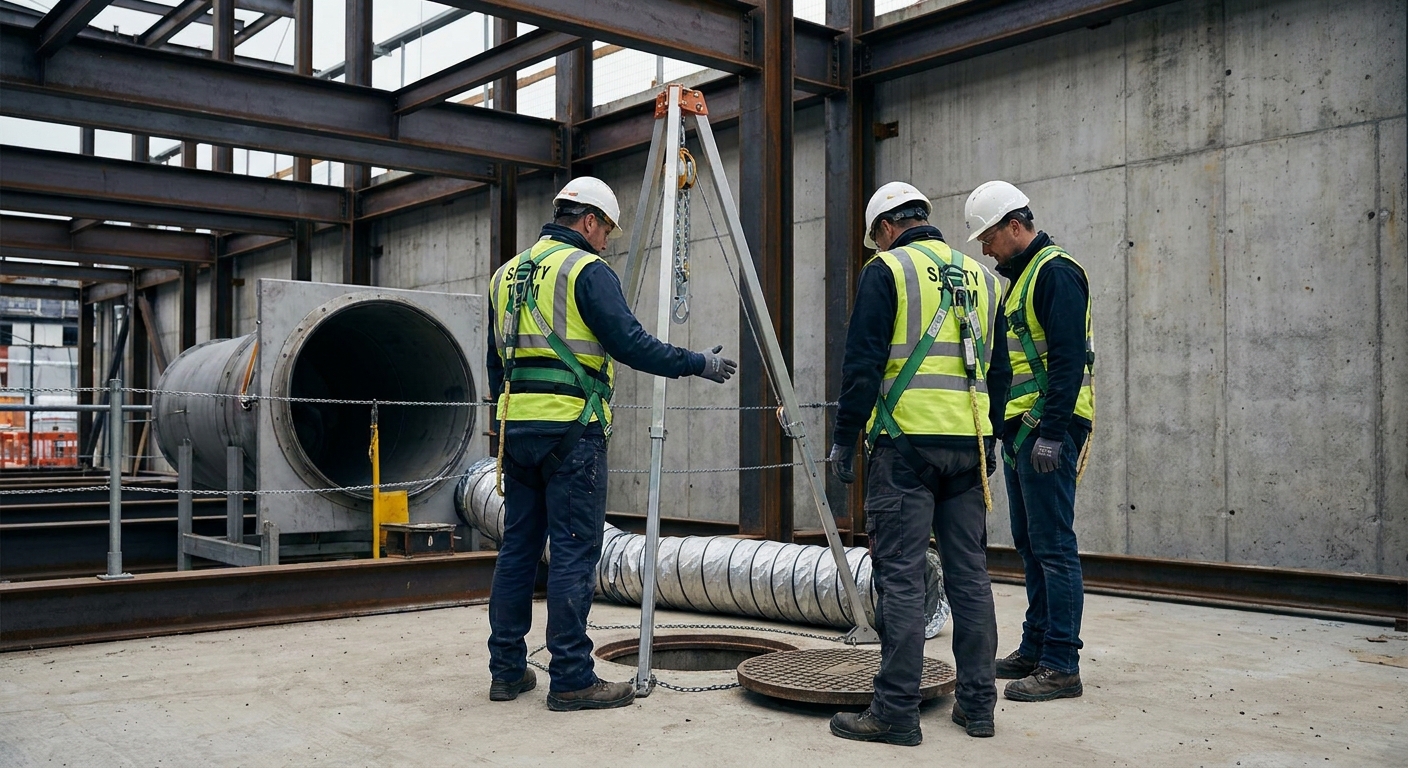
Prepared by the LSE Editorial Team. Reviewed by Joseph Andrade, Jr., RN, NRP.
Joseph is an active firefighter, paramedic, and registered nurse working in emergency and vascular access care, as well as an OSHA Outreach instructor and safety officer. He has spent his career on the response side of emergencies, from the fireground to the ambulance to the hospital bedside, and now trains civilians, workplaces, and first responders in the skills that save lives.
From a Friend “Early in my career, I worked around the underground vaults and manholes that run beneath a big city. The training was clear. Test the air before you go down. Every time. No exceptions. Then out in the real world, I watched crews drop into those holes day after day without ever touching a meter. Nobody got hurt, so nobody worried.” That is exactly how these spaces kill people.
Confined space safety is one of those topics that sounds boring until you understand what actually happens when it goes wrong. It does not go wrong slowly. It goes wrong in seconds, and it very often takes more than one person. This guide walks through what a confined space really is, why these spaces are so deadly, and the specific steps that keep workers and their would-be rescuers alive.
What counts as a confined space
Not every tight spot is a confined space in the legal and safety sense. OSHA defines a confined space by three features. It is large enough for a worker to enter and do work. It has limited or restricted means of entry or exit. And it is not designed for continuous occupancy.
Think about what fits that description. Tanks, silos, storage bins, hoppers, vaults, pits, manholes, sewers, tunnels, boilers, ductwork, pipelines, and crawl spaces. Some are obvious. Others, like a large agricultural bin or a utility vault under a sidewalk, do not look dangerous at all. That ordinary appearance is part of the trap.
Permit-required confined spaces
The category that demands the most respect is the permit-required confined space. Under OSHA standard 29 CFR 1910.146 for general industry, a confined space becomes permit-required when it has one or more of these added hazards.
A hazardous atmosphere, meaning air that is oxygen-deficient, oxygen-enriched, toxic, or flammable. A material that could engulf and bury someone, like grain, sand, or liquid. An internal shape that could trap or asphyxiate a person, such as inwardly converging walls or a floor that slopes down to a narrow section. Or any other recognized serious safety or health hazard, like unguarded moving parts, live electrical components, or extreme heat.
Construction work has its own closely related rule under 29 CFR 1926 Subpart AA. The core ideas are the same. If a space can hold a serious hazard and a worker has to climb inside, the casual approach is not an option.
Why confined spaces are so deadly
The reason confined spaces kill has almost nothing to do with the space being tight and almost everything to do with the air inside it.
The atmosphere is the number one killer
The leading cause of death in confined spaces is a hazardous atmosphere, usually oxygen deficiency or toxic gas. Here is what makes it so dangerous. You cannot see it. You often cannot smell it. And your body gives you very little warning before it shuts down.
Normal air is about 21 percent oxygen. Drop that even a few points and a person can become confused, weak, and unable to save themselves. Drop it further and they can lose consciousness in a breath or two. Gases like hydrogen sulfide and carbon monoxide can be lethal at concentrations you would never detect on your own. Some gases are heavier than air and pool at the bottom of a space, exactly where a worker is headed. Others displace oxygen entirely.
The cruel part is that the space can test and feel completely normal at the top and be deadly at the bottom. That is why the air feels fine right up until it does not.
The rescuer trap
Now here is the statistic that defines this entire topic. According to the National Institute for Occupational Safety and Health, more than 60 percent of confined space fatalities are the would-be rescuers.
Read that again. Most of the people who die in these spaces did not go in to do the job. They went in to save a coworker who had already collapsed.
It makes tragic sense. A worker goes quiet at the bottom of a tank. A friend or a supervisor sees it, and every human instinct screams to climb in and help. So they do, with no air monitoring, no breathing protection, and no plan. The same invisible atmosphere that dropped the first person drops the second, and sometimes a third and a fourth. Multiple-fatality incidents in the workplace are frequently confined space rescues gone wrong.
This is why the hardest and most important rule in confined space safety is also the most counterintuitive. Do not go in after them.
The numbers behind the risk
The scale of this problem is easy to underestimate because these deaths happen a few at a time and rarely make national news.
According to data from the Bureau of Labor Statistics, confined spaces account for roughly 90 or more worker fatalities per year in the United States, close to two every week. OSHA estimates that millions of confined space entries are made annually across American industry. The vast majority go fine, which is part of the problem, because routine breeds complacency.
The industries hit hardest include construction, manufacturing, agriculture, utilities, water and wastewater treatment, and oil and gas. If your operation has tanks, vaults, pits, or bins, this is your issue whether you have had an incident or not.
The safe entry process, step by step
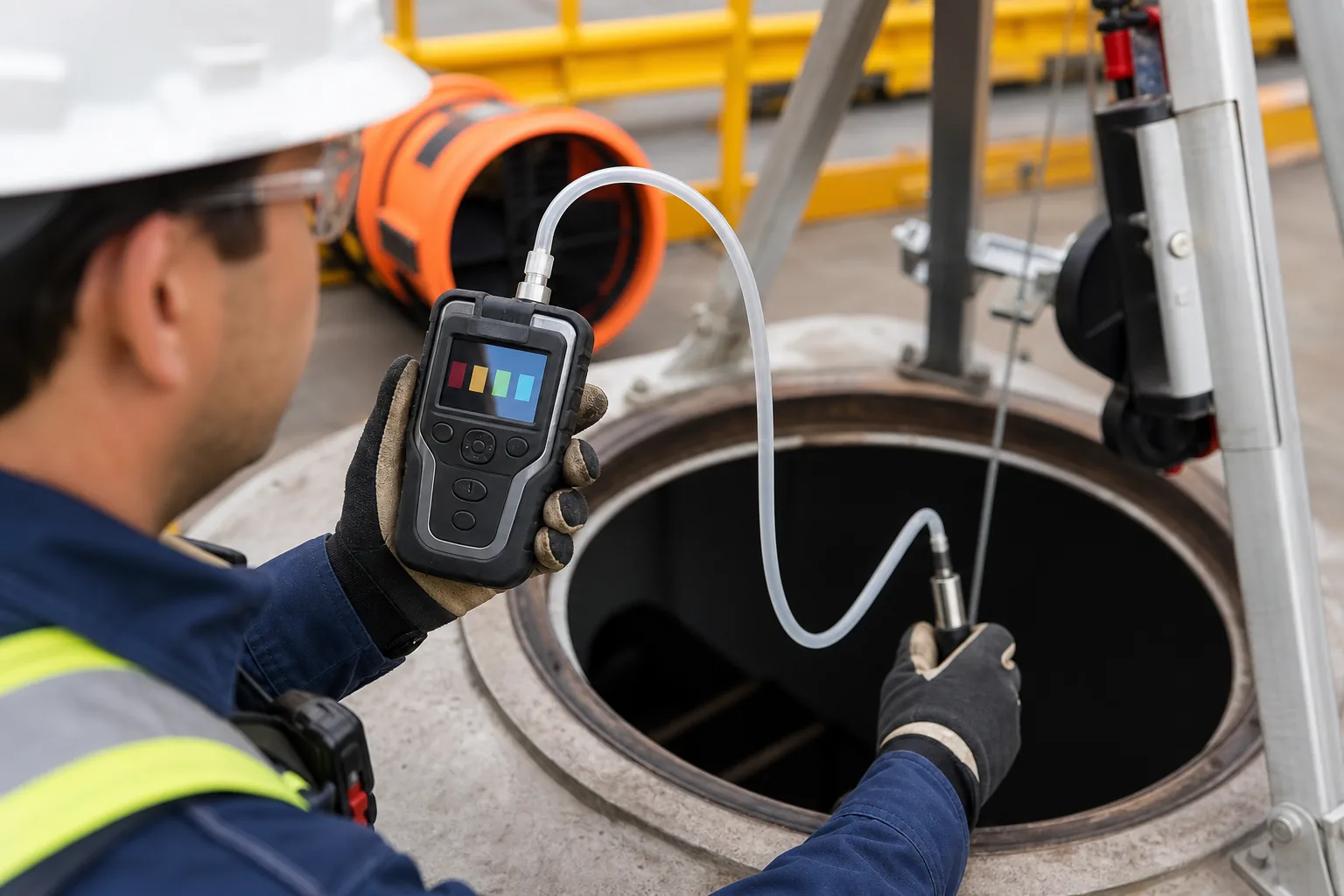
The good news is that confined space deaths are highly preventable. The process is well established, and when crews actually follow it, these spaces become manageable rather than lethal. Here is the framework that a permit-required entry follows.
1. Identify and evaluate the space
Before anyone approaches, a qualified person identifies whether the space is permit-required and what hazards it may hold. This drives everything that follows.
2. Test the atmosphere before entry
This is the step my old crews skipped, and it is the one that saves the most lives. Test the air with a calibrated meter before anyone enters. The correct testing order matters: oxygen first, then flammable gases, then toxic gases. Test at the top, middle, and bottom of the space, because hazards layer at different heights.
3. Ventilate and control the hazards
If the atmosphere is unsafe, use forced-air ventilation to make it safe, and isolate the space from anything that could reintroduce a hazard. That means locking out and tagging out energy sources, blanking off pipes, and stopping any product flow into the space.
4. Monitor continuously
Testing once is not enough. Conditions change. A pocket of gas can shift, ventilation can fail, or a task inside the space can generate new hazards. Continuous monitoring means the meter stays in the space and keeps reading the whole time work is happening.
5. Assign an attendant and use a permit
A trained attendant stays outside the space at all times, in constant communication with the entrant, watching for trouble and ready to summon rescue. The entry permit documents the hazards, the test results, the control measures, and who is doing what. It is not paperwork for its own sake. It is the checklist that forces every safety step to actually happen.
6. Have a real rescue plan
Every permit entry requires a rescue plan that does not depend on untrained coworkers rushing in. This is where the 60 percent statistic gets its answer.
Who does what: the three confined space roles
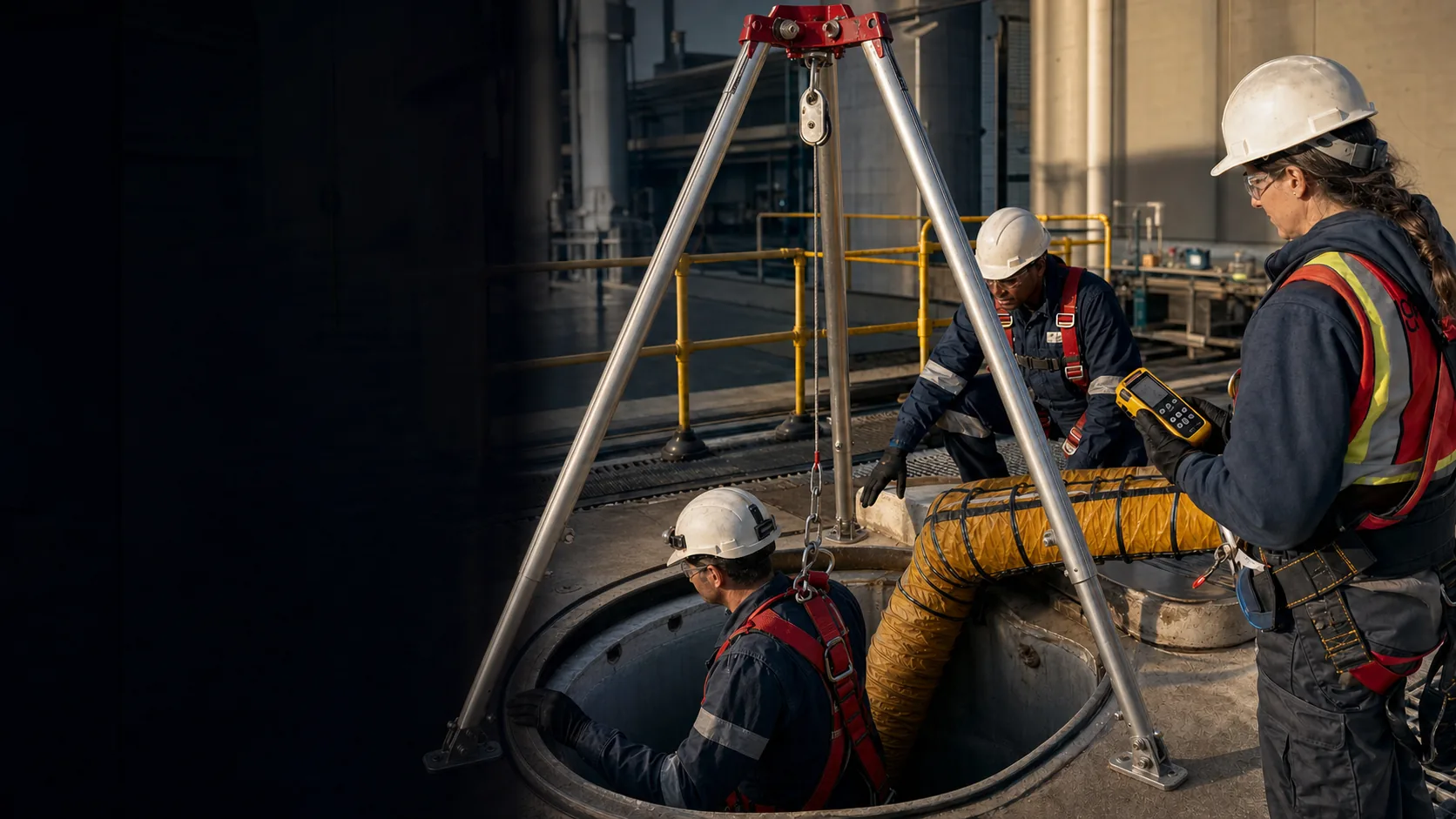
A safe permit entry runs on three clearly assigned roles, and every worker on the job should know which one they hold before anyone approaches the space.
The entrant is the person who goes inside. Their job is to know the hazards, use the required equipment, stay in constant contact with the attendant, and get out immediately if anything changes or the attendant tells them to.
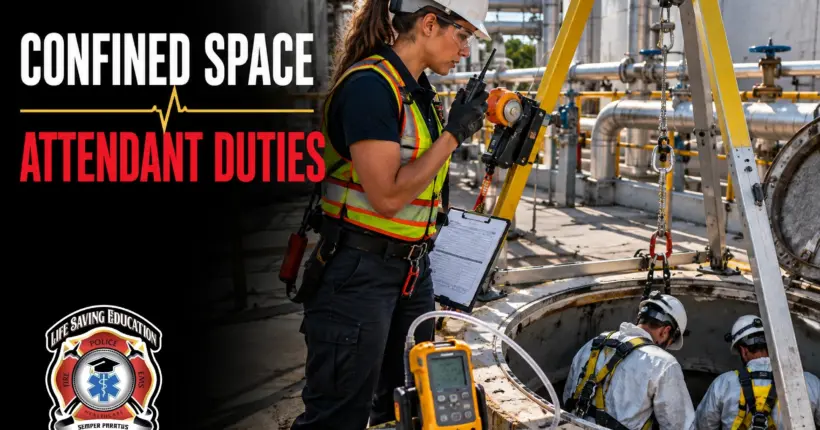
The attendant stays outside the space the entire time, and this role is the safety backbone of the whole operation. The attendant monitors conditions, keeps count of who is inside, maintains communication, orders an evacuation at the first sign of trouble, and summons rescue. The one thing the attendant never does is enter the space to attempt a rescue, because that is exactly how attendants become victims.
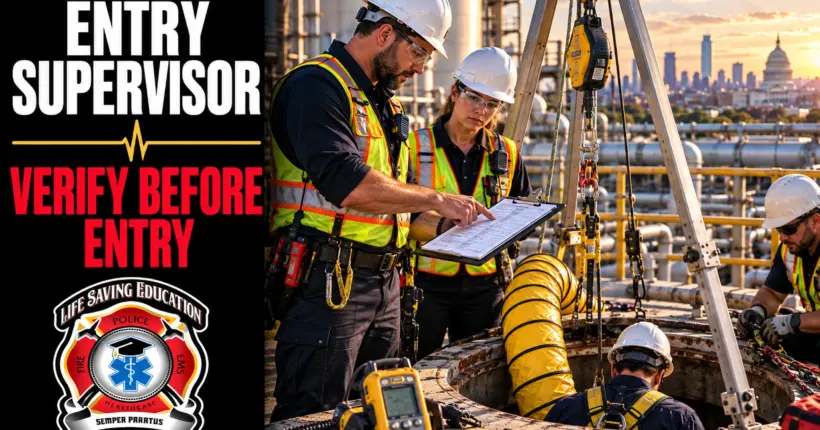
The entry supervisor authorizes the entry, verifies that testing and controls are in place, signs the permit, and cancels it when the work is done or conditions change. The supervisor owns the decision that the space is safe to enter in the first place.
When these roles are clear and respected, the system works. When they blur, when the attendant wanders off to help with the job, or the supervisor rubber-stamps the permit without checking, the safety net disappears.
The rescue plan: never go in after them
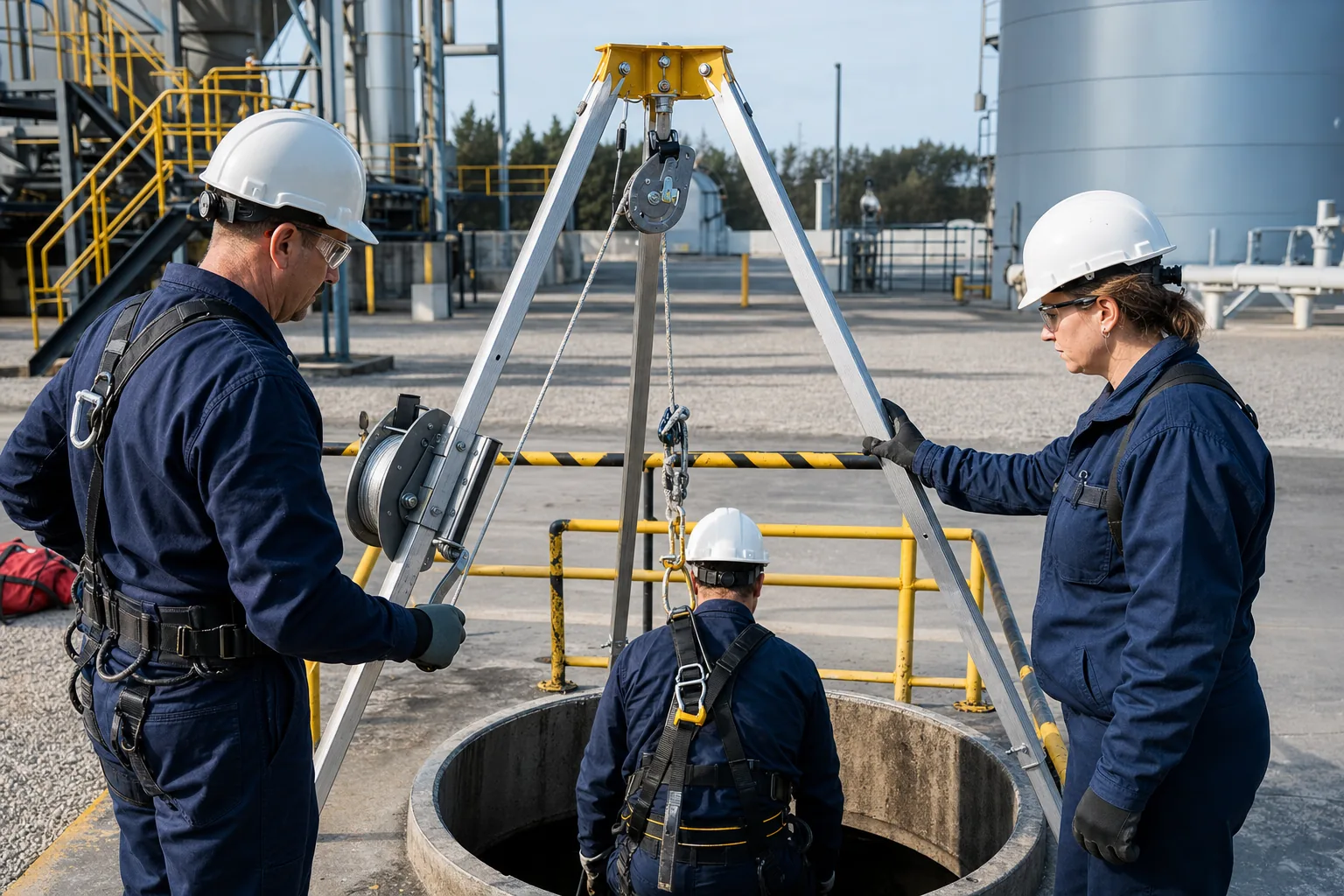
When someone goes down inside a confined space, the natural response is the deadly one. A proper rescue plan replaces instinct with a system.
The safest rescues are non-entry rescues, where the entrant wears a harness attached to a retrieval line and a mechanical device outside can haul them out without anyone else going in. When entry rescue is truly necessary, it is performed only by people trained and equipped for it, with their own air monitoring and breathing protection, practicing rescues from similar spaces at least once a year.
For everyone else, the rule is simple and it must be drilled until it is reflex. If a worker goes down inside, do not enter. Call 911 and your trained rescue resource, and do everything you can from outside. It feels wrong. It feels like abandoning your friend. But an untrained entry does not create one save. It creates two victims.
I have seen the aftermath of people who could not hold that line, and I understand completely why they could not. That is exactly why the training and the culture have to be built before the emergency, not improvised during it.
Building a confined space safety culture
Here is the hard truth from my years around these spaces. Most confined space deaths are not caused by workers who did not know the rules. They are caused by workers who knew the rules and skipped them because nothing bad had happened yet.
The meter feels like a hassle. The permit feels like bureaucracy. The attendant feels like a wasted body who could be helping with the work. So a crew shortcuts the process, gets away with it, and the shortcut becomes the routine. The routine holds right up until the day the atmosphere is bad, and then it fails catastrophically.
Fixing that is a leadership problem as much as a training problem. Supervisors have to treat the process as non-negotiable, model it themselves, and make it clear that no job is worth skipping the air test. The crews that go home are the ones where testing the air is as automatic as putting on a seatbelt.
Key Takeaways
- A confined space is large enough to enter, has limited entry or exit, and is not designed for continuous occupancy. It becomes permit-required when it holds a serious hazard like bad air.
- The leading cause of confined space death is a hazardous atmosphere you cannot see or smell, usually oxygen deficiency or toxic gas.
- More than 60 percent of confined space fatalities are would-be rescuers who entered without protection.
- Safe entry means testing the air first, ventilating, monitoring continuously, using an attendant and a permit, and having a real rescue plan.
- If a worker goes down inside, do not enter. Call 911 and trained rescue, and work the problem from outside.
- Most deaths come from skipping known steps, which makes confined space safety a culture and leadership issue.
Frequently Asked Questions
What is the most common cause of death in a confined space? The leading cause is a hazardous atmosphere, most often oxygen deficiency or a toxic gas like hydrogen sulfide or carbon monoxide. These hazards are usually invisible and odorless, and they can incapacitate a person within seconds, which is why testing the air before entry is the single most important safety step.
Why do so many rescuers die in confined spaces? More than 60 percent of confined space deaths are would-be rescuers. When a worker collapses inside, coworkers instinctively rush in to help without air monitoring or breathing protection, and the same atmosphere that dropped the first person drops them too. This is why every permit entry must have a rescue plan that does not rely on untrained entry.
What is a permit-required confined space? It is a confined space that contains one or more serious hazards: a hazardous atmosphere, a material that could engulf someone, an internal shape that could trap them, or any other recognized serious hazard. Permit-required spaces demand atmospheric testing, a written permit, an attendant, and a rescue plan under OSHA 29 CFR 1910.146.
Do I need training to enter a confined space? Yes. OSHA requires that entrants, attendants, and entry supervisors be trained in their specific duties, the hazards they may face, and the procedures that keep them safe. Rescue team members need additional specialized training and must practice rescues regularly. Entering a permit space without training is both illegal and extremely dangerous.
What should I do if a coworker collapses inside a confined space? Do not go in after them. Call 911 and activate your trained rescue resource immediately. If the entrant is wearing a retrieval harness and line, use the external mechanical device to haul them out without entering. Doing anything else risks turning one victim into two.
Get your team trained the right way
Reading about confined space safety is a start. Building the habits that hold up under pressure takes real training. Start with the Life Saving Education confined space training hub to compare awareness, entrant, attendant, supervisor, and non-entry rescue options. For teams that need the full role structure, explore Confined Space Entrant, Attendant and Entry Supervisor training.
If you want your crew trained on your site and around your actual spaces, get in touch and we will build a session for your operation. You can also see our full class list on our courses page.
Sources
- National Institute for Occupational Safety and Health (NIOSH). Preventing Occupational Fatalities in Confined Spaces. https://www.cdc.gov/niosh/docs/86-110/default.html
- OSHA. Permit-Required Confined Spaces, 29 CFR 1910.146. https://www.osha.gov/laws-regs/regulations/standardnumber/1910/1910.146
- OSHA. Confined Spaces: Hazards and Solutions. https://www.osha.gov/confined-spaces/hazards-solutions
- OSHA. Confined Spaces in Construction, 29 CFR 1926 Subpart AA. https://www.osha.gov/confined-spaces/construction
- Bureau of Labor Statistics, Census of Fatal Occupational Injuries. https://www.bls.gov/iif/oshcfoi1.htm
This article is provided by Life Saving Education for general educational purposes only. It is not medical, legal, or compliance advice, and it is not a substitute for hands-on training or professional guidance. Regulations and clinical guidelines change and vary by state. Verify current requirements for your situation. In an emergency, call 911.