By Joseph Andrade, Founder of Life Saving Education. Firefighter, paramedic, and registered nurse.
A derailment, a tanker crash, or a leak at a plant down the road can happen near almost any community. When it does, families often have only a short window to act, sometimes just a few hours. The good news is that a handful of simple moves, decided on in advance, protect your family better than any last-minute scramble. This guide walks through what to set up today and exactly what to do if a chemical release ever happens near you.
Set this up today, before you need it
The best preparedness is the kind you do on a calm afternoon, not during an emergency. Fifteen minutes now buys you a huge advantage later.
- Turn on alerts. Sign up for your county or city emergency notifications, and make sure Wireless Emergency Alerts are enabled in your phone settings. These are how officials will reach you fast.
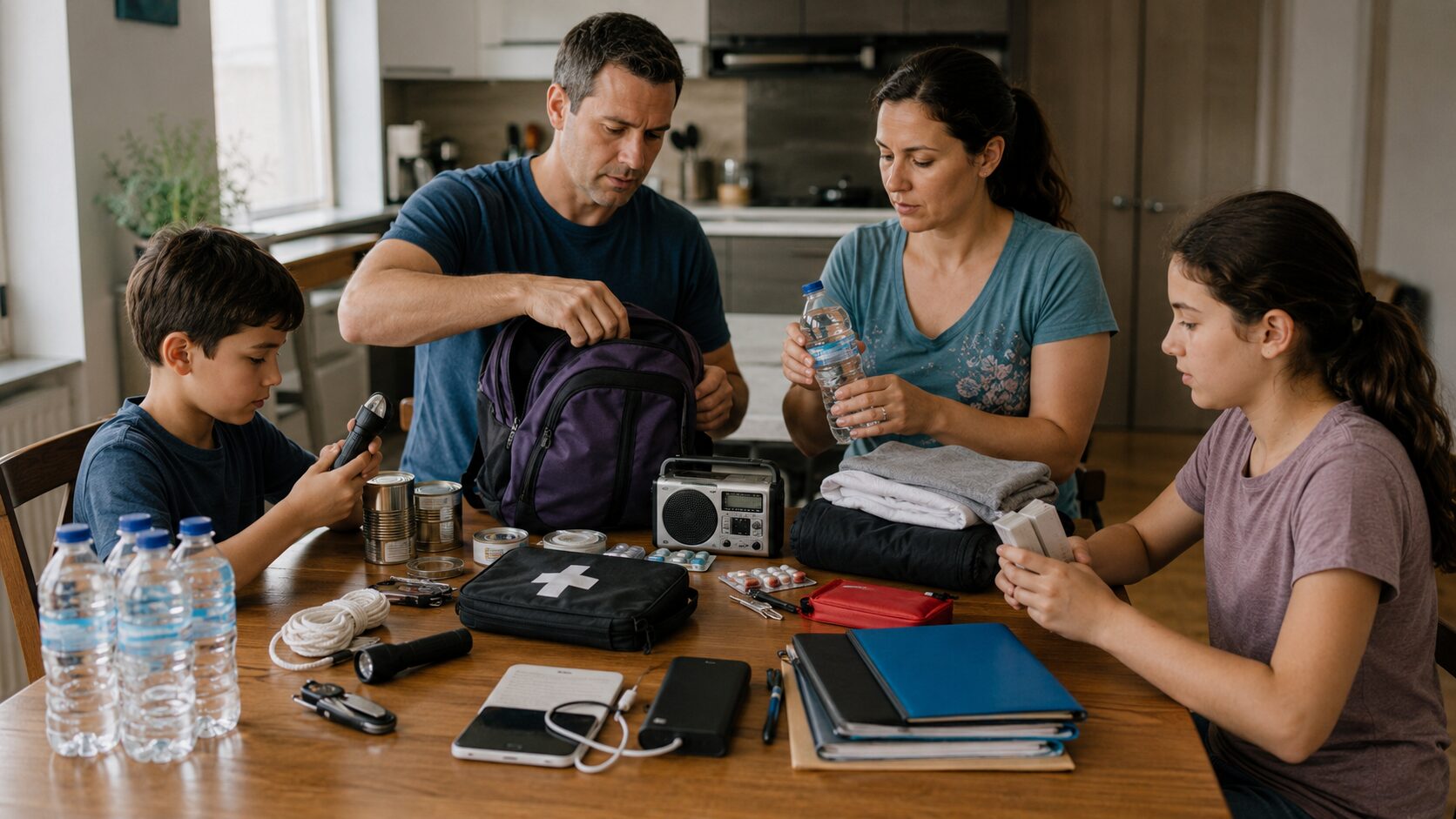
- Build a small go-bag. Keep it near the door with ID, medications, a phone charger, water, snacks, a change of clothes, and a leash or carrier for pets. You want to be able to leave in minutes without hunting for essentials.
- Talk it through once. Make sure everyone in the household knows the plan, including where to meet if you get separated.
If a chemical release happens, three moves matter
When something does happen, keep it simple. Three moves cover the vast majority of situations, and officials will tell you which one applies.
1. Get away from the source
Move upwind, uphill, and upstream if you can. Distance protects you fast. Do not head toward the scene to look or to reach a loved one. Trained responders will get to them, and going in puts you both at risk.
2. Shelter in place, if officials say to
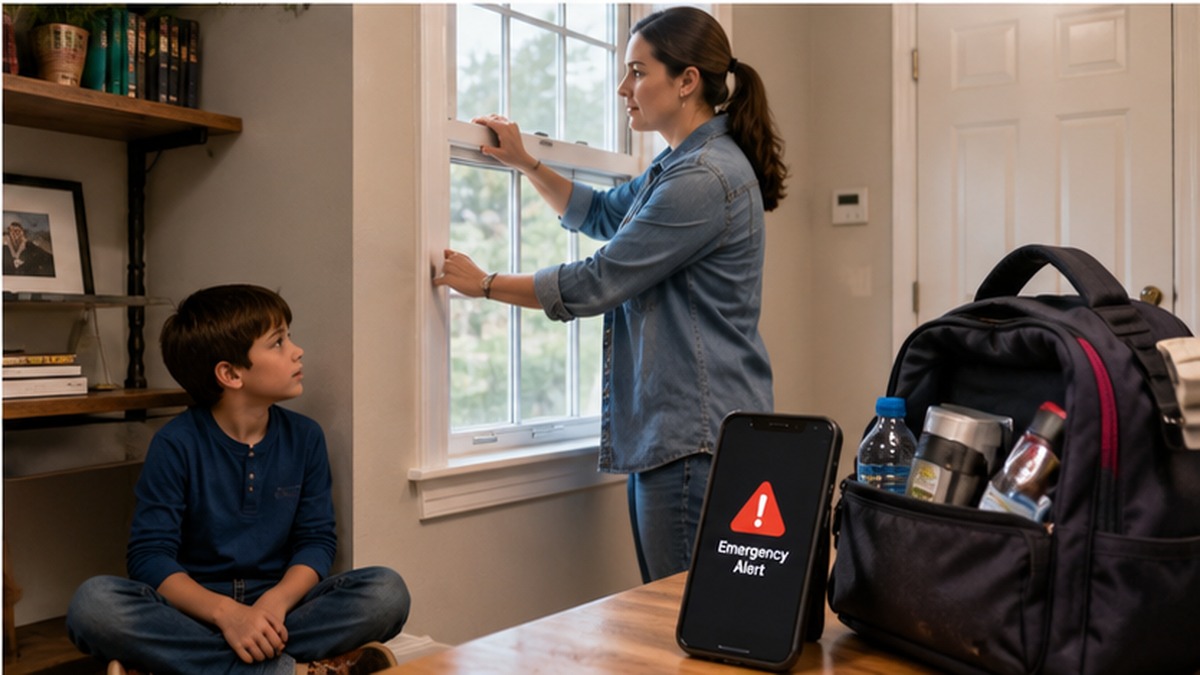
If authorities tell you to shelter in place, act right away. Go inside immediately. Close and lock all doors and windows. Turn off fans and air conditioning, or set the system to recirculate so it does not pull outside air in. Move to an interior room with the fewest windows, and keep a phone or a battery radio with you for updates.
3. Evacuate, if officials say to
If authorities tell you to evacuate, leave by the route they give you. Do not drive into visible haze or smoke. Bring your go-bag and your pets, and follow instructions rather than improvising a shortcut.
After: listen, report, and wait for the all clear
Follow local alerts and the instructions of emergency officials throughout the incident. Call 911 to report a spill and for anyone who is exposed or having trouble breathing. And this last part is easy to get wrong in the relief of the moment: wait for the official all clear before you return home. Returning early can put you right back into the cloud.
If you have children in school or family members at work, ask those organizations about their reunification plans, and practice yours once as a household. A little rehearsal removes a lot of panic.
Preparedness is a team sport
The strongest preparedness is the kind a whole street has done together. Share this guide with your neighbors and your group chat. When more households know the same simple moves, the entire community responds faster and calmer, and officials can do their job without a crowd walking into danger.
Key Takeaways
- Set up emergency alerts and a small go-bag today, before any emergency.
- If a chemical release happens, get away from the source: move upwind, uphill, and upstream.
- If told to shelter in place, go inside, seal up, turn off or recirculate the AC, and move to an interior room.
- If told to evacuate, use the route officials give and avoid driving into haze or smoke.
- Never head toward the scene to reach a loved one. Let trained responders do that.
- Wait for the official all clear before returning home.
Frequently Asked Questions
Should I shelter in place or evacuate during a chemical release?
Follow instructions from emergency officials. Both actions may be appropriate depending on the chemical, wind, release location, and your location.
What does sheltering in place involve?
Go inside, close and lock doors and windows, turn off or recirculate the HVAC so it does not pull in outside air, and move to an interior room with few windows. Monitor official updates.
Why should I not go toward the scene to help a loved one?
Moving toward the release can expose you, interfere with emergency operations, and create another person who needs rescue. Trained responders have protective equipment and an incident plan.
What belongs in a chemical-emergency go-bag?
Include identification, medications, a phone charger, water, snacks, a change of clothes, and supplies for pets. Keep the bag accessible so the household can leave quickly.
When is it safe to return after an evacuation?
Return only after officials issue the all clear. Lingering chemicals or changing conditions may remain dangerous after the visible emergency appears to end.
Prepare your family, your school, or your team
Knowing these steps before an incident is what turns fear into calm, capable action.
We offer hazmat awareness and emergency-planning sessions for schools, workplaces, and city teams. Review HAZWOPER and Hazmat Response to understand the responder side of an incident and use the LSE resource library for related safety guides. Then browse our classes or contact us to arrange training.
Training you can count on. When seconds count.
Sources
- Ready.gov, Chemicals and Hazardous Materials Incidents. https://www.ready.gov/hazmat (Supports the shelter-in-place steps and the move-away guidance.)
- CDC, Chemical Emergencies (Evacuation). https://www.cdc.gov/chemical-emergencies/response/evacuation.html (Supports following officials, not going to loved ones until it is safe, and waiting for the all clear.)
- PHMSA, Emergency Response Guidebook (ERG). https://www.phmsa.dot.gov/training/hazmat/erg/emergency-response-guidebook-erg (Supports why distance and protective action distances matter.)
This article is for general education and awareness. It is not medical or legal advice. Always follow the instructions of local emergency officials, which take priority over general guidance. In an emergency, call 911.