Why Freeze-Dried Plasma Matters for EMS Trauma Care
Trauma remains one of the leading causes of death in the United States, with uncontrolled hemorrhage responsible for a significant percentage of those preventable fatalities. For decades, emergency medical services (EMS) providers have relied on crystalloid fluids, such as normal saline or lactated Ringer’s, to manage hemorrhagic shock in the field. However, modern trauma science has definitively shown that replacing lost blood with clear fluids dilutes the body’s remaining clotting factors, worsening bleeding and leading to poor patient outcomes.
The optimal prehospital treatment for severe hemorrhage is the early administration of blood products. While prehospital whole blood programs have expanded rapidly in recent years, they remain logistically complex and prohibitively expensive for many rural, volunteer, and mid-sized agencies. Enter freeze-dried plasma (FDP). Following its highly anticipated FDA approval, freeze-dried plasma is finally arriving in the U.S. civilian market, promising to fundamentally transform how EMS agencies approach prehospital trauma care and hemorrhagic shock management.
Key Takeaways
- Freeze-dried plasma (FDP) replaces vital clotting factors lost during massive hemorrhage without the cold-chain logistics required by traditional blood products.
- FDA approval marks a historic milestone, opening the door for civilian EMS and air medical agencies to utilize this life-saving tool domestically.
- FDP bridges a critical gap for rural and volunteer agencies unable to sustain the high costs and strict storage requirements of whole blood programs.
- Agencies should begin evaluating their trauma protocols, engaging medical directors, and planning for logistical integration now.
What Is Plasma and Why Does It Matter?
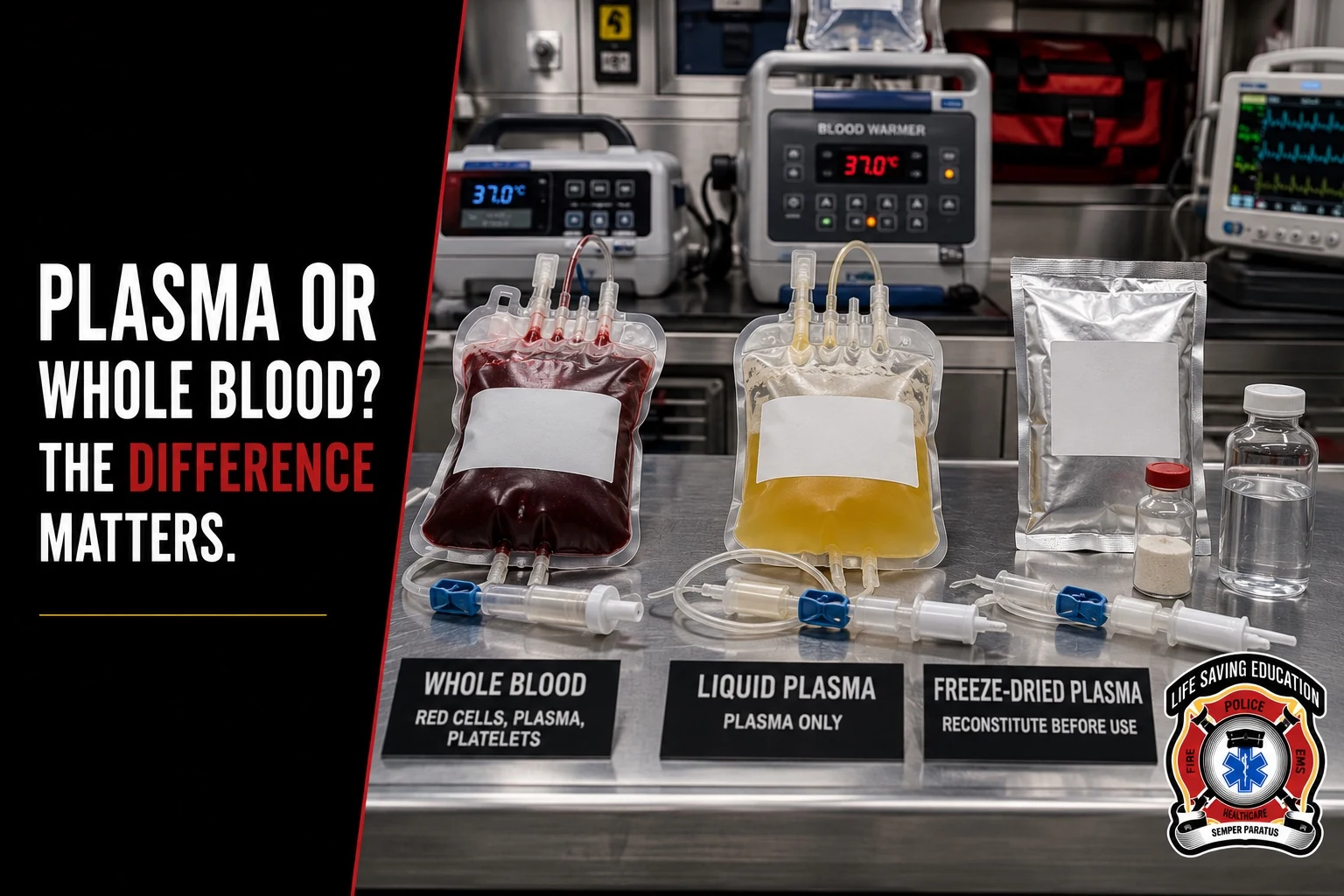
To understand why this FDA approval is so impactful, it is essential to understand the fundamental role of plasma in human physiology. Plasma is the clear, yellowish liquid portion of blood that remains after red blood cells, white blood cells, and platelets are separated. It makes up approximately 55% of the body’s total blood volume and carries vital proteins, electrolytes, and, most importantly, coagulation factors.
When a trauma patient experiences massive hemorrhage, they are not just losing oxygen-carrying red blood cells; they are rapidly depleting the coagulation factors required to form stable blood clots. If these factors are not replaced quickly, the patient loses their ability to stop bleeding naturally, falling into a dangerous state known as trauma-induced coagulopathy. Furthermore, administering standard clear IV fluids only exacerbates the problem by increasing blood pressure enough to pop existing fragile clots while washing away whatever clotting factors remain.
Administering plasma early in the resuscitation process replenishes these critical proteins. It helps stabilize the patient’s clotting cascade, mitigating the deadly triad of ongoing bleeding, hypothermia, and acidosis. Ultimately, keeping the patient’s blood capable of clotting buys crucial time until they can reach a trauma surgeon for definitive hemorrhage control.
Why Traditional Plasma Has Been Difficult for EMS
Despite the clear clinical benefits of administering plasma to trauma patients, doing so in the prehospital environment has historically been an overwhelming logistical challenge for emergency medical services.
Traditional Fresh Frozen Plasma (FFP) must be stored at freezing temperatures, typically at or below -18 degrees Celsius. When a critically injured patient requires it, FFP must be carefully thawed using specialized medical warming devices, a meticulous process that can take anywhere from 30 to 45 minutes. By the time EMS arrives on the scene, assesses the patient, and initiates transport, there is simply no time to thaw FFP for field administration.
Liquid plasma, an alternative that does not require freezing, still mandates strict cold-chain storage between 1 and 6 degrees Celsius and has a relatively short shelf life of roughly 26 days. Maintaining this unbroken cold chain requires expensive, medical-grade mobile refrigerators, continuous temperature monitoring systems, and robust resupply logistics with local blood banks. For the vast majority of ground EMS agencies—especially those dealing with extended rural transport times, extreme weather conditions, or limited budgets—carrying liquid or frozen plasma is operationally impossible.
How Freeze-Dried Plasma Changes the Equation
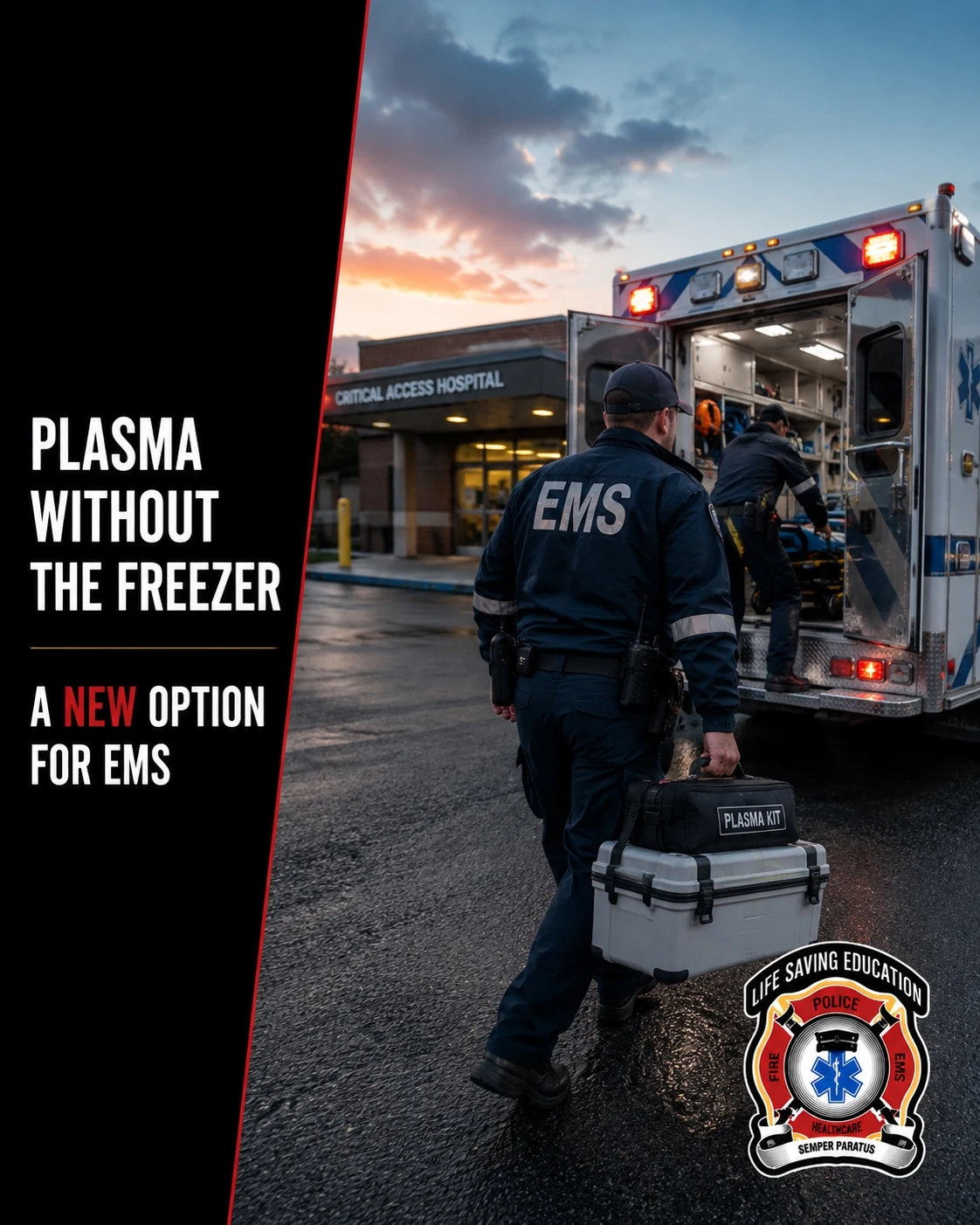
Freeze-dried plasma completely rewrites the rules of prehospital blood product logistics. By extracting the water content from the plasma while carefully preserving the fragile clotting proteins, manufacturers create a stable, dry powder. When needed, this powder is rapidly reconstituted with sterile water, transforming back into a life-saving liquid ready for immediate intravenous or intraosseous infusion.
This innovative processing method removes the most significant barriers to prehospital deployment, empowering field providers with capabilities previously reserved for hospital trauma bays.
Room Temperature Storage
FDP requires zero refrigeration. It can be stored securely in standard EMS jump bags, tactical medical kits, or standard ambulance cabinets regardless of outside climate variations.
Rapid Reconstitution
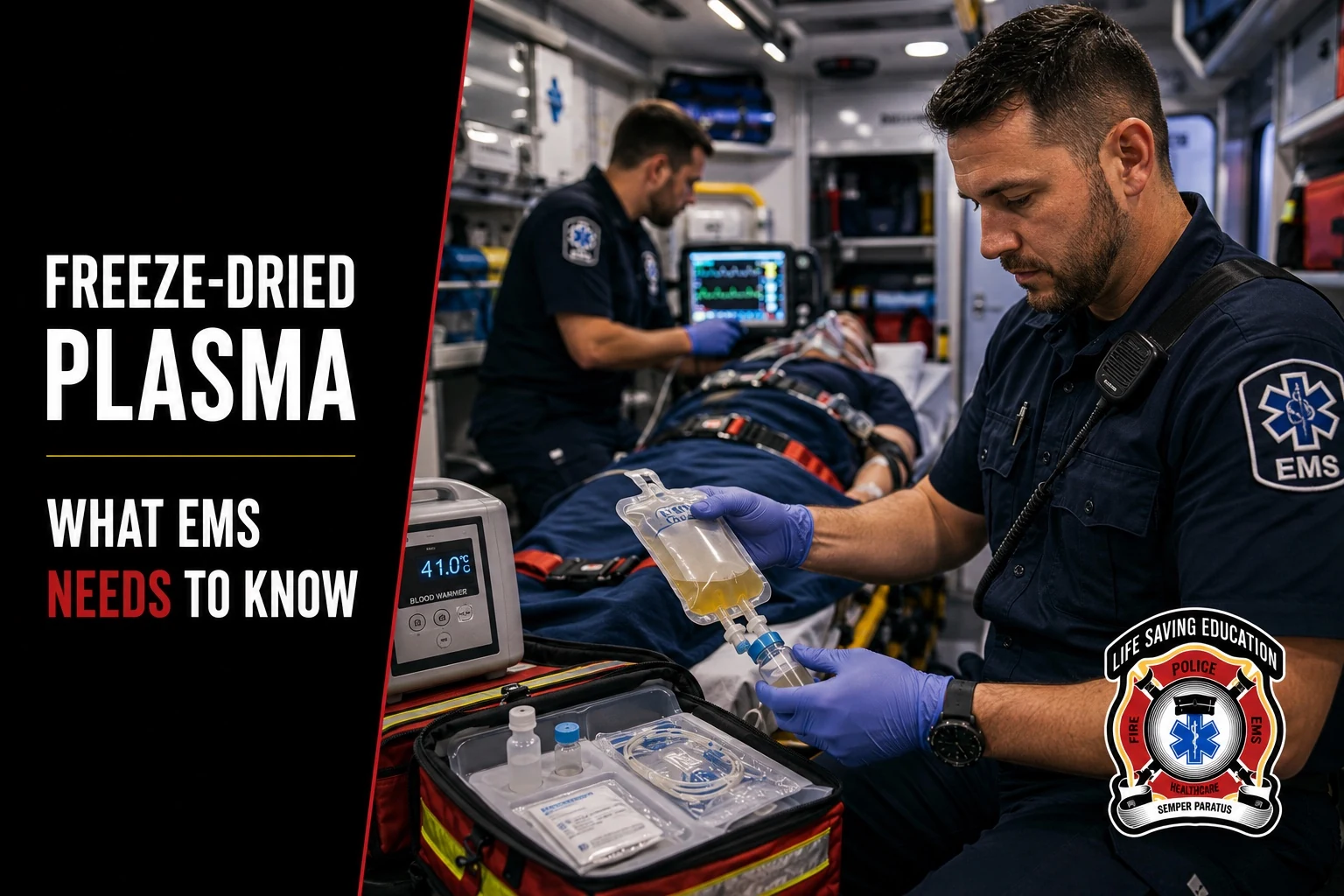
The dry powder mixes with sterile water in minutes, allowing paramedics to prepare and administer the product quickly on scene or while en route to the hospital.
Extended Shelf Life
With a shelf life lasting up to two years, FDP drastically reduces product waste and alleviates the constant resupply pressures faced by rural agencies.
Lightweight & Durable
Packaged in specialized, ruggedized materials, FDP is ideal for austere environments, search and rescue operations, and tactical law enforcement teams.
What the FDA Approval of EzPlaz Means for EMS
While freeze-dried plasma has been utilized successfully by European militaries and civilian medical services for years, its availability in the United States was historically restricted. Until recently, U.S. providers could only access FDP under strict experimental protocols, military-specific authorizations, or highly regulated Investigational New Drug (IND) applications. This meant that the vast majority of domestic EMS agencies had no legal or practical pathway to utilize the product.
The FDA’s formal approval marks a monumental turning point for domestic trauma care. It signals that the product has met the agency’s rigorous standards for safety, clinical efficacy, and manufacturing consistency. More importantly, it officially opens the door for commercial distribution to civilian hospitals, air medical services, and ground EMS agencies across the country.
For trauma advocates, emergency physicians, and military medics who have championed the use of FDP for over a decade, this approval validates years of intensive research and clinical experience. It represents a vital bridge translating battlefield medical advancements directly into civilian street application.
What This Means for EMS
The widespread availability of freeze-dried plasma will dramatically expand the life-saving capabilities of EMS systems nationwide, fundamentally shifting the standard of prehospital care.
For rural and remote EMS agencies, where transport times to a Level I or Level II trauma center frequently exceed the critical “golden hour,” FDP offers a true lifeline. These agencies, which often cannot support the financial or logistical demands of a whole blood program, will now have a viable, shelf-stable hemostatic agent to administer during prolonged transports.
In urban and suburban systems, FDP will provide immediate value during mass casualty incidents (MCIs), complex vehicular extrications, or tactical EMS deployments where carrying liquid blood is impractical. SWAT medics, technical rescue teams, and flight crews can easily carry lightweight FDP kits in their existing medical bags, ensuring that life-saving coagulation factors are available directly at the point of injury, regardless of the operational environment.
By initiating hemostatic resuscitation earlier, EMS providers will deliver patients to trauma centers in a far more stable physiological condition, primed for definitive surgical intervention rather than fighting severe, irreversible coagulopathy.
Challenges Before Widespread Adoption
While the clinical and logistical benefits of freeze-dried plasma are undeniable, integrating it into thousands of diverse EMS systems will not happen overnight. Several key hurdles must be thoughtfully navigated by industry leaders.
What Should EMS Agencies Do Now?
Even if freeze-dried plasma is not immediately available for delivery to your station tomorrow, forward-thinking EMS leaders, medical directors, and training officers should begin preparing today. The transition from crystalloids to advanced hemostatic resuscitation requires careful planning, education, and regional coordination.
- Assess Your Agency’s Needs: Analyze your trauma call volume, average scene-to-trauma-center transport times, and current hemorrhage control outcomes to determine if FDP is a viable addition to your service.
- Engage Your Medical Director: Begin preliminary conversations about incorporating FDP into your local protocols, discussing inclusion criteria, contraindications, and quality assurance processes.
- Monitor State Regulations: Keep a close eye on your state’s EMS regulatory body and Regional Trauma Advisory Councils (RTACs) for guidance on scope of practice updates regarding reconstituted blood products.
- Explore Funding Opportunities: Look into state trauma grants, community healthcare foundations, or federal EMS funding mechanisms to offset the initial purchase and stocking costs.
- Update Clinical Education: Use our EMS and safety resources to reinforce hemorrhagic shock, trauma-induced coagulopathy, and why excessive clear fluids can worsen severe trauma.
Looking Ahead
The FDA approval of freeze-dried plasma is not just a new tool in the EMS toolkit; it is a paradigm shift in how we view and execute prehospital trauma resuscitation. Over the next several years, we can expect FDP to become a foundational standard of care for agencies unable to maintain whole blood programs, and a critical supplementary tool for those that do.
As domestic manufacturing scales and acquisition costs eventually stabilize, FDP has the potential to become as ubiquitous on modern ambulances as the cardiac monitor, the traction splint, or the tourniquet. It serves as a vital clinical bridge between the point of injury and the operating room, drastically narrowing the survival gap between austere field environments and definitive in-hospital trauma care.
Bottom Line
The arrival of freeze-dried plasma in the United States represents one of the most significant advancements in prehospital trauma care in recent history. By providing a lightweight, shelf-stable, and rapidly deployable method to replace vital clotting factors, EMS agencies are now better equipped than ever to safely move away from harmful crystalloids, save critical lives, and combat preventable trauma deaths on the front lines.
Ready to Elevate Your Trauma Training?
Ensure your providers are prepared for the future of hemostatic resuscitation through onsite group training and our ACS Stop the Bleed course.
References
- U.S. Food and Drug Administration (FDA)
- Reuters
- Joint Trauma System (JTS)
- American College of Surgeons (ACS)
- Committee on Tactical Combat Casualty Care (CoTCCC)
- Air Force Medical Service