Prepared by the LSE Editorial Team. Reviewed by Joseph Andrade, Jr., RN, NRP.
Joseph is an active firefighter, paramedic, and registered nurse working in emergency and vascular access care, as well as an OSHA Outreach instructor and safety officer. He has spent his career on the response side of emergencies, from the fireground to the ambulance to the hospital bedside, and now trains civilians, workplaces, and first responders in the skills that save lives.
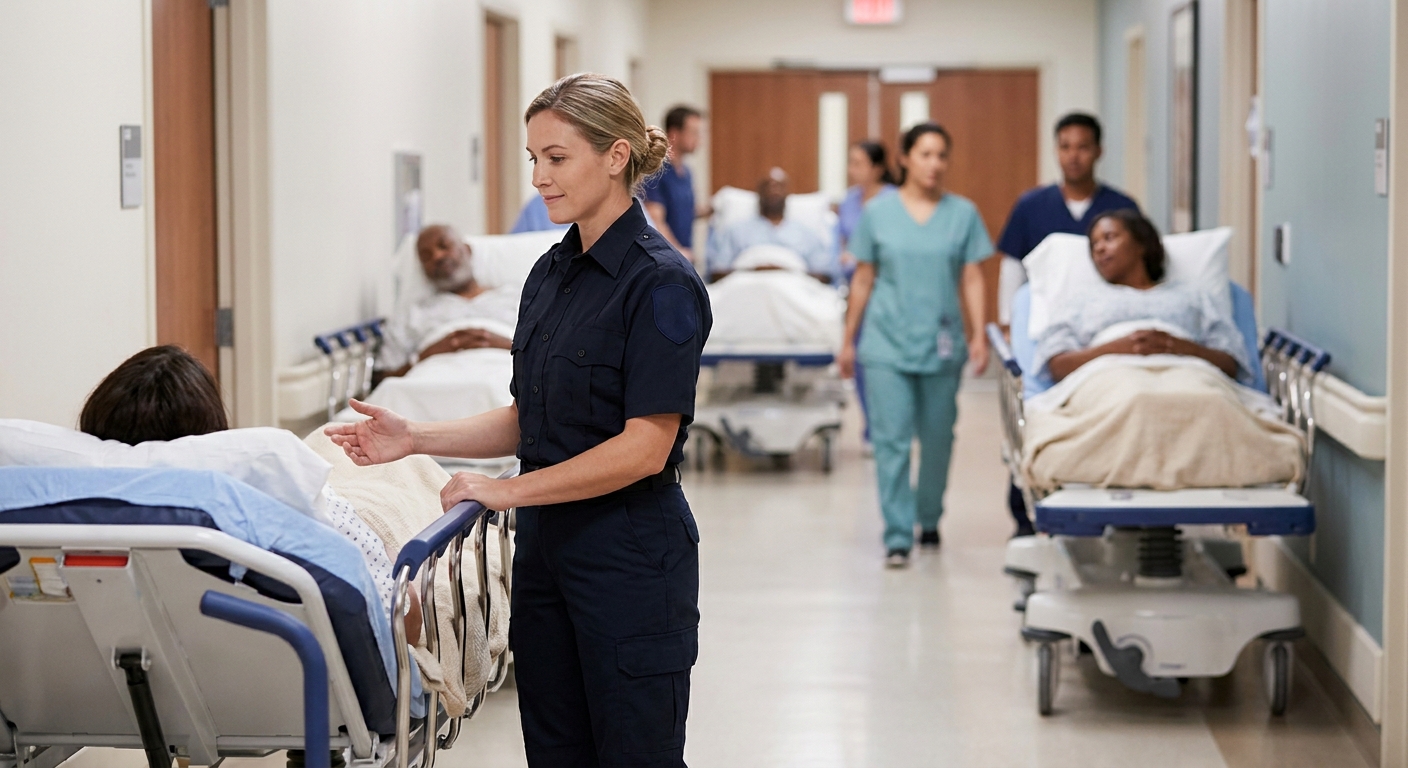
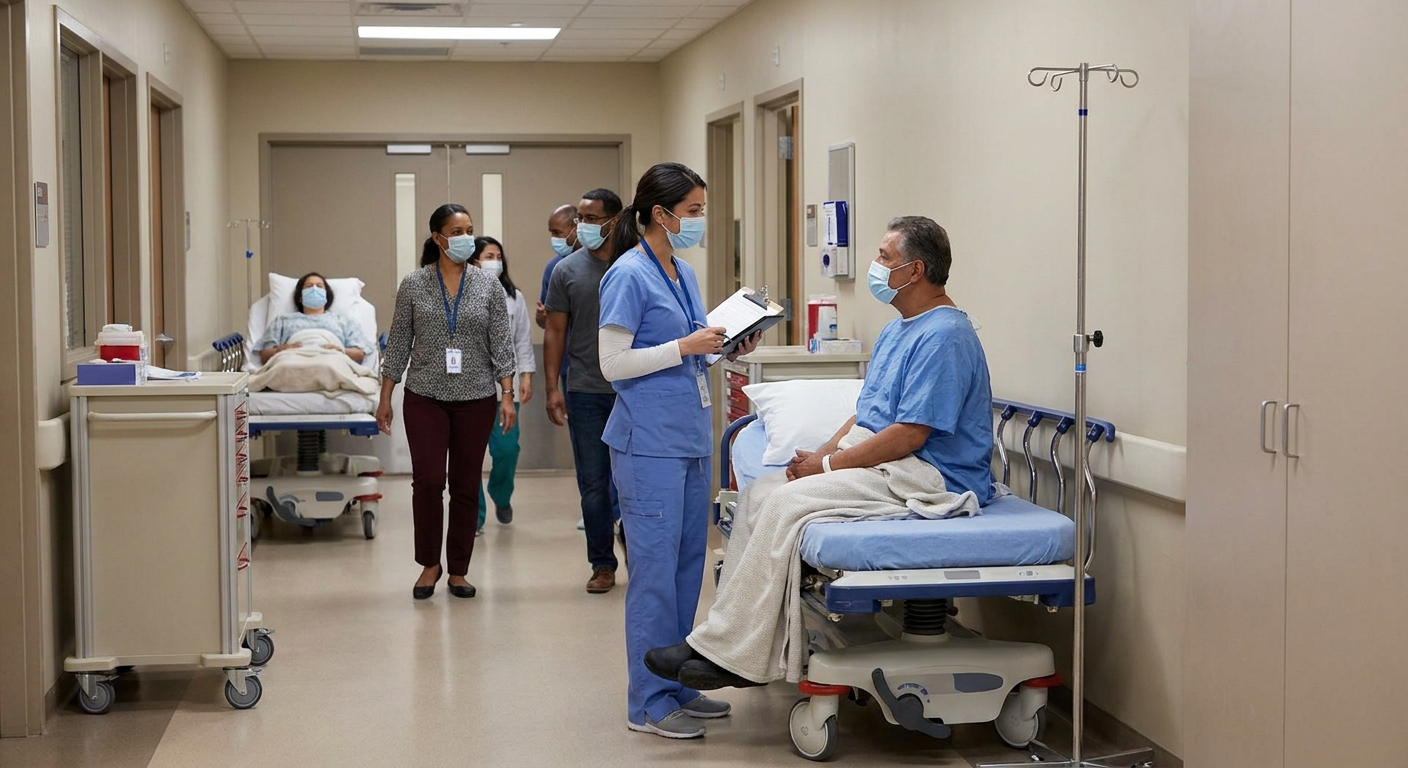
There is a moment on this job that outsiders never see. You bring in a genuinely sick patient, and then you stand in a hallway with them on your stretcher, waiting. Not for minutes. Sometimes for an hour or more. The beds are full. The nurses are slammed. And your ambulance—the one that is supposed to be back out there for the next call—is parked at the wall with you standing next to it.
We call it wall time. It is one of the most honest windows into a system stretched past its limits, and it is the human face of emergency room overcrowding.
This is not a story about lazy staff or a bad hospital. The people in that emergency department are working as hard as humans can. It is a story about a system where pressure from every other part of health care lands, all at once, in the one place that legally cannot turn anyone away. Here is what is actually happening, why it is dangerous, and what you can do to protect the people you love.
🏥 What Emergency Room Overcrowding Really Is
Most people picture overcrowding as a waiting room full of people with coughs and sprained ankles. That is part of it, but it is not the real problem.
The real driver has a name that much of the public has never heard: boarding.
🛏️ Boarding, in plain language
Boarding happens when a patient has already been evaluated and admitted to the hospital but cannot move upstairs because no staffed inpatient bed is available. The patient remains in the emergency department—sometimes for hours and sometimes for days.
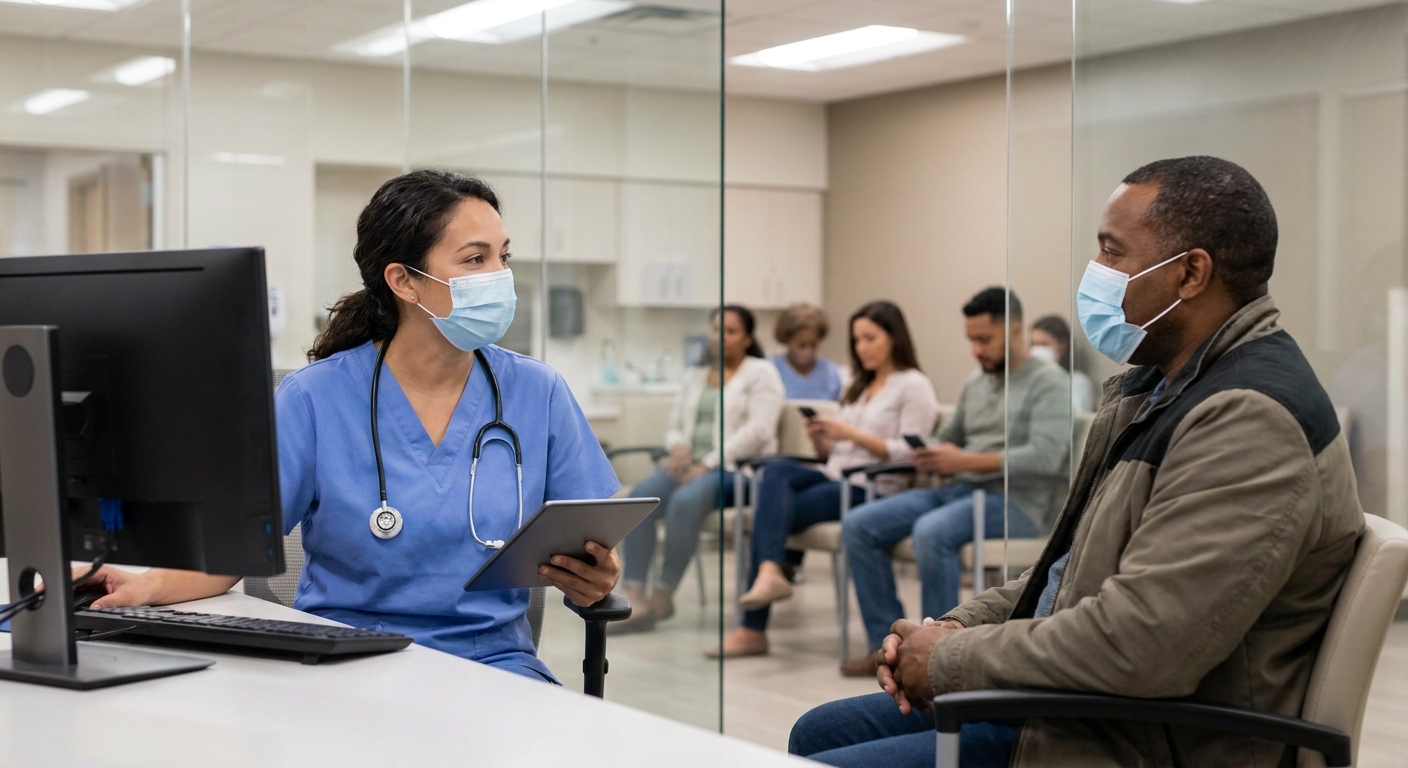
Picture it this way: an emergency department has a fixed number of rooms. When admitted patients cannot move up and out, those rooms remain occupied. New emergencies keep arriving, because emergencies always do, but there is nowhere to put them. Care moves into hallways, ambulances stack up at the door, and the waiting room starts functioning like a treatment area. That is overcrowding, and boarding is its engine.
⚙️ What Causes Emergency Room Overcrowding?
If boarding is the engine, several forces are pressing the accelerator at the same time.
No Inpatient Beds
When the hospital upstairs is full—or cannot staff its beds—admitted patients have nowhere to go. As hospital occupancy rises, the whole flow of care begins to seize up.
Staffing Shortages
A physical bed cannot safely open without nurses and support staff. Burnout and shortages reduce capacity, while crowded, high-stress departments drive more experienced people away.
Sicker, Older Patients
Patients arriving today are often older and living with multiple medical conditions. Their care is more complex, and they can be harder to admit and slower to move safely.
Rising Demand
Emergency visits continue to climb and can surge sharply when flu, COVID-19, and RSV circulate together. Most systems have very little spare capacity to absorb a sudden increase.
🧠 The Mental Health Boarding Tragedy
When someone arrives in a mental health crisis, they may need a specialized psychiatric bed. There are far too few of these beds, so patients wait in a setting built for the opposite of what they need: bright, loud, chaotic, and full of strangers.
Why this deserves special attention: Psychiatric patients may wait days for a specialist or an appropriate bed. Children in crisis are among the most affected. A busy emergency department is one of the least therapeutic places to spend that time, yet it happens every day because there is nowhere else for many patients to go.
If you or someone you know is in a mental health crisis, call or text 988 for the Suicide & Crisis Lifeline. Call 911 when there is immediate danger.
⚠️ Why Overcrowding Is Dangerous
Overcrowding is not merely uncomfortable. It can harm patients and weaken the emergency response system around them.
- Errors can increase: When staff are stretched across too many patients, the risk of medication errors, missed findings, and other adverse events rises.
- Important care is delayed: Crowding can mean longer waits for pain control, antibiotics, repeat assessments, imaging, and treatment. For heart attack, stroke, sepsis, and other time-sensitive conditions, minutes matter.
- Mortality can rise: Research has repeatedly associated emergency department crowding and boarding with higher rates of in-hospital death.
- Ambulances can be diverted or delayed: A longer ride to another hospital and prolonged offload delays take crews out of position for the next emergency.
🚑 The Ripple Effect on EMS—and Your Neighborhood
Emergency room overcrowding does not stay inside hospital walls. It reaches all the way to your street.
When emergency departments are jammed, ambulance crews can become stuck in wall time, holding a patient on a stretcher because there is no open bed or nurse available to accept the handoff. During that wait, the ambulance cannot answer the next chest pain, car wreck, or child who stopped breathing.
Now multiply that across a city. When several crews are stuck at the wall, the number of available ambulances drops and response times climb. The heart attack three blocks from your house may wait longer for help—not because crews are slow, but because they are trapped in a bottleneck that began with a hospital bed that never opened upstairs.
📊 This Crisis Is Not New—and Something Is Finally Moving
Emergency-care leaders have warned about a system at the breaking point for decades. What is changing is that the problem has become documented well enough for policy to begin responding.
In late 2025, the Centers for Medicare & Medicaid Services finalized an Emergency Care Access and Timeliness measure in its 2026 hospital payment rule. The measure pushes hospitals to track and report emergency department boarding. The American College of Emergency Physicians described this as a foundational step: a system cannot fix a problem it does not consistently measure.
A 2026 RAND report also framed the emergency department as the place where failures throughout the health system become impossible to ignore. Boarding is not solely an emergency-department problem. It is a whole-hospital and whole-system problem that surfaces in the emergency department.
Measurement will not fix the crisis overnight, but honest naming and reliable data are where change begins.
🧭 Where to Go: ER, Urgent Care, or Everyday Care?
Fear of a wait should never stop you from seeking emergency care when you truly need it. Choosing the appropriate setting for less serious problems, however, can save time and help preserve emergency capacity.
Emergency Room / 911
Chest pain, stroke signs, severe bleeding, difficulty breathing, major trauma, a severe allergic reaction, or any condition that may threaten life or limb.
Urgent Care
Non-life-threatening problems such as sprains, minor infections, small cuts, mild fevers, and other concerns that need prompt attention but are not emergencies.
Primary Care / Telehealth
Medication refills, minor rashes, routine cold symptoms, chronic-condition follow-up, and general advice when no emergency warning signs are present.
🛡️ How to Protect Yourself and Your Family
Do not leave an emergency department without speaking to staff if you may be experiencing a serious condition. If your condition worsens while you wait, notify the triage team immediately.
✅ Key Takeaways
- Emergency room overcrowding is driven mainly by boarding: admitted patients stuck in the ED because no staffed inpatient bed is available.
- Full or unstaffed beds, workforce shortages, sicker patients, rising demand, and too few psychiatric beds all contribute.
- Crowding is linked to more errors, longer delays, ambulance disruption, and higher mortality.
- Mental-health patients—including children—may board for days or longer in a setting poorly suited to recovery.
- Federal measurement of emergency-department boarding is an important first step toward accountability.
- Families can prepare by choosing the right care setting, learning emergency warning signs, speaking up when symptoms change, and gaining CPR and first-aid skills.
❓ Frequently Asked Questions
What is the difference between overcrowding and boarding?
Overcrowding is the visible result: too many patients and not enough available space or staff. Boarding is a principal cause: patients who have been admitted but remain in the emergency department because no inpatient bed is available.
Why does the ER make me wait even when I feel very sick?
Emergency departments treat people according to medical severity, not arrival time. Someone arriving later may be treated first if their condition is more immediately life-threatening. Boarding also leaves fewer rooms and staff available, lengthening waits for everyone.
Is it dangerous to go to a crowded emergency room?
The emergency department remains the right place for a true emergency. Crowding has real risks, but avoiding necessary emergency care can be far more dangerous. Speak up immediately if symptoms worsen while you wait.
When should I use urgent care instead?
Urgent care is generally appropriate for minor illnesses and injuries such as sprains, small cuts, mild fevers, and minor infections. Use the emergency department for chest pain, stroke signs, severe bleeding, breathing difficulty, major injury, or other potentially life-threatening problems. When in doubt about a serious symptom, seek emergency care.
Can learning first aid really reduce emergency room visits?
First-aid training can help families safely manage minor injuries, recognize what truly requires emergency care, and respond appropriately before EMS arrives. Training does not replace professional medical care, but it makes people stronger and calmer participants in an emergency.
Be the Trained One in the Room
You cannot fix a national crisis, but you can make sure your family or team is ready for the emergencies that matter. Life Saving Education teaches CPR, AED, first aid, and bleeding control with instructors who work inside this system every day.
📚 Sources and Further Reading
- American College of Emergency Physicians: Emergency Department Boarding and Crowding
- ACEP statement on the CMS 2026 final rule and emergency-department boarding measure
- ACEP Now: When the Waiting Room Becomes the Entire Emergency Department
- Medscape: Inside the Growing ED Boarding Crisis
- ACEP: ED Boarding Stories Overview
This article is provided by Life Saving Education for general educational purposes only. It is not medical, legal, or compliance advice and is not a substitute for hands-on training or professional guidance. If you are experiencing a medical emergency, call 911 or go to the nearest emergency department. If you or someone you know is in a mental health crisis, call or text 988 for the Suicide & Crisis Lifeline.