Prepared by the LSE Editorial Team. Reviewed by Joseph Andrade, Jr., RN, NRP.
Joseph works across emergency response, healthcare, and workplace safety and develops practical training for civilians, employers, and first responders.
Naloxone remains one of the most important emergency tools available for a suspected opioid overdose. It can rapidly reverse life-threatening opioid effects and restore breathing. But a changing illicit drug supply is making one point increasingly important for responders, workplaces, instructors, and clinicians:
A patient can respond to naloxone and still remain critically ill.
New research from the National Institute of Standards and Technology gives that warning new urgency. NIST analyzed 4,563 drug-residue samples collected across the United States from January 2024 through June 2026 and found an increasingly complicated mixture of substances in samples containing illicit fentanyl. The pattern also differed by region.
For East Coast communities, the findings are particularly relevant. NIST reported that animal tranquilizers such as xylazine have been much more common in eastern samples than western samples. Researchers also documented xylazine being displaced by medetomidine, a potent veterinary sedative that has become an increasingly important public-health concern.
This does not mean naloxone has stopped working. It means overdose education has to move beyond the idea that naloxone is the entire response.
🧪 The Drug Supply Is Becoming More Complex
NIST’s Rapid Drug Analysis and Research program, RaDAR, is designed to identify compounds in drug samples quickly enough to provide useful intelligence to public-health and response agencies.
The October 2026 NIST report identified several important trends. Additives appear to rise and fall over time. Xylazine has been much more prevalent in eastern samples, while medetomidine has increasingly appeared in the fentanyl supply. BTMPS, an industrial chemical, has appeared in samples from both eastern and western regions.
Perhaps most striking, NIST found that the number of additives is increasing. In early 2024, samples commonly contained one or two additives. Six or more compounds are now more common.
NIST also described tracking additives geographically, including movement from Philadelphia into Delaware and Maryland.
For an East Coast training organization, that is not an abstract laboratory finding. It means responders may encounter a patient affected by fentanyl plus one or more substances that produce effects naloxone cannot reverse.

Naloxone Still Matters
The emergence of medetomidine, xylazine, and other adulterants must not become a reason to delay naloxone.
CDC guidance remains clear: if an opioid overdose is suspected, administer naloxone and call 911.
Naloxone reverses opioid effects. If fentanyl or another opioid is contributing to respiratory depression, naloxone can be lifesaving. The problem is that naloxone does not reverse every other substance that may be present.
CDC notes that medetomidine is not an opioid and its effects cannot be reversed with naloxone. CDC advises clinicians to consider medetomidine intoxication when prolonged sedation continues after naloxone in a suspected opioid overdose.
Naloxone can successfully reverse the opioid component while the patient continues to experience serious effects from another drug.
What Medetomidine Changes
Medetomidine is a veterinary sedative that is not approved for use in people. CDC reports that it is frequently found mixed with illegally manufactured fentanyl and has been reported especially in the northeastern United States.
Medetomidine can complicate both intoxication and withdrawal. CDC advises clinicians to consider medetomidine intoxication when prolonged sedation persists following naloxone. In a previously reported Chicago cluster, bradycardia was frequently observed. CDC emphasized cardiovascular and respiratory support.
For advanced clinicians, withdrawal is another concern. CDC identifies possible findings including severe hypertension, tachycardia, fluctuating alertness, tremor, chest pain, and intractable nausea and vomiting.
Those are clinician-level considerations. They should not be dumped indiscriminately into a basic workplace first-aid class.
For lay responders
- Recognize a possible opioid overdose.
- Activate EMS.
- Administer naloxone according to the product instructions and training.
- Assess breathing.
- Provide CPR, rescue breathing, or other resuscitative support appropriate to training and current guidelines.
- Use an AED when indicated.
- Continue reassessment.
- Stay with the person until EMS assumes care.
For EMS and healthcare professionals
The educational conversation can go further. Persistent sedation after opioid reversal, bradycardia, hemodynamic abnormalities, mixed toxidromes, atypical withdrawal, and local drug-supply intelligence may influence assessment and supportive care.
A new adulterant does not authorize a responder to invent a new antidote or operate outside protocol.
Xylazine Has Not Disappeared
The increasing prominence of medetomidine does not make xylazine irrelevant. Xylazine is another non-opioid veterinary sedative identified in the illicit drug supply, often alongside fentanyl. Naloxone does not reverse xylazine itself, but naloxone should still be given when opioid involvement is suspected because fentanyl may also be present.
A more durable training message is: Naloxone reverses opioid effects. The person may have taken more than one substance and may still require airway support, CPR, monitoring, reassessment, and emergency medical care.
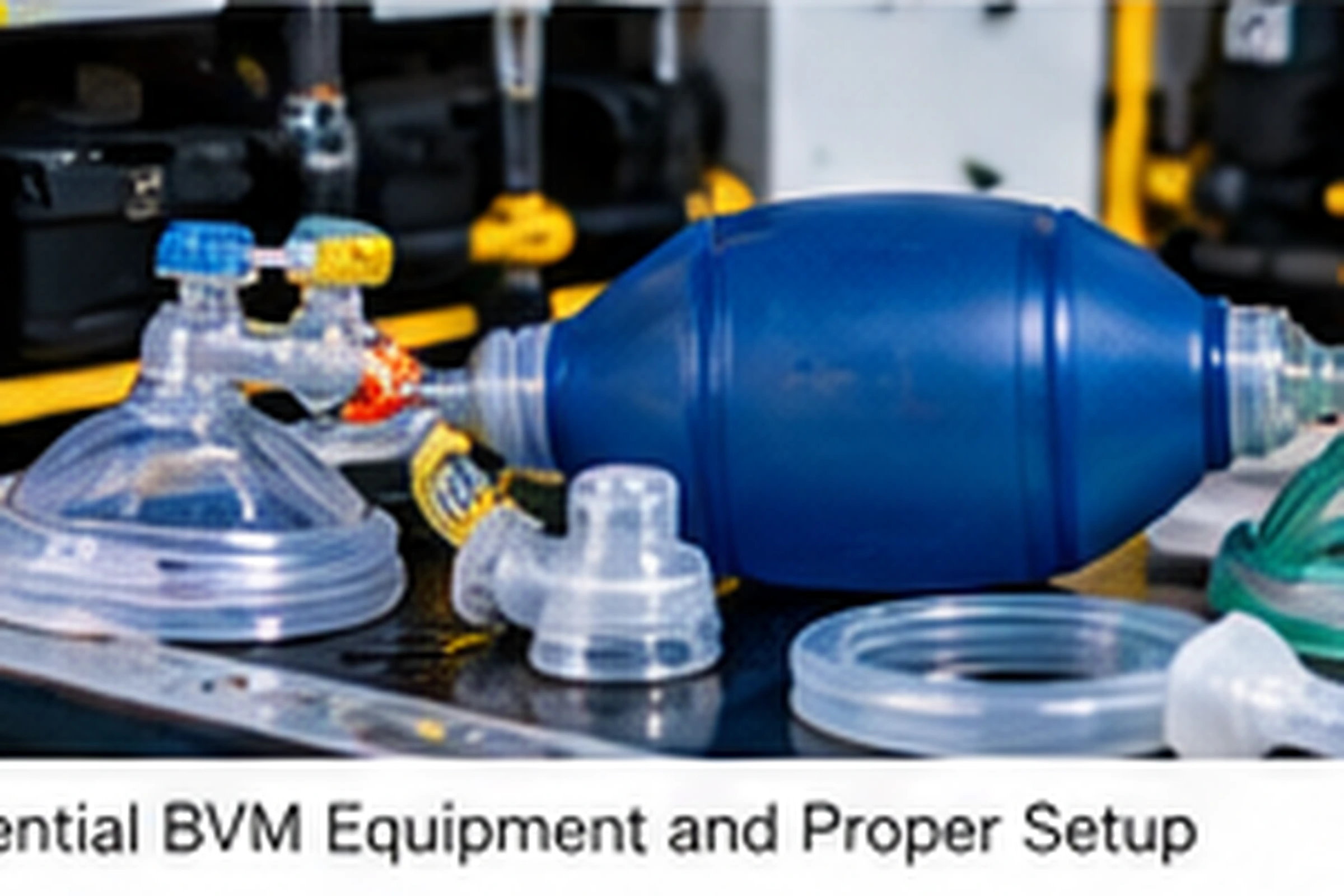
The Airway Still Matters
Overdose education can become so focused on medication that basic resuscitation priorities disappear into the background. That is a mistake.
If breathing is absent or ineffective, the responder must recognize that life threat and provide the level of resuscitative support appropriate to training.
For workplace responders, that can mean activating EMS, administering naloxone, beginning CPR when indicated, using an AED, and following the applicable first-aid or resuscitation protocol.
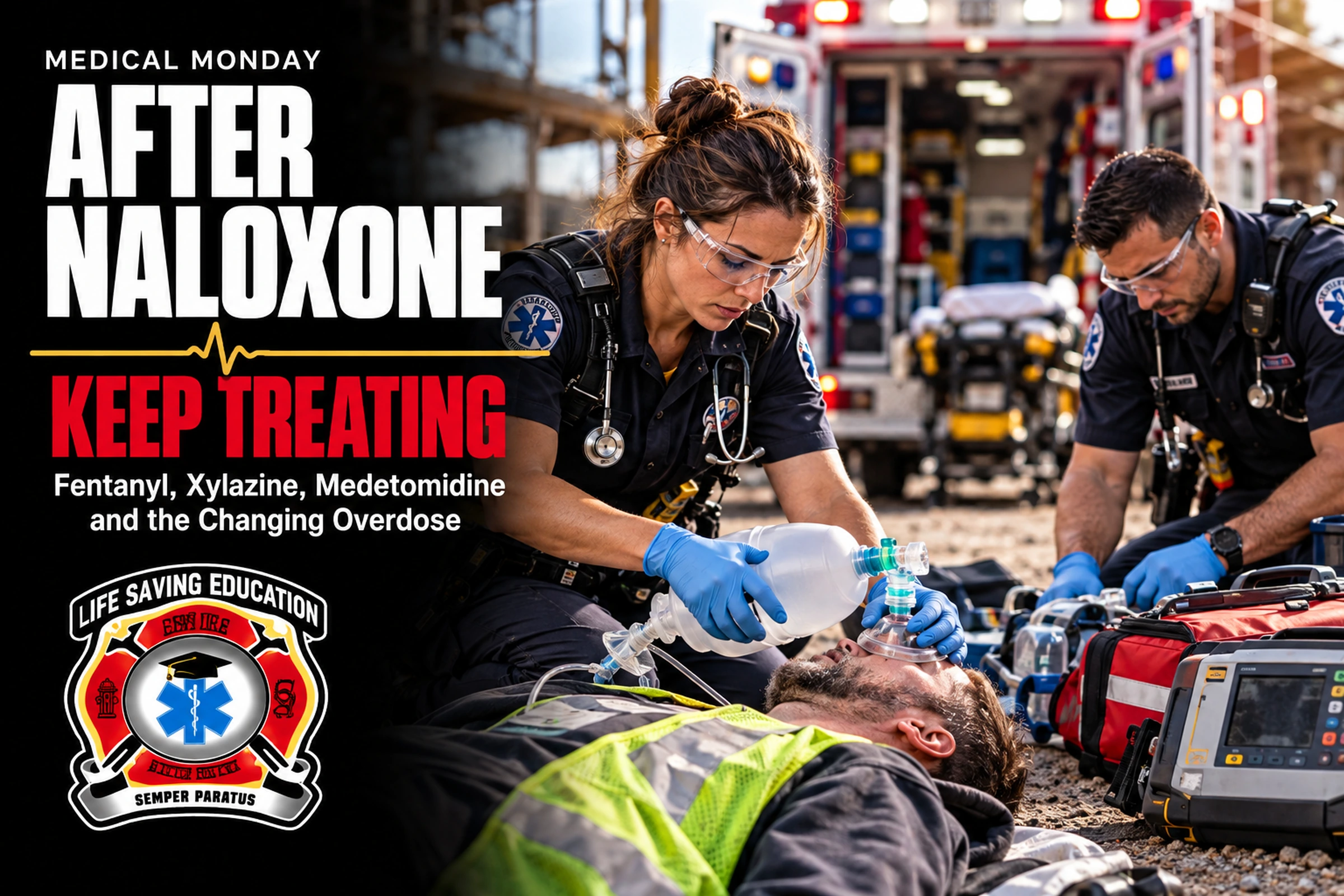
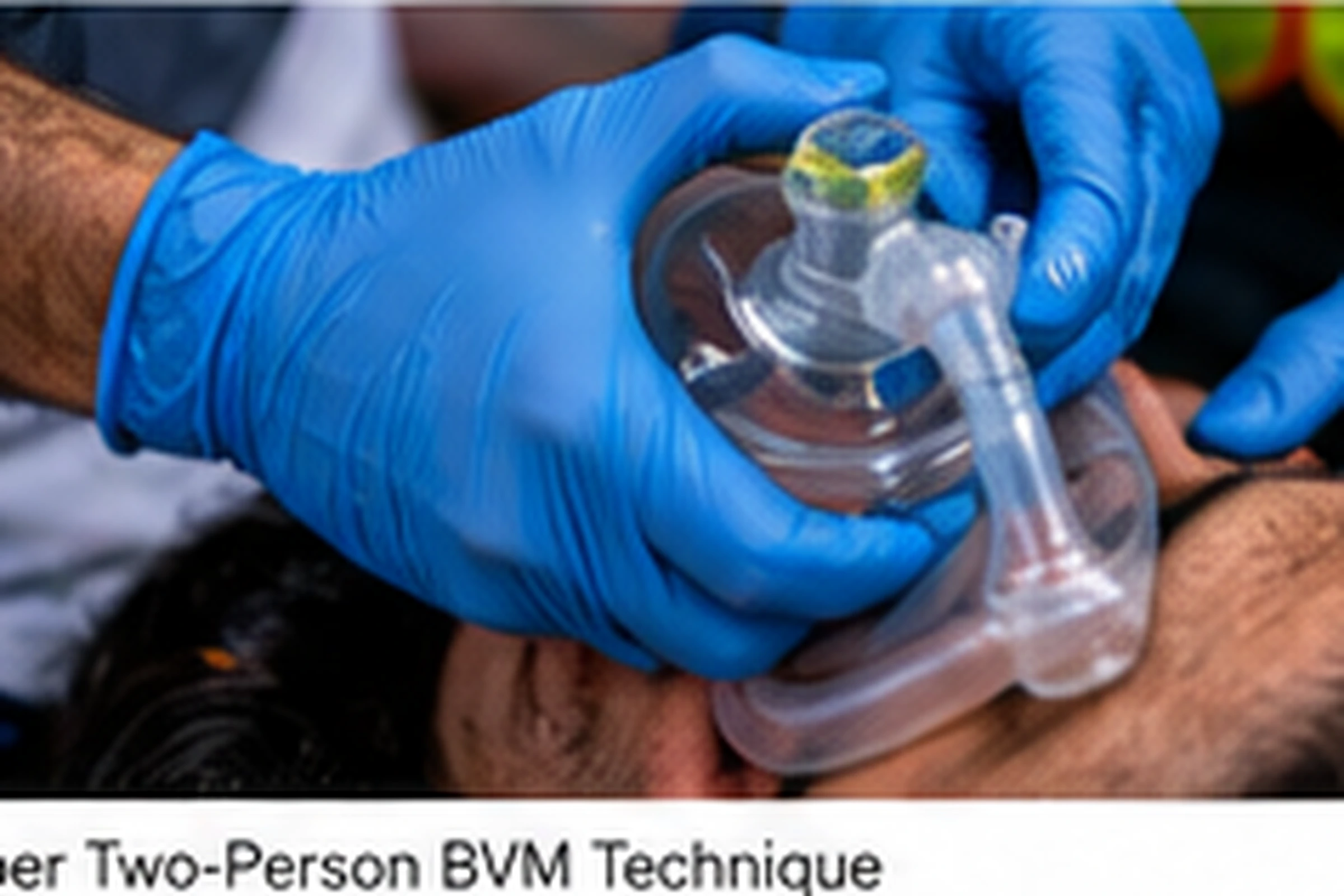
For EMS professionals, it means treating the patient rather than treating a single drug name. Airway positioning, oxygenation, ventilation, circulation, monitoring, repeated assessment, transport, and medical direction remain central.
Build Better Training Scenarios
An effective modern overdose scenario should not always end with the patient immediately sitting up after one naloxone dose.
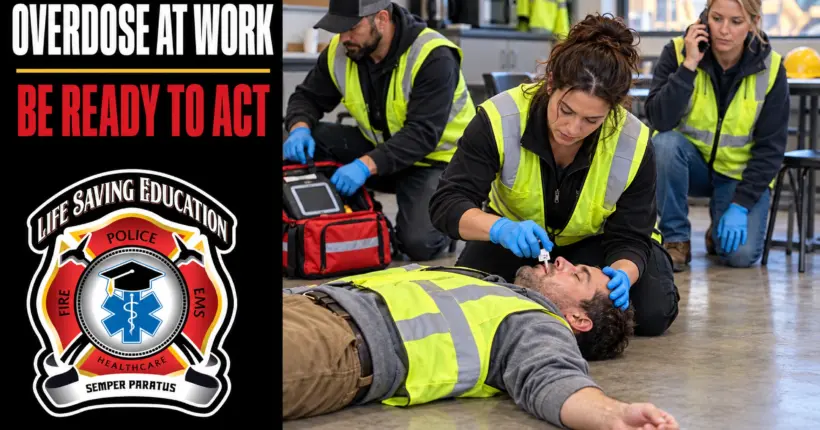
Consider a worker found unresponsive with slow, ineffective breathing. The responder recognizes a possible opioid overdose, activates EMS, obtains the overdose-response kit and AED, and administers naloxone. The patient’s respiratory status improves, but the patient remains markedly drowsy.
Now ask whether the emergency is over, what should be reassessed, what supportive care is needed, whether EMS should still respond, what happens if breathing worsens again, and what information should be handed off.
What Employers Should Do
A workplace overdose program should be a system, not a medication cabinet. Employers should address naloxone access, responder training, integration with CPR/AED and first aid, EMS activation, supply inspection, replacement after use, and post-event review.
What Instructors Should Update
- Remove language implying naloxone reverses every component of an overdose.
- Emphasize reassessment and supportive care.
- Explain that persistent sedation does not rule out opioid involvement.
- Use scenarios where the patient improves without instantly returning to normal.
- For advanced audiences, incorporate regional drug-supply intelligence while staying within protocol and scope.
- Avoid sensational language that distracts from observable patient findings and evidence-based actions.
✅ Key Takeaways
- Give naloxone when opioid overdose is suspected.
- Persistent sedation does not mean naloxone failed.
- Airway, ventilation, CPR, AED use, reassessment, and EMS remain essential.
- Training scenarios should reflect mixed-drug emergencies and incomplete recovery.
Bottom Line
The lesson from the changing fentanyl supply is not that naloxone is obsolete. It is the opposite: Give naloxone when an opioid overdose is suspected, and keep treating the patient.
For employers, the answer is not simply buying naloxone. It is building a complete response system. For instructors, the answer is teaching responders to recognize a life threat, intervene within scope, reassess, and continue care when the emergency does not resolve neatly.
Training You Can Count On. When Seconds Count.
Build a Complete Overdose Response
Life Saving Education provides practical CPR, first aid, emergency-response, and workplace training built around the emergencies responders actually face.