💡 Operational note: This article is for firefighter education and should be applied within your department’s SOPs/SOGs, command structure, training, and local conditions.
A fire does not have to be visible to be getting worse.
That lesson is at the center of a July 2026 NIOSH serious-injury investigation involving a career firefighter who suffered significant burns while operating at a residential structure fire in Virginia.
The incident combined two hazards firefighters routinely encounter but may underestimate when they occur together: a fire burning behind a knee wall and significant hoarding conditions.
Neither is unusual.
Together, they created a situation where firefighters could flow water but struggled to get that water onto the actual seat of the fire.
That distinction matters.
What Happened
According to the NIOSH Fire Fighter Fatality Investigation and Prevention Program report F2026-05, crews responded on April 18, 2026, to a residential structure fire.
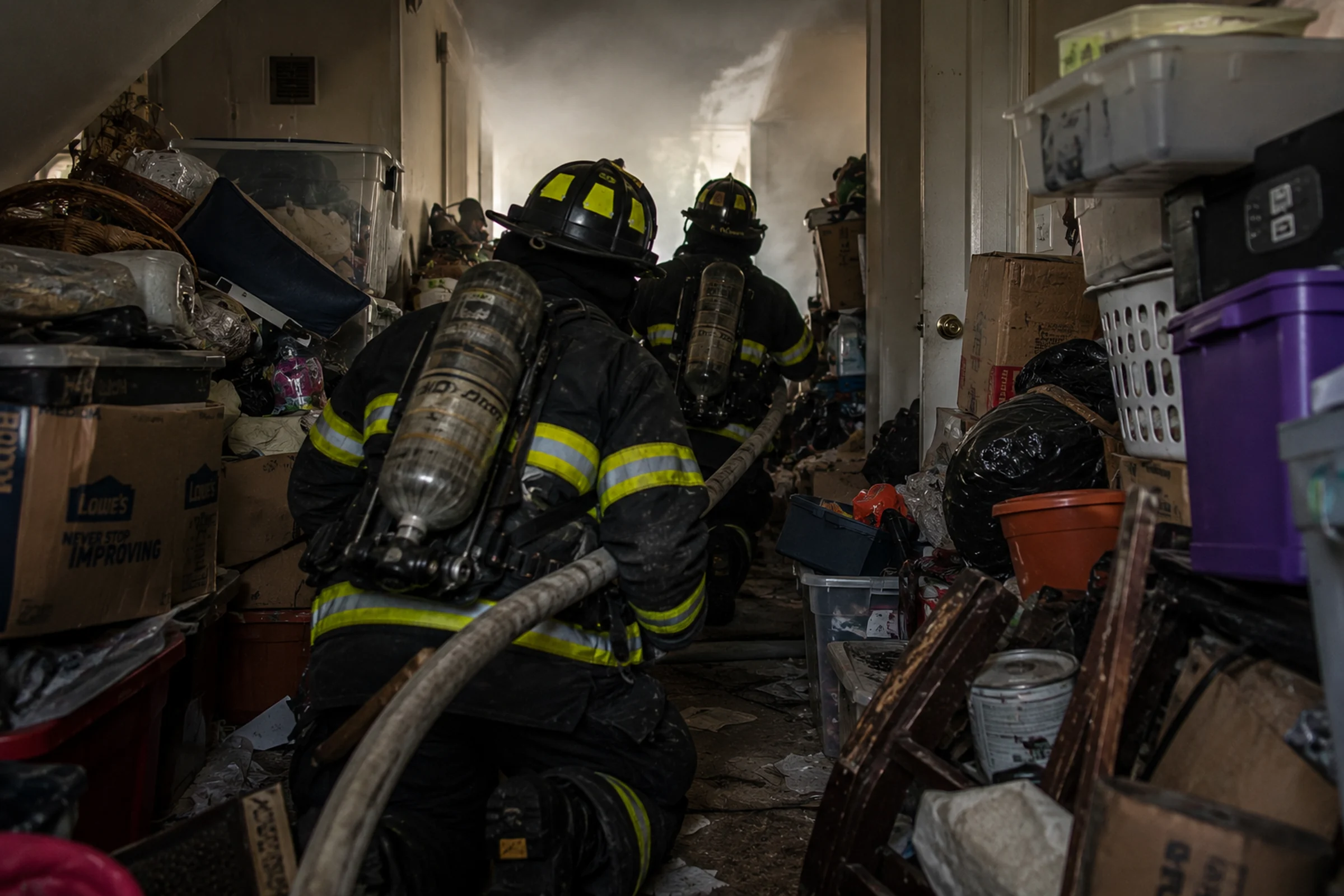
When Engine 16’s crew reached the attic, the officer reported hoarding conditions.
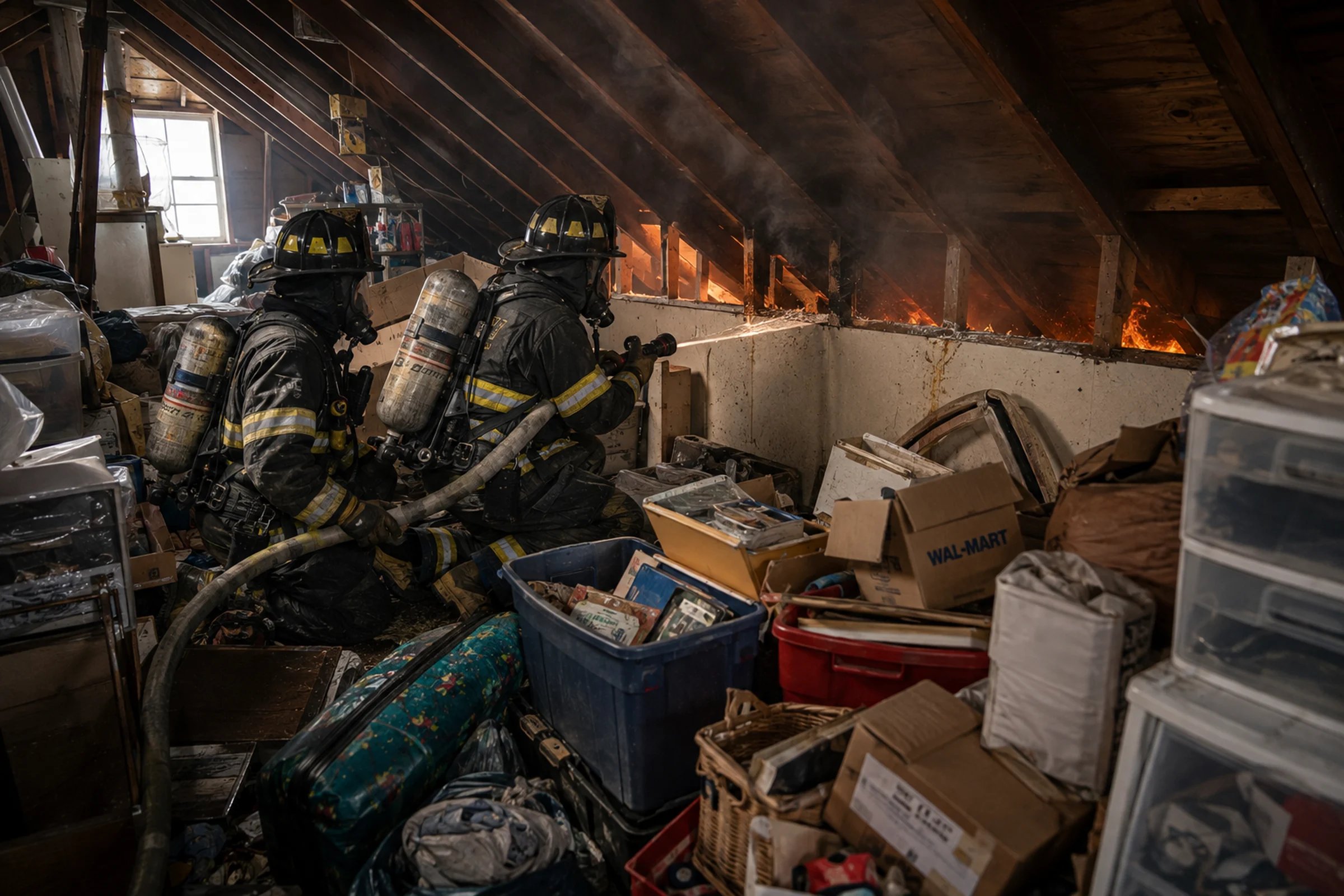
Firefighters began flowing water, but the fire was burning behind a knee wall. The accumulated materials made movement and hoseline navigation difficult, delaying the crew’s ability to reach the source of the fire.
Meanwhile, the fire continued to grow.
Conditions deteriorated rapidly. The ceiling collapsed, the Engine 16 officer sustained serious burns to the wrists and hands, interior crews withdrew, and a Mayday was transmitted.
NIOSH identified the principal contributing factor as a knee-wall fire extending into an attic complicated by hoarding conditions.
Its prevention recommendation deserves attention:
When hoarding conditions delay firefighters from reaching the seat of a knee-wall or attic fire, departments should consider exterior fire suppression.
That recommendation is not an argument that every attic fire should immediately become an exterior operation.
It is a reminder that tactics must change when the conditions that made the original strategy reasonable have changed.
Why Knee-Wall Fires Are Different
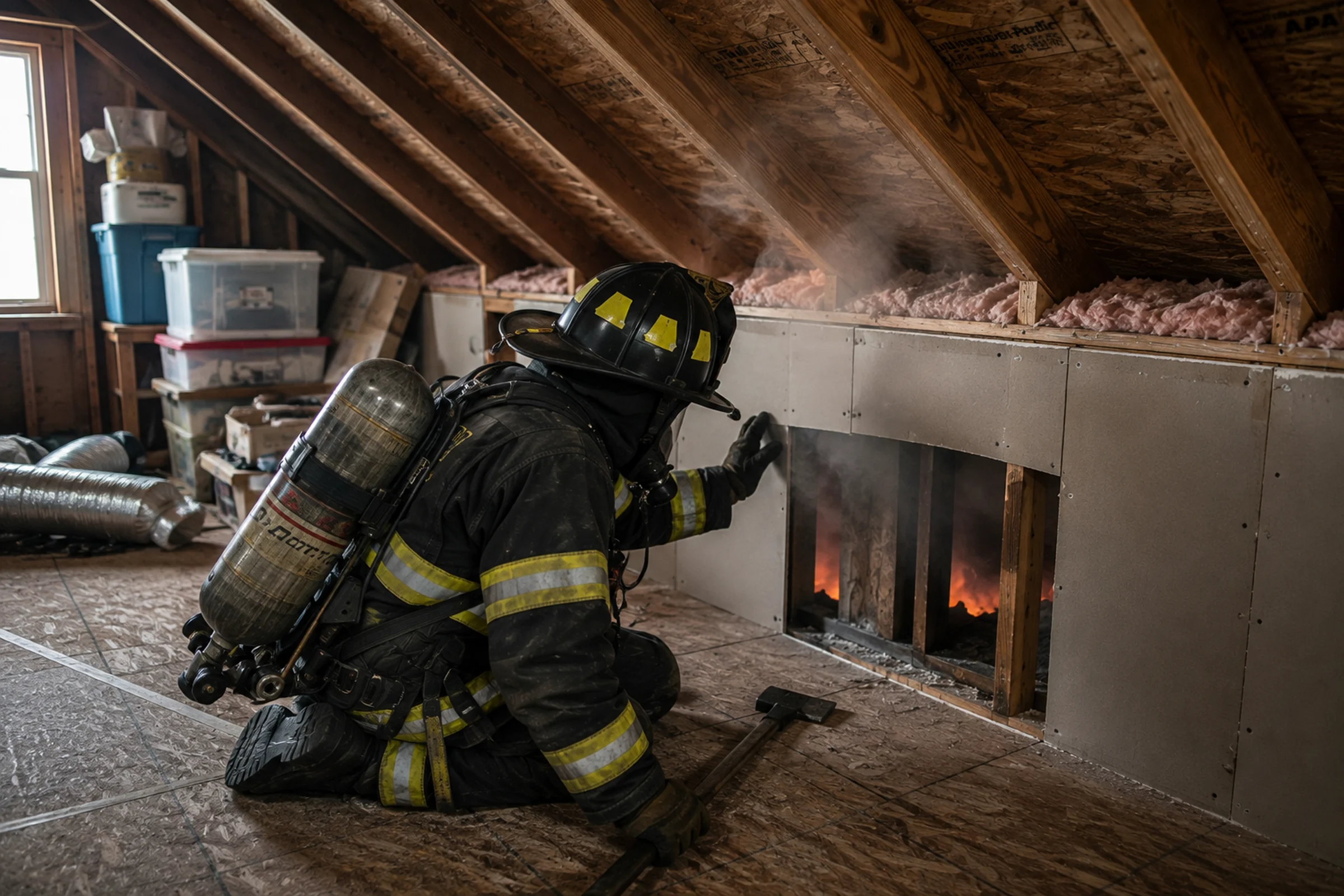
A knee wall is typically a short vertical wall constructed where a sloped roof intersects usable attic or upper-floor space.
Behind it can be a concealed void extending along the roofline.
For firefighters, the problem is simple:
The room you can see may not be the compartment that is burning.
Fire can extend behind walls, through voids and along structural spaces while crews experience relatively little visible fire in the occupied portion of the room.
That can create a dangerous mismatch between what firefighters see and what the fire is actually doing.
Smoke, heat, thermal-imaging information and changing conditions therefore have to be interpreted in the context of the building.
Finding heat at a wall does not necessarily mean firefighters have found the seat of the fire.
Flowing Water Is Not the Same as Reaching the Fire
One of the most important lessons from this incident is that firefighters were flowing water.
Yet NIOSH reports that they could not initially reach the source fire behind the knee wall.
This distinction belongs in fireground training.
A flowing hoseline does not automatically mean suppression is effective.
Water has to reach the burning fuel in sufficient quantity to reduce heat release.
If construction features prevent that from happening, the fire can continue developing even while firefighters are actively flowing a line.
That means crews and officers should continually ask:
- Is our water actually affecting the fire?
- Are temperatures improving?
- Is smoke production changing?
- Is the fire darkening down?
- Are conditions stabilizing or getting worse?
If the answer is no, continuing the same tactic simply because a hoseline is flowing may consume valuable time.
Hoarding Is More Than a Search Problem
Hoarding is sometimes discussed primarily as a search or occupant-access problem.
For firefighters, its effects are much broader.
Excessive contents can narrow travel paths, interfere with hose advancement, create snag hazards, make orientation more difficult, increase fire load, conceal openings and weaken the crew’s ability to retreat quickly.
A pathway that is difficult to enter may be much harder to exit under deteriorating conditions.
A charged hoseline adds another layer of difficulty. Hose does not move through clutter the way it moves down a clear hallway. Friction increases. Couplings catch. Furniture shifts. Contents collapse into the travel path. Backup firefighters may be unable to feed line effectively to the nozzle team.
These are not minor inconveniences.
They directly affect whether firefighters can reach the seat of the fire and whether they can get out if conditions change.
The Building Is Part of the Incident
Firefighters do not fight fire in empty space.
They fight fire inside construction systems.
Knee walls, cocklofts, void spaces, truss systems, soffits, balloon framing and renovations can all create pathways that allow fire to travel beyond the room firefighters are occupying.
Building construction should therefore be treated as an active part of size-up.
Questions include:
- Where could fire be traveling?
- What spaces exist behind the visible surfaces?
- Can crews physically access those spaces?
- Can hose streams reach them?
- Could fire be above, below or behind the crew?
When the building prevents effective access, the tactical problem is no longer simply fire attack.
It becomes an access problem, a construction problem and a time problem.
Thermal Imaging Helps, but It Does Not Remove the Wall
Thermal imagers are enormously valuable fireground tools, but they do not allow firefighters to see through ordinary building materials.
A thermal imager may identify temperature differences that suggest fire behind a wall, but firefighters still need to interpret that information correctly and gain physical access to the space.
That may require opening drywall, pulling ceilings or using another tactical approach.
Thermal imaging should support fireground judgment, not replace it.
When Interior Access Is Losing the Race
Interior fire attack is often the fastest and most effective way to reach occupants and control fire.
But tactics are not moral identities.
They are tools.
If firefighters cannot reach the seat of the fire and conditions continue worsening, command has to consider whether another method can place water on the fire faster.
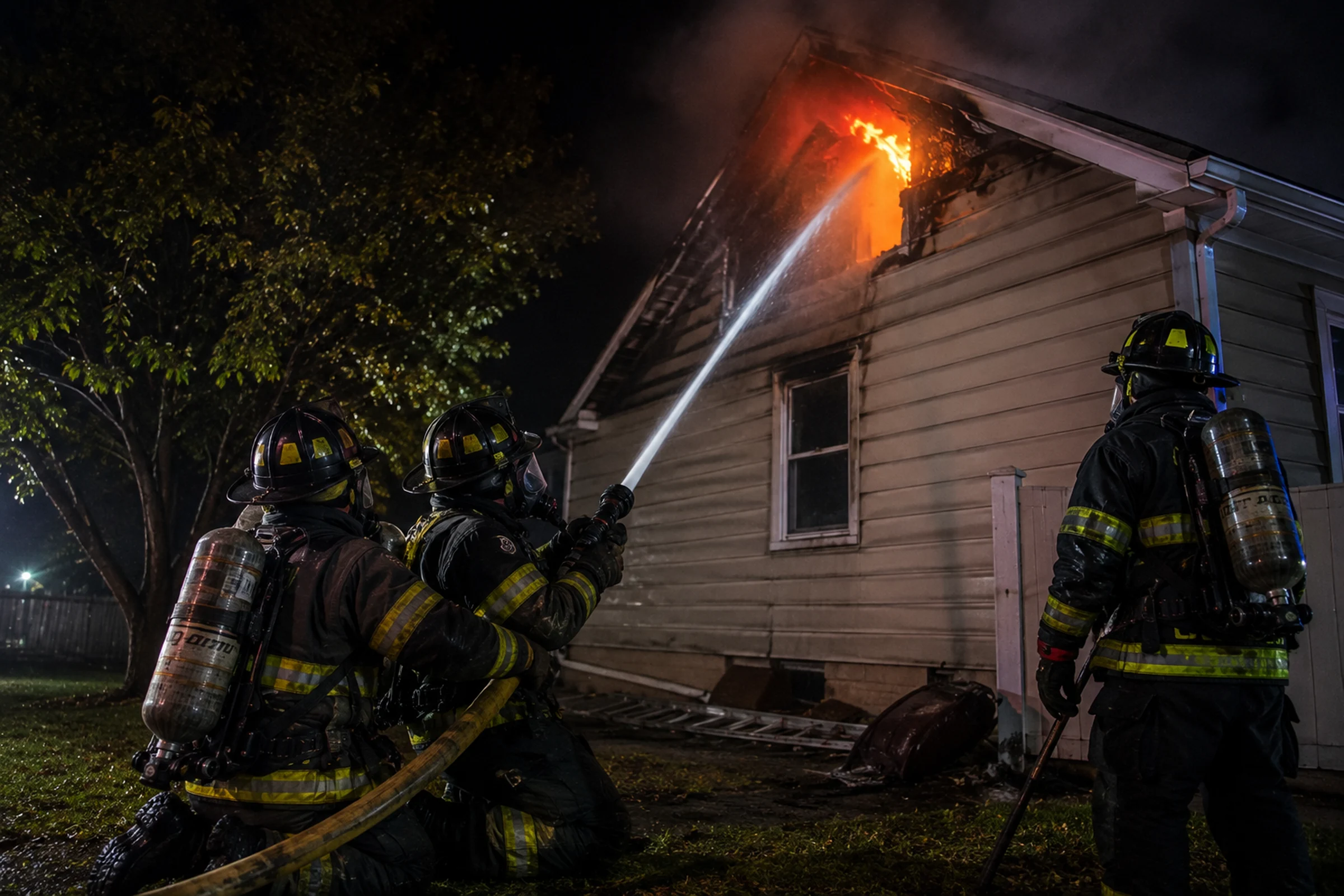
That is the significance of NIOSH’s recommendation to consider exterior fire suppression when hoarding delays access to a knee-wall or attic fire.
An exterior stream directed appropriately into the involved void may reduce heat release and improve interior conditions.
The decision depends on building configuration, fire location, occupant survivability, crew location and department procedures.
The larger lesson is universal:
If the current tactic is not changing conditions, the incident commander needs to know.
Watch the Trend, Not Just the Snapshot
Fireground conditions are dynamic.
A single observation can be misleading.
Smoke that looks moderate at one moment may become denser, faster and more pressurized.
Heat may increase gradually before conditions suddenly become untenable.
The better question is not simply:
What do conditions look like?
It is:
Are conditions getting better or worse?
If water is flowing but heat is increasing, smoke is worsening and access is becoming more difficult, that trend should drive tactical reassessment.
Mayday Before the Last Possible Moment
The NIOSH incident involved a Mayday after conditions deteriorated and a firefighter was injured.
Mayday training should emphasize that a Mayday is not an admission of failure.
It is an emergency communication designed to bring additional resources, radio priority and command attention to a firefighter in danger.
Departments should train members to recognize Mayday triggers involving restricted movement, hose entanglement, collapsing materials and deteriorating heat.
Knowing the acronym is not the same as being prepared to use it under stress.
What Company Officers Should Take From This Incident
The company officer occupies a critical position between tactical objectives and what the crew is actually experiencing.
At fires involving concealed spaces and hoarding, officers should continuously evaluate whether the crew can:
- advance,
- apply water effectively,
- maintain orientation,
- communicate,
- and withdraw.
If one or more of those capabilities begins disappearing, the tactical equation has changed.
The officer’s responsibility is not merely to complete the original assignment.
It is to continually determine whether that assignment remains achievable at an acceptable level of risk.
Training Drill: Make the Hoseline Difficult
Departments can turn this report into a practical company drill.
Build an attic or knee-wall scenario using training props and movable obstacles.
Require the crew to advance a charged line through a restricted pathway.
Then introduce changing information:
- The fire is behind the knee wall.
- The first stream is not reaching it.
- The access path is narrowing.
- Heat is increasing.
- The officer must communicate changing conditions.
- Command must decide whether to change tactics.
The goal is not simply stretching the line.
The goal is recognizing when the original plan is no longer winning.
The Bottom Line
The most important lesson from this incident is not that knee walls are dangerous or that hoarding is dangerous.
Firefighters already know both.
The deeper lesson is what happens when several individually manageable problems begin interacting.
A concealed fire delays locating the seat.
Hoarding delays movement.
Delayed movement delays effective water application.
Delayed suppression allows additional fire growth.
Additional fire growth worsens structural and thermal conditions.
Those conditions make withdrawal more difficult through the same restricted environment firefighters used to enter.
That is how a routine residential fire can become a firefighter emergency.
Good fireground decision-making requires recognizing that chain before the final link forms.
✅ Training Takeaway
When crews cannot reach the seat of a concealed fire, do not measure suppression success by whether water is flowing.
Measure it by whether conditions are improving.
If they are not, communicate it and change the plan.
❓ Frequently Asked Questions
Why are knee-wall fires especially dangerous?
They can burn in concealed triangular voids outside the room crews can see, allowing heat and fire extension to grow while direct access remains limited.
How does hoarding change fire attack?
Heavy contents restrict movement, create hoseline snag points, increase fire load, complicate orientation, and can make emergency withdrawal slower than entry.
Does flowing water mean the attack is working?
No. The important measure is whether water is reaching the burning fuel and whether heat, smoke, and overall conditions are improving.
When should command consider an exterior stream?
When crews cannot effectively reach the concealed fire and conditions continue to worsen, an appropriately directed exterior stream may be a tactical option consistent with department procedures and incident conditions.
Train for the Fire You Cannot See
Concealed fire, restricted movement, and changing conditions demand more than memorized tactics. Build realistic decision-making into company training and know when the original plan is no longer winning.
🔗 Continue Learning with LSE
- Onsite Group Training for departments and organizations that want scenario-based instruction.
- Explore Life Saving Education courses across fire, EMS, OSHA, and emergency-response topics.
- Start Here: How to Use LSE Resources for additional evidence-informed safety education.
📚 Source
NIOSH Fire Fighter Fatality Investigation and Prevention Program, F2026-05 VA, Career Firefighter Sustains Serious Burns at Residential Structure Fire with Hoarding Conditions – Virginia, July 2026.
Life Saving Education provides evidence-informed safety and emergency-response education. Training should always be conducted in accordance with applicable department SOPs/SOGs, regulations, standards and medical or operational direction.