By Joseph Andrade, Firefighter, Paramedic, Emergency Department and Vascular Access RN, OSHA Outreach Instructor, and Safety Officer. Founder and lead instructor at Life Saving Education.
Joseph is an active firefighter, paramedic, and registered nurse working in emergency and vascular access care, as well as an OSHA Outreach instructor and safety officer. He has spent his career on the response side of emergencies, from the fireground to the ambulance to the hospital bedside, and now trains civilians, workplaces, and first responders in the skills that save lives.
The room is quiet. The baby finally settled. A parent is exhausted. A couch looks comfortable. A pillow keeps the baby’s head in place. A blanket feels protective. An adult bed feels easier for feeding. Nothing about those choices looks dramatic. But infant sleep safety is built around hazards that can be quiet, ordinary, and easy to underestimate.
On September 10, 2026, CDC published a new analysis of 4,861 sudden unexpected infant deaths, or SUIDs, reported through its SUID and Sudden Death in the Young Case Registry from 2020 through 2024. The report gives one of the clearest recent looks at the environments in which these deaths occurred. The numbers deserve attention. They also deserve careful interpretation.
🧠 First, What Does SUID Mean?
Sudden unexpected infant death is an umbrella term. It includes several categories of sudden death in infants younger than one year, including sudden infant death syndrome, accidental suffocation and strangulation in bed, and deaths whose cause remains unknown.
That matters because SUID is not one diagnosis with one cause. A safe-sleep factor may be present in a death without investigators being able to prove that the environment directly caused that death. CDC’s case-registry system is designed to collect much more context than a standard death certificate can provide, bringing together death-scene investigations, autopsies, caregiver accounts, medical information, and other sources to ask a more useful question: What was happening around the infant when the death occurred?
📊 What CDC Found in 4,861 Cases
Among the infants in the registry: 66% were 0-3 months old, 57% were male, 74% were born at 37 weeks’ gestation or later, and 69% were insured by Medicaid.
The sleep-environment findings were especially important. Unsafe sleep factors were identified in at least 73% of cases. Those factors overlapped, meaning an infant could have more than one.
Found in a nonsupine position
On a surface other than a crib, portable crib, or bassinet
Had soft bedding in the sleep environment
Were sharing a sleep surface
Had documented full airway obstruction
Those numbers do not mean every death was proven to be caused by the sleep environment. They mean unsafe sleep factors were very common in the investigated scenes.

⚠️ The 73% Number Needs Context
This is where headlines can become misleading. CDC did not say that 73% of SUIDs were definitively caused by unsafe sleep. The registry uses several classification categories: some deaths were explained suffocation with unsafe sleep factors, others remained unexplained even though unsafe sleep factors were present, some had possible suffocation, some lacked complete information, and a small group had no identified unsafe sleep factors at all.
CDC reported that 98% of the cases had an autopsy and 98% had a death investigation, but important contextual information was not always complete. Airway obstruction status, for example, was unknown or missing in a substantial portion of cases.
A responsible prevention message can hold two ideas at once: safe sleep reduces known risk, and not every sudden infant death can be explained by the sleep environment. Families deserve both truths.
🛏️ Where Infants Were Sleeping
Only 21% of the infants in the registry were found in a crib, portable crib, or bassinet. CDC reported 57% were on an adult bed or futon, 9% were on a chair or couch, and 9% were in another location such as a floor, car seat, stroller, bedside sleeper, inclined sleeper, swing, or bouncy chair.
The location is not just a furniture choice. Different surfaces create different risks. Adult mattresses can be softer. Couches create cushions, gaps, and edges. Portable sitting devices may place the infant at an angle that is not intended for routine sleep. A safe-sleep space is deliberately boring: flat, firm, clear, separate. That is exactly the point.
🔄 Back means back
The American Academy of Pediatrics recommends placing infants supine, meaning on the back, for sleep. CDC found 46% of infants in the registry were discovered in a nonsupine position. That does not mean every infant had been intentionally placed prone or on the side; infants can move, roll, and change position as they develop. For caregivers, the practical instruction remains to place the infant on the back for sleep. Parents of infants who can roll independently should discuss what happens after the infant moves with the child’s pediatric clinician, especially when there are medical issues or developmental concerns.

🧸 Soft Bedding Feels Comforting to Adults
Blankets, pillows, stuffed animals, padded surfaces, and similar items can feel like things a baby should have. Adults associate bedding with comfort. Infants are different. AAP safe-sleep guidance recommends a firm, flat, noninclined sleep surface without soft bedding.
In the CDC analysis, 78% of the SUID scenes had soft bedding present. In the subgroup of 919 deaths categorized as explained suffocation with unsafe sleep factors, soft bedding was the most common documented suffocation mechanism. The safest crib is not the most decorated crib. It is the clearest one.
👥 Surface Sharing Is Common, and the Reasons Are Real
CDC found surface sharing in 59% of cases, which can include an infant sleeping on a surface with another adult, child, infant, or animal. This topic can become judgmental very quickly, which makes prevention messaging worse.
Parents may bring an infant into bed because they are feeding, they are exhausted, the infant settles more easily, housing is crowded, a separate sleep surface is not available, cultural norms support bed sharing, or they simply fall asleep unexpectedly. Telling tired parents “just don’t do it” is less useful than helping them plan for the moment they are most likely to fall asleep.
A prevention conversation should include:
- Is a safe sleep space available and close to the caregiver?
- What is the plan for nighttime feeding?
- What happens if the caregiver feels themselves falling asleep?
- Who else in the household needs to know the safe-sleep plan?
- Does the family need help obtaining a crib or bassinet?
Good safety education has to work at 3 a.m., not just at a prenatal appointment.
🛋️ Couches deserve special attention
A couch can feel like the place where a tired caregiver will “rest for a minute” while holding a baby. That is exactly why it belongs in safe-sleep teaching. Couches and upholstered chairs can create soft surfaces, cushions, gaps, wedging hazards, overlay risks, and awkward positions. The safer plan is to have an actual infant sleep space ready before the caregiver is exhausted.
🚗 What about car seats?
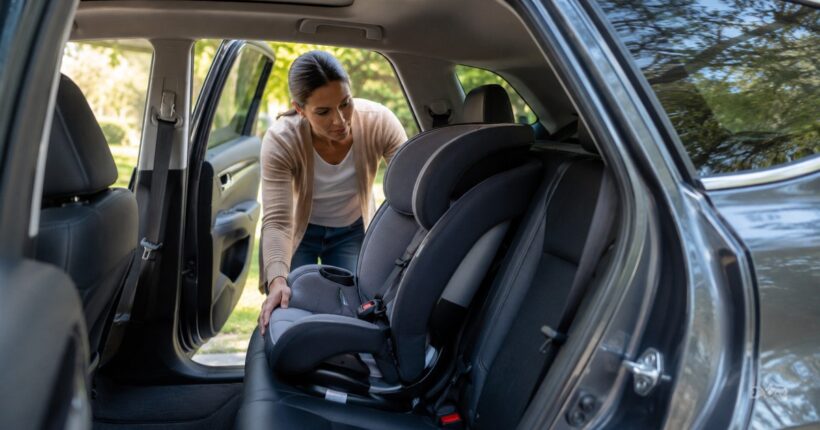
Car seats save lives when used correctly for transportation. That does not make every sitting device an appropriate routine sleep surface outside its intended use. CDC’s “other” sleep-location category included car seats, strollers, swings, inclined sleepers, bedside sleepers, floors, and bouncy chairs. Parents should follow current product instructions and pediatric guidance. When an infant falls asleep during travel, the restraint system still needs to be used correctly. For routine sleep outside transportation, use the recommended firm, flat sleep environment.
🧬 Safe Sleep Is Not the Whole SUID Story
CDC also highlights something important for clinicians, investigators, and families: some deaths occurred without identified unsafe sleep factors. The report also notes limits in death-investigation completeness and discusses the need to better identify underlying etiologies, including through genetic testing and more complete airway documentation.
That means prevention work should not become blame. SUID research still includes unanswered questions. Safe sleep is one of the clearest modifiable areas we can act on, but it is not a complete explanation for every tragedy.
👶 A Simple Safe-Sleep Setup
For most healthy infants, current AAP recommendations can be summarized in a few practical points:
Families should also follow current pediatric guidance on feeding, pacifiers, swaddling, room sharing, smoking exposure, and other risk-reduction strategies.

🍼 What Babysitters, Grandparents, and Childcare Providers Need to Know
A safe-sleep plan only works if every caregiver follows it. Parents may have a perfect setup at home and then find that a grandparent uses a pillow, a babysitter places the infant on the stomach, or a childcare provider uses an unapproved sleep surface. Do not assume everyone already knows current guidance.
Tell caregivers where the infant sleeps, how the infant should be positioned, what should stay out of the sleep space, what to do if the infant falls asleep elsewhere, and when to call the parent or pediatric clinician with a concern. Consistency matters.
❤️ Where CPR Training Fits, and Where It Does Not
Infant CPR is essential emergency training. It is not a prevention strategy for SUID. That distinction matters. CPR training prepares a caregiver to recognize an unresponsive infant, activate emergency response, provide CPR, and manage choking emergencies. Safe-sleep education aims to reduce preventable risk before an emergency occurs. Families need both: one helps reduce risk, the other prepares them to act when something has gone terribly wrong.
🧭 What instructors should change
CPR and First Aid instructors should resist the temptation to turn a safe-sleep discussion into a long pediatric lecture unless it fits the course and program rules. A short, accurate safety reminder can still help, reinforcing back positioning, firm and flat sleep surfaces, separate sleep space, no soft bedding, and the importance of consistent caregiver practices. When teaching formal AHA courses, instructors should remain within the approved course framework and avoid presenting additional material as though it were part of the AHA credential unless it actually is.
✅ Key Takeaways
- CDC analyzed 4,861 SUIDs from 2020-2024 participating case-registry jurisdictions.
- Unsafe sleep factors were identified in at least 73% of cases.
- The factors overlapped: 46% were found nonsupine, 75% on a non-crib sleep surface, 78% with soft bedding, and 59% surface sharing.
- Those numbers do not prove that the sleep environment caused every death.
- AAP guidance continues to emphasize a supine position on a firm, flat, nonshared sleep surface without soft bedding.
- Safe-sleep messaging should be practical and nonjudgmental, especially when families face exhaustion, feeding challenges, crowded housing, or limited access to infant sleep equipment.
- Infant CPR training prepares caregivers for emergencies but does not replace safe-sleep prevention.
❓ Frequently Asked Questions
What is SUID?
Sudden unexpected infant death is an umbrella term that includes SIDS, accidental suffocation and strangulation in bed, and deaths from unknown causes in infants younger than one year.
Did CDC find that unsafe sleep caused 73% of SUIDs?
No. CDC found unsafe sleep factors in at least 73% of the registry cases. The report separates explained suffocation, possible suffocation, unexplained deaths with unsafe sleep factors, deaths with incomplete information, and other categories.
What sleep position is recommended?
AAP guidance recommends placing infants on their backs for sleep.
Can my baby sleep in an adult bed if I remove the pillows?
AAP safe-sleep guidance recommends a separate, firm, flat, noninclined infant sleep surface such as an appropriate crib or bassinet. Removing pillows does not turn an adult mattress into an infant sleep surface.
What should I do if my baby falls asleep in a car seat?
Use car seats correctly during transportation. For routine sleep outside transportation, follow current pediatric guidance and move the infant to an appropriate firm, flat sleep surface when it can be done safely.
Does learning infant CPR prevent SIDS or SUID?
No. CPR is emergency-response training. Safe-sleep practices are prevention measures aimed at reducing known sleep-related risks.
Learn the Skills That Matter Before an Emergency
Life Saving Education teaches AHA Heartsaver Pediatric First Aid CPR AED alongside our full CPR and AED course lineup, taught by instructors who work in emergency medicine every day.
Pediatric First Aid CPR AED CPR & AED Training
Plan Group Training
📚 Sources and Further Reading
- CDC: Characteristics of Sudden Unexpected Infant Deaths, United States, 2020-2024, MMWR, September 10, 2026
- American Academy of Pediatrics: Evidence Base for 2022 Updated Recommendations for a Safe Infant Sleeping Environment
- NIH Safe to Sleep Campaign
Safe-sleep guidance can change as evidence and recommendations evolve. Families should discuss individual medical or developmental concerns with the child’s pediatric healthcare professional.