Prepared by the LSE Editorial Team. Reviewed by Joseph Andrade, Jr., RN, NRP.
Joseph works across emergency response, healthcare, and workplace safety and develops practical training for civilians, employers, and first responders.
EMS has spent years teaching clinicians how to manage stress: sleep when you can, exercise, eat well, talk to someone, use the EAP, build resilience.
Those messages help. They can also become a way for an organization to place responsibility for an occupational problem entirely on the worker.
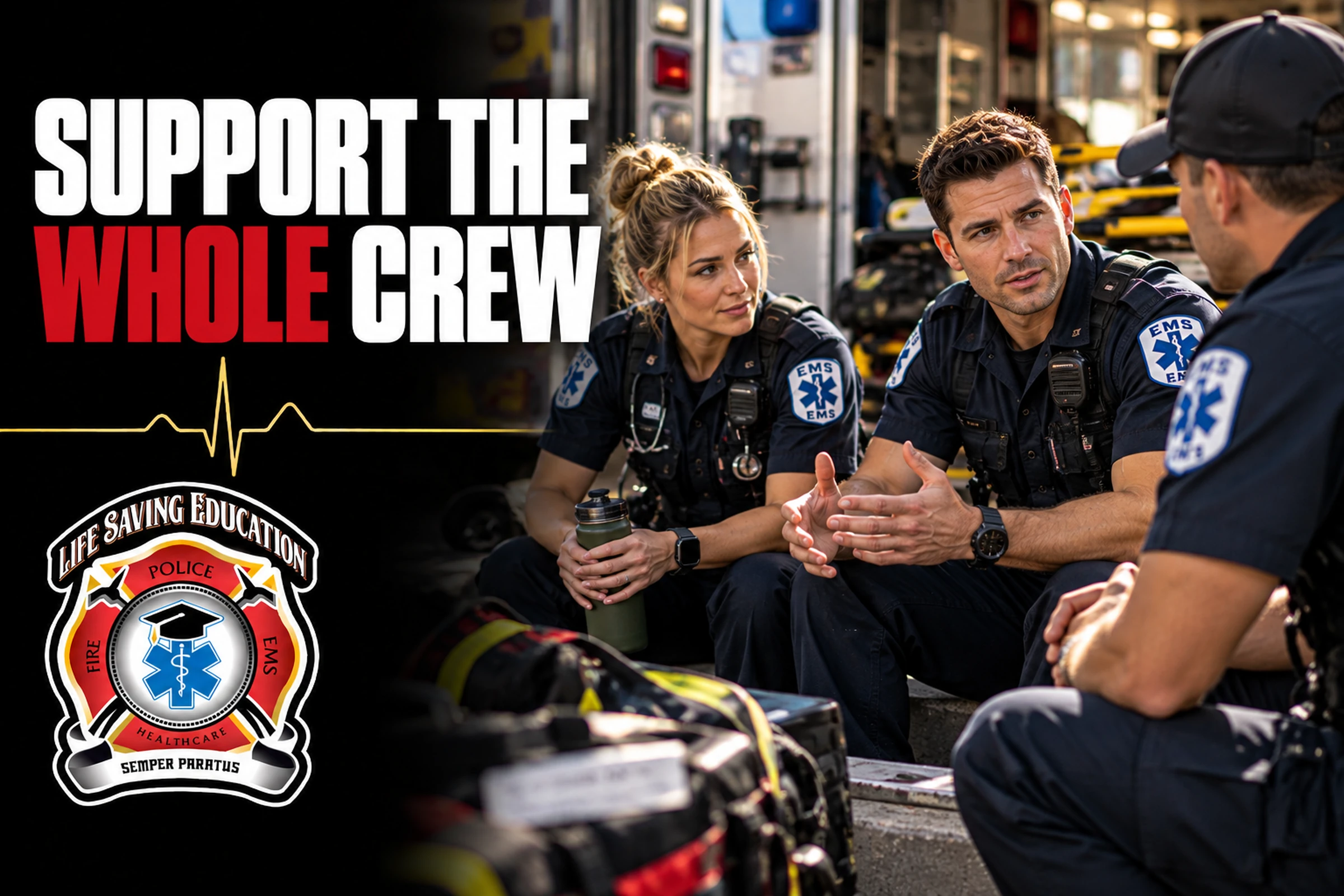
A 2026 National Association of EMS Physicians position statement takes a broader view. NAEMSP describes EMS clinician mental health as a systems issue tied to workforce sustainability, clinical performance, and patient care.
The statement recommends leadership accountability, mental-health education, confidential and culturally competent resources, multifaceted support, quality improvement, advocacy, and partnerships.
That’s a much higher bar than telling clinicians to practice self-care.
📋 Why EMS Mental Health Is a System Issue
The work creates predictable stressors
EMS clinicians work in an environment built around unpredictability: repeated trauma exposure, shift work, sleep disruption, violence, moral distress, high-consequence decisions, resource limitations, pediatric deaths, suicide calls, fatal crashes, mass-casualty events, and routine calls that become personally significant for reasons no one else sees.
The cumulative effect matters. This does not mean every clinician develops a mental-health condition. It means the occupational risk deserves the same systems thinking EMS applies to other hazards.
Resilience is not a staffing plan
A clinician can be resilient and still be harmed by chronic sleep disruption, mandatory overtime, unsafe staffing, workplace violence, repeated trauma exposure, poor leadership, and lack of confidential treatment access.
Individual skills can help someone manage stress. They cannot redesign a broken schedule, create confidentiality where none exists, eliminate stigma created by supervisors, or fix a culture that treats help-seeking as weakness.

Mental health affects patient safety
Fatigue, burnout, distraction, and psychological distress can affect attention, communication, decision-making, and performance. Supporting the workforce is not separate from the mission. It protects the mission.
📋 What Leaders Own
Leadership owns part of the outcome
NAEMSP recommends that organizational leadership recognize clinician mental health as foundational to workforce sustainability and safe patient care.
Leaders should ask what workplace practices increase avoidable stress, whether fatigue is affecting safety, how the organization responds after difficult calls, whether employees can access confidential care, whether supervisors recognize concerning changes, whether discipline culture discourages help-seeking, and what happens after workplace violence.
Mental health becomes measurable organizational work.
Scheduling belongs in the conversation
Wellness programs can lose credibility when an organization offers meditation resources while relying on chronic mandatory overtime or schedules that predictably disrupt sleep.
EMS systems face vacancies, demand surges, disasters, special events, and budget limits. That does not make fatigue invisible. Organizations can examine shift length, overtime patterns, late calls, holdovers, recovery time, fatigue-related incidents, and whether staffing practices create avoidable risk.
Workplace violence belongs in the conversation too
EMS clinicians may experience threats, assault, harassment, and unsafe scenes. Agencies should connect violence-prevention policy, reporting, medical evaluation, psychological support, legal resources, and quality improvement.
Quality improvement should include workforce health
Possible organizational indicators include turnover, vacancy rates, sick leave, overtime, injuries, workplace violence, appropriately aggregated employee-assistance trends, peer-support contacts, sleep and fatigue reports, exit-interview themes, training participation, and employee climate surveys.
These data should not become a tool for identifying or punishing individuals seeking help. The purpose is system improvement.
🔗 Related: Construction Suicide Prevention: What Supervisors Should Know Before a Coworker Reaches Crisis
📋 Education, Peer Support, and Confidentiality
Education belongs in initial and continuing training
A practical curriculum can cover common occupational stress reactions, warning signs requiring professional evaluation, sleep and fatigue, substance-use risk, peer support, how to approach a coworker, confidentiality limits, crisis resources, supervisor responsibilities, return-to-work considerations, and when to activate emergency help.
Training should be factual, nonjudgmental, and clear about the difference between peer support and professional treatment.
Peer support can help, but it is not therapy
Peer programs can reduce isolation and create an accessible first contact. Peers understand the culture and language of the job. That does not make a peer supporter a therapist.
Programs need training, boundaries, escalation pathways, confidentiality rules, leadership support, and access to qualified mental-health professionals.
Confidentiality is operational
A resource is not useful if employees believe using it will damage their career. Agencies should clearly explain what is confidential, what is not, who receives information, what mandatory-reporting limits exist, how fitness-for-duty processes differ from ordinary treatment, and how to access care outside the chain of command.
📋 Supervisors, Instructors, and Difficult Calls
Difficult calls need a flexible response
Not every difficult call requires the same intervention. Some clinicians want to talk immediately. Some do not. Some benefit from informal peer contact. Some need professional evaluation. Some develop symptoms later.
The organization should make support available, normalize access, educate supervisors, and create pathways for escalation when risk is present.
Supervisors need training too
A supervisor may be the first person to notice unusual irritability, withdrawal, repeated lateness, deterioration in performance, unsafe risk-taking, increased substance-related concerns, statements suggesting hopelessness, or inability to recover after a difficult event.
The supervisor does not need to diagnose the employee. The supervisor needs to know how to have a professional conversation, access organizational resources, escalate urgent safety concerns, and protect privacy.
Instructor practices matter
Educators shape culture. An instructor who jokes about clinicians being weak for seeking help teaches a lesson even if the mental-health slide says the opposite.
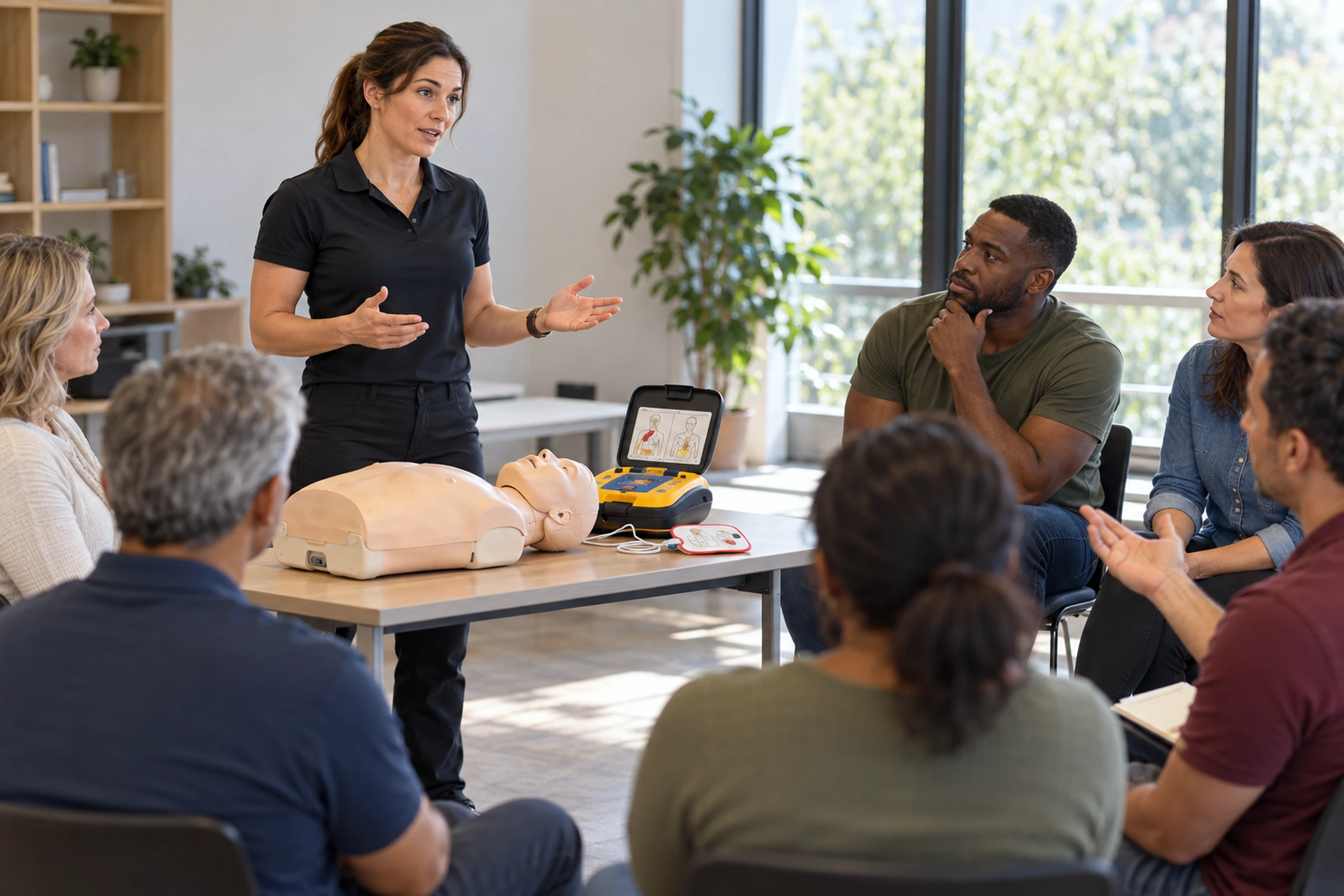
Training programs should avoid stigmatizing language, include realistic occupational-health resources, teach peer and supervisor response, normalize professional treatment, distinguish normal stress reactions from situations needing evaluation, include fatigue and sleep in safety education, and give learners a clear crisis pathway.
🔗 Related: When Fire Academy Soreness Is Not Normal: Exertional Rhabdomyolysis in Firefighters and Recruits
✅ Build the Program, Then Audit It
What an agency program can look like
- Leadership policy
- Confidential treatment access
- Trained peer support
- Supervisor education
- Onboarding education
- Recurring continuing education
- Fatigue and scheduling review
- Workplace-violence prevention
- Post-event support options
- Quality-improvement monitoring
- Crisis-response procedures
- Partnerships with clinicians familiar with public safety
No single component is enough. That is the point of a systems approach.
A practical leadership audit
Can every employee identify confidential resources without asking a supervisor? Do employees understand confidentiality limits? Are supervisors trained? Is peer support properly bounded? Is there a process after unusually difficult events? Are fatigue, scheduling, and workplace violence reviewed? Are mental-health topics included throughout a career? Are workforce trends part of quality improvement? Does leadership behavior match written policy?
⚠️ Crisis Resources Should Be Visible Before a Crisis
Employees should not need to search an intranet while in distress. Agencies can place resources in onboarding materials, station postings, secure employee portals, supervisor guides, wallet cards, and mobile-accessible pages.
In the United States, 988 is available by call or text for the Suicide & Crisis Lifeline.
📋 What LSE Can Build, and the Bottom Line
What LSE can build from this
This topic supports EMS supervisor awareness training, instructor-development modules on psychologically safer education, fatigue and scheduling safety modules, peer-support awareness training, post-event operational checklists, workplace-violence integration, leadership tabletop exercises, and resource-navigation modules.
The boundary should remain clear. Education can help people recognize problems, build safer systems, and connect to appropriate resources. It does not replace diagnosis or treatment by qualified professionals.
Agencies can explore these modules through LSE fire and EMS training programs, delivered onsite in the Washington, DC region and across the East Coast.
LSE Bottom Line
Resilience still matters. It is simply not the whole answer.
EMS organizations influence mental health through leadership, staffing, scheduling, culture, training, confidentiality, peer support, access to care, and what happens after difficult events.
The 2026 NAEMSP position statement gives agencies a better frame: mental health is not an extracurricular wellness project. It is part of workforce safety and patient care.
Educational content only. It is not medical or mental-health advice and does not replace diagnosis or treatment by qualified professionals.
✅ Key Takeaways
- A 2026 NAEMSP position statement calls EMS clinician mental health a systems issue tied to workforce sustainability, clinical performance, and patient care.
- Resilience helps, but it cannot fix chronic overtime, unsafe staffing, workplace violence, or a culture that punishes help-seeking.
- Leaders should treat fatigue, scheduling, and violence as part of the mental-health conversation.
- Peer support helps, but it is not therapy. Programs need boundaries and access to qualified professionals.
- Employees need to know what is confidential before they will use a resource.
- Post crisis resources, including 988, where people can find them before a crisis.
❓ Frequently Asked Questions
What does the 2026 NAEMSP position statement recommend?
Leadership accountability, mental-health education, confidential and culturally competent resources, multifaceted support, quality improvement, advocacy, and partnerships.
Is EMS peer support the same as therapy?
No. Peer programs can reduce isolation and give people an accessible first contact, but peer supporters are not therapists. Programs need training, boundaries, escalation pathways, confidentiality rules, and access to qualified mental-health professionals.
What should an EMS supervisor do if they notice warning signs?
The supervisor does not need to diagnose anyone. They need to know how to have a professional conversation, connect the person to organizational resources, escalate urgent safety concerns, and protect privacy.
Where can an EMS clinician get help in a crisis?
In the United States, call 911 when emergency response is needed, or call or text 988 for the Suicide & Crisis Lifeline.
How can an agency track workforce mental health without targeting individuals?
Use aggregated indicators such as turnover, vacancies, overtime, sick leave, injuries, workplace violence, fatigue reports, and climate surveys. The data should drive system improvement, never identify or punish people who seek help.
Training You Can Count On. When Seconds Count.
Build Training That Supports the People Doing the Work
LSE develops supervisor, instructor, and agency training for fire and EMS teams, delivered onsite in the Washington, DC region and across the East Coast.