How three Houston firefighters survived a flashover, what their destroyed gear teaches the fire service, and why training, not equipment alone, brought them home.
Prepared by the LSE Editorial Team. Reviewed by Joseph Andrade, Jr., RN, NRP.
Equipment buys firefighters time. Training determines how that time is used.
Every Firefighter Has Imagined This Moment
The room changes. Heat becomes something you can no longer outrun. The exit disappears. Radio traffic becomes a Mayday. There is no time to work through a checklist or recall a slide from recruit school. Your body will do what it has been trained to do, or it will not.
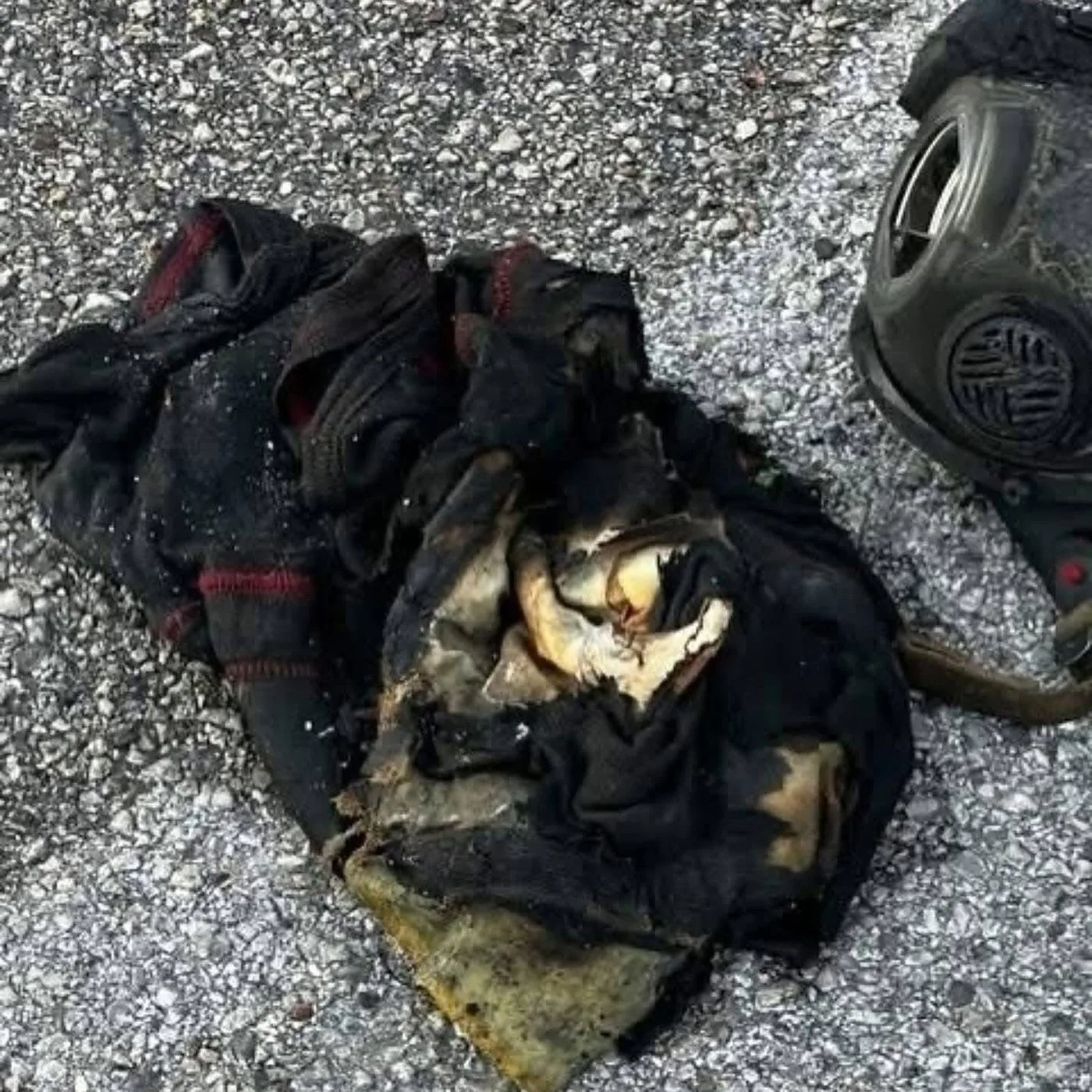
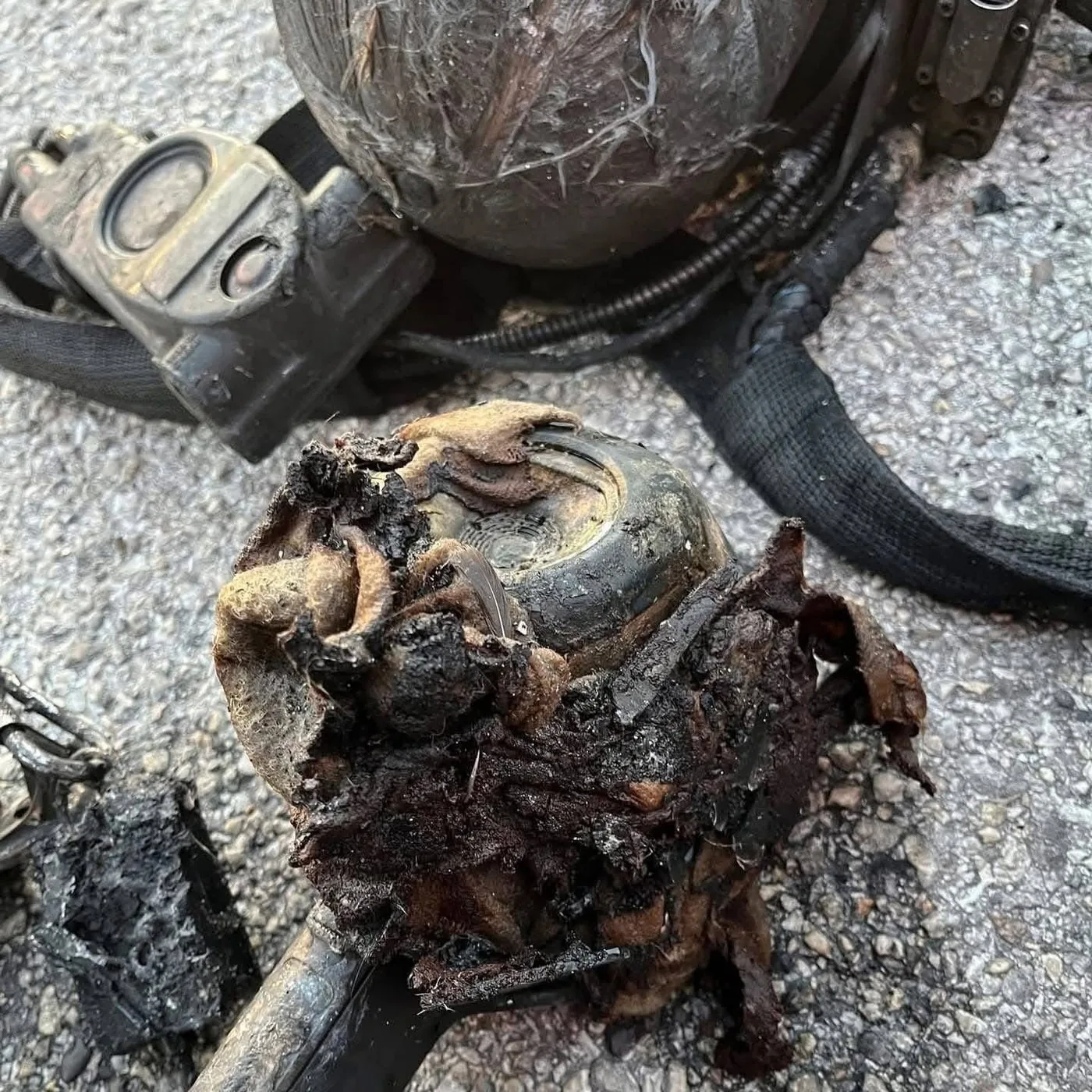
On January 7, 2025, three Houston firefighters experienced that nightmare inside an apartment on Jarmese Street. Senior Captain Edward Escamilla and Firefighters Darren Jones and Jonathan Guzman entered during a primary search after reports of people trapped. A heavy door blocked their exit, conditions rapidly deteriorated, and the crew called a Mayday. A fourth firefighter forced the obstruction and helped remove them. All three survived significant burns, while their helmets, gloves, coats, and SCBA components showed severe thermal damage.
The photographs are compelling, but the melted equipment is not the most important part of this case. The central lesson is what the firefighters did after normal escape was no longer possible.
What Happened on Jarmese Street
Houston companies responded shortly before 5:30 a.m. to an apartment fire near Jarmese Street and Coffee Street. Public reporting confirms that Station 46 members conducted a primary search, became trapped behind a heavy door, transmitted a Mayday, and were rescued by another firefighter. Officials reported second- and third-degree burns involving the hands, legs, and neck, and described extensive damage to the crew’s PPE and air packs.
A member of the Houston Fire Department training community later provided additional operational context for this article: the search team had confirmed reports of occupants trapped, and a hoseline was advancing behind them but did not reach the team because of a civilian altercation. This detail is attributed to that Houston Fire Department member and has not been independently confirmed in the public incident reports reviewed for this article.
That clarification matters. The crew was performing the mission firefighters are expected to perform when lives may be inside. They completed the search. Then the apartment flashed over and trapped them for nearly a minute.
Do not confuse equipment performance with human survivability. Laboratory ratings do not promise that a firefighter can remain in direct flame for the duration of a test.
What the Destroyed Gear Tells Us
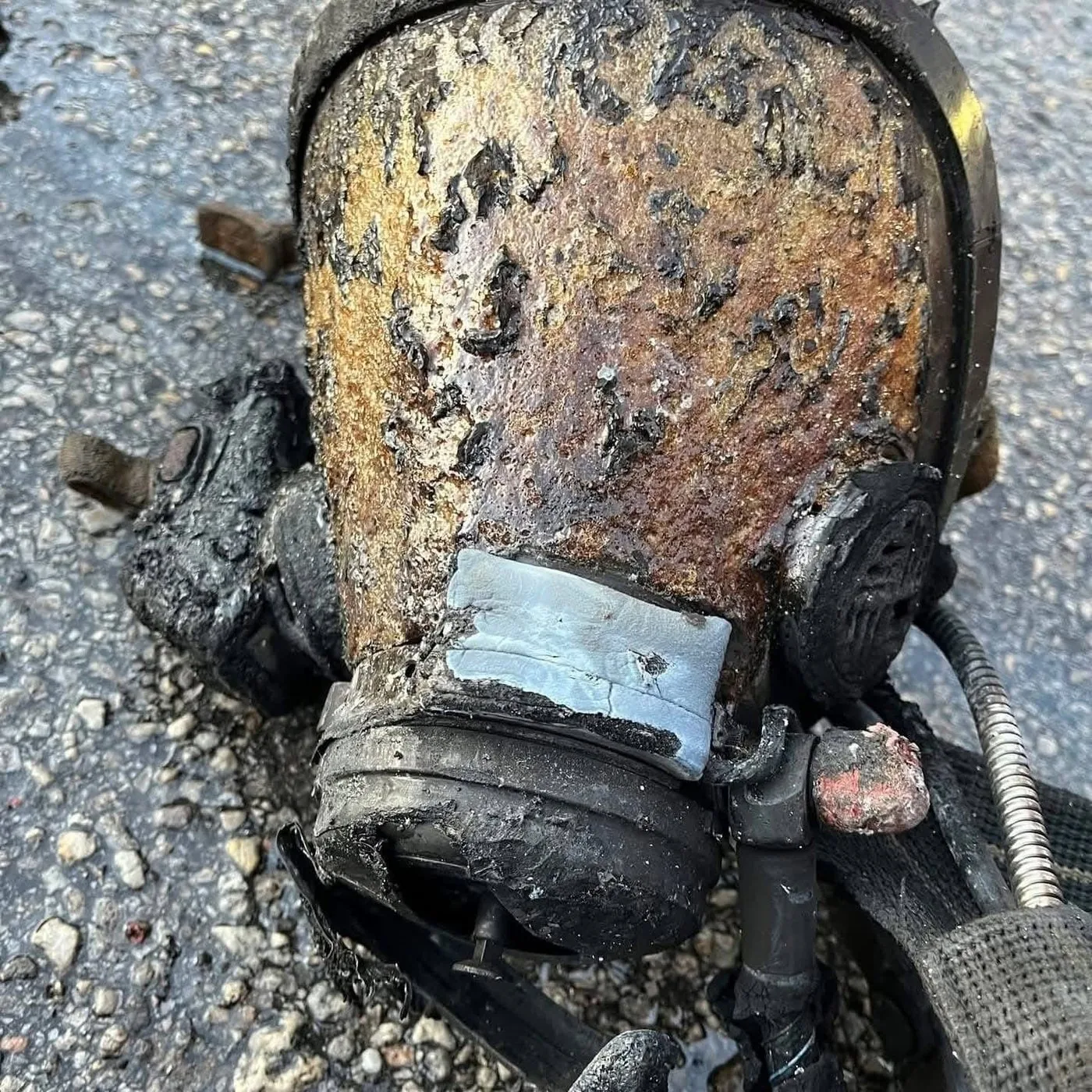
Modern structural firefighting PPE is extraordinarily capable. It delays burn injury, protects the respiratory system, and gives firefighters time to work in environments that would otherwise be immediately lethal. It is not invulnerable, and it does not suspend the laws of heat transfer.
NIST research identified the SCBA facepiece lens as a particularly vulnerable part of the protective ensemble. The radiant-heat test incorporated into the 2013 edition of NFPA 1981 exposes facepieces to 15 kW/m² for five minutes, a heat flux selected as representative of conditions encountered while approaching flashover. A separate elevated-temperature test exposes the SCBA to 500°F for five minutes followed by ten seconds of direct flame. These are controlled equipment tests, not promises of firefighter survivability under identical exposure.
The Houston images show crazing, blistering, deformation, delamination, burned-through outer shells, damaged gloves, charred harness components, and distorted helmets. Those photographs do not prove that the PPE failed. They show that the ensemble bought critical time while every component moved toward its performance limit.
Training, Not Luck
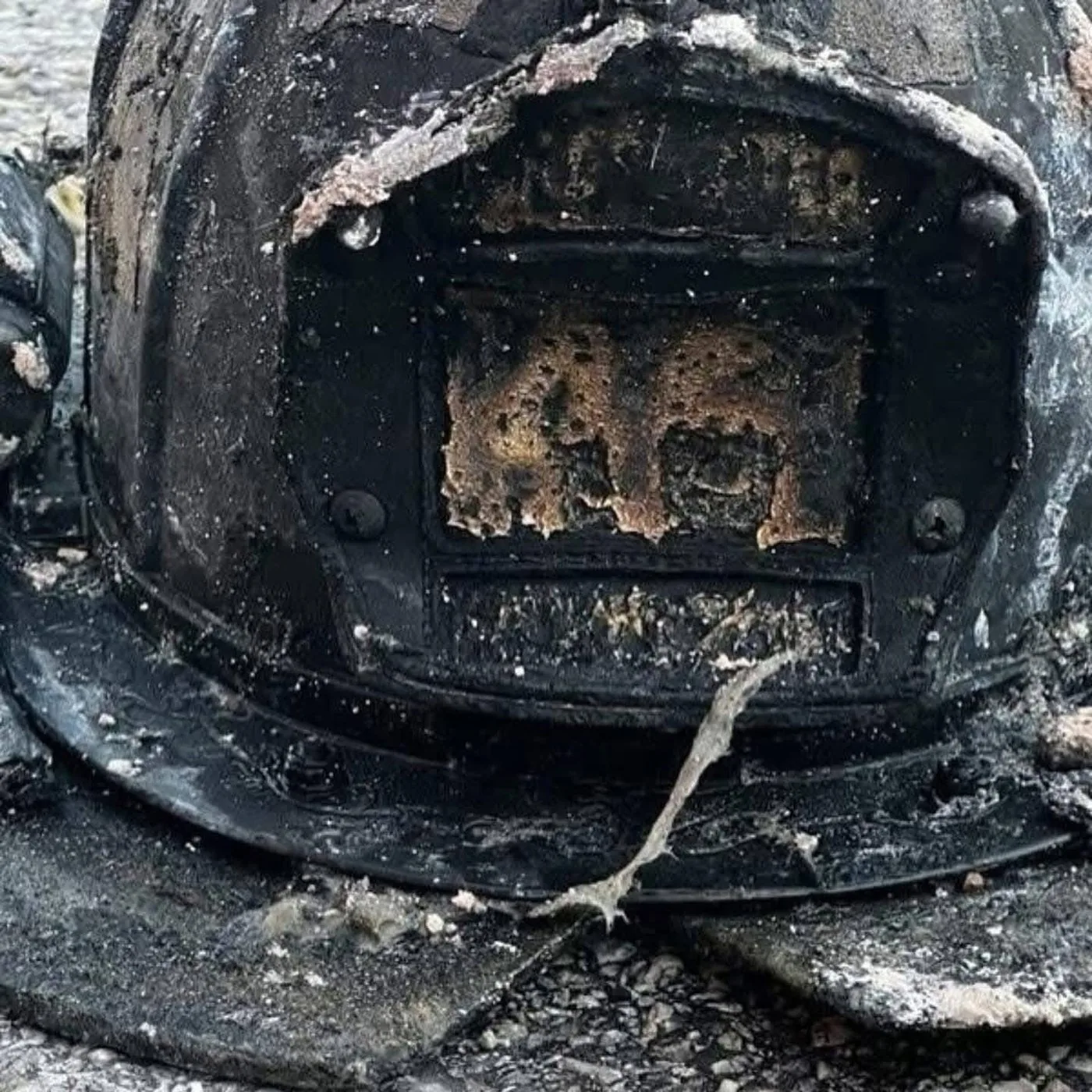
Houston Senior Captain Dale Jenkins’ public debrief emphasized that the trapped firefighters protected their facepieces. Two used their hands to shield the masks, while a third pressed the facepiece into a lower corner and protected it with the crook of an arm. Jenkins explained that current instruction favors using the arm rather than leaving the fingers directly exposed.
Additional guidance shared directly by a member of the Houston Fire Department training community adds important context to the survival lesson. According to that member, the three firefighters entered to search after confirmed reports of occupants trapped, with a hoseline advancing behind them. The member reports that the line did not make it inside because of a civilian altercation, that the search was completed, and that the apartment then flashed over, trapping the firefighters in direct flame for nearly a minute. That operational account is attributed to the Houston Fire Department member and has not been independently confirmed in the public incident reports reviewed for this article. The central point of the member’s training message is equally important: the firefighters’ PPE bought time, but their practiced survival actions helped them use that time. They protected their facepieces as they had been trained to do.
Houston Fire Department Survival Guidance
- If escape is impossible and you must get as low as possible, push the SCBA facepiece firmly into the floor or the most protected available surface.
- Clench both hands tightly. Bury the fingertips deep into the palms of the gloves, then cover the fingers with the thumbs so the fingertips are not left exposed.
- Cross the arms and try to place each fist beneath the opposite armpit. The goal is to bury the hands on the inside of the arms and create a protected pocket or nest with the arms and torso.
- Place the facepiece in the center of that pocket. Adjust the arms to close any gaps and shield as much of the facepiece as possible.
- Make the body as small as possible to reduce exposed surface area. Keep the legs tight together, keep the arms tucked, and pull the arms tighter against the body when possible to protect the underside of the arms.
The two most critical areas to protect are the facepiece and the hands. The facepiece is the final barrier protecting the airway from superheated gases and toxic products of combustion. Hands are also especially vulnerable when fingers remain exposed, and severe hand burns can immediately compromise radio use, tool operation, door manipulation, hose control, and self-rescue. The Houston training takeaway is simple: protect the mask, bury and shield the hands, reduce body profile, and make the posture something the body can perform under extreme stress.
Training note: This technique and the operational context above are attributed to a member of the Houston Fire Department training community and are included here as actionable firefighter-survival education. They are not presented as a universal national standard. Firefighters must train and operate under their own department’s SOPs/SOGs, approved firefighter-survival curriculum, live-fire safety rules, manufacturer instructions, and applicable standards.
Houston Fire Department Member Takeaway
The lesson is not that a facepiece or turnout ensemble makes direct-flame exposure survivable for a specified period. Equipment test conditions are not human survivability guarantees. In this incident, the gear was devastated, yet the firefighters survived. The training message shared with Life Saving Education is to practice protecting the facepiece and hands until the response is immediate: be trained, be prepared, stay alive.
Houston Shows What To Do. NIOSH Explains Why It Matters.
NIOSH’s Fire Fighter Fatality Investigation and Prevention Program investigates line-of-duty deaths and serious injuries so the fire service can identify contributing factors and prevent recurrence. Across hundreds of investigations, NIOSH has repeatedly emphasized effective training, appropriate strategy and tactics, accountability, timely emergency communications, understanding fire behavior, and learning from prior incidents.
NIOSH does not publish the Houston body position described above as a national standard. Its broader findings nevertheless support the same training philosophy: recognize rapidly deteriorating conditions, call a Mayday when egress is compromised, coordinate ventilation and suppression, understand that PPE has limits, and practice survival actions until execution is immediate under stress.
NIOSH also evaluates SCBA involved in selected fatal or serious-injury events. The purpose is to determine whether a unit was in an approved configuration, whether it met applicable performance requirements, and whether equipment performance may have contributed. Those evaluations improve equipment, standards, and training; they do not establish that any SCBA can make an otherwise unsurvivable fire environment safe.
Why Modern Flashover Is a Different Animal
Modern residential fuel packages have compressed the timeline. In UL FSRI’s comparison of two identical rooms, the room furnished with synthetic materials reached flashover in 4 minutes and 50 seconds. The room furnished with natural materials took more than 30 minutes. The rooms were the same size and contained comparable furnishings; the material composition changed the outcome.
That difference reshapes search, attack, ventilation, victim survivability, and firefighter survivability. Crews are often operating in ventilation-limited structures where opening a door or losing a window can rapidly increase heat release and establish a dangerous flow path.
Cherry Road: The Door Changed the Fire
On May 30, 1999, Firefighters Louis Matthews and Anthony Phillips were killed and Firefighter Joe Morgan was severely injured at a townhouse fire on Cherry Road in Washington, D.C. NIST used its Fire Dynamics Simulator to reconstruct the incident and examine the thermal conditions created when ventilation changed at the basement level.
The enduring lesson is not that every opened door creates the same outcome. It is that ventilation can rapidly reorganize an under-ventilated fire, move superheated gases toward interior crews, and eliminate an escape window in seconds. Cherry Road became a foundational case study in flow path, ventilation coordination, and modern fire dynamics.
Beacon Street: Wind, Flow Path, and a Lost Hoseline
On March 26, 2014, Boston Lieutenant Edward Walsh Jr. and Firefighter Michael Kennedy were killed and 13 firefighters were injured at a wind-driven brownstone fire on Beacon Street. The NIOSH F2014-09 investigation issued 15 recommendations addressing incident strategy, wind-driven fire conditions, fireground communications, staffing, training, and other contributing factors.
A companion NIOSH training document used the incident to reinforce flow-path control and the need for incident commanders to adapt strategy and tactics to changing conditions. The lesson aligns directly with Houston: firefighters can be overtaken when ventilation, wind, obstruction, and water application do not remain coordinated.
The Pattern
Cherry Road, Beacon Street, and Jarmese Street were not identical incidents. They were, however, governed by the same physics. Each involved a rapidly changing compartment fire, a critical ventilation or access problem, and firefighters operating inside a shortening survivability window.
The difference was outcome. The Houston crew went home. That outcome should be studied as seriously as a line-of-duty death because successful survival offers something every training program needs: evidence that practiced actions can change the ending.
What Every Training Officer Should Take From Houston
- Add facepiece and hand-protection practice to department-approved Mayday and firefighter-survival evolutions.
- Teach the difference between an equipment test and human survivability. PPE ratings are not permission to remain in untenable conditions.
- Use UL FSRI’s synthetic-versus-natural furnishings experiment to demonstrate the compressed modern fire timeline.
- Debrief Houston alongside Cherry Road and Beacon Street so members can compare fire behavior, access, flow path, water, communications, and outcomes.
- Make Mayday triggers explicit. Compromised egress, separation, collapse, loss of water, entanglement, or rapidly deteriorating conditions require decisive communication.
- Inspect and remove thermally damaged PPE and SCBA from service under manufacturer instructions and departmental policy.
- Train until the correct action is physical memory, not a fact stored in a policy binder.
The fire did not teach these firefighters how to survive. Their training had already done that.
The Question Every Firefighter Should Ask
The question is not whether your gear would survive. The question is whether your training would survive the stress, heat, disorientation, and fear of a rapidly deteriorating compartment.
If your facepiece became the final barrier protecting your airway, would your hands know exactly where to go? Would you protect your fingers? Would you reduce your body profile? Would you transmit the Mayday without delay? Would your crew recognize that the room had changed before the exit disappeared?
Those answers cannot be invented during flashover. They must already exist in the body.
The Bottom Line
Three Houston firefighters went home. Their equipment was devastated. Their PPE reached the edge of its performance envelope. Their training did not fail.
If the answer to the next-two-seconds question is uncertain, today’s drill schedule has already written itself.
Equipment buys firefighters time. Training determines how that time is used.
Train often. Train realistically. Train until the correct actions require no conscious thought. Then train again, because when the room changes, training may write the ending.
Frequently Asked Questions
What is the Houston flashover case study about?
It examines the January 2025 Jarmese Street apartment fire in which three Houston firefighters survived severe fire conditions, and it uses the incident to discuss training, equipment limits, fire behavior, and lessons for the fire service.
Why are the damaged PPE and SCBA photographs important?
The photographs document the extreme thermal exposure involved in the incident and provide a useful teaching example of how protective equipment can be severely damaged while still buying critical time.
Do equipment heat tests equal firefighter survivability ratings?
No. Controlled equipment tests evaluate component performance under defined laboratory conditions. They should not be interpreted as guarantees that a person can safely remain in the same temperature or flame exposure.
Why does the article compare Houston with Cherry Road and Beacon Street?
The incidents are different, but comparing them helps illustrate how ventilation, access, flow path, water application, and rapidly changing compartment conditions can affect firefighter risk and outcomes.
Related Life Saving Education Resources
- Knee-Wall Firefighter Safety: Hidden Fire and Hoarding Risks
- Start Here: How to Use LSE Resources
- Onsite Group Training
About This Article
This article was prepared by Life Saving Education as an educational case study. It combines publicly reported information about the January 7, 2025 Houston apartment fire, training guidance attributed to members of the Houston Fire Department training community, and research from NIOSH, NIST, and UL FSRI. It is not a substitute for departmental SOPs/SOGs, hands-on survival training, manufacturer instructions, or applicable standards.
References
- Houston Stringer, incident report
- Houston Stringer, survival debrief
- Firehouse, incident coverage
- NIST, new SCBA facepiece test
- NIST, thermal performance of SCBA facepiece lenses
- UL FSRI, comparison of natural and synthetic furnishings
- NIOSH FFFIPP reports
- NIOSH, leading recommendations for preventing firefighter fatalities
- NIOSH F2014-09, Beacon Street
- NIST IR 6510, Cherry Road
- NIOSH, SCBA evaluation process
Photo credit: Houston Fire Department. Used for firefighter safety education.