By Joseph Andrade, Founder of Life Saving Education. Firefighter, paramedic, and registered nurse.
This one is hard to talk about, and that is exactly why it matters. On average, 37 children die in hot cars in the United States every year, and most of them were simply forgotten during a change in routine. This is not a story about bad parents. It is a story about how human memory works under stress, and about a few simple habits that break the chain before tragedy happens.
If you drive children anywhere, this is worth five minutes. The habits are easy. The stakes could not be higher.
Why it happens to loving, careful parents
The instinct is to believe this could never happen to you. That belief is part of the danger. Research on these cases shows that the majority of children who die in hot cars were unknowingly left behind, often by an attentive, loving caregiver whose routine changed that day. A different drop-off. A missed nap. A phone call at the wrong moment. The part of the brain that runs on autopilot took over, and a quiet child in a rear-facing seat did not interrupt it.
Understanding that is not about excusing it. It is about respecting how the failure actually happens so you can build habits that do not depend on memory alone.
How fast a car becomes dangerous
A parked car can climb roughly 50 degrees hotter than the air outside, and much of that increase happens in the first 10 to 20 minutes. Cracking a window barely slows it. A child’s body heats up several times faster than an adult’s, which means a situation that feels survivable to a grown-up can be deadly for a small child in minutes. Most of these deaths happen between May and September, but a warm day in spring or fall can be dangerous too.
The habits that prevent it: Park, Look, Lock
You cannot promise yourself you will never forget. You can build a system that catches you when you do. That is what Park, Look, Lock is.
Look
Check the back seat every single time you park. Every trip, no exceptions, even the short ones. Make it as automatic as turning off the headlights. The goal is to turn a memory task into a physical habit.
Lock
Always lock the car and keep the keys and fobs away from children. A frightening share of hot car deaths involve kids who climbed into an unlocked car on their own to play and could not get out. Locking the car protects against both the forgotten child and the curious one.
Remind
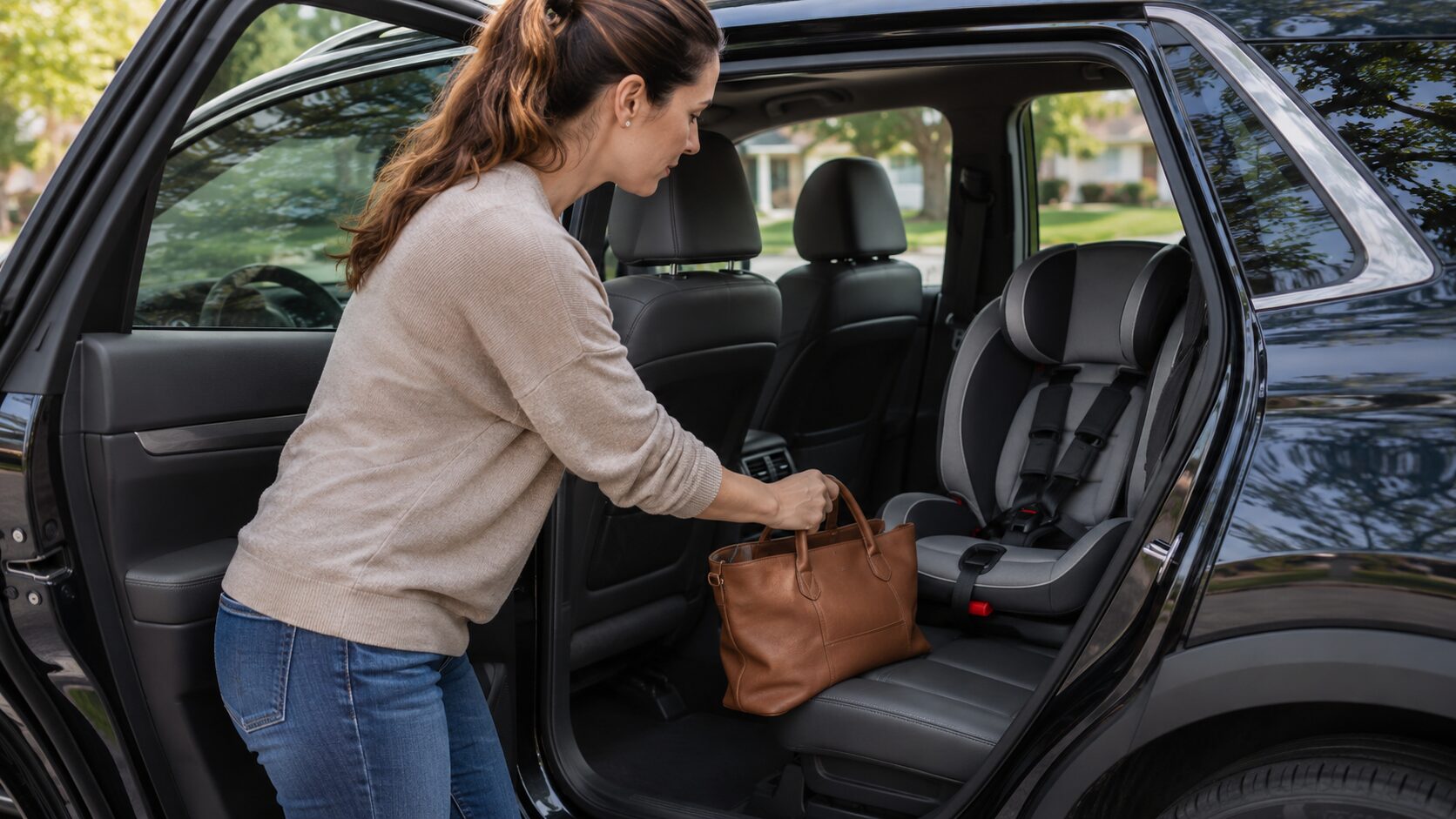
Give your brain a physical cue. Put your phone, your bag, or your left shoe in the back seat next to the child, so you have to open that door before you walk away. It sounds almost too simple. That is why it works.
Act
If you ever see a child alone in a hot car, get them out and call 911 right away. Do not wait to find the driver. In that moment, minutes matter more than manners.
A word for the people who love them
Infant and child CPR and first aid is one more layer of protection for the people who love the smallest members of a family. Knowing what to do in an emergency does not replace prevention, but it means you are not helpless if the worst happens to any child in your care. The most powerful thing you can do with this article, though, is share it. One habit, passed to one more parent or caregiver, can prevent a tragedy.
Key Takeaways
- On average, 37 children die in hot cars each year in the US, and most were simply forgotten.
- This happens to attentive, loving caregivers, usually during a change in routine.
- A parked car can climb about 50 degrees hotter than the air outside, and children overheat several times faster than adults.
- Park, Look, Lock: check the back seat every time, lock the car and keep keys away from kids, and use a physical reminder.
- If you see a child alone in a hot car, get them out and call 911 immediately.
Frequently Asked Questions
How can a loving parent forget a child in a car?
It usually happens during a change in routine, when the brain’s autopilot takes over and a quiet child does not interrupt it. Most hot-car deaths involve children who were unknowingly left behind, which is why habit-based prevention matters.
How hot does a parked car get?
A parked car can climb roughly 50 degrees hotter than the outside air, with much of that rise occurring in the first 10 to 20 minutes. Cracking a window does little to prevent dangerous heating.
What is the Park, Look, Lock habit?
Check the back seat every time you park, lock the vehicle and keep keys away from children, and use a physical reminder such as a phone or bag in the back seat.
What should I do if I see a child alone in a hot car?
Get the child out and call 911 immediately. Do not wait to locate the driver.
Why keep the car locked when no child is inside?
Curious children sometimes climb into unlocked vehicles on their own and cannot get out. Locking protects against both a forgotten child and a child entering the vehicle to play.
One more layer of protection
Prevention comes first, and the habits above are the heart of it. Knowing infant and child CPR and first aid is the backup layer that means you are ready to act if any emergency reaches a child in your care.
We teach infant and child CPR and first aid for families and workplaces. Review CPR and AED: From Bystander to Lifesaver and our family water-safety guide, then browse our classes or contact us to find a session. Please share this article with one parent or caregiver today.
Training you can count on. When seconds count.
Sources
- NHTSA, Child Heatstroke Prevention. https://www.nhtsa.gov/campaign/heatstroke (Supports the average of about 37 deaths per year, the Park, Look, Lock message, and getting a child out and calling 911.)
- NHTSA, You Can Help Prevent Hot Car Deaths. https://www.nhtsa.gov/child-safety/you-can-help-prevent-hot-car-deaths (Supports that most children were unknowingly forgotten and the May to September peak.)
- National Safety Council, Injury Facts: Hot Car Deaths. https://injuryfacts.nsc.org/motor-vehicle/motor-vehicle-safety-issues/hotcars/ (Supports yearly tracking and the rapid rise of interior temperature.)
This article is for general education and awareness. It is not medical advice and does not replace hands-on training or certification from a qualified instructor. In an emergency, call 911.