Prepared by the LSE Editorial Team. Reviewed by Joseph Andrade, Jr., RN, NRP.
Joseph works across emergency response, healthcare, and workplace safety and develops practical training for civilians, employers, and first responders.
OSHA’s 2024 update to the Hazard Communication Standard is moving into a critical employer implementation phase.
On January 15, 2026, OSHA extended the compliance dates. For substances, manufacturers, importers, and distributors evaluating chemicals were required to comply with modified provisions by May 19, 2026.
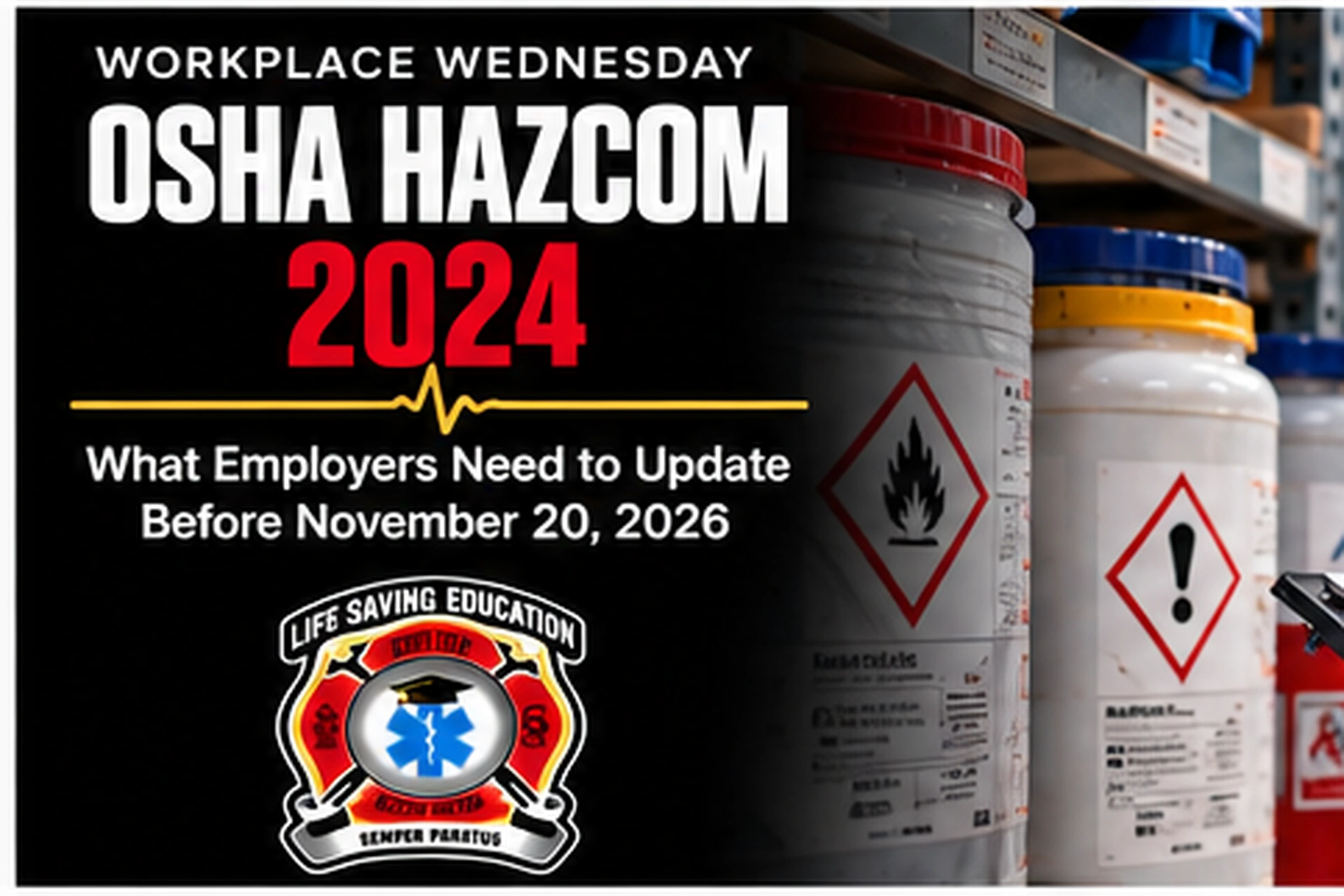
The next major date is November 20. For substances, OSHA requires employers, as necessary, to update alternative workplace labeling, update the hazard communication program, and provide additional employee training for newly identified physical hazards, health hazards, or other covered hazards no later than November 20, 2026.
As necessary matters. This is not an instruction to discard every HazCom program and retrain every employee from zero. It is a requirement to determine what changed and make the necessary updates.
📅 Know Which Deadline Applies
Substances
Manufacturer/importer/distributor deadline: May 19, 2026. Employer deadline for necessary workplace-labeling, program, and additional-training updates: November 20, 2026.
Mixtures
Manufacturer/importer/distributor deadline: November 19, 2027. Employer deadline for necessary labeling, program, and additional-training updates: May 19, 2028.
What Employers Should Do Now
Start with an organized HazCom audit. Compare the written inventory with purchasing records, storage areas, maintenance rooms, production areas, laboratories, janitorial supplies, and other locations where hazardous chemicals are used or stored.
Identify affected substances, determine whether updated manufacturer information has reached the workplace, and compare updated hazard information with workplace controls and training.
Workplace Labels
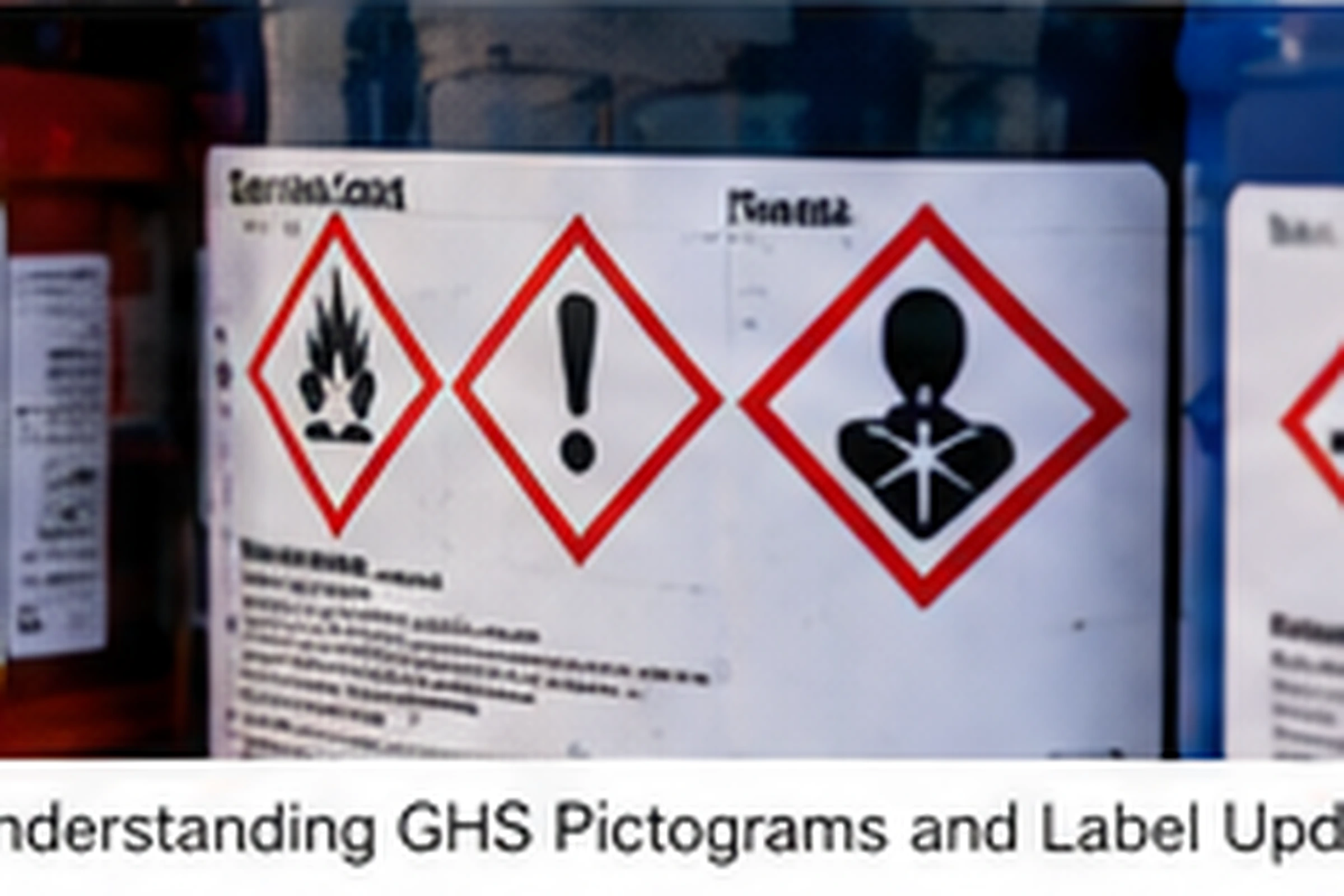
Review alternative workplace labeling and determine whether updated hazard information requires a change. Ask whether employees, contractors, and temporary workers can understand the system and connect the label to the hazard and protective measures.
The Written Program
Verify that the written HazCom program reflects current practice. Review responsible persons, chemical inventory processes, labels, SDS access, employee information and training, non-routine tasks, multi-employer communication, new-chemical introduction, and revised hazard information.
Safety Data Sheets
Employees must have ready access to required SDSs during the work shift. If the system is electronic, consider network outages, power failures, remote work, field operations, emergencies, and device-access restrictions.
Does Everyone Need Retraining?
Not automatically. OSHA’s implementation language requires any additional employee training for newly identified hazards, as necessary.
A sensible gap analysis asks what changed, which employees are affected, what they already know, what additional information is necessary, and how the training will be documented.
What Good Additional Training Looks Like
Employees should understand what chemical or group is involved, what changed, how exposure can occur, how to recognize a problem, what controls and PPE protect them, where to find label and SDS information, and what to do in an emergency.
Multi-Employer Worksites
Review contractor chemical introduction, SDS exchange, labeling systems, restricted areas, emergency procedures, non-routine work, temporary storage, and employee orientation.
Supervisors Are the Bridge
Supervisors should recognize when a new chemical arrives, a label is damaged, an SDS cannot be accessed, a worker does not understand the hazard, PPE does not match the task, or a chemical is introduced outside normal processes.
A Practical Readiness Plan
Inventory and ownership: assign responsibility, verify inventory, identify substances and mixtures, and gather updated SDSs.
Gap analysis: compare updated information with labels, procedures, PPE, and training.
Update: revise labels and the written program where necessary and prepare targeted training.
Train and verify: deliver additional training to affected employees and correct remaining gaps.
Don’t Forget Mixtures
The 2026 date does not end HazCom implementation. Mixture-related deadlines continue into 2027 and 2028. Build a repeatable review process now.
✅ Key Takeaways
- November 20, 2026 is the employer implementation date for necessary substance-related HazCom updates.
- Review workplace labels, the written program, SDS access, and newly identified hazards.
- Additional training should be targeted to actual changes and affected employees.
- Mixture-related implementation continues into 2027 and 2028.
Bottom Line
November 20, 2026 is an important HazCom implementation date for employers using substances. The correct response is not indiscriminate retraining. It is a structured review of updated hazard information followed by the labeling, written-program, and employee-training changes that are actually necessary.
Training You Can Count On. When Seconds Count.
Get the HazCom Update Right Before the Deadline
Life Saving Education provides practical OSHA and workplace safety training for employers that need training tied to real compliance responsibilities.