Prepared by the LSE Editorial Team. Reviewed by Joseph Andrade, Jr., RN, NRP.
Joseph works across emergency response, healthcare, and workplace safety and develops practical training for civilians, employers, and first responders.
On October 1, 2026, OSHA announced approximately $10.2 million in Susan Harwood Training Grants to 67 organizations. The program focuses on instructor-led education for workers and employers, especially small businesses and industries with high injury, illness, and fatality rates.
For training organizations, the award list is more than a funding announcement. It is also a snapshot of the hazards federal safety officials and training partners believe deserve better educational resources.
🔎 What Stands Out in the 2026 Awards
Battery hazards are moving from specialty fire-service content into everyday workplace training.
Construction, warehousing, emergency response, utilities, and outdoor work remain strong training targets.
Integrated programs can address traffic, charging, heat, ergonomics, egress, and material handling together.
Employers increasingly need shorter, task-specific refreshers that complement broader training programs.
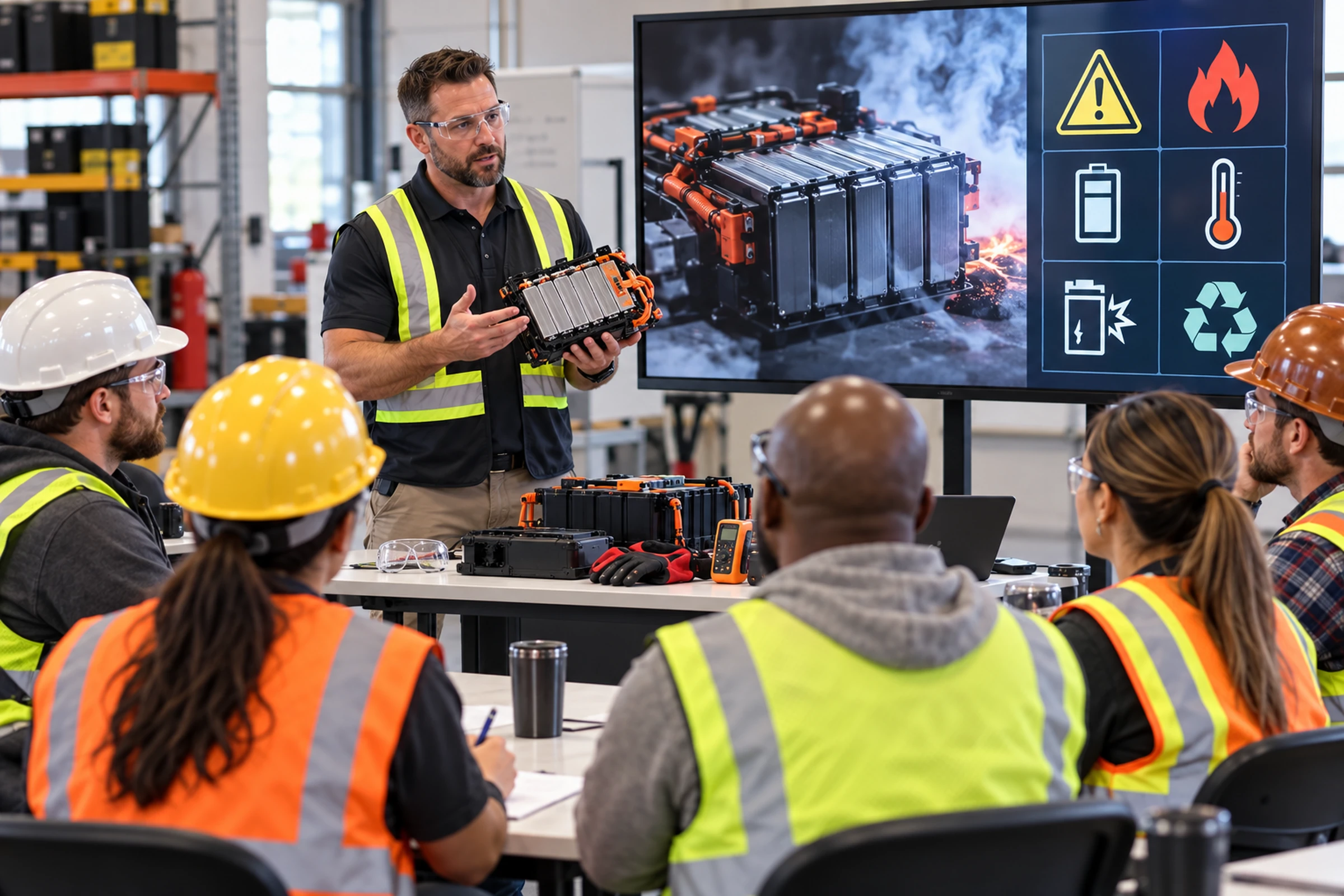
🔋 Lithium-Ion Battery Training Is Moving Into the Mainstream
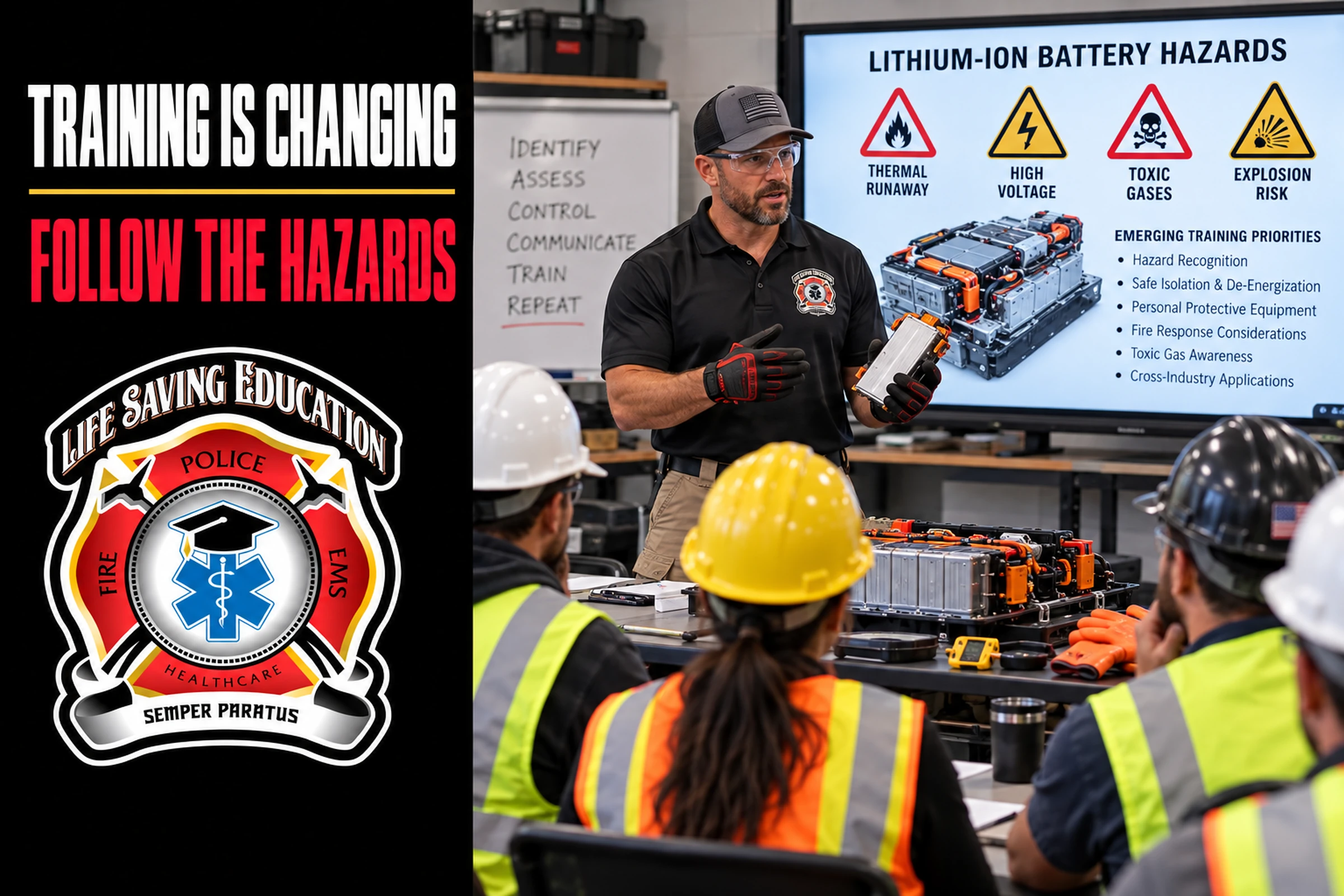
The 2026 awards include projects addressing lithium-ion battery hazards in high-hazard industries, fire protection, recycling, warehousing, distribution, industrial material handling, and construction. That is a strong signal that lithium-ion battery education is no longer only a fire-service specialty.
Battery-powered tools, forklifts, mobility devices, e-bikes, storage systems, consumer electronics, damaged batteries, and recycling streams are placing the hazard inside ordinary workplaces.
🌡️ Heat Training Remains a Major Need
Multiple grant projects involve hazardous temperature exposure, including training activity in New York, New Jersey, and Connecticut. Heat risk is not limited to traditionally hot climates. Construction, utilities, warehousing, landscaping, emergency response, public works, and outdoor events can all create significant exposure.
For instructors, the opportunity is to move beyond slogans. “Drink water” is not a heat-illness program.
Useful heat-training topics
- Acclimatization
- Workload and environmental conditions
- Clothing and PPE burden
- Recovery and work-rest planning
- Symptom recognition
- Emergency response
- Site-specific controls
🏭 Warehousing Is Becoming a Training Category of Its Own
Warehouses combine powered industrial trucks, pedestrian traffic, material storage, loading docks, ergonomics, battery charging, heat, conveyors, machine hazards, hazard communication, emergency egress, and temporary or contract labor.
Employers need integrated training rather than isolated one-topic presentations.
🏗️ Construction Training Is Becoming More Specialized
Construction remains a major focus, but the useful signal is specialization. Employers increasingly need short, task-specific training that can supplement OSHA 10- or 30-hour education without being misrepresented as a substitute for required Outreach content.
Cordless tools, charging areas, damage recognition, and storage.
Worker and supervisor versions with scenario-based decisions.
Silica, falls, confined spaces, hazard communication, PPE, and work-zone awareness.
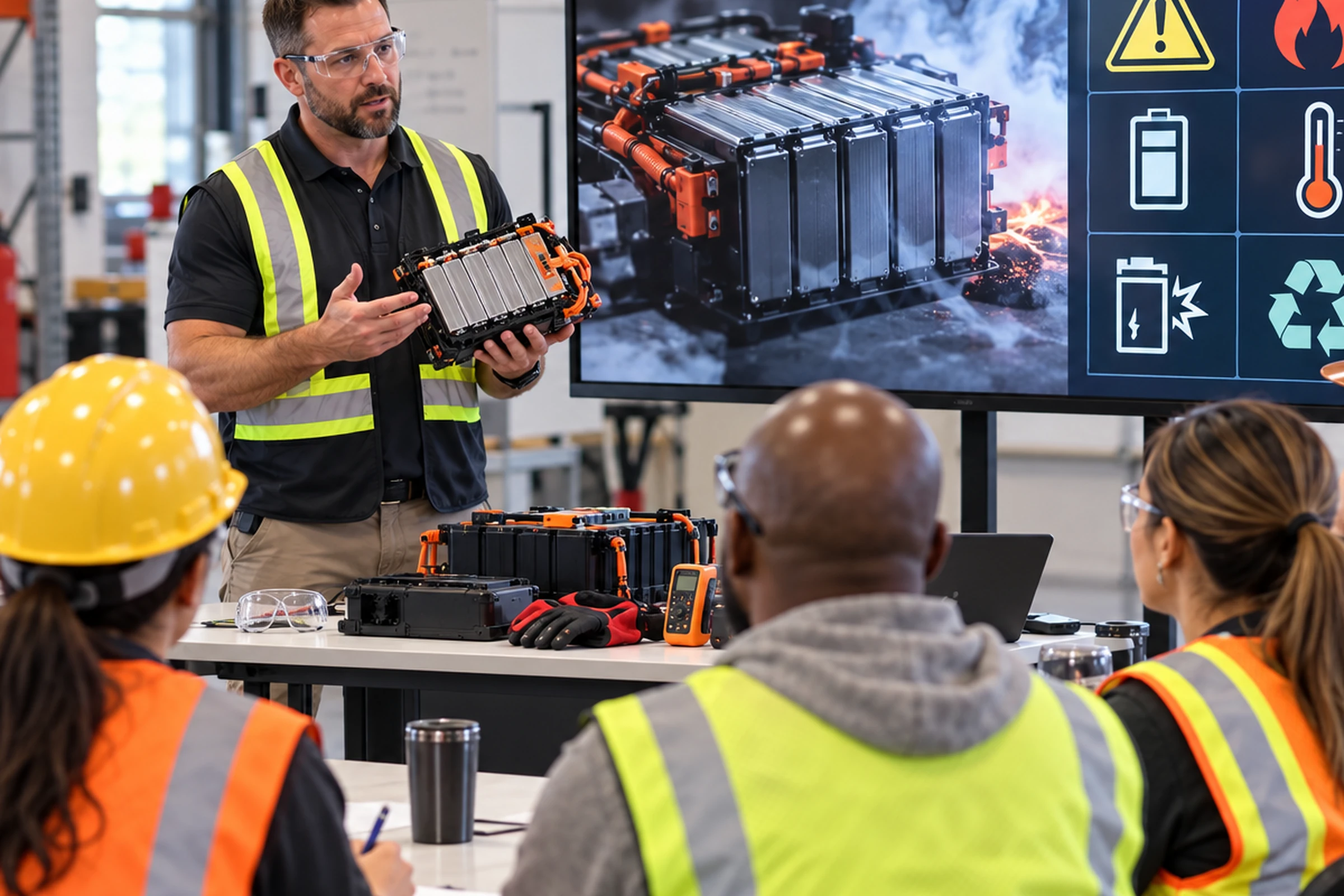
🧰 Training Materials Matter as Much as Seat Time
A strong course should leave the employer with tools that continue working after the instructor leaves.
- Supervisor checklists
- Toolbox talks
- Short quizzes
- Inspection cards
- Emergency-response flowcharts
- Posters
- Scenario cards
- Refresher microlearning
- Training records
- Corrective-action prompts
The course teaches the concept. The implementation kit helps the employer apply it.
🎓 What This Means for LSE
- Build lithium-ion battery safety as a formal course family.
- Expand heat training beyond basic awareness.
- Develop warehouse safety modules for employer groups.
- Package targeted construction refreshers.
- Give employers implementation tools, not just slides and seat time.
Instructor quality matters too. Trainers should be able to connect a regulation or hazard to actual work and explain what the worker should recognize, what action should follow, what the supervisor should verify, and how the employer should audit the system.
✅ Key Takeaways
- OSHA’s 2026 grant awards point toward more specialized, practical workplace training.
- Lithium-ion batteries, heat, warehousing, construction, PPE, and fire safety stand out as strong content areas.
- Short employer modules can complement broader OSHA Outreach education when they are clearly labeled and properly scoped.
- Training should leave behind usable tools such as checklists, drills, and scenario cards.
- LSE has a clear opportunity to package modular training for East Coast employers.
❓ Frequently Asked Questions
Do Susan Harwood grant topics create new OSHA requirements?
No. The grant list is useful as a training-market signal, but the existence of a grant project does not itself create a new regulatory requirement.
Can short refresher courses replace OSHA 10 or OSHA 30?
No. Short modules can support employer training needs, but they should not be marketed as substitutes for OSHA Outreach courses or other required training.
Why is lithium-ion battery training expanding?
Battery-powered equipment is increasingly common across construction, warehousing, recycling, transportation, and general industry, which places battery hazards in more ordinary work settings.
What makes a course easier for employers to use?
Practical tools such as checklists, supervisor guides, drills, documentation templates, and refresher materials make it easier to carry the training into daily operations.
Turn Training Into a Working Safety System
Life Saving Education builds practical employer training for construction, industrial, healthcare, and emergency-response teams across the East Coast.
Explore Construction & Industrial Training
Plan Group Training