By Joseph Andrade, Firefighter, Paramedic, Emergency Department and Vascular Access RN, OSHA Outreach Instructor, and Safety Officer. Founder and lead instructor at Life Saving Education.
Joseph is an active firefighter, paramedic, and registered nurse working in emergency and vascular access care, as well as an OSHA Outreach instructor and safety officer. He has spent his career on the response side of emergencies, from the fireground to the ambulance to the hospital bedside, and now trains civilians, workplaces, and first responders in the skills that save lives.
When most clinicians think about EMS medication rules, they think about the moment a drug reaches the patient. Which medication can I give? What dose? Standing order or online medical control?
That is the part we use on calls, but it is not the whole medication system. Before a vial reaches a paramedic’s hand, somebody has to buy it, receive it, store it, keep it within temperature limits, control access, track expiration dates, document inventory, handle shortages, and account for controlled substances.
Maine EMS is proposing to rewrite the state rule that governs that infrastructure. The agency opened public comment on a repeal-and-replace of 16-163 C.M.R. Chapter 6, Drugs and Medications on August 19. Comments close September 18 at 11:59 PM Eastern.
Maine describes the proposal as a routine technical rule intended to align state EMS requirements with changes in the federal controlled-substance regulatory structure and with Maine law enacted in 2026. This is not a new drug protocol. It is a rewrite of the rules that help determine whether an EMS service has a defensible medication system.
🧾 What Is Changing at a High Level?
The current Chapter 6 is short. It addresses medication authorization, climate-controlled storage, controlled-drug security, drug logs, seal checks, missing controlled medications, inspections, and record retention.
The proposed replacement reorganizes the chapter around several defined concepts:
Two distinct tracks with different obligations
Who can direct medication use in the field
Explicit reporting tied to licensure
Real shortages treated differently from poor ordering
Temperature range, excursions, mean kinetic temperature
Service-level supply and recordkeeping obligations
The proposal is only five pages long, but it changes the structure of the rule enough that agencies should read the entire draft rather than rely on a summary.
🌡️ Temperature Control Gets Much More Specific
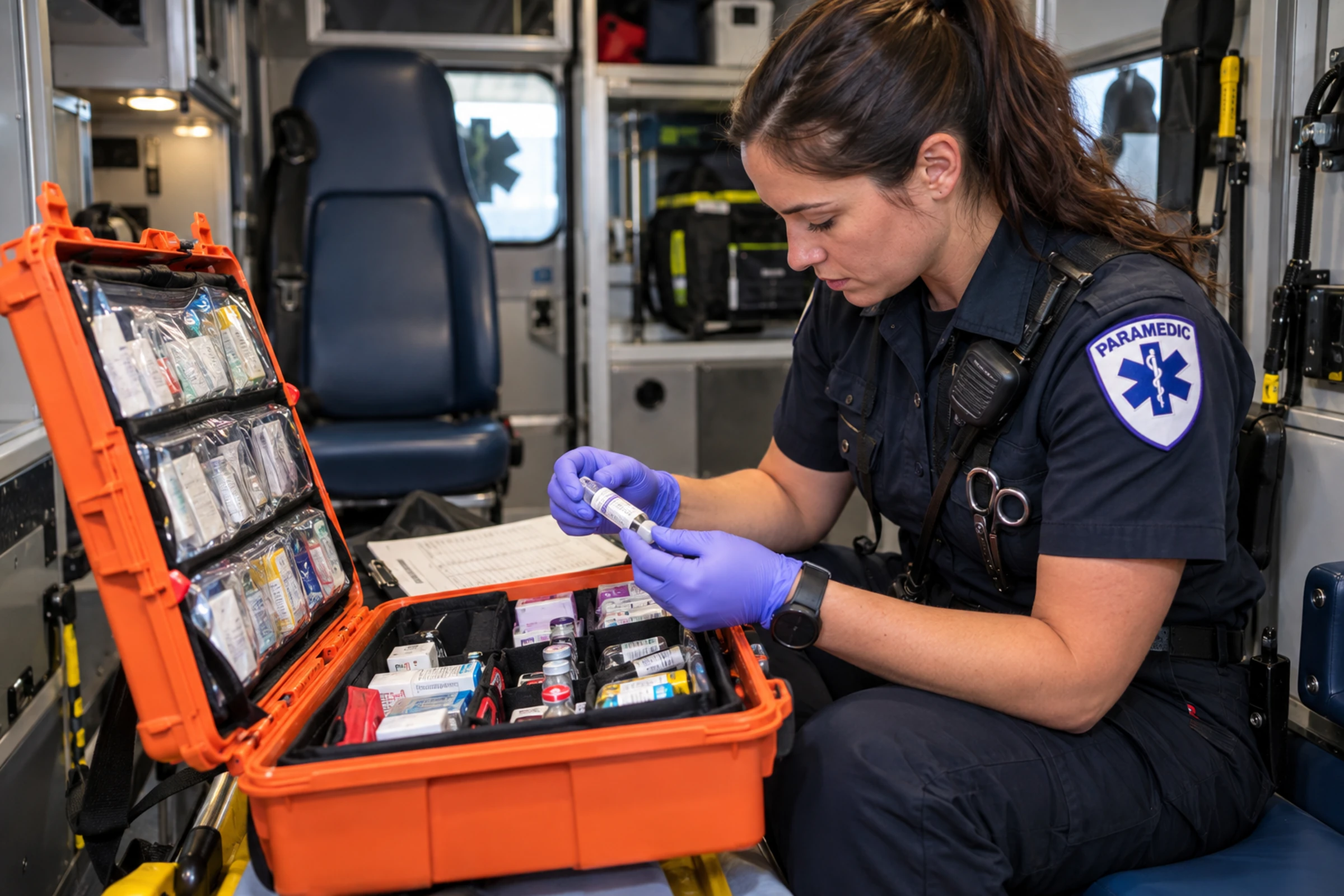
The current rule requires reasonable climate control. The proposed rule is more explicit. For both controlled and non-controlled medications, the service would have to store drugs according to the FDA label, including permitted temperature range, allowed temperature excursions, and mean kinetic temperature.
🌡️ Mean kinetic temperature, in plain language
Ambulances are terrible pharmacies. They sit in summer heat, winter cold, direct sun, garages, stations, hospital bays, and road conditions that change constantly. Mean kinetic temperature describes the cumulative thermal stress a medication experiences over time, rather than a single thermometer reading. The practical question is not “what is the temperature right now,” it is “can we demonstrate storage stayed within the manufacturer’s acceptable conditions over time?”
That has implications for vehicle temperature monitoring, station storage, replacement procedures, and documentation.
📦 Non-Controlled Medications Get Their Own Detailed System
The proposed chapter creates a dedicated section for non-controlled substances. An EMS clinician could administer an approved non-controlled medication according to protocol or an order from an authorized medical professional, within the clinician’s licensure level. The service would be responsible for maintaining enough medication for a patient to receive treatment for the duration of a call at the highest licensure level of the personnel responding, up to the service’s permitted level.
The proposal also recognizes shortages. If a medication is unavailable because of a genuine shortage, the service would not be required to stock that specific medication, but it would still need to supply any alternative required by an approved shortage protocol.
🔒 Access, packaging, and contamination are spelled out
For non-controlled medications, the proposal would require storage in an area that limits access to people whose service role includes stocking, use, inventory, or ordering. It also specifies unit-dose packaging and directs services to store medications in a way that prevents contamination with blood or body fluids, dirt or debris, and cross-contamination between patients.
These details sound obvious until you picture the environment where EMS medications live. A medication kit may be opened on a roadway, in a home, in a nursing facility, in the back of an ambulance, or next to a bleeding patient. Clean storage cannot depend on luck.
🧮 A different logging standard
The draft would require a single legible log for each storage location documenting every non-controlled substance: storage location, medication description, unit-dose quantity, expiration date, the identity of the person making the entry, and the Maine EMS license number when applicable. The service would need to check non-controlled medications and make a log entry at least monthly.
This differs from the current rule’s combined medication-box framework, which requires daily checks for scheduled drugs and weekly checks for nonscheduled drugs under the current seal-based system. Agencies should pay attention to that difference when comparing existing inventory software, paper logs, sealed kits, and vehicle-check processes with the proposed rule.
💊 Controlled Substances Move Into a DEA-Centered Framework
The proposed rule states that a Maine EMS service licensed or permitted at the paramedic level may procure, possess, store, and furnish controlled substances in federal Schedules II through V, administered by EMS clinicians according to approved protocol or an order from an authorizing medical professional.
Where the proposal becomes especially operational is in the reporting around DEA registration. A paramedic-level service would have to report its DEA registration number to Maine EMS as part of service licensure or renewal, along with its DEA-registered location, any designated locations, changes within 10 business days, and suspension, revocation, surrender, or denial of renewal within 10 business days.
🚨 What about missing controlled substances?
The current Maine EMS rule explicitly requires services to report missing controlled drugs or medications to Maine EMS within 24 hours of discovery and later submit the results of the service’s investigation. The proposed clean draft organizes controlled-substance accountability differently and does not reproduce that sentence in the same form.
That does not mean an agency should assume missing-drug reporting obligations disappear. Controlled substances remain governed by federal law, state law, DEA requirements, service policy, and any final Maine EMS rule that is ultimately adopted. This is exactly why agencies should avoid rewriting policy based only on a proposed draft. The correct move is to identify where existing policies rely on current Chapter 6 language and flag those sections for legal and regulatory review once final language is published.
🔍 Maine EMS Inspection Authority Is Explicit
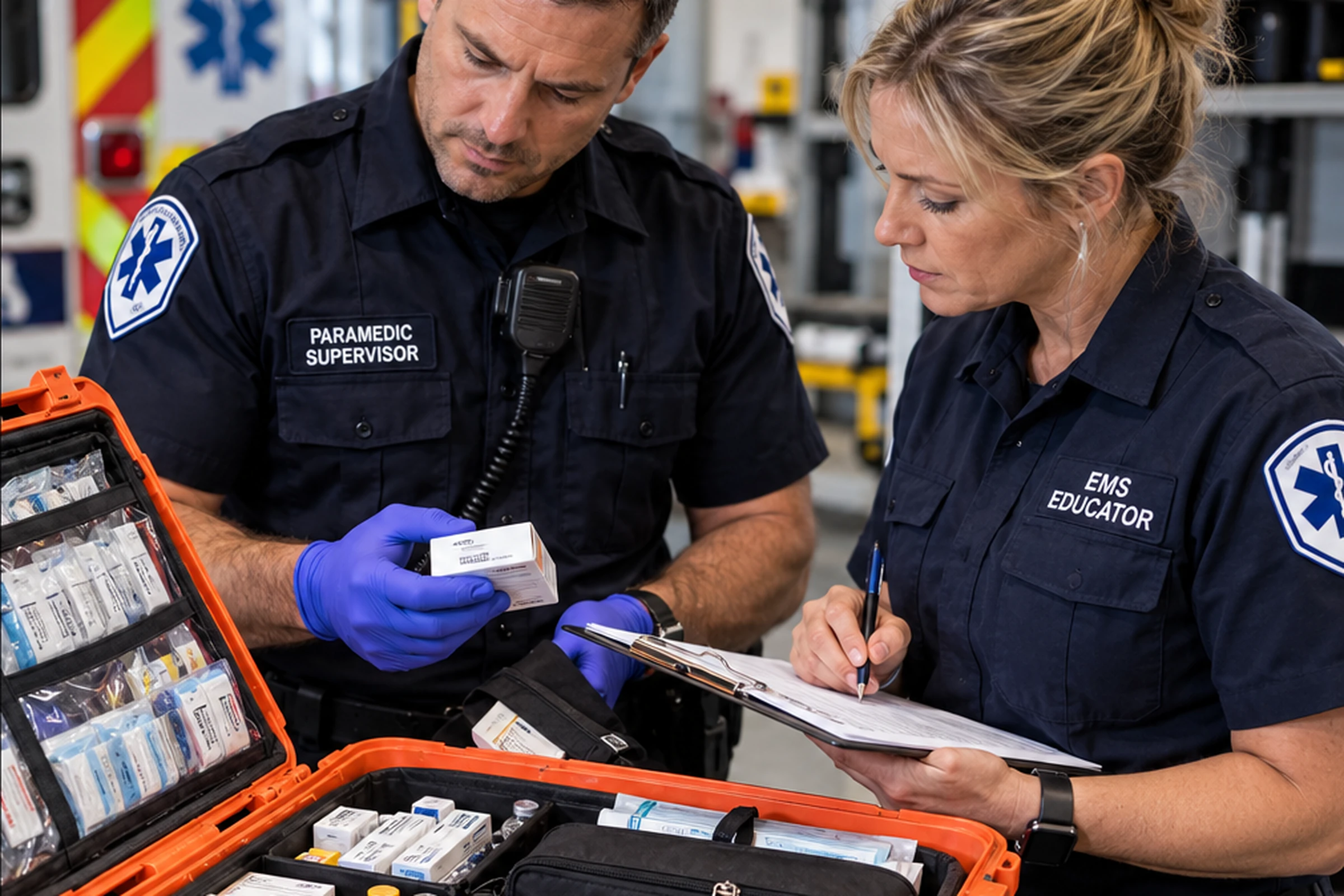
The proposed rule states that medication storage locations in ambulances and buildings are subject to inspection by Maine EMS. A service would have to allow inspection, and refusal could lead to disciplinary action against the service license. That applies to the physical medication system, not just the paperwork.
An agency preparing for compliance should ask:
- Are medication locations clean and controlled?
- Are temperature conditions defensible?
- Are expiration dates current?
- Can staff explain how inventory is tracked?
- Can the service show who has access?
- Do records match the medications actually present?
- Can the agency identify its DEA registration and designated locations?
If the answer depends on one person being on duty, the process is fragile.
🏥 “Authorizing Medical Professional” also matters
The proposal defines an authorizing medical professional as a Maine-licensed physician, advanced practice registered nurse, or physician associate who is authorized by a hospital to provide contemporaneous direction to an EMS clinician. Medication governance stretches from the cabinet to the clinician to the medical professional authorizing treatment, not just inventory management.
⚠️ What This Proposal Does Not Do
This proposal should not be taught as though it has already taken effect. It does not replace Maine EMS protocols today. It does not authorize clinicians to ignore their scope of practice. It does not eliminate federal controlled-substance obligations. It does not mean every agency should immediately rebuild its medication room. And it does not mean a clinician outside Maine should adopt Maine’s proposed rules.
For instructors, the correct label is: PROPOSED MAINE RULE. That label should stay attached to every slide, handout, and discussion until Maine completes rulemaking.
🧭 What Maine EMS Agencies Should Review Before the Deadline
The September 18 comment deadline gives services a short window to examine how the proposed language fits real operations.
🎓 What EMS instructors should do now
Do not rewrite medication lessons as though the proposal is final. Instead, use it as a professional-development case study. Ask clinicians and supervisors: Who owns the medication system in your agency? How do you prove storage conditions stayed within label requirements? What happens when a controlled medication is missing? How is a drug shortage handled? Who can access medication storage? How are DEA locations tracked? What happens when a response vehicle sits outside in extreme heat or cold?
Those questions apply well beyond Maine. Every EMS system relies on medications. Every medication program depends on controls that most clinicians never see until something fails.
✅ Key Takeaways
- Maine EMS is proposing to repeal and replace Chapter 6, Drugs and Medications.
- The proposal remains open for public comment through September 18, 2026 at 11:59 PM Eastern.
- The draft addresses both controlled and non-controlled medications.
- Storage language would specifically incorporate FDA label temperature requirements, excursions, and mean kinetic temperature.
- Non-controlled medication logs would be organized by storage location with at least monthly checks.
- Controlled-substance provisions would explicitly connect paramedic-level service licensure with DEA registration and designated-location reporting.
- Agencies should compare the proposal against current policy but should not implement it as final law unless and until it is adopted.
❓ Frequently Asked Questions
Is Maine’s new Chapter 6 already in effect?
No. The September 2026 document is a proposed repeal-and-replace rule. The current Maine EMS rules remain the operative rules unless and until a final rule takes effect.
When does public comment close?
Maine EMS lists the deadline as September 18, 2026 at 11:59 PM Eastern.
Does this change Maine EMS clinical protocols?
The rule governs drugs and medications at the service and regulatory level. Clinical medication use still depends on Maine EMS protocols, clinician licensure, medical direction, and other applicable requirements.
Why does mean kinetic temperature matter?
It helps evaluate cumulative thermal stress on medication over time. For EMS, that can be more meaningful than a single spot temperature because medications may spend hours in changing vehicle and station conditions.
Should agencies change controlled-substance policies now?
Agencies should review the proposal and identify possible policy effects, but they should continue following current state rules, federal law, DEA requirements, protocols, and existing policy until a final rule is adopted and any required implementation date arrives.
Build a Medication System That Passes Inspection
Whether Maine’s proposal becomes final or not, every EMS agency needs a defensible medication program. Life Saving Education builds Fire & EMS training and professional development programs led by instructors who work inside these systems every day.
📚 Sources and Further Reading
- Maine EMS: Chapter 6 Rules Repeal-Replace Public Comment Period
- Maine EMS: Proposed Chapter 6, Drugs and Medications, clean draft, August 19, 2026
- Maine EMS: Current Maine EMS Rules, effective April 6, 2026
- Related reading: The Patient Is Already in Cardiac Arrest. Does Naloxone Still Matter?
This article explains a proposed rule for educational purposes and is not legal advice. EMS services should review final Maine EMS rulemaking, applicable federal requirements, agency counsel, medical direction, and official state guidance before changing policy.