Prepared by the LSE Editorial Team. Reviewed by Joseph Andrade, Jr., RN, NRP.
Joseph works across emergency response, healthcare, and workplace safety and develops practical training for civilians, employers, and first responders.
The alarm sounds before the team reaches the entry point.
That moment is exactly why radiation detection belongs in practical HazMat training. A personal radiation detector can warn a responder that ionizing radiation is present, but the alarm does not automatically identify the source, define the hazard, establish a safe boundary, or tell the incident commander what tactical decision comes next.
For fire departments and HazMat teams, the real skill is not carrying a detector. It is understanding what the instrument is telling you, confirming the reading, protecting the team, communicating the information, and knowing when the problem has moved beyond the capability of the initial response organization.
Radiation Detection, Measurement, Identification, and Dosimetry Are Different Jobs
One of the easiest mistakes in radiation training is treating every instrument as though it does the same thing. It does not.
A detector may alert the user that radiation is present. A survey meter may help characterize radiation levels in an area. Some instruments can identify radionuclides. A dosimeter is intended to track the dose received by the person wearing it. Certain modern systems combine capabilities, but responders should never assume that one instrument can perform every radiation-protection function.
DHS guidance on portable radiological equipment makes the same point: instruments are designed for particular missions, and although capabilities overlap, no single device does everything. That distinction should be taught before responders ever enter a scenario.
A PRD Is an Early-Warning Tool
Personal radiation detectors, or PRDs, are valuable because they can provide continuous awareness while a responder moves through an environment. Depending on the instrument, the device may alarm based on radiation intensity, accumulated exposure, or other programmed thresholds.
The practical benefit is simple. Radiation is invisible. Responders cannot rely on smell, appearance, irritation, or other ordinary sensory clues to recognize it. An electronic warning may therefore be the first indication that the team has entered an abnormal radiation field.
But the alarm is not the diagnosis. A responder who hears an alarm should move from recognition to confirmation and control rather than immediately assuming the worst possible scenario.
Know Normal Background Before You Need to Recognize Abnormal
Radiation exists naturally in the environment. Background levels vary with location, elevation, building materials, medical facilities, industrial sources, and other factors.
That makes baseline familiarity important. A responder who has never watched the instrument operate under normal conditions is poorly prepared to interpret a change during an incident.
Training should include routine meter operation away from the emergency scene. Members should see normal background readings, learn the display, hear the alarms, understand the units used by their specific device, and practice moving from a routine reading to an elevated one.
This is also where nuisance alarms belong in the curriculum. An alarm can be operationally significant without automatically meaning that the responder is in immediate danger. The response should be disciplined: recognize, withdraw or reposition when appropriate, verify the instrument, communicate the reading, and use additional resources to characterize the hazard.
Time, Distance, and Shielding Still Matter
The classic radiation-protection principles remain operationally useful. Reduce time in the radiation field, increase distance from the source when possible, and use appropriate shielding when the incident and available resources allow it.
The principles are simple. Applying them during a fire or HazMat incident is not.
Distance may compete with rescue priorities. Shielding may not be immediately available. The safest route may not be obvious. A team may have to balance life safety, exposure control, evidence preservation, contamination concerns, and the need to characterize an unknown source.
That is why radiation training should be scenario based. Members should have to make decisions with incomplete information instead of merely repeating three words from a slide.
Radiation Exposure and Radioactive Contamination Are Not the Same Thing
Responders need a clear mental distinction between being exposed to a radiation field and being contaminated with radioactive material.
A person can be exposed to radiation without radioactive material being deposited on the body. Contamination means radioactive material is actually present where it should not be, such as on clothing, skin, equipment, or another surface.
That distinction changes operational priorities. It affects zoning, decontamination, patient handling, equipment control, hospital notification, and how responders interpret survey results.
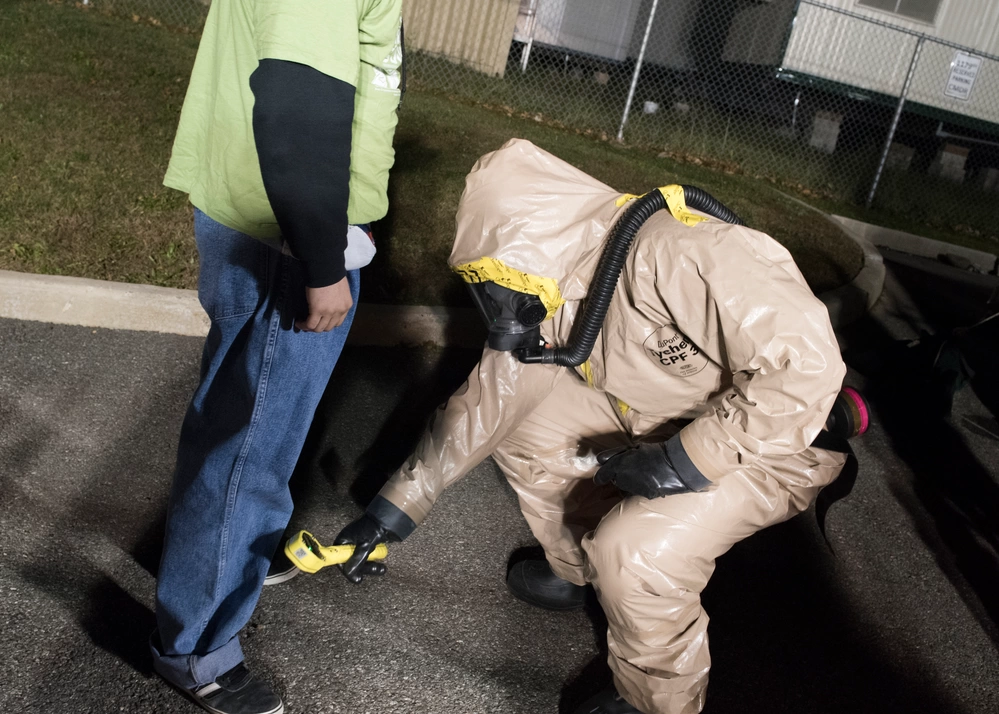
CDC training resources for radiation emergencies specifically teach the use of handheld survey equipment to screen people for external contamination. That kind of hands-on screening should be familiar to HazMat and receiving-facility teams before a real incident.
The Meter Has to Be Ready Before the Call
A detector that has been sitting in a compartment for months is not automatically response ready.
Agency procedures should address the manufacturer’s required checks and the program’s own readiness process. Depending on the device, that may include battery condition, self-test, calibration status, source or bump checks when required, physical condition, alarm settings, accessories, and documentation.
Members also need to know who owns the readiness problem. If a device fails its check at 0200, is there a replacement? Who is notified? Can the unit remain in service for HazMat response without that capability? Where are calibration and maintenance records kept?
These are program-design questions, not merely equipment questions.
Wear the Instrument Where It Can Do Its Job
Detector placement matters. The manufacturer’s instructions and the agency’s radiation-protection plan should control how a device is worn or carried.
PPE can complicate access, visibility, alarm audibility, and manipulation. A detector buried under protective clothing may not serve the same operational purpose as one positioned according to its intended use. Conversely, placing equipment outside a protective ensemble without understanding contamination-control implications can create other problems.
Training should therefore use the same PPE configuration members are expected to wear operationally. If responders will operate in Level B protection, train them to read, acknowledge, and communicate detector information while wearing Level B protection. If the instrument will be used with structural firefighting PPE during an initial investigation, practice that configuration too.
An Alarm Should Trigger a Process
A useful radiation-response procedure gives the responder a repeatable sequence rather than leaving the member to improvise.
The exact steps are agency specific, but the operational questions are consistent: Is the reading credible? Is it increasing? Is the team moving toward or away from the source? Is there an immediate life-safety problem? What is the dose rate? What exposure has the team accumulated? Does the instrument identify the material or only detect radiation? Does the team need a different meter? What boundaries should be established? Who needs the information?
The incident commander should receive meaningful information, not simply “the meter is going off.” A useful radio report includes the location, instrument, displayed reading and units, trend, alarm condition, team position, and any immediate action taken.
Do Not Confuse a Number With a Complete Risk Assessment
Radiation instruments produce numbers, but a number without context can create false confidence.
Responders must understand the units displayed by their specific equipment and whether the instrument is showing count rate, dose rate, accumulated dose, or another value. They should also know the device’s limitations, energy response, alarm behavior, and whether the reading is within the instrument’s usable range.
High readings can overwhelm or saturate some instruments. Low readings may be difficult to distinguish from background. Geometry, shielding, distance, source characteristics, and contamination can all affect what the responder sees.
For that reason, advanced characterization should involve the appropriate radiation specialists and properly selected instruments.
Fire Department Operations Depend on Interagency Coordination
Radiological incidents can quickly involve local fire and EMS, law enforcement, emergency management, public health, hospitals, state radiation-control programs, National Guard Civil Support Teams, federal agencies, and specialized technical resources.
That coordination works better when agencies train together before an emergency.
Aurora Fire Department firefighters, for example, trained with the Colorado National Guard’s 8th Civil Support Team and the U.S. Department of Energy on radiation survey instruments and radiological-response techniques. FDNY HazMat personnel have similarly trained alongside federal CBRN response forces in New York City. These exercises reinforce an important lesson: local responders may arrive first, but complex radiological incidents are rarely solved by one agency working alone.

Contamination Control Extends Beyond the Hot Zone
A radiological response can create secondary contamination concerns for ambulances, fire apparatus, tools, PPE, receiving hospitals, and personnel.
Plans should address how potentially contaminated patients are transferred, how equipment is surveyed, how contaminated items are controlled, and how the receiving facility is notified. Hospitals should not learn about a potential radiological contamination problem when the ambulance doors open at the emergency department.
Fire, EMS, HazMat, emergency management, and receiving facilities benefit from shared exercises because the handoff is part of the incident.
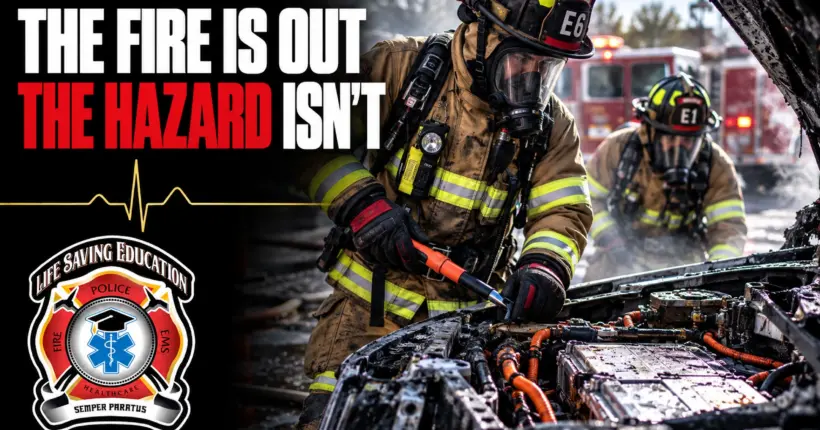
🔗 Related: The Fire Is Out. The Hazard Isn’t: Why SCBA Must Stay On During EV Battery Handling and Removal
Teams that need hazardous materials response training can review LSE’s HAZWOPER training options.
Train With the Actual Instrument
Radiation detection is not a skill that should exist only in PowerPoint.
Responders should operate the actual detector, wearing the PPE they will use, while moving through a realistic environment. They should experience background readings, alarms, increasing and decreasing readings, communication problems, instrument limitations, contamination-control decisions, and the need to request specialized resources.
A strong exercise can start before entry. The team receives a dispatch for an unknown package, industrial accident, transportation incident, suspicious source, or fire involving a facility that uses radioactive material. The first detector alarms during approach. The crew must stop, interpret, communicate, establish control zones, choose the next instrument, manage personnel accountability, and determine whether rescue operations can proceed safely.
What LSE Would Teach
A practical Life Saving Education radiation-detection program would focus on operational competence. Core elements would include radiation fundamentals, exposure versus contamination, instrument categories, PRD operation, background radiation, alarm interpretation, time-distance-shielding, PPE integration, contamination surveys, responder dosimetry, equipment checks, documentation, radio reporting, zoning, decontamination interfaces, hospital communication, and interagency escalation.
The course should finish with realistic scenarios rather than a written test alone. Responders need to demonstrate that they can recognize an alarm, interpret the device correctly, communicate useful information, protect themselves and the team, and make an appropriate tactical decision.
The Bottom Line
A radiation detector can warn a firefighter about a hazard that cannot be seen, smelled, or felt. That makes it an extraordinarily valuable tool.
But the tool is only as useful as the responder’s ability to understand it.
Fire and HazMat teams should know what their detector measures, what it does not measure, how normal background looks, what an alarm requires them to do, how PPE affects instrument use, how readings should be communicated, and when specialized radiological resources are needed.
The objective is not to turn every firefighter into a health physicist. It is to make sure the first team entering an uncertain environment recognizes the warning, protects itself, and makes the next decision correctly.
🔗 Related: The First Minutes of a Toxic-Gas Release
✅ Key Takeaways
- Detection, measurement, radionuclide identification, and personal dosimetry are different functions.
- A personal radiation detector is an early-warning tool, not a complete radiological risk assessment.
- Responders should know normal background, their instrument’s units, alarm behavior, and limitations before an incident.
- Time, distance, shielding, contamination control, and disciplined communications remain central to responder protection.
- Fire and HazMat teams should train with the actual detector and PPE configuration they will use operationally.
- Complex radiological incidents require early coordination with specialized local, state, and federal resources.
❓ Frequently Asked Questions
What does a personal radiation detector do?
A personal radiation detector can provide continuous warning that ionizing radiation is present or increasing. Its exact capabilities depend on the model and should be confirmed in the manufacturer instructions.
Is radiation exposure the same as radioactive contamination?
No. Exposure means a person is in a radiation field. Contamination means radioactive material is deposited where it should not be, such as on clothing, skin, equipment, or another surface.
What should a firefighter do when a radiation detector alarms?
Follow agency procedures and the instrument instructions. The response generally requires recognizing the alarm, protecting the team, evaluating location and trend, communicating the reading and units, confirming the hazard with appropriate instruments, and requesting specialized resources when needed.
Why should HazMat teams practice with radiation detectors?
Hands-on practice builds familiarity with background readings, alarms, units, PPE integration, radio reports, contamination surveys, equipment limitations, and escalation decisions before a real incident.
Training You Can Count On. When Seconds Count.
Turn Detector Alarms Into Better Decisions
Build practical Fire and EMS training around equipment, PPE, communications, contamination control, and scenario-based decision-making.
📚 Authoritative Sources
Educational note: Radiation-response operations must follow the agency’s procedures, instrument manufacturer instructions, radiation-safety program, incident command structure, and applicable local, state, and federal requirements.