Prepared by the LSE Editorial Team. Reviewed by Joseph Andrade, Jr., RN, NRP.
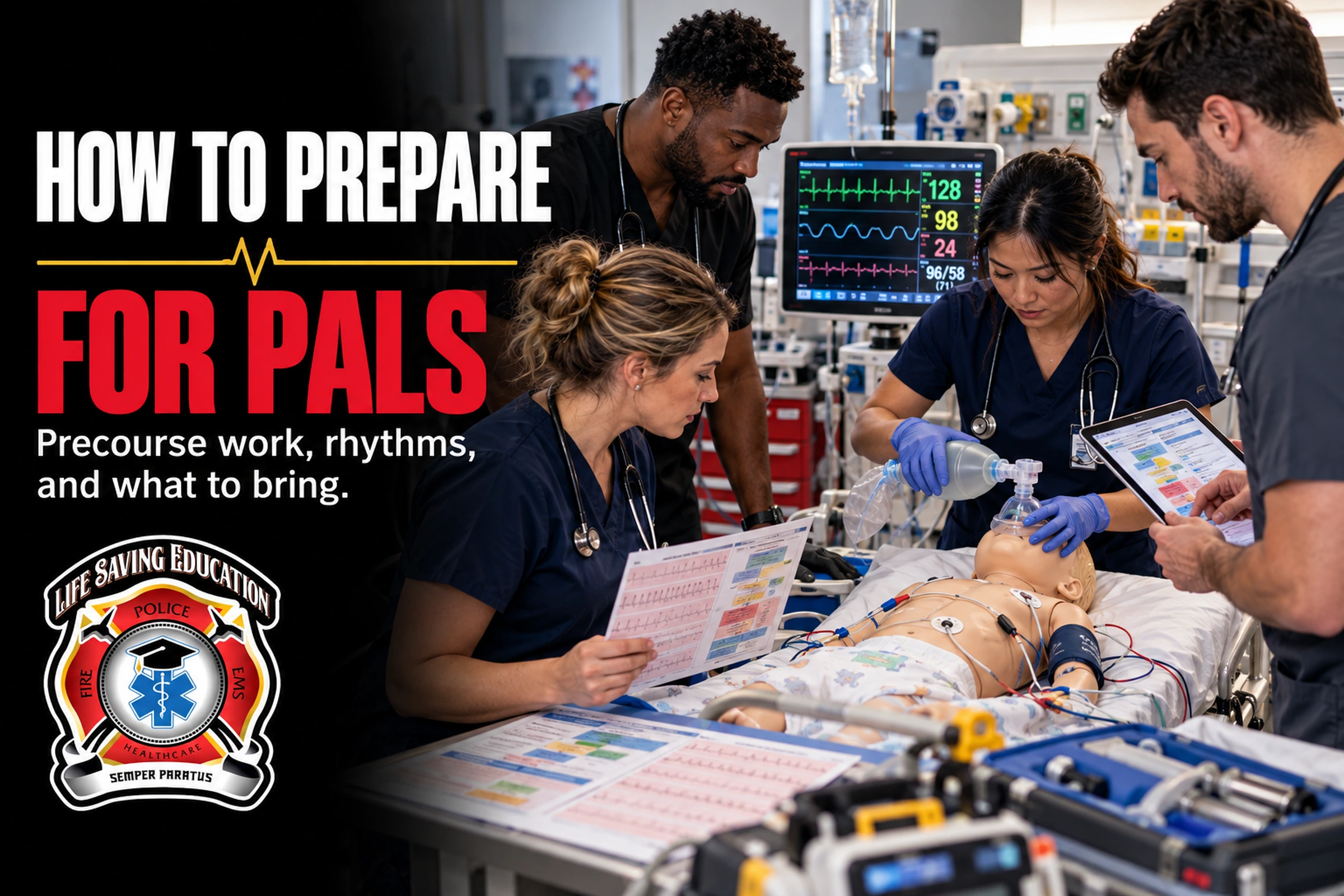
Pediatric Advanced Life Support moves quickly because the course expects learners to apply assessment, BLS, rhythm recognition, pediatric physiology, and team communication together. The best preparation is not trying to memorize every algorithm the night before. Complete the required precourse work early, identify weak areas, and practice a repeatable approach to pediatric assessment and resuscitation.
✅ Key takeaways
- Complete the current AHA PALS precourse requirements provided for your course before class.
- Use your self-assessment results to identify topics that need review.
- Know the pediatric systematic assessment approach and be ready to verbalize what you see and what you will do next.
- Refresh core pediatric BLS and rhythm recognition.
- Practice using weight-based information and reference tools accurately rather than guessing from memory.
1. Complete the required precourse work early
The AHA PALS pathway includes precourse preparation, and the current PALS Precourse Self-Assessment requires a passing score of at least 70 percent. Follow the instructions from your Training Center and bring or submit the required completion documentation. Do the assessment early enough to study the topics you miss rather than treating it as a last-minute administrative task.
2. Build a repeatable pediatric assessment
PALS scenarios become easier when you stop approaching each case as a new puzzle. Practice moving from an initial impression into a structured primary assessment, identifying the likely problem, intervening, and reassessing. Say your reasoning aloud: what is abnormal, what problem category it suggests, what needs to happen now, and what finding will tell you whether the intervention worked.
3. Review the rhythms you are expected to recognize
Be comfortable distinguishing normal sinus rhythm and sinus tachycardia from important pediatric bradyarrhythmias and tachyarrhythmias, and recognize shockable versus non-shockable cardiac-arrest rhythms. You should be able to connect the rhythm to the patient’s clinical condition rather than identifying a strip in isolation.
If rhythm interpretation is a weak area, our rhythm recognition guide can help reinforce the underlying ECG concepts.
4. Refresh pediatric BLS
High-quality CPR is the foundation of pediatric resuscitation. Review age-appropriate compression technique, depth and rate concepts, ventilation, two-rescuer coordination, AED or defibrillator use, and how the approach changes between infants and children. A learner who struggles with basic compressions and ventilation will have difficulty leading an advanced scenario.
See LSE’s BLS training options if those skills need a full refresh.
5. Practice weight-based calculations safely
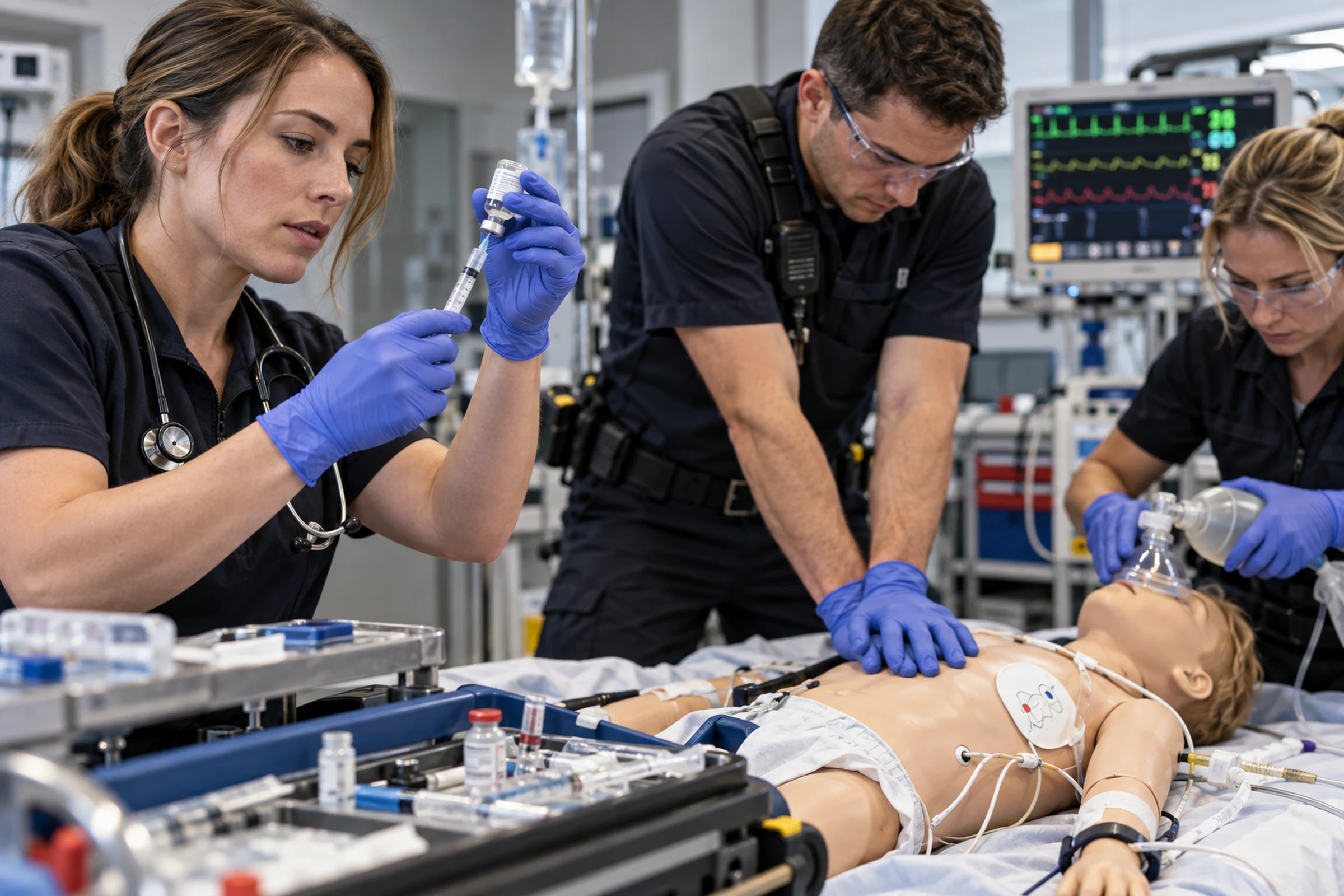
Pediatric treatment frequently depends on weight. The goal is not reckless memorization. Practice reading a weight in kilograms, finding the correct dose or energy recommendation in the approved reference material, performing the calculation, and communicating it clearly enough for another team member to verify. Use the reference tools provided for the course rather than inventing shortcuts.
6. Practice team communication
PALS is not only an individual knowledge test. During scenarios, communicate findings, assign tasks clearly, use closed-loop communication, and reassess after interventions. If you are leading, create enough structure that everyone knows the priority. If you are assigned a role, confirm the task and report completion and results back to the leader.
Our team dynamics guide applies to the same communication habits used in pediatric resuscitation.
7. Know what to bring
- Required precourse completion or self-assessment documentation
- Access to the current provider manual or required course materials as directed by the Training Center
- Comfortable clothing appropriate for hands-on skills practice
- Any personal items your confirmation email requests
- A plan to arrive early enough to check in without starting the day rushed
A 3-day PALS study plan
Three days before
Complete the precourse assessment and make a short list of weak topics. Review the systematic pediatric assessment and respiratory versus circulatory problems.
Two days before
Review rhythms, pediatric BLS, and the major decision points in bradycardia, tachycardia, shock, and cardiac arrest. Practice locating information in your course reference materials.
The day before
Use short scenario walk-throughs instead of cramming. Pack required materials, confirm the class location and time, and get adequate rest.
Frequently asked questions
What score do I need on the PALS Precourse Self-Assessment?
The current AHA PALS Precourse Self-Assessment requires at least 70 percent. Follow your Training Center’s current instructions because course processes can change.
Do I need to memorize every PALS medication dose?
Prepare enough to understand the medications and calculations you will use, but safe pediatric care depends on accurate use of weight-based references and verification, not guessing from memory.
Should I study ACLS rhythms before PALS?
Basic ECG recognition skills transfer, but study the rhythms and clinical decision-making expected in the PALS course rather than treating PALS as an adult ACLS class with smaller doses.
What if my BLS skills are rusty?
Refresh them before class. Advanced pediatric resuscitation assumes you can perform high-quality basic life support while integrating advanced assessment and treatment.
Ready for class?
If you are deciding between advanced courses, read PALS vs ACLS. LSE offers PALS certification training and BLS training for healthcare professionals.
Educational note: AHA course materials and Training Center procedures can change. Use the current materials and instructions issued for your specific class.
Source: American Heart Association PALS Precourse Self-Assessment.