Prepared by the LSE Editorial Team. Reviewed by Joseph Andrade, Jr., RN, NRP.
PALS and ACLS are both advanced American Heart Association resuscitation courses, but they prepare healthcare professionals for different patient populations and clinical problems. ACLS focuses on adult cardiac arrest, stroke, acute dysrhythmias, acute coronary syndromes, and other cardiopulmonary emergencies. PALS focuses on recognizing and treating serious pediatric respiratory emergencies, shock, arrhythmias, and cardiopulmonary arrest.
Quick answer
Choose ACLS when your role involves adult cardiac arrest or other adult cardiopulmonary emergencies. Choose PALS when your role involves emergencies in infants and children. Clinicians who routinely care for both age groups may need both credentials.
Your employer, clinical program, medical staff rules, or other credentialing authority determines which course your position requires.
Key takeaways
- ACLS is adult focused. It is designed for healthcare professionals who direct or participate in the management of adult cardiac arrest, stroke, and other cardiopulmonary emergencies.
- PALS is pediatric focused. It is intended for healthcare providers who respond to emergencies in infants and children.
- Both build on BLS skills. High-quality CPR, team performance, communication, and rapid reassessment remain foundational.
- Both have classroom and blended pathways. AHA HeartCode blended learning includes online cognitive work plus a required hands-on session.
- Both provider credentials are valid for two years. Employer policies can still determine when an employee must renew or maintain uninterrupted credentialing.
PALS vs ACLS at a glance
| Question | ACLS | PALS |
|---|---|---|
| Primary population | Adults | Infants and children |
| Clinical emphasis | Adult cardiac arrest, acute dysrhythmias, stroke, acute coronary syndromes, post-arrest care, and other cardiopulmonary emergencies | Pediatric assessment, respiratory emergencies, shock, arrhythmias, and cardiopulmonary arrest |
| Common learners | Healthcare professionals involved in adult resuscitation and cardiopulmonary emergency care | Healthcare professionals who respond to emergencies in infants and children |
| Training pathways | Classroom or HeartCode blended learning | Classroom or HeartCode blended learning |
| Provider credential | Valid for two years after successful completion | Valid for two years after successful completion |
Why PALS is different from ACLS
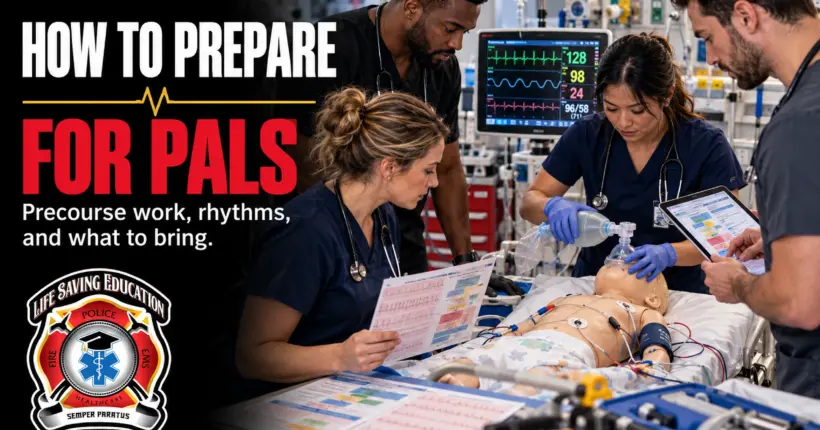
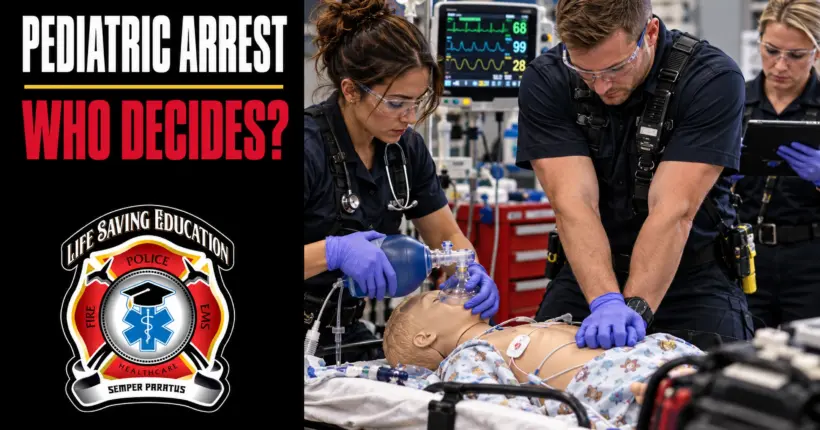
Pediatric emergencies are not managed by simply scaling down an adult approach. PALS uses a systematic pediatric assessment and prepares learners to recognize and intervene in respiratory emergencies, shock, arrhythmias, and cardiac arrest. The current 2025 course includes child and infant CPR, airway and oxygen-delivery equipment, ECG monitoring, defibrillation and cardioversion, team dynamics, and simulated pediatric cases.

PALS focus
Recognition before arrest is a major part of pediatric advanced life support. Learners practice identifying and treating respiratory and circulatory problems as well as managing pediatric cardiac emergencies.
What ACLS emphasizes
ACLS develops an organized response to adult cardiovascular and cardiopulmonary emergencies. The current 2025 course includes high-quality BLS, airway management, rhythm recognition, defibrillation, medication concepts, cardioversion, transcutaneous pacing, systematic assessment, and high-performance team practice. It also addresses cardiac arrest, stroke, acute dysrhythmias, acute coronary syndromes, and post-cardiac arrest care.

ACLS focus
ACLS is built around adult resuscitation and time-sensitive cardiopulmonary emergencies. Rhythm recognition and electrical therapy matter, but they sit inside a broader system of assessment, high-quality CPR, team performance, and post-arrest care.
What PALS and ACLS share
- High-quality CPR and strong BLS performance
- Systematic assessment and frequent reassessment
- High-performance team roles and communication
- Rhythm recognition and appropriate electrical therapy concepts
- Scenario-based application of knowledge and skills
Team performance matters in both courses. Review ACLS team dynamics and closed-loop communication for a closer look at communication during resuscitation.
Which course does your job require?
The answer depends on the patients you may be expected to manage and the credentialing rules that apply to your position. Adult-focused critical care, emergency, procedural, and response roles may require ACLS. Pediatric emergency and critical care roles may require PALS. EMS, emergency departments, transport teams, and other settings responsible for both adults and children may require both.
Before you register
Confirm the exact credential your employer or program accepts, whether you need PALS, ACLS, or both, and whether an initial provider or renewal pathway is appropriate. Do not assume one advanced course substitutes for the other.
Classroom or blended learning?
AHA offers instructor-led classroom and HeartCode blended-learning pathways for both ACLS and PALS. In the blended pathway, the learner completes the online portion and then completes a hands-on session with an AHA Training Center to earn the course completion card. All approved pathways teach the applicable AHA science and lead to the corresponding provider credential after successful completion.
If you are deciding between delivery formats, see HeartCode ACLS vs Classroom ACLS.
How long are PALS and ACLS credentials valid?
Current AHA PALS and ACLS Provider Course Completion Cards are valid for two years after successful completion. Employers and credentialing organizations may have their own policies for renewal timing, so clinicians who need continuous credentials should plan ahead.
Frequently asked questions
Do I need ACLS before PALS?
No general AHA rule requires ACLS simply because you are taking PALS. They are separate advanced courses for different patient populations. Follow the prerequisites and precourse instructions for the specific course you are attending.
If I have PALS, do I still need ACLS?
Possibly. PALS does not replace an employer’s ACLS requirement for adult care, and ACLS does not replace a PALS requirement for pediatric care.
Do paramedics need both PALS and ACLS?
Requirements vary by employer, jurisdiction, medical direction, and credentialing policy. Paramedics who are expected to manage both adult and pediatric emergencies may be required to maintain both, but the applicable employer or credentialing authority controls the requirement.
Which course is harder?
There is no universal answer. Familiarity with the patient population, BLS performance, rhythm recognition, systematic assessment, and preparation can affect how challenging either course feels.
Prepare before class
For ACLS preparation, review the ACLS precourse checklist, ACLS rhythm recognition guide, and ACLS megacode preparation guide.
Choose the course that matches your clinical role
LSE offers PALS and ACLS training for healthcare professionals. Confirm your required credential, then choose the course and delivery pathway that fits your role and schedule.
Educational note: This article summarizes current AHA course information. Employer, school, medical staff, and other credentialing requirements determine which credential is required for a particular role.
Primary course information: American Heart Association ACLS and American Heart Association PALS.