Prepared by the LSE Editorial Team. Reviewed by Joseph Andrade, Jr., RN, NRP.
Joseph works across emergency response, healthcare, and workplace safety and develops practical training for civilians, employers, and first responders.
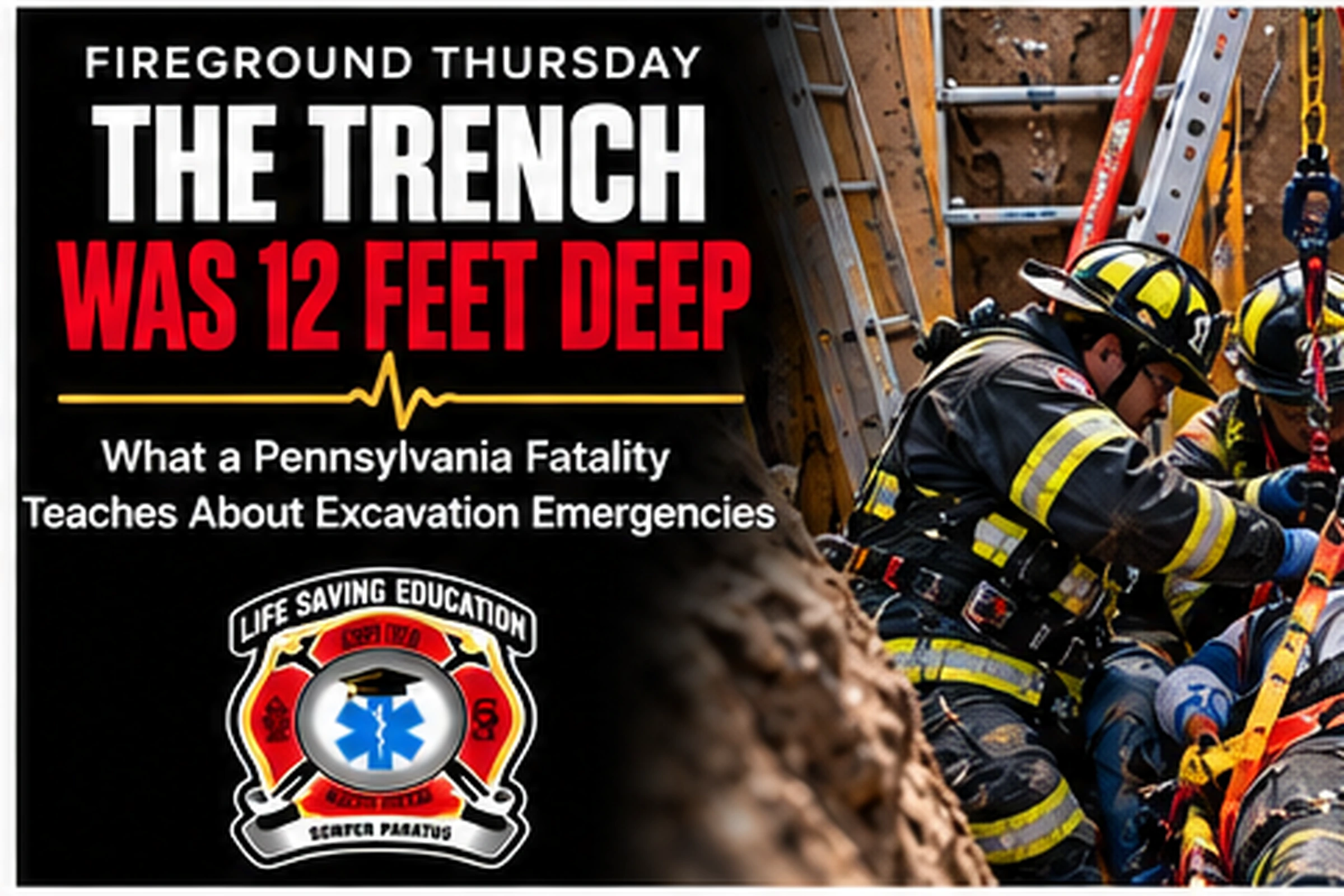
A trench can change from workplace to rescue scene in seconds.
On October 7, 2026, the U.S. Department of Labor announced OSHA citations following an April 2 fatal trench collapse in Pennsylvania. According to OSHA, workers were installing a storm sewer system approximately 12 feet below ground level in a trench that was not adequately protected from soil collapse. A wall failed and soil engulfed one worker.
OSHA issued a willful citation concerning cave-in protection, repeat citations concerning competent-person inspections and removal from hazardous conditions, and serious citations involving training, safe egress, material placement, and roll-in hazards. Proposed penalties total $254,884.
The employer has the right to contest the citations, so these should be described as OSHA citations and allegations, not final adjudicated findings.
🕳️ Twelve Feet Is Not Just a Hole

A trench wall can fail suddenly. Soil is heavy enough that even a limited collapse can trap the chest, restrict breathing, injure the body, or bury a worker.
The intuitive response may be immediate entry by coworkers. That instinct can create another victim. An unprotected trench that has already collapsed has demonstrated instability.
Protective Systems
OSHA’s excavation requirements establish protections against cave-ins unless a specific exception applies. Depending on conditions, protection may involve sloping, benching, shoring, shielding, or another properly designed system.
A trench box is not magic. Shoring is not the same as shielding. Sloping cannot simply be guessed.
The Competent Person Is Not an Honorary Title
OSHA defines a competent person as someone capable of identifying existing and predictable hazards or dangerous conditions and authorized to take prompt corrective measures.
Knowledge without authority is inadequate. Authority without knowledge is inadequate.
Conditions Change
An excavation inspected in the morning may not remain safe all day. Rain can alter soil. Equipment can add surcharge loads or vibration. Spoil piles can move. Protective systems can shift. Traffic can change.
Access, Egress and Spoils
A worker needs a planned, usable way out. OSHA’s trenching eTool also instructs employers to keep spoils and equipment at least two feet back from an adequately protected excavation or use appropriate retaining methods.
When Prevention Fails
The wall collapses. A worker is missing or trapped. Someone calls 911. The worst possible plan is converting one trapped worker into multiple trapped workers.
Do not rush into an unstable trench
Untrained spontaneous entry can expose coworkers and responders to secondary collapse. Initial responders should control the scene, identify the problem, request appropriate technical-rescue resources, and prevent additional entry.
Control the top
Vehicles, vibration, spoil piles, bystanders, and unnecessary personnel can worsen conditions.
Identify utilities and other hazards
Electrical, gas, water, sewer, atmospheric, mechanical, and other hazards may be present.
Establish specialized rescue operations
Technical trench rescue can require shoring, panels, walers, struts, ladders, atmospheric monitoring, rigging, ventilation, dewatering, and specialized patient access.
Fire and EMS Personnel Need Discipline Too
A uniform does not make a trench safe. An EMS crew may be urgently needed for patient care but should not be placed into an uncontrolled collapse zone simply because the patient needs treatment.
A first-arriving fire company can establish command, isolate the area, gather witness information, determine the number and location of victims, identify utilities, request specialized resources, establish EMS and rehab areas, prepare access routes, and coordinate with site representatives.
General Awareness Is Not Technician-Level Rescue
A collapse changes loads and creates voids, unstable soil, trapped victims, damaged utilities, and access problems. Rescue shoring must be installed in a deliberate sequence that protects rescuers while progressively creating a safer work area.
Questions Contractors Should Ask
- Is a competent person actually present and empowered?
- Has soil been evaluated?
- Is the protective system appropriate?
- Is safe access and egress available?
- Are spoils and equipment controlled?
- Have weather or site conditions changed?
- Are inspections meaningful?
- Is there an emergency plan?
Questions Fire Departments Should Ask
Departments should know what trench capability they possess, who provides technician-level resources, how quickly those resources can be requested, and what initial companies should do while those resources respond.
✅ Key Takeaways
- Protective systems and competent-person inspections are central to trench safety.
- Access, egress, spoil placement, equipment loads, weather, and changing conditions all matter.
- Do not turn one trapped worker into multiple victims through spontaneous entry.
- Technical trench rescue requires specialized equipment, training, and controlled operations.
Bottom Line
The Pennsylvania fatality is a reminder that trench safety is a system. Protective systems matter. Competent-person inspections matter. Access and egress matter. Spoil placement matters. Training matters. And when that system fails, rescue discipline matters.
Training You Can Count On. When Seconds Count.
Train Before the Trench Becomes an Emergency
Life Saving Education provides practical construction, emergency-response, and workplace safety training built around hazards that demand disciplined decisions.