Joseph Andrade, Firefighter, Paramedic, RN, OSHA Outreach Instructor, Lead Instructor
Life Saving Education. Practical safety education built around real hazards, real decisions, and skills people can use when seconds count.
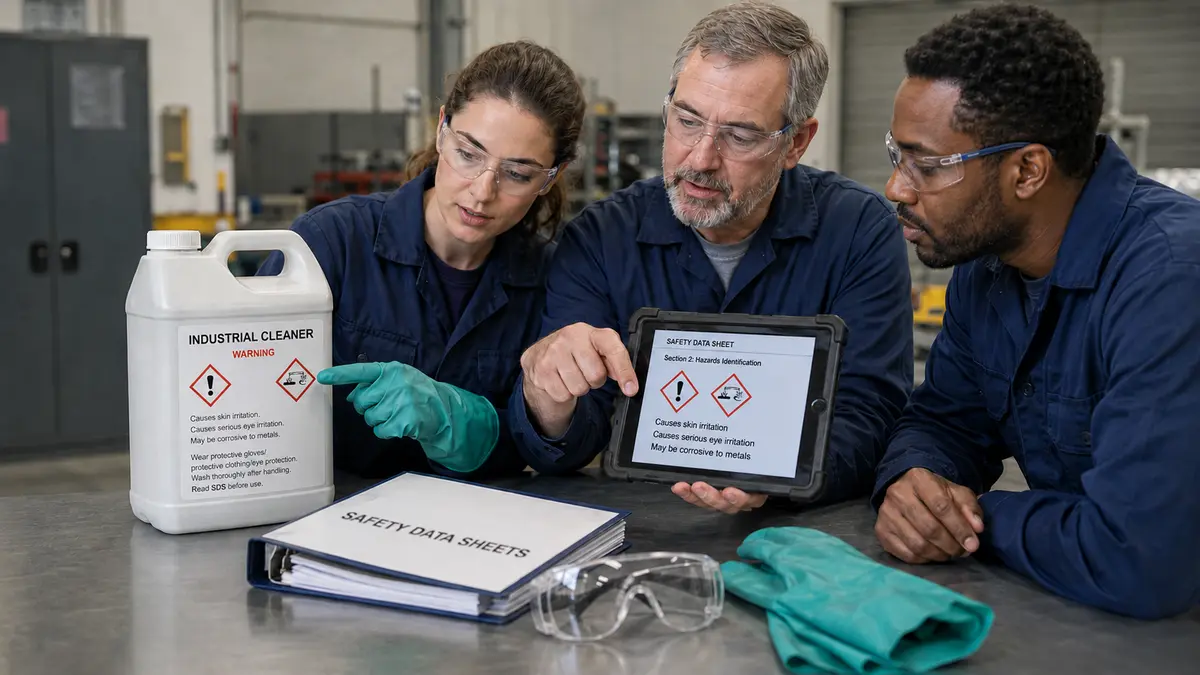
A Safety Data Sheet can be technically perfect and still fail a worker if they cannot find the answer they need when it matters.
A label can contain every required element and still be useless if the employee only recognizes the red diamond and does not know what action follows.
That is why I like the HazCom right to understand idea better than treating Hazard Communication as a paperwork exercise.
OSHA’s Hazard Communication Standard, 29 CFR 1910.1200, requires employers to provide effective information and training on hazardous chemicals in the work area. The system connects labels, Safety Data Sheets, the written program, chemical inventory, and employee training.
The word that deserves more attention is effective.
🧠 The real test of a HazCom program is whether an employee can use the information to make a safer decision.
🧭 HazCom Right to Understand Starts With Three Questions
Every employee working around a covered hazardous chemical should be able to answer:
- What is this material?
- What can it do to me or the workplace?
- What do I need to do to use it safely or respond to a problem?
The label and SDS are tools for answering those questions.
Training should teach workers how to use those tools, not simply prove that a slideshow was assigned.
explore OSHA and workplace-safety training
OSHA 10-Hour Training
🏷️ Teach the Label as a Decision Tool
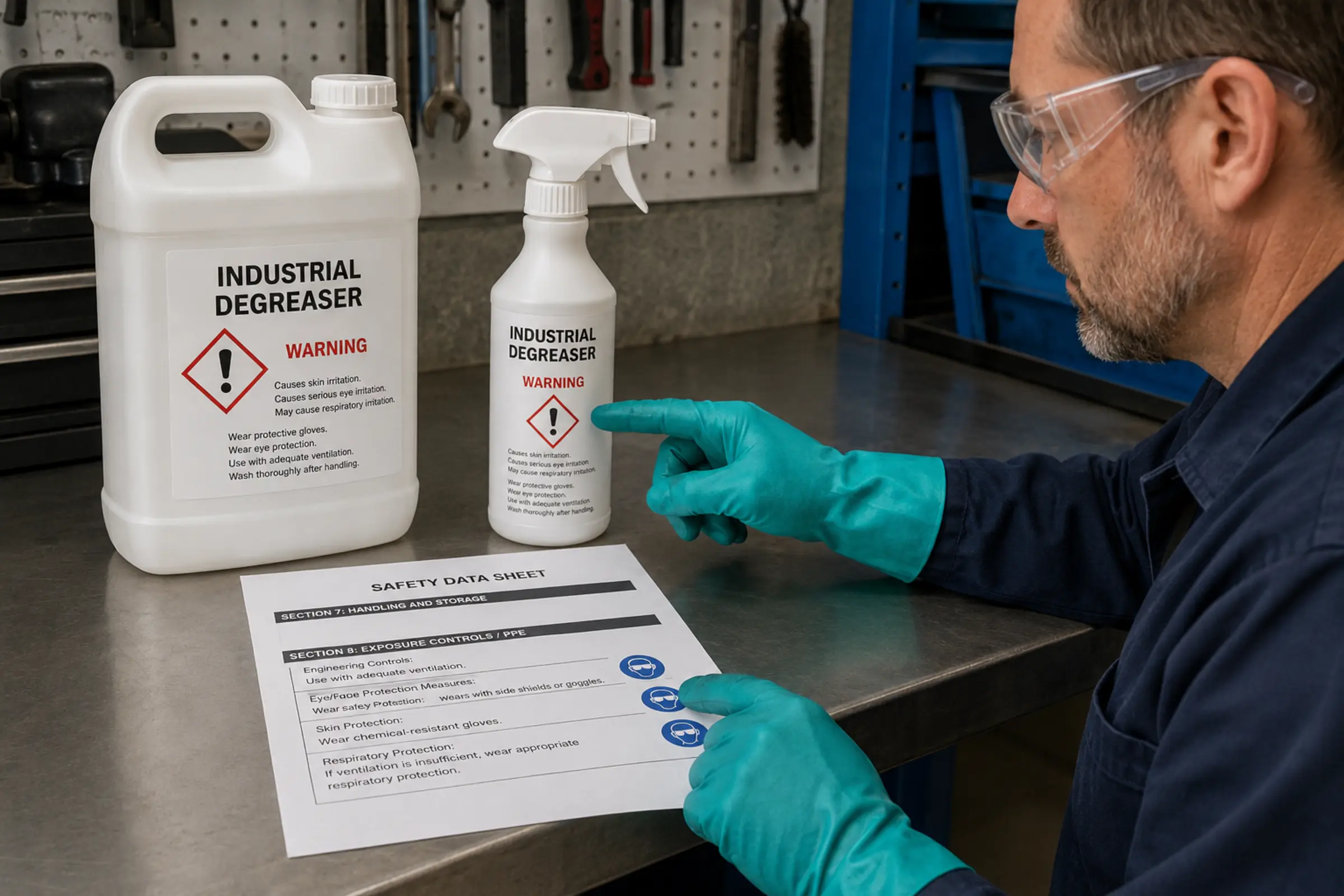
For shipped containers, OSHA’s GHS-aligned label system uses elements such as:
- product identifier
- signal word
- hazard statement
- precautionary statements
- pictograms
- responsible-party information
Do not train the elements as trivia.
Teach employees how they work together.
For example, ask a worker to pick up a real product used at the facility and identify:
- the product identifier
- the most serious hazard language
- the pictogram
- a key precaution
- where to find more information
That exercise takes minutes and immediately tells you whether the label training transferred.
Secondary containers are where theory becomes reality
Many HazCom gaps appear after a chemical leaves the manufacturer’s original container.
A spray bottle, squeeze bottle, process container, or transfer container can quickly become a mystery to the next employee who sees it.
OSHA allows workplace labeling systems that communicate the required hazard information, and there is a limited immediate-use exception for certain portable containers controlled by the employee who made the transfer.
The exception should not become an excuse for anonymous containers circulating around the facility.
📄 Teach Workers Where to Look in the SDS
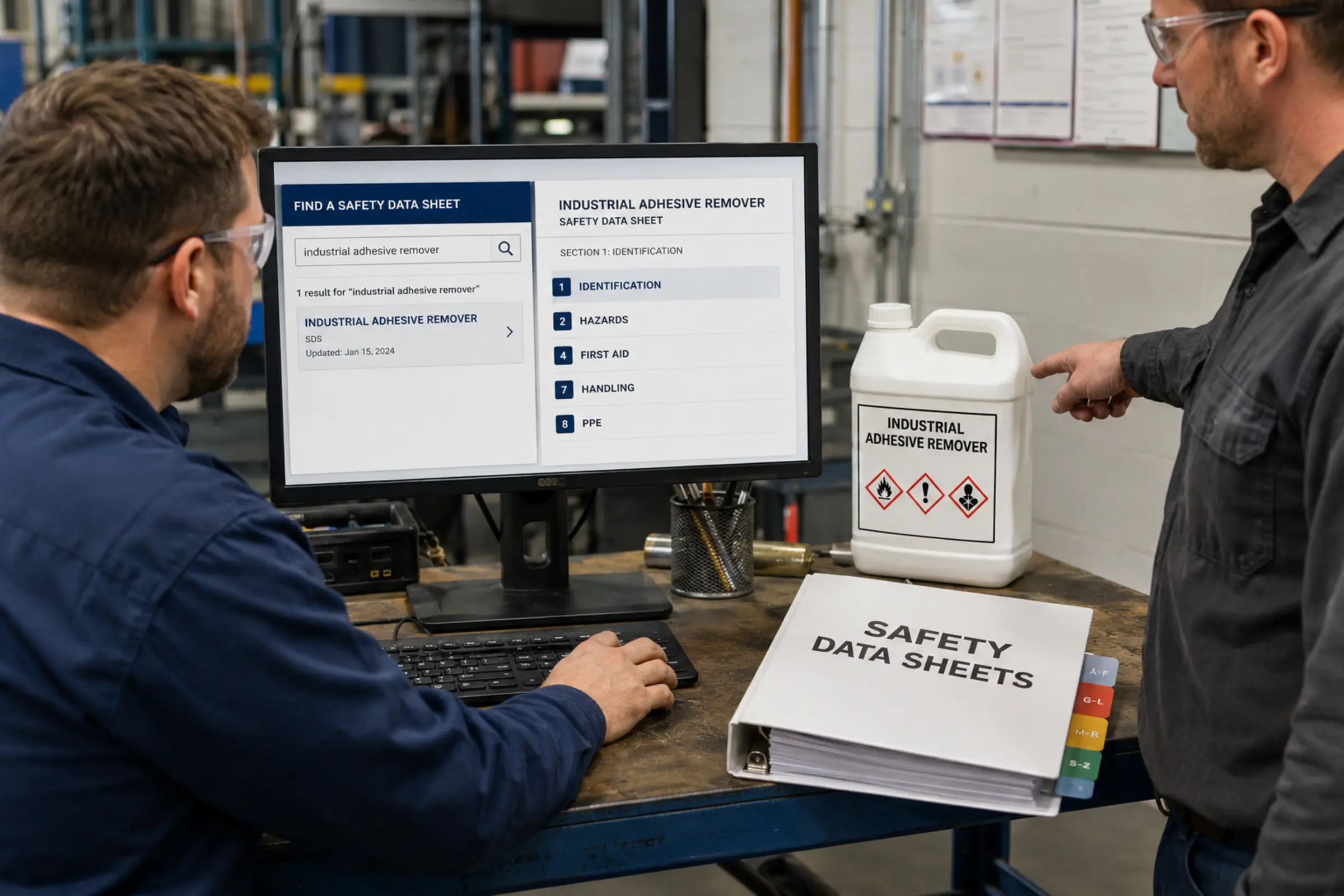
The 16-section SDS format is useful because the information has a predictable structure.
Workers do not need to memorize every line.
They should know where to look.
| Need | SDS section |
|---|---|
| Identify the product and supplier | Section 1 |
| Understand hazards | Section 2 |
| First-aid information | Section 4 |
| Firefighting information | Section 5 |
| Spill / accidental release information | Section 6 |
| Handling and storage | Section 7 |
| Exposure controls and PPE | Section 8 |
| Stability / incompatibilities | Section 10 |
A practical exercise is simple: give the employee a chemical used in their department and ask them to locate the emergency and PPE information without coaching.
If it takes ten minutes to find the SDS system, the problem is not the employee’s reading speed.
It is the program.
💻 Electronic SDS Systems Need an Offline Reality Check
OSHA permits electronic access as long as required information is readily accessible to employees during each work shift.
That creates a few operational questions:
- Does every shift know the login or access method?
- Can employees get the SDS without finding a supervisor?
- What happens during a network or power failure?
- Is there a backup method?
- Can a responder or medical provider get the information quickly?
A modern cloud system can be excellent.
A three-ring binder can also work.
The compliance feature is access, not the technology brand.
🧪 Train the Hazards Employees Actually Have
OSHA requires effective information and training at initial assignment and whenever a new chemical hazard the employee has not previously been trained about is introduced.
That does not create a blanket federal annual HazCom retraining rule.
Annual refreshers can still be useful, especially in changing workplaces, but they do not replace training when a new hazard is introduced.
The strongest programs train by hazard category and workplace reality.
Examples:
- corrosives used in sanitation
- flammable solvents in maintenance
- compressed gases in welding
- disinfectants in healthcare
- sensitizers and isocyanates in coatings
- oxidizers in laboratories
Workers remember what connects to their job.
🆕 The 2024 HCS Update Makes 2026 a Good Audit Year
OSHA updated the Hazard Communication Standard in 2024 to further align it with GHS Revision 7 and improve information on labels and Safety Data Sheets.
On January 15, 2026, OSHA extended the phase-in dates by four months.
For employers using affected substances, a key current deadline is November 20, 2026 to update alternative workplace labeling, the written HazCom program, and provide additional employee training for newly identified hazards as necessary.
Later mixture-related dates extend into 2027 and 2028.
That makes now a good time to ask whether updated supplier SDSs are actually flowing into the employer’s system.
OSHA 30-Hour Training
explore OSHA and workplace-safety training
🧯 Train for the Foreseeable Emergency, Not Just Normal Use
HazCom applies when employees may be exposed under normal conditions of use or in a foreseeable emergency.
Training should therefore connect normal handling to emergency boundaries.
Employees need to know:
- what they can safely clean up
- what requires evacuation
- how to report a release
- when respiratory protection or specialized PPE is required
- where emergency equipment is located
- when HAZWOPER emergency-response provisions or outside HazMat resources may apply
One of the most dangerous gaps is teaching workers how to recognize a hazard without teaching them where their responsibility stops.
🧑🏫 A Better 20-Minute HazCom Refresher Exercise
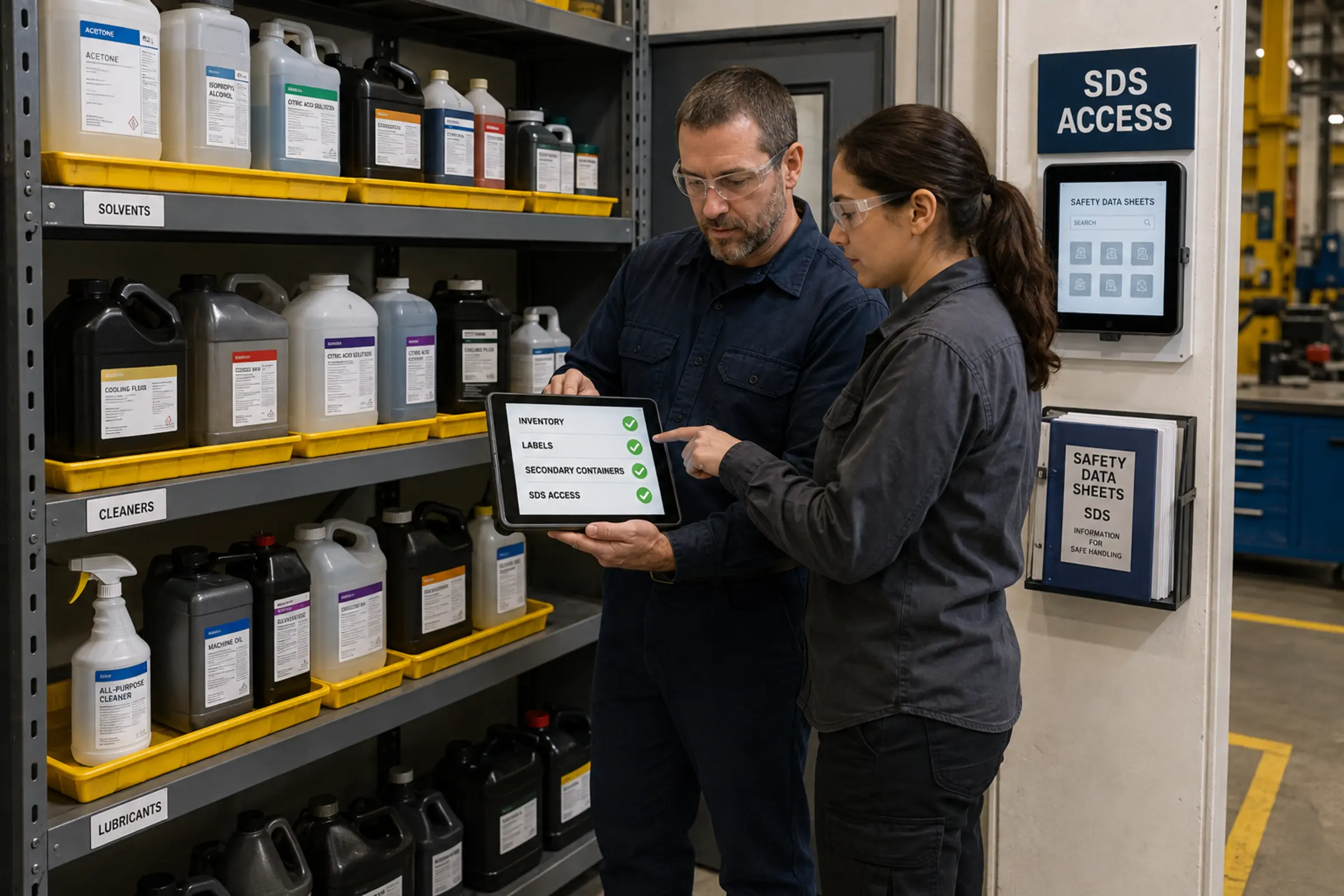
Instead of replaying an entire generic deck, pull one actual chemical from the work area.
Ask the group to:
- Match the container to the chemical inventory.
- Read the label and identify the signal word and primary hazard.
- Locate the SDS.
- Find the PPE information.
- Find the first-aid information.
- Explain what they would do if the container leaked.
- Identify whether the product is ever transferred to a secondary container.
Then correct the system, not just the worker.
If the label is damaged, replace it.
If the SDS is missing, obtain it.
If the employee cannot access the database, fix access.
If the procedure is unclear, revise it.
That is HazCom doing its job.
📋 HazCom Right-to-Understand Audit
- Chemical inventory matches actual products in the workplace.
- Product identifiers connect inventory, label, and SDS.
- Shipped labels remain legible.
- Secondary-container rules are understood and followed.
- Employees can access SDSs on every shift.
- Electronic SDS systems have workable backup access.
- Training uses real workplace chemicals and tasks.
- Employees know how to detect releases and protect themselves.
- Employees know when to stop work and escalate an emergency.
- New chemical hazards trigger additional training.
- 2024 HCS supplier updates are reviewed and incorporated by applicable deadlines.
🔗 Related Life Saving Education Guides
- OSHA Hazard Communication compliance guide
- OSHA 10-Hour Training
- OSHA 30-Hour Training
- When a chemical spill becomes a HAZWOPER emergency response
✅ Key Takeaways
- HazCom works when workers can turn information into action.
- Labels and SDSs should be taught with actual workplace products, not only as vocabulary.
- OSHA requires training initially and when new chemical hazards are introduced, not a universal annual refresher for every employer.
- Electronic SDS systems are acceptable when employees have ready access and a practical backup.
- The November 20, 2026 employer deadline for affected substances makes 2026 an important program-audit year.
❓ Frequently Asked Questions
What does "right to understand" mean in HazCom?
It describes the practical goal that workers do more than receive chemical information. They should understand labels, SDSs, hazards, and protective measures well enough to use the information safely.
Does OSHA require annual HazCom training?
The federal Hazard Communication Standard requires effective training at initial assignment and when a new chemical hazard the employee has not previously been trained about is introduced. Employers can provide annual refreshers, but the standard itself does not establish one universal annual cycle.
Do secondary containers always need GHS labels?
Workplace containers generally need compliant workplace hazard information unless a specific exception applies. OSHA permits workplace labeling alternatives, and a limited immediate-use exception applies to certain portable containers controlled by the employee who transferred the chemical.
Can Safety Data Sheets be electronic only?
Electronic SDS systems are permitted if employees have ready access during their work shifts and access is not blocked by technical barriers. A reliable backup method is a strong operational safeguard.
What should employers do before November 20, 2026?
Employers affected by updated substance information should review supplier labels and SDSs and update alternative workplace labeling, the written HazCom program, and additional employee training as necessary for newly identified hazards.
🎯 Make Chemical Information Usable
HazCom is often taught like a language course: pictogram, signal word, hazard statement, precautionary statement.
The better goal is operational fluency.
Life Saving Education teaches OSHA and chemical-safety concepts through the real decisions employees make around labels, SDSs, PPE, spills, and changing hazards.
explore OSHA and workplace-safety training
Onsite Group Training
Training You Can Count On. When Seconds Count.
📚 Sources and Further Reading
- OSHA, 29 CFR 1910.1200 Hazard Communication
- OSHA, Hazard Communication Overview
- OSHA, HCS 2024 Compliance Date Extension
- OSHA, HCS 2024 Rulemaking
- OSHA, Safety Data Sheets
⚖️ Educational Disclaimer
This article is provided by Life Saving Education for general educational purposes only. It is not medical, legal, or compliance advice, and it is not a substitute for hands-on training or professional guidance. Regulations and clinical guidelines change and vary by state, jurisdiction, job function, and operation. Verify current requirements for your situation. In an emergency, call 911.