Prepared by the LSE Editorial Team. Reviewed by Joseph Andrade, Jr., RN, NRP.
Life Saving Education. Practical safety education built around real hazards, real decisions, and skills people can use when seconds count.
Sometimes the most important regulatory update is the number that did not change.
For years, federal civil monetary penalties have typically received annual inflation adjustments. HazMat employers became used to watching maximum penalties creep upward from one year to the next.
Then 2026 broke the pattern.
On April 17, 2026, the Office of Management and Budget issued Memorandum M-26-11, Cancellation of Penalty Inflation Adjustments for 2026, directing agencies to cancel 2026 inflation adjustments under the Federal Civil Penalties Inflation Adjustment Act Improvements Act of 2015.
That is the basis for the PHMSA 2026 penalty increases story.
But the headline can be misleading if employers read it as "PHMSA penalties were canceled."
They were not.
⚠️ The annual 2026 inflation increase was canceled. The underlying hazardous-materials civil penalties and PHMSA enforcement authority remain.
💵 PHMSA 2026 Penalty Increases: What Actually Happened?
The 2015 federal civil-penalty inflation law created a process for agencies to make annual inflation adjustments so civil monetary penalties maintain their deterrent effect.
OMB’s April 17, 2026 memorandum canceled the 2026 inflation adjustments.
As a result, the existing penalty levels carried forward rather than receiving a new 2026 inflation increase.
The current eCFR text for 49 CFR 107.329 lists the hazardous-materials maximums at:
| Penalty category | Current amount |
|---|---|
| Maximum civil penalty for a knowing HMR violation | $102,348 per violation |
| Maximum when a violation results in death, serious illness, severe injury, or substantial destruction of property | $238,809 per violation |
| Minimum penalty specifically for violations relating to training | $617 |
For a continuing violation by a shipper or transporter, each day can constitute a separate violation under the governing statute and regulations.
Those are not theoretical numbers. PHMSA enforcement notices issued in 2026 continue to cite the same figures.
request customized HazMat and transportation-safety training
request customized HAZWOPER and HazMat training
🧾 Why Was the 2026 Increase Canceled?

OMB’s memorandum was titled specifically around canceling the 2026 penalty inflation adjustments under the 2015 Act.
The important compliance point for employers is not the political or administrative backstory.
It is the practical outcome:
do not apply a made-up 2026 inflation multiplier to PHMSA civil penalties.
For current compliance materials, use the numbers in the current regulation and current PHMSA enforcement documents.
This is a good example of why safety trainers and compliance managers should verify live regulatory sources rather than automatically rolling last year’s trend forward.
🚚 What PHMSA Can Enforce
PHMSA’s hazardous-materials authority reaches far beyond a mislabeled box.
The Hazardous Materials Regulations cover functions involving:
- classification
- packaging
- package testing and qualification
- marking
- labeling
- placarding
- shipping papers
- emergency-response information
- training
- security requirements
- loading and unloading
- carrier operations
- registration and approvals where applicable
A civil penalty can arise from failures in any regulated function, depending on the circumstances.
Training violations get special attention in the penalty structure
49 CFR 107.329 includes a specific minimum civil penalty for training violations.
That should get an employer’s attention for a simple reason.
Training is not treated as optional paperwork.
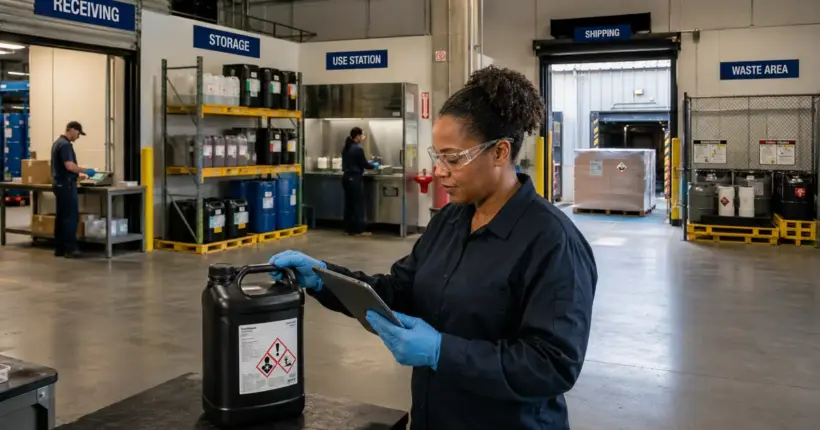
PHMSA requires hazmat employers to train, test, certify, and maintain records for hazmat employees whose job functions directly affect hazardous-materials transportation safety.
request customized HazMat and transportation-safety training
🧠 The Wrong Lesson: "Penalties Did Not Go Up, So Risk Went Down"
That is the wrong conclusion.
A frozen maximum penalty does not change:
- whether the HMR applies
- whether employees must be trained
- whether packages must be compliant
- whether shipping papers must be accurate
- whether hazmat is properly classified
- whether security requirements apply
- whether PHMSA can investigate and enforce
The compliance risk is driven by the operation, not by whether an annual inflation factor was applied.
And direct civil penalties are only one piece of the potential cost.
- shipment rejection
- carrier delays
- damaged goods
- emergency response
- cleanup expense
- employee injury
- customer disruption
- contractual consequences
- criminal referral in severe cases
📚 Training Records Are Often the Easiest Thing to Fix Before an Inspection

DOT hazmat training under 49 CFR 172.704 generally includes:
- general awareness and familiarization
- function-specific training
- safety training
- security awareness training
- in-depth security training when required
Recurrent training is required at least once every three years under the federal HMR.
Employers must keep a current training record for each hazmat employee. Records include identifying information, training dates, training materials or references, trainer information, and certification that the employee was trained and tested as required.
A practical audit can catch gaps such as:
- employees whose job duties changed but training did not
- recurrent training approaching expiration
- missing function-specific content
- incomplete training records
- contractors performing hazmat functions without clear responsibility
- employees performing shipping duties before initial training is completed
🔍 What PHMSA Considers When Assessing Penalties
49 CFR 107.331 identifies assessment considerations used in civil-penalty decisions.
Factors can include the nature, circumstances, extent, and gravity of the violation, the degree of culpability, history of prior violations, ability to pay, effect on ability to continue in business, and other matters as justice may require.
That means enforcement is not simply "violation equals maximum penalty."
But it also means employers should not assume a smaller operation is invisible.
Good-faith compliance systems, training records, corrective actions, and documented procedures matter.
🧮 A Simple Example of Why Daily Violations Matter
Imagine a shipper has a continuing violation that remains unresolved over multiple days.
The statute allows each day of a continuing violation by a shipper or transporter to constitute a separate violation.
That does not mean PHMSA automatically assesses the statutory maximum for every day in every case.
It means the potential exposure can multiply when a problem continues.
This is another reason to treat regulatory findings and internal audit findings as correction priorities, not paperwork for next quarter.
📋 2026 DOT Hazmat Compliance Audit Checklist

- Current HMR references are being used.
- Penalty figures in training and compliance documents match the current eCFR.
- Every hazmat employee has been identified by function.
- Initial training is completed within the applicable timeframe and employees are directly supervised before completion where allowed.
- Recurrent training dates are tracked.
- Function-specific training matches actual duties.
- Training records contain all required information.
- Packaging and closure procedures are current.
- Marking, labeling, placarding, and shipping-paper procedures are audited.
- Security-awareness requirements are addressed.
- Regulatory changes are reviewed rather than assumed from prior-year trends.
🔗 Related Life Saving Education Guides
- Life Saving Education HAZWOPER training
- Onsite group safety training
- Life Saving Education resources
- Contact Life Saving Education
✅ Key Takeaways
- OMB canceled federal 2026 civil monetary penalty inflation adjustments in Memorandum M-26-11.
- That did not cancel PHMSA enforcement or existing hazardous-materials penalties.
- Current 49 CFR 107.329 lists a $102,348 general maximum, $238,809 aggravated maximum, and $617 minimum for training violations.
- Continuing violations can create additional exposure because each day can constitute a separate offense in qualifying circumstances.
- The right employer response is not to celebrate a frozen number. It is to verify training, shipping functions, and records against current regulations.
❓ Frequently Asked Questions
Did PHMSA cancel civil penalties in 2026?
No. The 2026 inflation adjustment was canceled. The underlying civil-penalty authority and current penalty amounts remain in effect.
What is the maximum PHMSA civil penalty for a hazmat violation in 2026?
Current 49 CFR 107.329 lists a maximum of $102,348 per violation, with a higher maximum of $238,809 when the violation results in death, serious illness, severe injury, or substantial destruction of property.
Is there a minimum penalty for DOT hazmat training violations?
Yes. The current regulation lists a $617 minimum civil penalty for violations relating to training.
How often does DOT hazmat training recur?
PHMSA requires recurrent hazmat employee training at least once every three years. Additional training may be needed when job functions or applicable requirements change.
Will penalty amounts increase again in 2027?
That depends on future federal action and the regulatory text in effect at that time. Employers should verify the current eCFR rather than assume either an increase or another cancellation.
🎯 Compliance Does Not Freeze When the Penalty Number Does
Regulatory updates are a good reminder that safety and compliance programs should be built around the current rule, not last year’s slide deck.
Life Saving Education provides DOT HazMat, OSHA, HAZWOPER, and workplace-safety education designed to connect regulatory requirements to the job functions employees actually perform.
request customized HazMat and transportation-safety training
Onsite Group Training
Training You Can Count On. When Seconds Count.
📚 Sources and Further Reading
- OMB, Memoranda page listing M-26-11
- eCFR, 49 CFR 107.329 Maximum Penalties
- eCFR, 49 CFR Part 107 Enforcement
- PHMSA, Hazmat Training Requirements for Industry
- PHMSA, Hazardous Materials Training Requirements
⚖️ Educational Disclaimer
This article is provided by Life Saving Education for general educational purposes only. It is not medical, legal, security, or compliance advice, and it is not a substitute for hands-on training, professional guidance, law-enforcement direction, or an employer-specific emergency plan. Laws, regulations, guidance, and best practices change and may vary by jurisdiction and workplace. Verify current requirements for your situation. In an emergency, call 911 when it is safe to do so.