American Heart Association Pediatric Advanced Life Support (PALS) training is designed for healthcare professionals who respond to emergencies involving infants and children. Life Saving Education offers full provider, renewal/update, and HeartCode PALS options so clinicians can select the format that matches their employer, hospital, school, or credentialing requirement.
The current American Heart Association Pediatric Advanced Life Support (PALS) program reflects the 2025 American Heart Association Guidelines for CPR and Emergency Cardiovascular Care. Pediatric Advanced Life Support (PALS) focuses on the recognition and treatment of pediatric respiratory emergencies, shock, cardiopulmonary arrest, and other time-critical conditions, with strong emphasis on systematic assessment and team-based care.
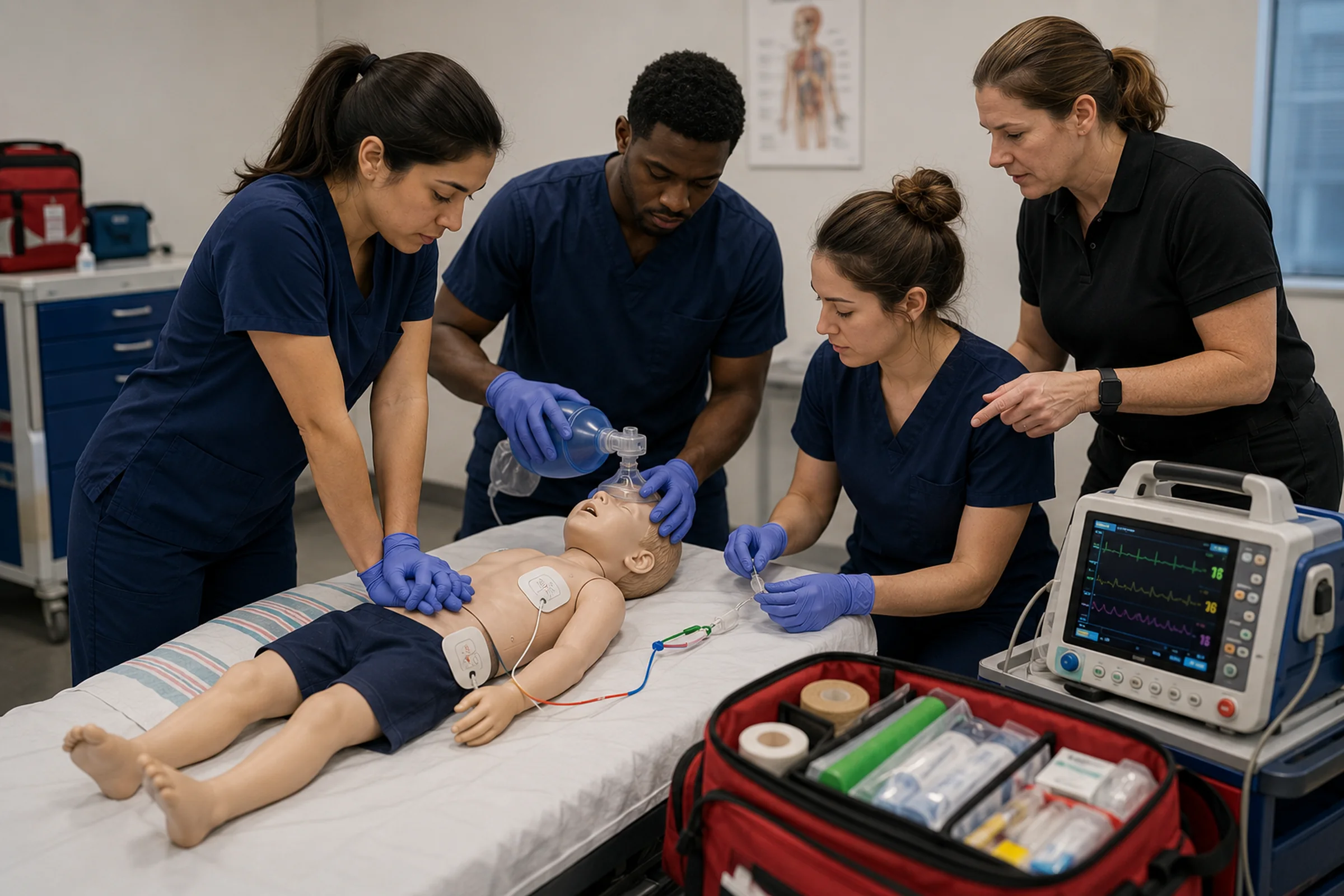
Choose the Right PALS Training Option
AHA PALS Provider
The AHA PALS Provider course is the primary option for healthcare professionals who need a full PALS provider course. It is commonly selected by emergency and critical-care clinicians, pediatric nurses, physicians, advanced practice clinicians, paramedics, respiratory therapists, and other professionals who may participate in pediatric emergency care.
PALS Update or Renewal
The AHA PALS Update / Renewal course is intended for experienced learners who already have a working foundation in pediatric emergency assessment and PALS concepts. Update courses move quickly, so the full provider course may be a better fit when a learner needs more review or when an employer specifically requires full-course completion.
HeartCode PALS Hands-On Skills Session
HeartCode PALS is the AHA blended-learning pathway. Students complete the required online cognitive portion and then attend a HeartCode PALS hands-on skills session to complete the applicable hands-on practice, scenarios, and testing requirements.
PALS Instructor Development
Experienced PALS providers interested in teaching can review AHA PALS Instructor Development. Instructor status requires completion of all applicable provider, instructor-development, and Training Center requirements.
What PALS Training Emphasizes
Pediatric patients can deteriorate quickly, and effective PALS performance depends on recognizing problems before cardiac arrest occurs. Course activities may address:
- systematic pediatric assessment;
- recognition and management of respiratory distress and respiratory failure;
- recognition and treatment of shock;
- high-quality pediatric CPR and integration of BLS skills;
- recognition and management of pediatric cardiac arrest;
- rhythm recognition and electrical therapy concepts;
- airway, oxygenation, and ventilation strategies;
- medication use within pediatric resuscitation algorithms;
- post-cardiac-arrest care concepts; and
- team leadership, communication, and case-based performance.
The exact curriculum, testing process, learning stations, and required materials follow the current AHA PALS program used for the class.
Who Usually Takes PALS?
PALS is intended for healthcare professionals who may care for critically ill or injured infants and children. Common participants include:
- emergency and pediatric nurses;
- physicians, physician assistants, and advanced practice clinicians;
- paramedics and advanced prehospital providers;
- respiratory therapists;
- intensive-care and emergency-department staff;
- pediatric procedural or specialty-care clinicians; and
- healthcare students or employees whose program specifically requires PALS.
Your employer, school, licensing body, clinical site, or credentialing organization determines which course and format it will accept. Verify the exact requirement before registration.
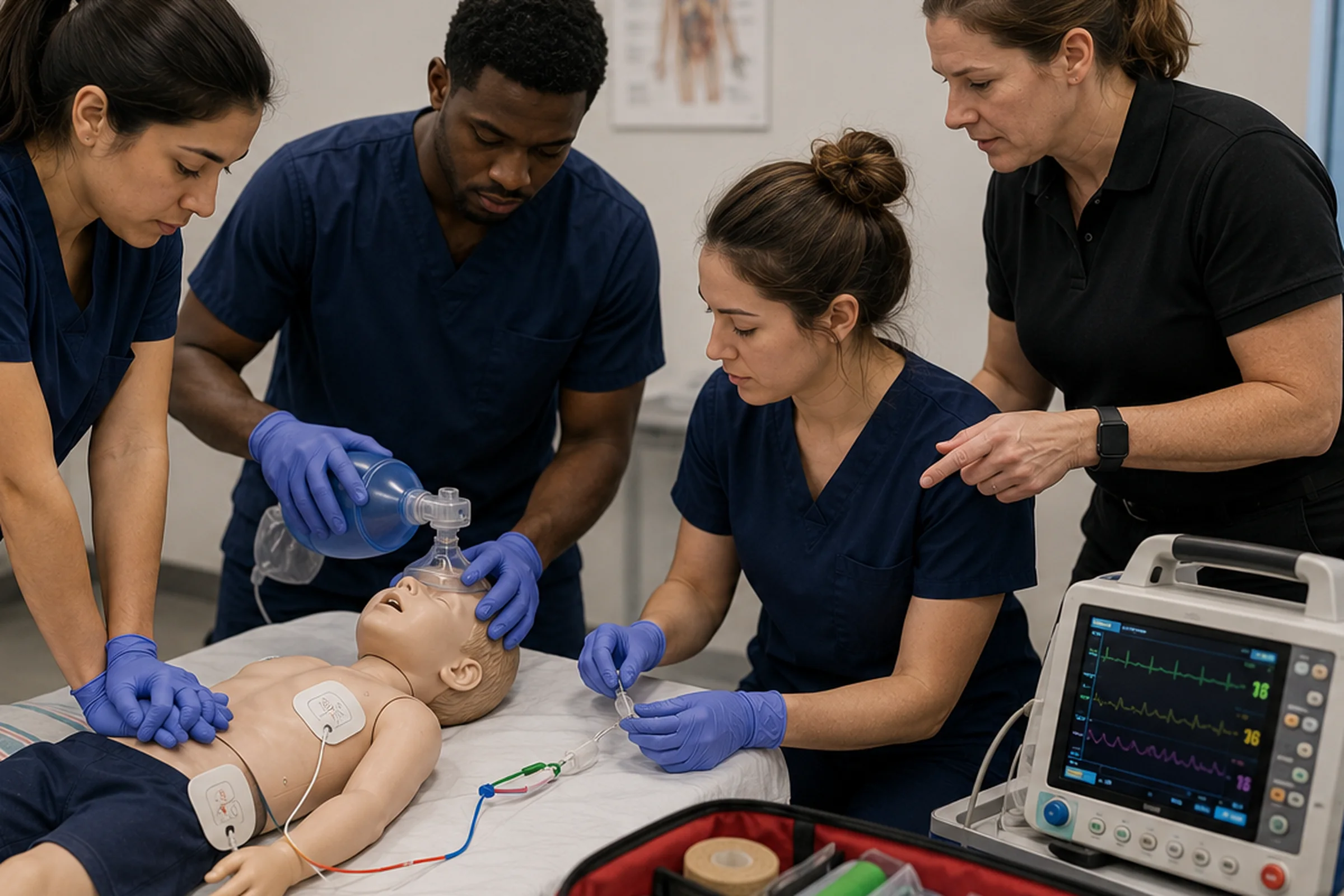
Pediatric Advanced Life Support (PALS) Provider vs. HeartCode PALS
The classroom and blended-learning pathways teach the same AHA science-based PALS skills but organize the learning differently. A classroom provider course keeps the cognitive and hands-on learning within an instructor-led environment. HeartCode allows the learner to complete the online cognitive component before attending the required hands-on portion.
HeartCode should not be treated as an online-only replacement for required PALS skills. Students must complete the applicable hands-on session and testing before receiving the corresponding course-completion eCard.
PALS Course Completion Card
Students who successfully complete the applicable AHA PALS requirements receive a PALS Provider course completion eCard that is valid for two years. Course completion does not expand a clinician’s professional scope of practice and does not replace employer orientation, medical direction, or local clinical protocols.
Prepare Before Your PALS Class
PALS is easier to learn when pediatric BLS, respiratory assessment, shock recognition, rhythm interpretation, and core pediatric algorithms are already familiar. Complete any assigned precourse work and arrive ready for active participation in case-based scenarios and hands-on skills.
Because the current PALS program includes substantial scenario-based learning, students should expect to communicate, perform assigned team roles, and apply assessment findings to treatment decisions rather than simply memorize algorithms.
Onsite PALS Training for Healthcare and EMS Teams
Hospitals, pediatric practices, emergency departments, EMS organizations, transport teams, and other healthcare employers can request private or onsite PALS training. Group scheduling can help coordinate multiple staff members or shifts while keeping training tied to realistic pediatric emergency teamwork.
Visit Onsite Group Training for planning information or use the training request page to request a class.
Frequently Asked Questions About PALS
Who is PALS designed for?
PALS is intended for healthcare professionals who respond to emergencies involving infants and children, including personnel in emergency response, emergency medicine, intensive care, and critical-care environments.
Is HeartCode PALS completely online?
No. HeartCode is a blended-learning pathway. The online portion is followed by the required hands-on skills session.
How long is the PALS course-completion card valid?
The AHA PALS Provider course completion eCard is valid for two years after successful completion.
Should I take the full provider course or the update course?
Choose the format required by your employer or program and appropriate to your current knowledge. Learners who need more review may benefit from the full provider course.
Find Your PALS Class
Review the PALS Provider course, choose a PALS Update / Renewal course, schedule a HeartCode PALS skills session, check the class schedule, or contact Life Saving Education for help selecting the correct option.